
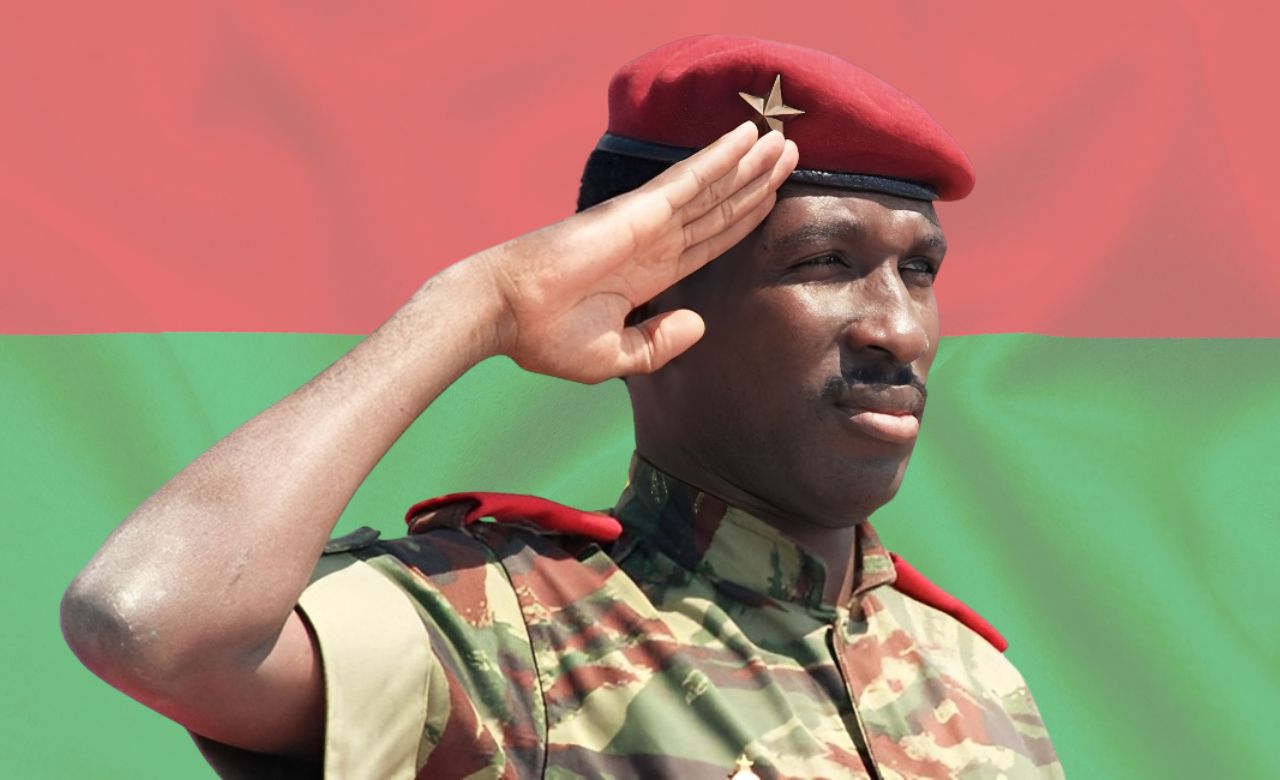
Thomas Isidore Noël Sankara (1949–1987) became one of Africa’s clearest voices for integrity, social justice, and self-reliance. In just four years as president of Burkina Faso (1983–1987), he tried to rebuild a poor Sahelian nation from the ground up—changing its name, civic culture, and sense of possibility. His reforms were bold and sometimes abrasive, and his assassination cut them short. Yet across the continent, including East Africa, Sankara remains a symbol of principled leadership.
Early Life and Formation
Sankara was born on 21 December 1949 in Yako, then Upper Volta under French rule. Gifted and disciplined, he chose the army over the priesthood and trained as an officer in Madagascar, where student and worker movements shaped his political outlook. Parachute training in France added confidence and technical skill. He first gained public attention after the 1974 Agacher Strip border conflict with Mali, which marked him as a capable young officer.
From Officer to Revolutionary Leader
The early 1980s were turbulent in Upper Volta. After strikes and power struggles, Sankara became prime minister in January 1983, only to be dismissed and briefly detained that May. His allies—among them Blaise Compaoré—led a coup on 4 August 1983 and placed him at the head of the National Council of the Revolution (CNR). Young and uncompromising, he promised a clean break with the old order and pledged to centre ordinary citizens in government.
Renaming a Nation and Resetting Its Direction
On the revolution’s first anniversary, 4 August 1984, Sankara renamed the country Burkina Faso—“Land of Upright People”—and introduced a new flag and anthem. These changes signalled an effort to rebuild national identity around dignity, honesty, and hard work. The “democratic and popular revolution,” as he called it, aimed to fight corruption, expand basic services, empower women, and repair the environment while reducing dependence on foreign aid.
Health, Education, and the Environment
Sankara treated social policy like an emergency. His government organised rapid vaccination campaigns against measles, meningitis, and yellow fever that dramatically raised coverage within weeks. Literacy drives, often run through neighbourhood and village committees, boosted school attendance and adult learning. Facing Sahelian drought and advancing desertification, he made tree-planting and water harvesting national duties. Millions of trees went into the ground, and environmental care was framed as a patriotic act tied to food security.
Women’s Rights at the Heart of Reform
Sankara argued that no revolution could succeed without women’s liberation. He used public platforms—including International Women’s Day—to challenge forced marriages, abusive polygamy, and gender-based violence, and to encourage women’s leadership in public life. Campaigns of the 1980s laid social groundwork that later supported legal reforms, including the banning of female genital mutilation in the 1990s. For him, gender justice was a practical measure of national progress.
Economy, Rural Change, and the Ethics of Office
“Let us produce what we consume” was more than a motto. He promoted local textiles and food crops and redirected resources to the countryside, where most citizens lived. Land policies strengthened peasant farmers, boosting cereal and cotton output. He also tried to model frugality from the top: selling luxury cars, cutting senior officials’ salaries, banning first-class travel, and insisting that public service meant personal sacrifice. Roads, wells, schools, and rural clinics became spending priorities, with communities often contributing labour.
Political Methods and Their Costs
To mobilise the country quickly, the government created Committees for the Defense of the Revolution (CDRs) and Popular Revolutionary Tribunals. Supporters saw them as tools to break patronage networks and accelerate projects. Critics argued they encouraged heavy-handed policing, limited press freedom, and weakened due process. Sankara’s Burkina Faso felt dynamic and disciplined—but also, at times, coercive. The tension between speed and rights remains part of any balanced assessment of his rule.
Foreign Policy and the Debt Question
On the international stage, Sankara embraced a proudly non-aligned posture. He supported African liberation movements, resisted the strict terms of structural adjustment, and tried to diversify partnerships beyond old colonial ties. His most famous intervention came in 1987, when he urged African leaders to form a united front on external debt—arguing that unpayable, unjust debts should be collectively renegotiated or refused. The message still echoes in debates on sovereignty and development.
Assassination and Aftermath
On 15 October 1987, Sankara and twelve colleagues were killed in a coup. Blaise Compaoré assumed power the same day and ruled for nearly three decades. After Compaoré fell in 2014, a long-delayed judicial process began. In 2022, a court convicted several figures—including Compaoré in absentia—for complicity in the assassination. Sankara’s remains were reburied in 2023 at a memorial in Ouagadougou, and commemorations continue to mark his place in national memory.
Legacy for Africa Today
Sankara’s legacy rests on four pillars. First, civic ethics: he tried to match words with personal example, attacking corruption not just with laws but with lifestyle. Second, public health and education: he showed that clear targets, mobilisation, and practical logistics can deliver big gains even with limited budgets. Third, gender justice: he placed women’s rights at the centre of national renewal. Fourth, environmental foresight: he tied trees, water, and soil to long-term sovereignty—an urgent lesson for a warming Africa. For policy makers, students, and community organisers, he remains a case study in ambitious, values-driven leadership.


Leave a Reply