
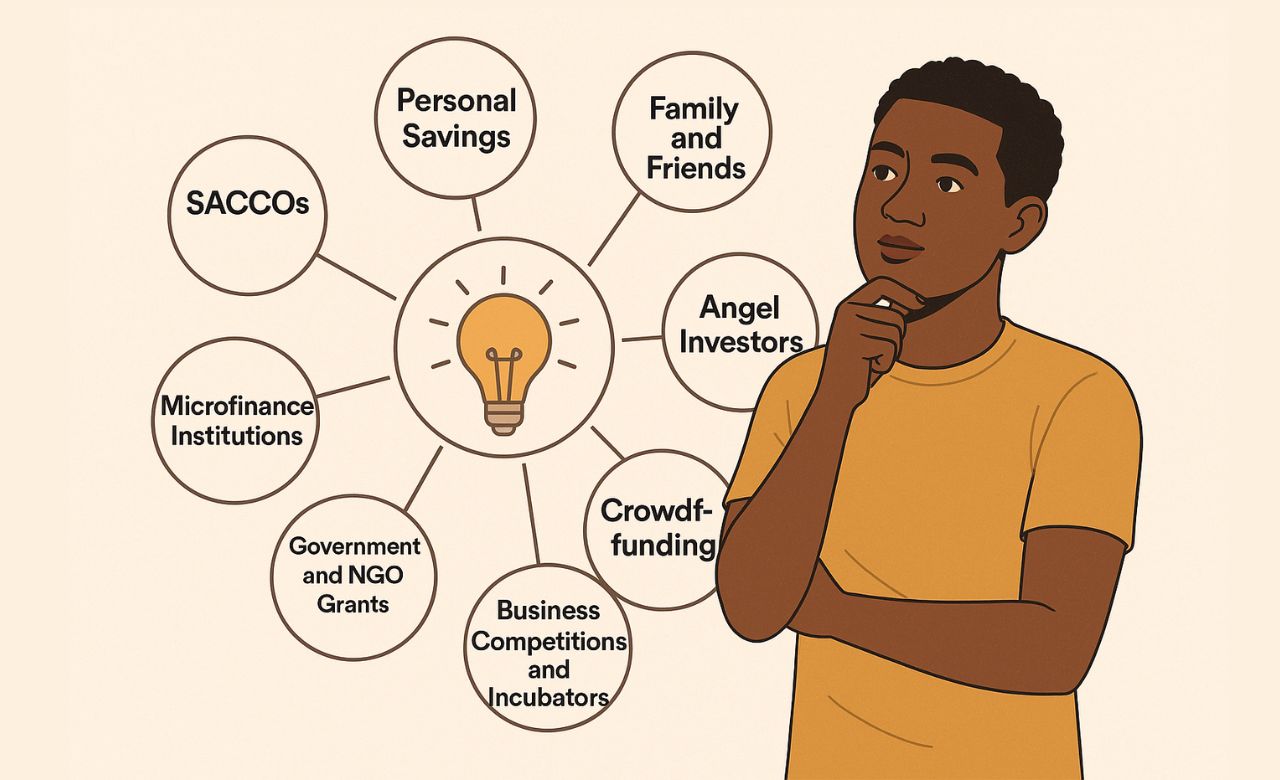
Every business needs capital to begin. Whether it’s for product development, licensing, rent, or marketing, startup capital helps transform a business idea into a functioning operation. Understanding where and how to get this capital is key for any aspiring entrepreneur. In this guide, we explore different sources of startup capital—ranging from personal resources to external investors—and how to practically access each one.
Personal Savings
This is often the first and most accessible form of startup capital.
What it means:
Using your own money that you’ve saved over time to fund the early stages of your business.
Why it works:
- No repayment obligations
- Full control over how the money is used
- Shows personal commitment, which can attract other investors later
How to access:
- Begin saving with a specific goal and deadline
- Open a dedicated savings account for the business
- Track your spending and reduce unnecessary expenses to increase your saving rate
Tip:
If your savings are not enough, consider combining them with small external sources like SACCO loans or family contributions.
Family and Friends
Family and friends are often willing to support your business dreams, especially if they trust your vision.
What it means:
Receiving startup funds through personal relationships—either as loans, gifts, or informal investments.
Why it works:
- Accessible and fast
- Flexible terms
- May be based on trust, not credit history
Risks to manage:
- Damaged relationships if expectations aren’t clear
- Lack of formality can lead to misunderstandings
How to access:
- Prepare a short, clear explanation of your business idea
- Be honest about how much you need and how you’ll use it
- Define whether it’s a loan or an investment
- Put the agreement in writing—even informally
Tip:
Maintain communication and update them on your progress to build trust and credibility.
SACCOs (Savings and Credit Cooperatives)
SACCOs are member-owned financial institutions that offer loans based on individual or group savings.
What it means:
Joining a SACCO, contributing savings over time, and borrowing against your savings.
Why it works:
- Lower interest rates than commercial banks
- Encourages a habit of saving
- Accessible to low-income earners and informal sector workers
How to access:
- Identify a registered SACCO in your area
- Become a member and start contributing regularly
- After a few months of saving, apply for a loan (usually 2-3 times your savings)
- Use the loan to purchase stock, pay rent, or acquire equipment
Tip:
Repay promptly to qualify for higher amounts in future.
Microfinance Institutions (MFIs)
MFIs are financial organizations that provide small loans, especially to low-income and informal business owners.
What it means:
Accessing credit facilities without needing traditional collateral.
Why it works:
- Designed for small businesses
- Faster loan approval than banks
- Group lending (chamas) can boost trustworthiness
How to access:
- Research MFIs operating in your region (e.g., Faulu, KWFT, Kiva-backed lenders)
- Prepare a business plan or proof of existing operations
- Join a borrowing group or savings circle if required
- Apply and use the loan as planned
Tip:
Compare interest rates and repayment terms before choosing an MFI.
Government and NGO Grants
Some governments, non-governmental organizations, and development agencies offer grants to youth, women, or startups in key sectors.
What it means:
Receiving funds that you don’t have to repay, usually for development or innovation purposes.
Why it works:
- No repayment or interest
- May come with mentorship or training support
Limitations:
- Competitive application process
- Requires documentation and sometimes registration
How to access:
- Identify active government programs (e.g., Uwezo Fund, Youth Enterprise Fund, Ajira)
- Follow their guidelines carefully
- Prepare all needed documents: ID, business plan, group registration, etc.
- Attend training or forums they organize
Tip:
Subscribe to government agency newsletters or follow them on social media to learn about funding calls early.
Angel Investors
Angel investors are wealthy individuals who provide capital to startups in exchange for equity or future profits.
What it means:
Getting funds from an individual investor who believes in your business idea and wants to share in its success.
Why it works:
- Offers both funding and mentorship
- Ideal for scalable, high-growth businesses
Challenges:
- Hard to find and convince
- Often involves giving up some ownership
How to access:
- Build a strong pitch and clear business plan
- Attend entrepreneurship forums, startup events, and investor meetups
- Join online platforms like VC4A, AngelList, or LinkedIn
Tip:
Be ready to answer questions about profitability, risks, market potential, and long-term plans.
Crowdfunding
Crowdfunding involves collecting small amounts of money from many people, usually via the internet.
What it means:
Sharing your business idea online and asking the public to contribute financially.
Why it works:
- Can raise funds and create awareness at the same time
- Supporters don’t always expect repayment or returns
Challenges:
- Requires strong storytelling and marketing
- Doesn’t guarantee funding success
How to access:
- Choose a platform (e.g., M-Changa, GoFundMe, Kickstarter)
- Create a campaign with visuals, video, and a clear story
- Share the campaign widely on social media, WhatsApp groups, and among networks
Tip:
Offer small rewards or recognition to encourage contributions.
Business Competitions and Incubators
Many universities, companies, and development agencies organize startup competitions or incubation programs with funding and training support.
What it means:
Participating in programs that provide seed capital, mentorship, and visibility to promising business ideas.
Why it works:
- Free support plus exposure
- Opportunity to refine your business with guidance
Challenges:
- Very competitive
- Requires preparation and presentation skills
How to access:
- Search for local and international competitions
- Prepare a short business pitch deck
- Practice explaining your business in 3–5 minutes
- Show impact, potential, and a strong personal story
Tip:
Even if you don’t win, you gain experience, feedback, and networking opportunities.
Final Takeaway
Starting a business doesn’t require millions—you need strategy, discipline, and access to the right sources of capital at the right time. Most successful entrepreneurs combine personal savings, community financing, and small institutional loans before moving to larger investors.
Key steps to remember:
- Start small, test your idea
- Use available resources wisely
- Build trust, credibility, and financial discipline
- Explore external funding as your business grows
No matter your background, there is a path to raising the capital you need.


Leave a Reply