
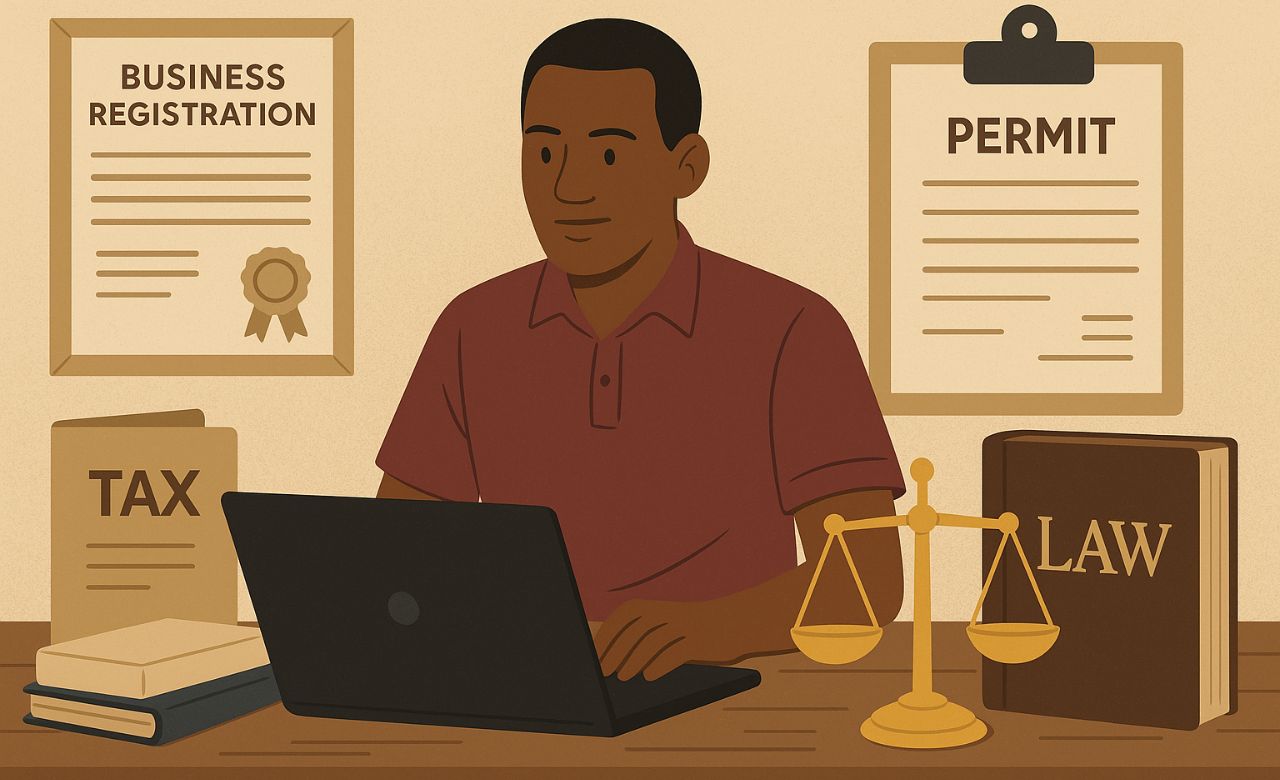
Before running any business legally, it’s essential to understand the legal framework that governs business operations. Proper registration, acquiring the right permits, and following compliance requirements not only protect your business but also build credibility with customers, suppliers, and investors. This guide outlines the key legal steps every entrepreneur should take when starting a business.
Choose a Legal Structure
The legal structure you choose determines your liability, tax obligations, and how you can raise funds. Common types include:
Sole Proprietorship:
A business owned and operated by one person. It’s simple and inexpensive to set up but offers no legal separation between the business and the owner.
Partnership:
An arrangement where two or more individuals share ownership and responsibility. Profits and liabilities are shared.
Limited Liability Company (LLC) / Private Limited Company:
A separate legal entity. Owners (shareholders) are not personally liable for business debts. Suitable for growth-oriented businesses.
Non-Profit or NGO:
Used for mission-driven ventures that don’t distribute profits to owners. Subject to special rules and requirements.
How to choose:
Consider the number of owners, the nature of your business, tax implications, and risk level.
Register Your Business Name
Registering your business name makes it official and legal.
Steps:
- Choose a unique and meaningful name.
- Check availability on the government’s company registry or online portal (e.g., eCitizen in Kenya).
- Reserve the name (optional in some jurisdictions).
- Complete the name registration with relevant documents (owner ID, structure details, etc.).
- Pay the registration fee.
Tip: Avoid names that are too similar to existing businesses or that may be trademarked.
Obtain a Business Registration Certificate
This document proves your business is legally recognized.
Requirements may include:
- Personal identification documents
- Proof of address
- Business name reservation
- Company structure details
- Directors’ or owners’ information
Why it’s important:
- Required for opening a bank account
- Needed when applying for business loans
- Legitimizes your operations
Kenya example:
Use eCitizen to register sole proprietorships or companies through the Business Registration Service (BRS).
Apply for Necessary Licenses and Permits
The licenses you need depend on your business type and location.
Common licenses include:
- County/Municipal Business Permit: Mandatory for all businesses to operate legally within a jurisdiction.
- Health and Safety Permits: For businesses in food, hospitality, or beauty services.
- Sector-Specific Licenses: For pharmacies, schools, financial services, public transport, etc.
- Fire Safety Certificate: Required for most premises with public access.
How to get them:
- Visit the county government office or online portals (e.g., Nairobi e-services)
- Submit application forms and pay relevant fees
- Prepare your premises for inspection (for health and fire permits)
Tip: Keep a copy of each license in your business premises for inspection.
Register for Tax Obligations
Proper tax registration ensures compliance with national revenue laws.
Key steps:
- Apply for a Personal Identification Number (PIN) from the revenue authority (e.g., KRA in Kenya).
- Register your business for taxation using your business certificate.
- Understand which taxes apply (e.g., income tax, VAT, turnover tax).
If hiring employees:
- Register for Pay As You Earn (PAYE)
- Register with social security funds (e.g., NSSF, NHIF)
Tip: Use an accountant or tax expert for guidance in your early stages.
Understand Your Compliance Obligations
Running a business means meeting ongoing legal obligations.
Examples of compliance duties:
- Renewing your business permit annually
- Filing annual tax returns and financial statements
- Maintaining records (invoices, receipts, contracts)
- Complying with labor laws and safety standards
- Updating changes (address, ownership, directors)
Consequences of non-compliance:
- Penalties and fines
- Suspension of operations
- Loss of business reputation
Tip: Set reminders for renewal deadlines and keep digital records for easy access.
Protect Your Intellectual Property (Optional but Recommended)
If your business involves unique products, branding, or creative content, protect it legally.
Options include:
- Trademark your business name, logo, or slogan
- Register a patent for inventions
- Copyright written or visual content
Why it matters:
- Prevents others from copying your work
- Builds value in your brand
- Helps attract investors
Tip: Contact your national IP office (e.g., KIPI in Kenya) for application steps.
Final Takeaway
Starting a business legally is not just about avoiding trouble—it’s about building a solid foundation for growth. Registering your business, obtaining the right permits, and following regulations protects you, opens access to funding, and earns customer trust. Make legal compliance part of your business culture from the very beginning.


Leave a Reply