

Financial literacy is a powerful life skill that empowers people to make smart choices about their money. In today’s world, understanding finances is more important than ever. This article will help you grasp essential financial concepts like budgeting, saving, investing, and debt management so you can build a strong foundation for lifelong economic independence.
What is Financial Literacy?
Financial literacy refers to the knowledge and skills needed to manage personal finances effectively. It covers understanding income, expenses, savings, investments, and credit. When you are financially literate, you can make wise decisions that protect and grow your financial resources.
Core Areas of Financial Literacy
Budgeting
- A budget is a monthly plan for spending and saving.
- It helps you track your income versus expenses and avoid overspending.
- Budgeting brings control and clarity to your finances.
Saving
- Saving means setting aside money for future needs or emergencies.
- It supports goals like an emergency fund, education, or travel.
- A healthy saving habit protects you from unexpected setbacks.
Investing
- Investing involves using your money to buy assets like stocks, bonds, or real estate.
- Investments aim to grow your wealth over time.
- Even beginners can start with low-risk investments such as mutual funds.
Debt Management
- Debt management is about understanding and handling credit or loans.
- Avoid high-interest debt whenever possible.
- Maintaining a good credit score improves your financial opportunities.
Real-Life Example
Consider a recent graduate with their first job. If they don’t budget, they might overspend and run out of cash before payday. Applying financial literacy, they could:
- Draft a monthly budget to plan spending
- Save at least 20% of their income
- Invest in a beginner-friendly mutual fund
- Limit credit card use to true emergencies
These skills help avoid stress and build long-term financial stability.
Visual: Budget Breakdown
A pie chart can illustrate the 50/30/20 budget rule:
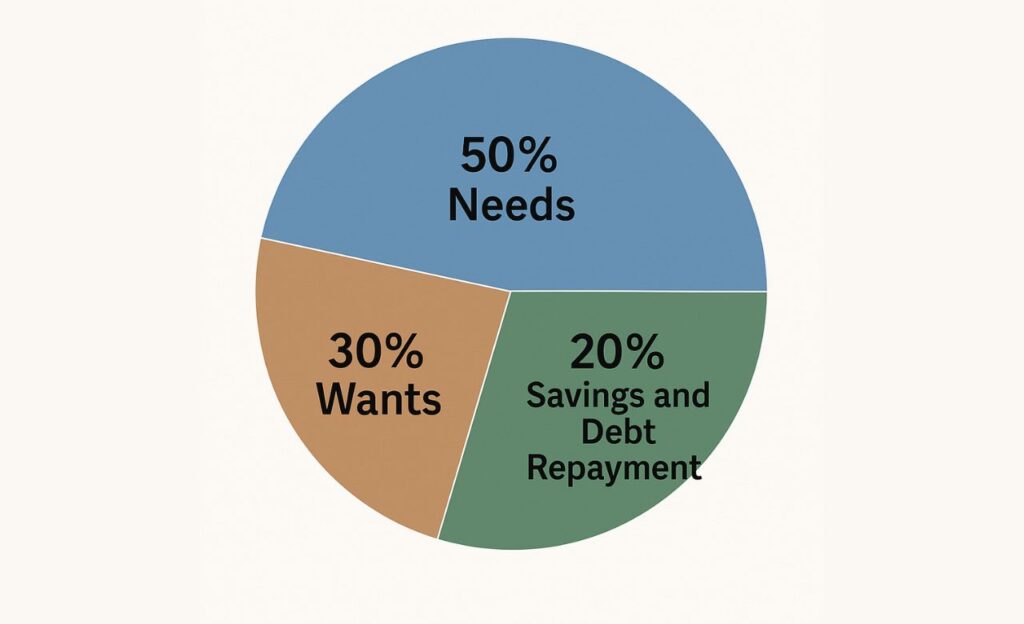
- 50% on needs (housing, food, bills)
- 30% on wants (entertainment, hobbies)
- 20% on savings and debt repayment
Summary Keypoints
- Financial literacy equips you to manage money confidently.
- Core skills include budgeting, saving, investing, and debt control.
- Practical examples show the benefits of smart planning.
- Financial knowledge builds long-term economic independence.
Reference
- Investopedia: Financial Literacy


Leave a Reply