
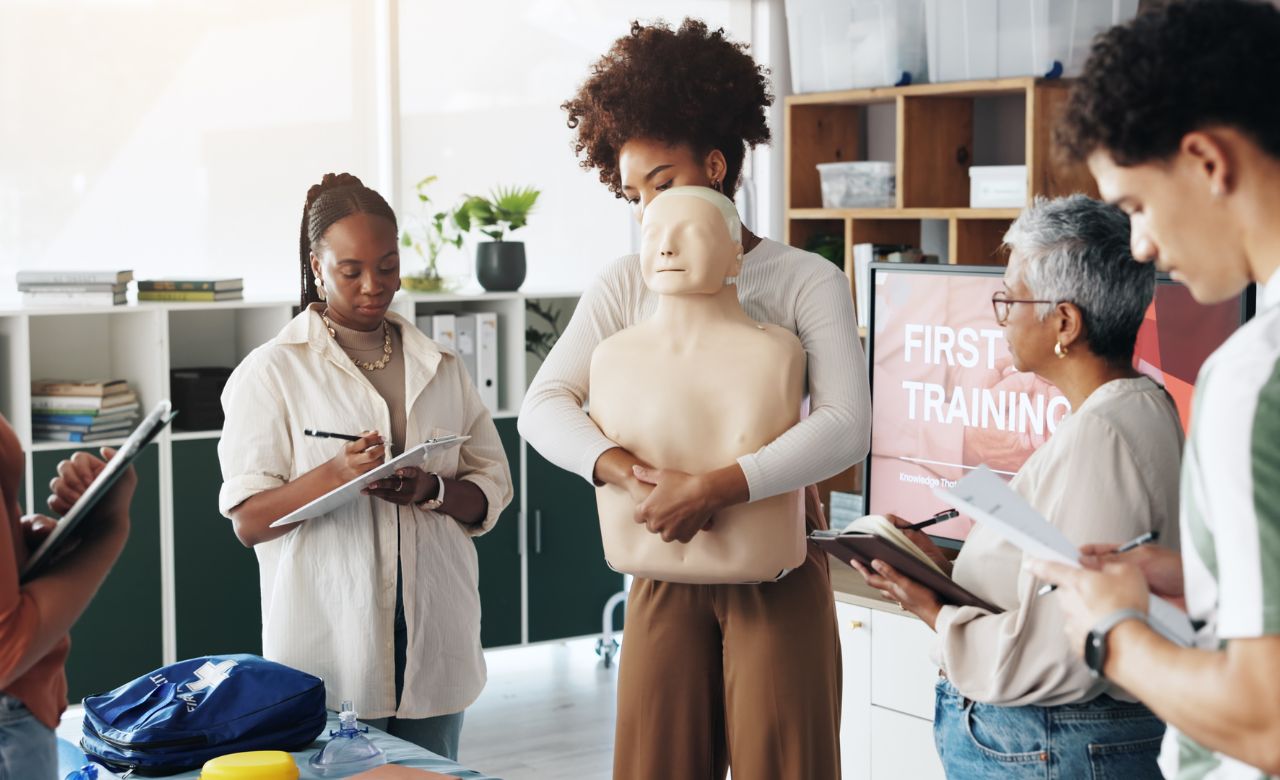
Essential First Aid Skills for Immediate Emergencies
In moments of crisis, knowing how to react can save a life. Three of the most common emergency situations that demand quick first aid are choking, burns, and bleeding. Each requires a different response technique, but the underlying goal remains the same: preserve life, prevent the condition from worsening, and promote recovery.
This guide provides step-by-step instructions on how to respond effectively to each.
Responding to Choking
Choking happens when an object blocks the airway, making it difficult or impossible to breathe. It can occur in both adults and children and requires immediate action.
Signs of Choking:
- Inability to speak or cough
- Clutching the throat
- Wheezing or high-pitched sounds
- Turning blue around the lips or face
- Loss of consciousness (in severe cases)
What to Do (For a Conscious Adult or Child):
- Ask if the person is choking. If they can cough or speak, encourage them to try to dislodge the object by coughing forcefully.
- If they can’t breathe or speak:
- Stand behind them.
- Give 5 back blows: Use the heel of your hand to deliver firm blows between their shoulder blades.
- If the object is not expelled, proceed with 5 abdominal thrusts (also called the Heimlich maneuver):
- Wrap your arms around their waist.
- Make a fist with one hand and place it just above the navel.
- Grasp the fist with your other hand and press inward and upward sharply.
- Repeat the cycle of 5 back blows and 5 abdominal thrusts until the object is dislodged or the person becomes unresponsive.
- If the person loses consciousness:
- Gently lower them to the ground.
- Call emergency services.
- Begin CPR immediately, starting with chest compressions. Do not perform mouth-to-mouth if the airway is still blocked.
Note: For infants under 1 year, use different techniques—5 gentle back blows and 5 chest thrusts using two fingers.
Responding to Burns
Burns can result from heat, chemicals, electricity, or friction. They are categorized by degree of severity:
- First-degree: Red, painful skin (like sunburn)
- Second-degree: Blistered and swollen skin
- Third-degree: Charred or white skin; may be painless due to nerve damage
What to Do for Minor Burns (First- or Small Second-Degree):
- Cool the burn: Immediately place the affected area under cool (not cold) running water for at least 10 to 20 minutes. This helps reduce pain and limit tissue damage.
- Remove tight clothing or jewelry near the burn area before swelling starts. Do not remove anything stuck to the burn.
- Cover the burn: Use a clean, non-stick dressing or sterile gauze. Avoid using cotton wool or fluffy materials.
- Do not apply: Ice, butter, oils, or ointments—they can worsen the damage.
- Give pain relief like paracetamol or ibuprofen if needed.
Seek Medical Help If:
- The burn is larger than your palm
- It affects the face, hands, genitals, or joints
- There are signs of infection (pus, increased redness, fever)
- It’s a third-degree burn
Responding to Bleeding
Bleeding can range from minor cuts to life-threatening injuries. The goal is to stop the bleeding and prevent shock.
What to Do for External Bleeding:
- Apply direct pressure: Use a clean cloth, bandage, or your hand (with gloves if available) to press firmly on the wound.
- Elevate the injured part above heart level if possible. This reduces blood flow to the area and helps slow bleeding.
- Use a bandage: Once bleeding slows or stops, wrap the wound with a sterile bandage or clean cloth.
- If blood soaks through the bandage: Do not remove it. Add another layer on top and continue to apply pressure.
- Monitor for shock: Signs include pale, cold skin, rapid heartbeat, shallow breathing, and confusion. Keep the person lying down and warm while waiting for help.
Do Not:
- Use a tourniquet unless you are trained and the bleeding is severe and uncontrollable
- Remove deeply embedded objects—stabilize them and wait for medical help
Seek Immediate Help If:
- Bleeding is heavy or spurting
- The wound is deep or large
- There’s a foreign object embedded
- The bleeding doesn’t stop after 10 minutes of firm pressure
Final Tips
- Always use gloves or a barrier when available to protect yourself from infections.
- Stay calm, speak clearly, and comfort the injured person.
- Keep a well-stocked first aid kit accessible at home, school, or work.
- Consider enrolling in a certified first aid and CPR course to gain confidence and practice.


Leave a Reply