
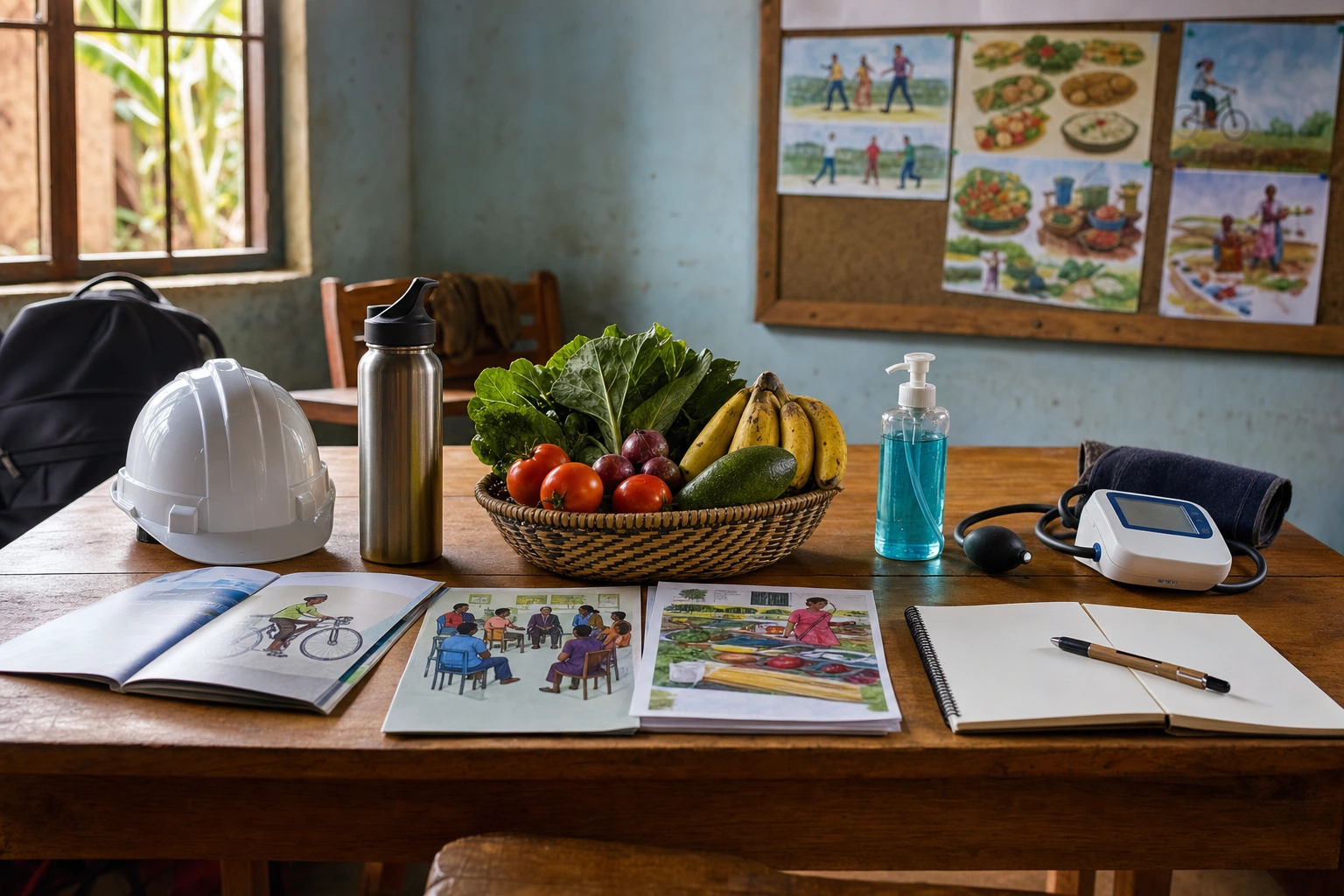
Health promotion means more than telling people to make healthy choices. It is the process of enabling individuals and communities to gain greater control over the conditions that influence their health and, as a result, improve it. Those conditions include personal knowledge and habits, but also income, education, housing, employment, safety, social support, food access and the quality of local services.
This broader view matters because health is not created only in clinics or hospitals. A person may understand the importance of nutritious food but have limited access to affordable produce. A worker may know that rest is important but face unsafe working conditions or unpredictable hours. Health promotion addresses these realities by combining education, supportive environments, community participation and policies that make healthier choices more practical.
What health promotion means
Health promotion is a planned and continuing effort to improve health by influencing the factors that shape it. It may involve helping people develop skills, making environments safer, strengthening community action or advocating for decisions that protect wellbeing.
The term is closely associated with the Ottawa Charter for Health Promotion, which describes health promotion as enabling people to increase control over and improve their health. This definition emphasises control and participation. People are not simply passive recipients of medical advice; they can contribute to identifying health priorities, designing solutions and evaluating whether those solutions work.
For example, a health promotion project addressing high blood pressure might include information sessions about salt and physical activity. However, it could also involve screening at workplaces, encouraging food vendors to offer lower-salt options, creating safe spaces for walking and helping local groups organise regular exercise. The aim is not merely to transfer information. It is to make healthier living more achievable.
Health promotion, health education and disease prevention
These terms are related, but they do not mean exactly the same thing.
Health education
Health education provides knowledge and develops skills that help people make informed decisions. A lesson on handwashing, a workshop on budgeting for nutritious meals or guidance on recognising the signs of stroke are examples of health education.
Education is important, but knowledge alone does not guarantee behaviour change. Someone can know that tobacco causes harm and still find it difficult to stop if they are dependent on nicotine, surrounded by smoking, or unable to access support.
Disease prevention
Disease prevention focuses on reducing the risk, occurrence or impact of particular diseases and injuries. Prevention is often described in three broad levels:
- Primary prevention aims to stop a disease or injury before it occurs. Examples include immunisation, safer roads, protection from occupational hazards and reducing exposure to tobacco smoke.
- Secondary prevention aims to detect a condition early, when timely action may reduce its effects. Screening and regular blood pressure checks are examples.
- Tertiary prevention aims to reduce complications, disability or further harm after a condition has developed. Rehabilitation, diabetes management and support for people living with long-term illness may serve this purpose.
Health promotion
Health promotion includes education and prevention, but it has a wider scope. It also considers the social, economic, environmental and political conditions that influence health. A campaign encouraging physical activity is health promotion, but so is planning neighbourhoods with safe paths, reliable lighting and accessible public spaces.
The distinction prevents a common mistake: assuming that poor health results only from individual choices. Personal responsibility matters, but choices are shaped by opportunity. Effective health promotion combines individual action with supportive conditions.
The main areas of health promotion
Health promotion can take place in homes, schools, workplaces, health facilities, communities and government systems. Several areas frequently work together.
Building personal skills
People need practical abilities to manage their health. These may include reading medicine instructions, preparing balanced meals, handling stress, using protective equipment, communicating with health professionals and recognising when urgent care is needed.
Skills-based learning is more useful than vague advice. Instead of simply telling adults to “eat better”, a programme might teach them how to compare food labels, plan affordable meals, reduce excess salt and adapt familiar dishes without losing cultural relevance.
Creating supportive environments
People are more likely to act on health information when their surroundings support them. A workplace can provide clean drinking water, safe equipment, reasonable ventilation, rest periods and a respectful policy on harassment. A school can offer safe sanitation, nutritious meals, physical activity and emotional support. A community can improve safety, waste management and access to fresh food.
Supportive environments reduce the amount of effort required to make healthy decisions. They also help protect people who may have fewer resources or less control over their circumstances.
Strengthening community action
Community action means involving people in decisions that affect their health. Local residents may identify unsafe water points, barriers to maternal care, concerns about substance use or the need for youth-friendly services. Community health volunteers, faith groups, schools, employers and local associations can then help design and implement suitable responses.
Participation improves relevance and trust. A solution imposed from outside may overlook local routines, language, costs or beliefs. In contrast, community members can explain what is realistic, who is trusted and which practical obstacles need attention.
Reorienting health services
Health services traditionally focus heavily on diagnosing and treating illness. Health promotion encourages them to place greater emphasis on prevention, early support, patient education, continuity of care and the wider circumstances affecting health.
For instance, a clinic managing asthma can do more than prescribe medicine. It can help patients understand triggers, check whether inhalers are being used correctly, identify household smoke exposure and connect families with relevant support. This approach keeps treatment important while recognising that long-term outcomes depend on daily life outside the clinic.
Advocating for healthy policies
Policies influence health by shaping prices, safety standards, working conditions, education, transport, housing and access to services. Health promotion may therefore involve advocating for safer roads, clean water, smoke-free public areas, protection from workplace hazards or better access to essential care.
Policy advocacy does not mean promoting one particular political party. It means presenting evidence, community experiences and practical proposals to decision-makers so that health is considered in choices made across different sectors.
Why health promotion matters to individuals and organisations
For individuals, health promotion can improve daily functioning, reduce avoidable risks and support better management of existing conditions. It can help a person develop realistic routines rather than relying on occasional bursts of effort. It also encourages people to seek care early and to understand their rights and responsibilities when using health services.
For employers, health promotion can contribute to a safer and more supportive workplace. A useful programme might address ergonomics, occupational safety, mental wellbeing, workload, nutrition, health checks and referral pathways. It should not shift all responsibility onto employees while ignoring unsafe systems or excessive demands.
For schools and training institutions, health promotion supports learning as well as physical wellbeing. Learners may benefit from sanitation, healthy food choices, active recreation, safeguarding, accurate health information and access to trusted adults. These measures create conditions in which learners can participate more fully.
For entrepreneurs, health promotion can reveal opportunities to solve practical problems responsibly. Examples include affordable nutritious food services, accessible fitness programmes, occupational safety products, transport solutions that reduce injury risk, digital tools for appointment reminders, or educational services designed with local languages in mind. A responsible health-related enterprise should be clear about what it can and cannot provide and should not make unsupported medical promises.
Principles of effective health promotion
Equity
Equity means responding fairly to different levels of need. Treating everyone identically may not produce fair results if some groups face greater barriers. A rural community may need outreach services, while an urban community may need help navigating overcrowded facilities. Language, disability, age, income, gender and cultural context should be considered during planning.
Participation
People affected by a health issue should have meaningful opportunities to shape the response. Participation includes listening, shared decision-making and feedback, not simply inviting people to attend a programme designed elsewhere.
Evidence and accuracy
Health messages should be based on reliable knowledge and presented honestly. Communicators should distinguish between established guidance, emerging evidence and personal opinion. Fear, exaggeration and shame may attract attention briefly, but they can damage trust and discourage people from seeking help.
Cultural and practical relevance
Advice is more likely to be used when it respects local food, language, beliefs, schedules and resources. Relevance does not mean accepting harmful practices without question; it means understanding context well enough to communicate clearly and design workable alternatives.
Sustainability
A short campaign may raise awareness, but lasting change requires continuity. Programmes should consider who will maintain activities, how supplies will be replaced, how staff will be supported and how results will be reviewed. Small, dependable improvements can be more valuable than ambitious projects that cannot continue.
How to plan a health promotion activity
- Define the health issue clearly. Avoid broad goals such as “make the community healthier”. Specify the concern, the people affected and the setting. For example, the issue might be low uptake of blood pressure checks among adults in a particular workplace.
- Understand the causes and barriers. Speak with the people involved and examine practical factors. Barriers may include cost, distance, inconvenient opening hours, fear, misinformation, stigma or lack of privacy.
- Set a realistic objective. An objective should describe a measurable change within a stated period. It might involve increasing attendance at screening sessions, improving knowledge of warning signs or reducing exposure to a workplace hazard.
- Choose combined actions. Use education alongside environmental or organisational changes. A nutrition programme, for example, might combine demonstrations, affordable menus, improved food availability and follow-up support.
- Assign responsibility and resources. Identify the people, skills, materials, budget and partnerships required. Make sure the plan fits the capacity of the organisation or community.
- Monitor and adapt. Track participation, reach, satisfaction and relevant outcomes. Ask what worked, who was missed and what needs changing. Evaluation should improve the programme, not merely produce a report.
Applying This in Practice
Consider a small enterprise in Nairobi that wants to improve staff wellbeing. The owner could begin by asking employees about common concerns rather than assuming that a gym membership is the answer. Staff may identify long sitting periods, poor ventilation, stress during peak orders and difficulty finding affordable lunch.
A practical response could include safer workstation arrangements, regular breaks, drinking water, improved airflow, confidential signposting to professional support and healthier, affordable food options. Brief health education could cover sleep, physical activity and when to seek medical advice. The owner could review participation and feedback after several weeks, while protecting employees from pressure to disclose private health information.
The same reasoning applies at community level. Before organising a health talk, ask who is most affected, what prevents action, who is trusted, which resources already exist and how success will be recognised. A well-designed activity may be modest, but it should address a real barrier and leave people with practical options.
Questions to consider
- Which factors outside the health service are contributing to the issue?
- Who experiences the greatest barriers, and how will they be included?
- Does the proposed advice match people’s available time, money and resources?
- What changes to the environment or organisation would make healthy action easier?
- How will privacy, dignity and informed choice be protected?
- What evidence will show whether the activity reached the intended people and made a useful difference?
Key Takeaways
- Health promotion helps people and communities gain greater control over the conditions that shape health.
- It is broader than health education or disease prevention because it also addresses environments, services, policies and social conditions.
- Effective health promotion combines practical skills with supportive surroundings and meaningful community participation.
- Healthier choices are easier when organisations address barriers such as cost, safety, distance, time and access to services.
- Good programmes are equitable, culturally relevant, evidence-informed and designed to continue beyond a single campaign.
- Planning should involve defining the issue, understanding barriers, setting objectives, taking combined action and reviewing results.
No comments yet.