
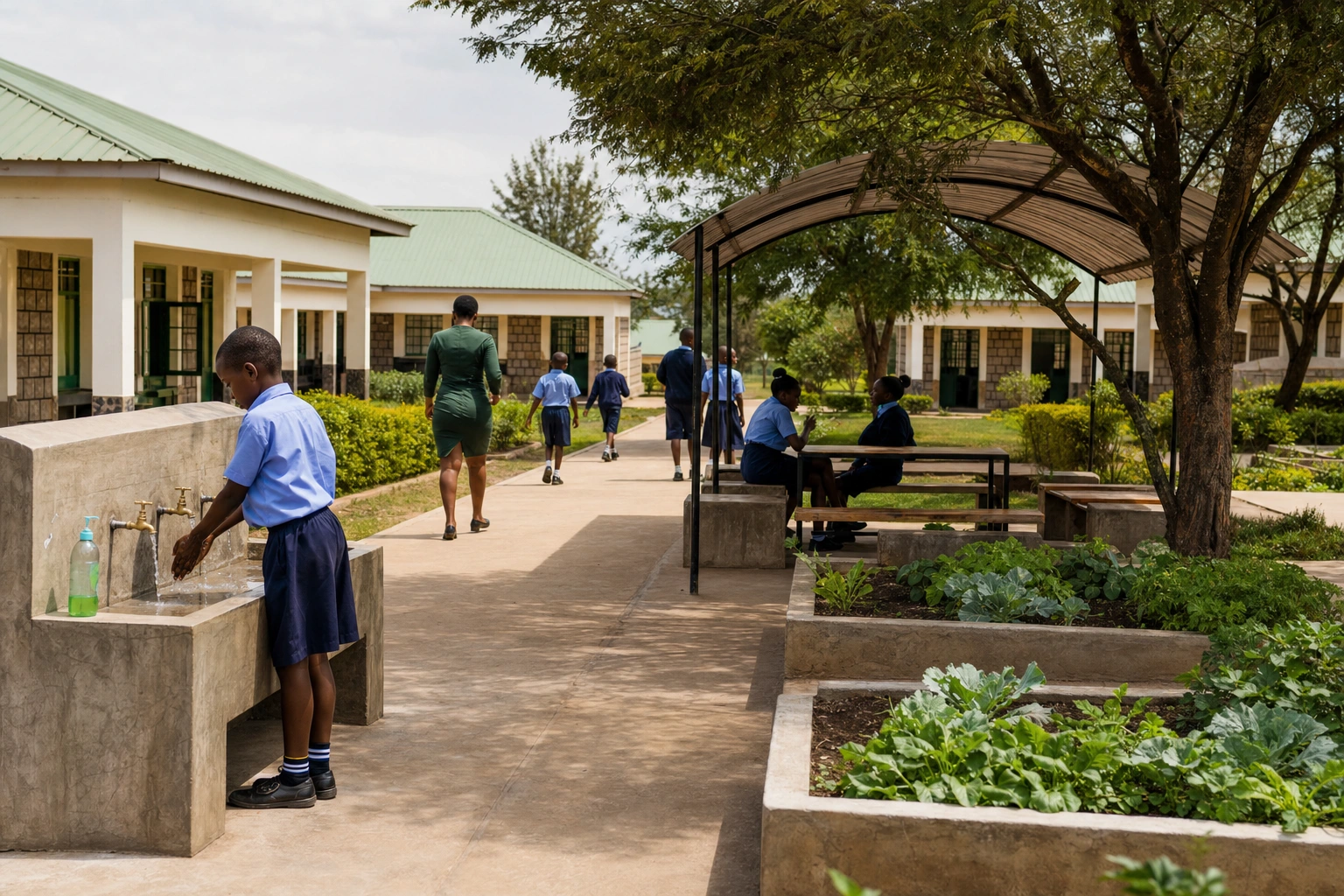
Schools are important settings for health promotion because they reach children and young people during formative years, while also influencing families and communities. A learner’s health affects attendance, concentration, confidence, relationships and academic progress. In turn, the school environment can either support wellbeing or create risks through unsafe facilities, bullying, poor nutrition, exclusion or inadequate support.
The role of a school in promoting health is therefore broader than teaching a lesson about the human body or disease prevention. It involves creating conditions in which learners can make healthier choices, access appropriate support and feel physically and emotionally safe. This article explains the main responsibilities of schools, how different parts of school life contribute to health, and how educators and communities can apply a practical whole-school approach.
What Health Promotion Means in a School
Health promotion is the process of enabling people to improve and take greater control of their health. In a school, this includes developing knowledge and skills, shaping a supportive environment, preventing avoidable harm and connecting learners with suitable services.
This is different from health education alone. Health education may explain balanced nutrition, hygiene, puberty, substance misuse or emotional wellbeing. Health promotion asks a wider set of questions: Is healthy food available? Do learners have private and functional sanitation facilities? Can a learner report bullying safely? Are staff able to recognise distress? Can a child with a health condition participate fully in school activities?
Effective health promotion also recognises that health is influenced by social, economic and environmental conditions. A learner cannot always act on health advice if clean water is unavailable, meals are unaffordable, transport to a clinic is difficult or discrimination prevents them from seeking help. Schools cannot solve every social problem, but they can identify barriers, reduce preventable risks and work with families and relevant services.
Why Schools Are Well Placed to Promote Health
Schools provide regular contact with learners, making it possible to reinforce healthy behaviours over time rather than relying on a single campaign. Teachers and other staff may notice changes in attendance, mood, appearance, participation or performance that suggest a learner needs support. Schools can also reach caregivers through meetings, communication channels and community activities.
Schools are especially valuable because they combine learning with daily routines. Handwashing, active play, safe travel, respectful communication, nutritious meals and responsible use of technology are not only topics to discuss; they are behaviours that can be practised. When the school’s policies and routines match its teaching, learners receive a consistent message.
However, schools should not be expected to diagnose illnesses or replace qualified health professionals. Their role is to promote wellbeing, identify concerns responsibly, provide first-line support within their competence, protect learners and refer them to appropriate services when necessary.
Key Areas of School-Based Health Promotion
1. Health education and life skills
Age-appropriate health education helps learners understand their bodies, make informed decisions and recognise when to seek help. Topics may include personal hygiene, nutrition, physical activity, sleep, sexual and reproductive health, emotional wellbeing, injury prevention, substance misuse, communicable diseases and digital wellbeing.
Good health education goes beyond memorising facts. Learners need opportunities to practise decision-making, communication, consent, refusal skills, problem-solving and help-seeking. For example, a lesson on substance misuse can explore peer pressure and coping strategies rather than simply listing harmful effects. A lesson on mental health can explain that strong emotions are part of life while also identifying warning signs that require trusted adult or professional support.
Content should be accurate, inclusive and culturally respectful. Teachers should use language that learners can understand, allow appropriate questions and avoid shame-based approaches. Sensitive subjects require clear safeguarding procedures so that disclosures are handled safely and referred according to school policy and applicable requirements.
2. A safe and healthy physical environment
The physical environment strongly affects health. Schools should pay attention to safe buildings, ventilation, lighting, classroom cleanliness, waste management, drinking water, handwashing facilities and usable toilets. Facilities should provide privacy and dignity for all learners, including those with disabilities and those managing menstruation.
Risk reduction also includes safe play areas, maintained equipment, appropriate supervision, fire and emergency procedures, and measures to reduce injuries. Schools should identify hazards systematically rather than waiting for an accident. A simple inspection can consider slippery surfaces, exposed electrical points, overcrowding, blocked exits, unsafe cooking areas and traffic risks near school gates.
In some Kenyan and other African settings, water availability and sanitation may require cooperation with families, local authorities, community organisations or other partners. The principle remains the same: facilities should be planned around actual use, maintained consistently and treated as part of education quality rather than as optional extras.
3. Nutrition and healthy food environments
Nutrition affects energy, concentration, growth and participation. Schools promote nutrition by teaching practical food knowledge and by considering what is sold, served or encouraged on school premises. Messages about healthy eating are weakened if the only readily available choices are foods and drinks high in sugar, salt or unhealthy fats.
A supportive approach does not require every learner to have the same diet or assumes that families have equal resources. Instead, it can promote affordable, locally available and culturally familiar foods, safe food preparation and regular meals. In areas where school feeding programmes operate, food safety, nutritional adequacy, reliable supply and respectful distribution are important. Schools can also engage caregivers without stigmatising learners who experience food insecurity.
Practical learning might include reading food labels where labels are available, planning a balanced meal within a budget, growing vegetables, or discussing safe storage and clean preparation. Any school garden or food project should complement, not replace, appropriate meals and professional nutrition guidance.
4. Physical activity and active routines
Regular physical activity supports physical fitness, coordination, mood and social development. Schools can provide structured physical education, active games, sports and opportunities for movement during the school day. Activity should be inclusive, with adaptations for learners with disabilities or health conditions.
Promotion is more effective when activity is not limited to talented athletes. Walking between activities, active breaks, dance, traditional games and classroom movement can involve more learners. Teachers should avoid using physical activity as punishment, because this can create negative associations with movement and unfairly affect particular learners.
Schools should also consider safety, hydration, weather conditions, suitable clothing and medical needs. Participation should be encouraged while respecting professional advice for learners with conditions such as asthma, epilepsy or heart problems.
5. Mental health, emotional wellbeing and relationships
Learners need relationships and environments that support belonging, confidence and emotional safety. Schools contribute through respectful discipline, anti-bullying procedures, supportive teacher-learner relationships and opportunities for learners to express concerns.
Staff do not need to become therapists to support mental wellbeing. They can listen without judgement, notice changes, respond calmly, maintain appropriate boundaries and connect learners with trained counsellors, health workers or trusted caregivers. Schools should have clear procedures for responding to serious distress, self-harm concerns, abuse, violence and threats to safety.
Social and emotional learning can help learners identify feelings, manage conflict, cooperate and seek help. Yet wellbeing programmes should not imply that individual resilience solves every problem. If excessive workload, harassment, discrimination or unsafe conditions are harming learners, the school must address those structural issues as well as teaching coping skills.
6. Prevention, early identification and referral
Schools can reduce harm by supporting prevention and recognising concerns early. This may include health checks or outreach services delivered by qualified professionals, immunisation activities where appropriately organised, information about disease prevention, and clear procedures for managing common health needs.
Teachers and school leaders should understand the limits of their role. They may observe symptoms or changes, but they should not make diagnoses based on limited information. A learner with persistent pain, vision difficulties, hearing problems, repeated absence, unexplained tiredness or emotional distress may need assessment by a qualified provider.
A useful referral system identifies who receives concerns, how confidentiality is handled, how urgent cases are escalated and how follow-up occurs. Consent, privacy and safeguarding must be respected. The school should avoid publicly labelling learners or sharing personal health information unnecessarily.
The Whole-School Approach
A whole-school approach integrates health into leadership, teaching, facilities, relationships and community partnerships. It is stronger than a one-off health talk because responsibility is shared across the school.
- Leadership and policy: School leaders set priorities, allocate time and resources, and ensure that health and safeguarding procedures are understood.
- Teaching and learning: Health topics are taught accurately and connected to practical skills across relevant subjects.
- Physical environment: Water, sanitation, food, safety, accessibility and maintenance support healthy behaviour.
- School climate: Learners experience respect, inclusion, fair discipline and protection from bullying and abuse.
- Staff wellbeing: Teachers and other workers also need reasonable support, safe working conditions and opportunities to manage stress.
- Family and community partnerships: Caregivers, health professionals and community leaders contribute knowledge, services and local insight.
This approach prevents contradictions. For instance, a school may teach hygiene effectively but undermine that lesson if handwashing points are empty or broken. It may discuss mental health but discourage learners from reporting distress. Reviewing the whole system helps identify such gaps.
Working with Families and Health Services
Health promotion is most effective when schools work respectfully with families. Caregivers can provide information about a learner’s health needs, reinforce routines at home and help identify barriers to attendance or treatment. Communication should be clear, accessible and sensitive to language, culture, disability and differing levels of health literacy.
Partnerships with clinics, public health teams, counsellors, nutrition professionals and community organisations can extend what schools are able to provide. Each partner should have a defined role, and arrangements should protect learners’ privacy. Schools should not make promises about services they cannot guarantee, nor should external activities be introduced without proper planning and safeguarding.
Community knowledge also matters. In rural or low-resource settings, local leaders and families may help identify practical solutions for water access, safe routes to school, menstrual support or emergency communication. Partnership does not mean transferring the school’s responsibilities to the community; it means coordinating strengths and being transparent about limitations.
How to Plan and Evaluate a School Health Initiative
A school can use a simple improvement cycle rather than launching many disconnected activities.
- Assess the situation. Gather information through facility checks, attendance patterns, learner and caregiver feedback, staff observations and available health records. Protect confidentiality and avoid collecting information that is not needed.
- Choose a clear priority. Select a specific issue, such as unsafe sanitation, bullying, poor participation in physical activity or weak referral follow-up. A focused priority is easier to manage than a long list.
- Set a practical objective. Define what should change, for whom and by when. The objective should describe an outcome or improvement, not simply an activity such as holding a meeting.
- Plan coordinated actions. Combine education, environmental changes, staff preparation, communication and referral support where appropriate.
- Assign responsibility and resources. Identify who will do each task, what materials are needed and how progress will be reported.
- Review and adapt. Use feedback and observations to see what is working. If learners are not using a facility, investigate whether the problem is location, privacy, cleanliness, safety or another barrier.
Evaluation should consider both implementation and results. It is useful to ask whether activities took place, whether the intended learners were reached, whether facilities remained functional and whether learners experienced a meaningful improvement. Numbers may help, but qualitative feedback can reveal issues that routine records miss.
Applying This in Practice
Imagine a secondary school notices that many learners avoid using its toilets during the day. A weak response would be to deliver another hygiene lecture. A stronger response would begin with confidential learner feedback and a facilities assessment. The school might discover inadequate privacy, unreliable water, poor lighting or fear of teasing.
The improvement plan could combine repairs, soap and water monitoring, better supervision near the facilities, respectful menstrual health education, anti-bullying action and a system for reporting maintenance problems. School leaders could involve learner representatives, caregivers and relevant service providers. After implementation, the school could review cleanliness, availability, reported concerns and learner experience rather than assuming that a single repair solved every issue.
The same reasoning applies to mental wellbeing, nutrition and physical activity: identify the real barrier, involve those affected, combine education with environmental change, and review whether the intervention is safe, inclusive and useful.
Key Takeaways
- Health promotion in schools includes education, safe environments, supportive relationships, healthy routines and access to appropriate services.
- Health lessons are most effective when school policies and daily conditions reinforce the behaviours being taught.
- Schools should support early identification and referral without diagnosing illnesses beyond staff competence.
- Water, sanitation, nutrition, physical activity, mental wellbeing and safeguarding are connected parts of a healthy school.
- A whole-school approach shares responsibility among leaders, staff, learners, families and health professionals.
- Successful initiatives begin with a local assessment, a focused objective, coordinated action and regular review.
No comments yet.