
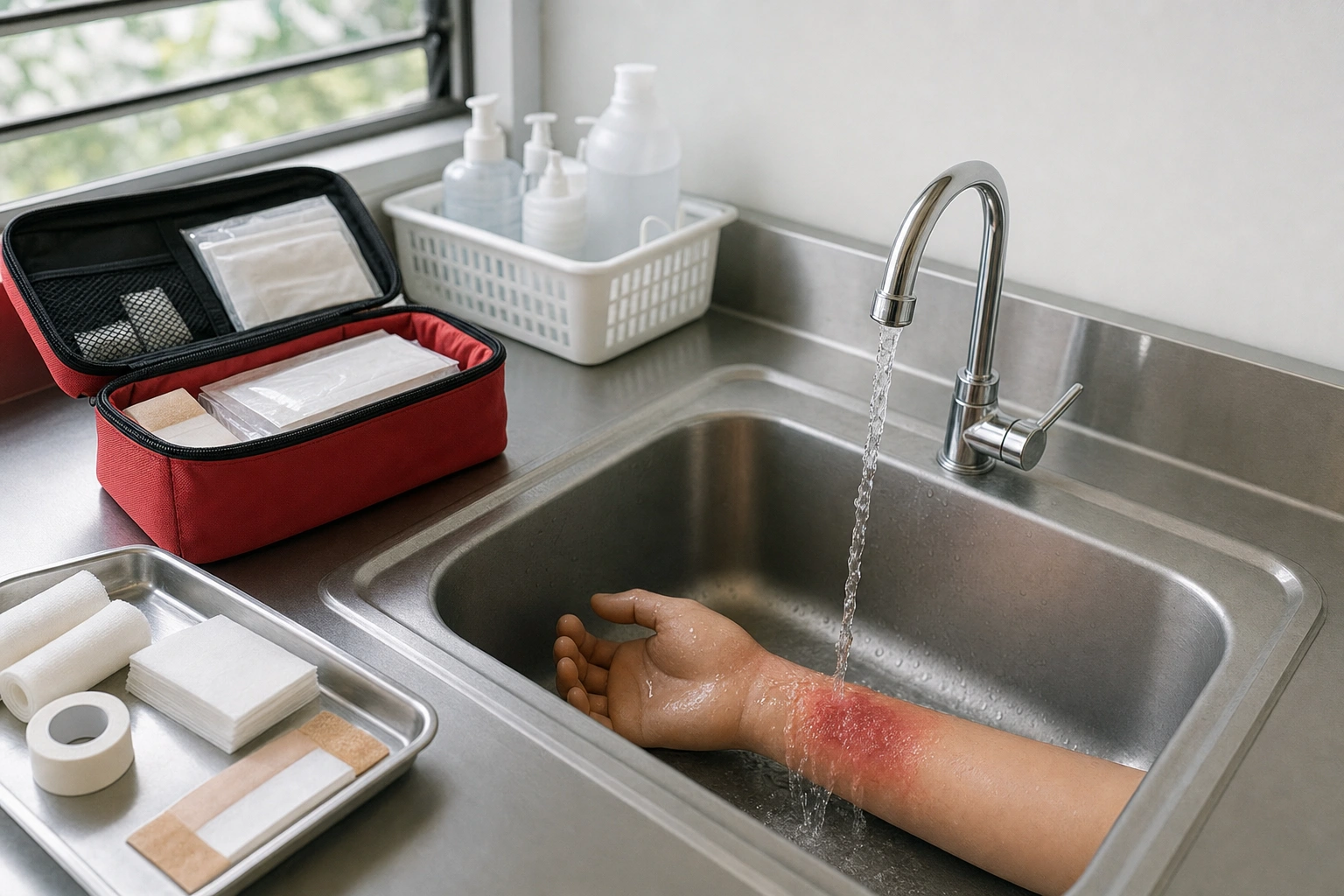
Burns can happen in seconds: a hot drink spills on a child, cooking oil splashes onto a hand, or a person touches a heated metal surface. The first few minutes matter because prompt, appropriate first aid can reduce ongoing tissue damage, ease pain and help prevent complications.
Burn first aid begins with safety. Move away from the heat or other source without putting yourself at risk, then assess the injury and the person’s breathing and responsiveness. Minor burns may be managed initially at home, but serious burns need urgent medical attention even if the injured person seems relatively well.
Understanding Burns
A burn is an injury to the skin or deeper tissues caused by heat, chemicals, electricity, friction, radiation or, in some cases, extreme cold. Scalds from hot water, tea, porridge or cooking liquids are common causes. Flames, hot oil, steam and heated objects can also cause burns.
The appearance of a burn can change over time. A shallow burn may look red, painful and dry. A deeper burn may blister, appear pale or waxy, or look brown, black or charred. Surprisingly, a very deep burn may be less painful in some areas because nerve endings have been damaged. Do not judge seriousness by pain alone.
Common levels of burn depth
- Superficial burns: The skin is red, dry and painful, but there are no blisters. A mild sunburn is an example.
- Partial-thickness burns: The skin is damaged more deeply and may be very painful, moist, swollen or blistered.
- Full-thickness burns: All layers of the skin may be damaged. The area can look white, brown, black, leathery or charred and may have reduced sensation.
These descriptions are useful for recognising risk, but they do not replace a clinical assessment. The size, location, cause and age of the injured person all affect the required treatment.
First Steps: Make the Situation Safe
- Stop the burning process. Move the person away from flames, hot liquid, steam or the source of heat if this can be done safely.
- Call for help when necessary. Arrange emergency medical assistance for a serious burn, breathing difficulty, unconsciousness, severe pain, electrical injury, chemical exposure or any situation you cannot manage safely.
- Check breathing and responsiveness. If the person is not breathing normally, begin appropriate resuscitation if you are trained and follow instructions from an emergency dispatcher.
- Remove smouldering clothing and jewellery carefully. Take off clothing that is not stuck to the skin, as well as rings, watches, bracelets, belts and tight items near the burn. Swelling can develop quickly. Do not pull away fabric attached to the skin.
If clothing is on fire, help the person stop, drop and roll, or cover the flames with a heavy, non-flammable material if this is safe. Do not allow the person to run, because movement can intensify flames.
Cool a Thermal Burn with Running Water
For a burn caused by heat, place the affected area under cool, gently running tap water for about 20 minutes as soon as possible. Cooling helps remove heat from the tissues and may reduce pain and swelling. The water should be cool, not icy. If running water is unavailable, use clean cool water poured gently over the area or apply clean, cool wet cloths, replacing them as they warm.
Cool the burn, not the whole person. Avoid immersing a large burn in cold water or covering a large area with very cold materials, particularly in babies, older adults or people who are already cold. Excessive cooling can cause shivering and dangerous loss of body temperature.
Cooling can still be useful if some time has passed, but do not delay urgent medical care in order to complete cooling. Remove clothing or jewellery near the injury while cooling if they are not stuck. Do not remove clothing that has adhered to the skin.
Protect the Burn After Cooling
After cooling, cover the affected area loosely with a sterile, non-fluffy dressing or a clean, non-sticking material. A clean plastic covering may be used temporarily for a larger thermal burn, provided it is laid over the burn rather than wrapped tightly around a limb. For a hand, a clean plastic bag can be placed loosely over the injury after cooling. Keep the person warm in other areas of the body.
Covering protects the burn from dirt, reduces exposure to air and may ease discomfort. Do not apply adhesive dressings directly to burned skin. Do not use cotton wool or materials that shed fibres, because they can stick to the wound.
For a small, superficial burn, pain relief may be considered if the person can safely take the medicine and follows the product instructions. Never give food or drink to someone who may need an anaesthetic or who is drowsy, vomiting or seriously injured.
What Not to Put on a Burn
Several familiar home remedies can make an injury worse or interfere with medical treatment. Do not apply ice, iced water, butter, cooking oil, toothpaste, flour, mud, herbal preparations, raw egg, alcohol, antiseptic chemicals or thick creams to a fresh burn unless a qualified healthcare professional specifically directs you.
Ice can further damage already injured tissue. Greasy substances trap heat and make the burn difficult to assess or clean. Powders, food products and unsterile substances can introduce contamination. Do not burst blisters or peel away loose skin. The blister roof provides some protection, and opening it can increase the risk of infection.
Do not place adhesive tape over the burn, rub the area, or attempt to remove material that is stuck to the skin. Do not use a fan or hairdryer to cool the injury, as this can dry and irritate the tissue.
When a Burn Needs Urgent Medical Care
Seek urgent medical help for any burn that is large, deep or located in a sensitive area. Emergency assessment is especially important when the burn:
- Is on the face, eyes, ears, neck, hands, feet, major joints or genitals.
- Encircles an arm, leg, finger, toe, chest or other body part.
- Looks white, brown, black, charred, leathery or deeply blistered.
- Is larger than the person’s palm or covers a substantial area of the body.
- Was caused by electricity, lightning, chemicals, an explosion or inhaled smoke.
- Is associated with severe pain, numbness, confusion, fainting or signs of shock.
- Occurs in a baby, young child, older person or someone with a serious medical condition.
Also obtain medical advice if redness, swelling, pain or discharge increases after the injury, or if the person develops fever or feels increasingly unwell. A burn involving the eyes, mouth or airway requires urgent assessment.
In Kenya, use the emergency service number available in your area, such as 999 or 112 where applicable, or go to the nearest emergency department. In other countries, use the local emergency number. If transport is needed, keep the burn covered and avoid allowing the person to walk if they are weak, dizzy or badly injured.
Chemical Burns
Chemical burns require additional precautions because the substance may continue damaging tissue. Protect yourself first. Avoid touching the chemical with bare hands and move the person away from the source. Remove contaminated clothing, shoes and jewellery if this can be done without spreading the substance or causing further exposure.
If the chemical is a dry powder, brush it off carefully before applying water, unless safety guidance for that substance says otherwise. For liquid chemicals, flush the affected skin continuously with plenty of clean, running water for at least 20 minutes, and longer if advised. Keep the water flowing away from unaffected skin.
Do not try to neutralise one chemical with another. Do not apply creams or other substances. If the chemical enters the eye, hold the eyelids open and rinse continuously with clean water, directing water away from the unaffected eye. Remove contact lenses if they come out easily during rinsing. Seek urgent medical help and, if possible, keep the product container or its name available for healthcare professionals without delaying treatment.
Electrical Burns and Smoke Inhalation
An electrical injury may look small on the skin while causing serious internal damage, heart rhythm problems or injury along the path of the current. Do not touch a person who is still in contact with an electrical source. Switch off the power at the main supply if it is safe to do so, or have the source disconnected by someone qualified. Do not use water near live electricity.
Once the person is safely separated from the source, check responsiveness and breathing. Arrange urgent medical assessment for an electrical burn, even when the skin injury appears minor.
Smoke, hot gases and toxic fumes can injure the airway. Treat breathing difficulty, hoarseness, a persistent cough, soot around the nose or mouth, facial burns, confusion or unusual sleepiness as emergency warning signs. Move the person to fresh air only if you can do so safely, and seek emergency help immediately. Do not make someone who is struggling to breathe lie flat.
Recognising Shock
Serious burns can lead to shock, particularly when a large area is affected. Warning signs include pale, cold or clammy skin, weakness, rapid shallow breathing, dizziness, confusion, nausea or increasing drowsiness. The person may become restless or unusually quiet.
Call for emergency help. Lay the person down if this does not worsen breathing or other injuries. Keep them warm with a blanket placed over unburned areas, but do not cover the burn with heavy material. Do not give food or drink. Continue monitoring breathing and responsiveness until help arrives. If the person becomes unresponsive and is not breathing normally, follow emergency-dispatch instructions and begin resuscitation if trained.
Special Considerations for Children
Children can suffer significant burns from hot drinks, cooking liquids, bath water, irons and electrical sockets. Their smaller bodies can lose heat quickly, so cool the affected area while keeping the rest of the child warm. A child may also struggle to describe pain or may seem calm despite a serious injury.
Seek medical advice promptly for burns in babies and young children, especially when the burn is blistered, larger than a small patch, located on the face or hands, or caused by electricity or chemicals. Remove dangerous hot liquids from the child’s reach and check that appliance cords cannot be pulled down from work surfaces. Prevention is safer than relying on quick reactions after an accident.
Applying This in Practice
Imagine that hot tea spills onto an adult’s forearm. First, move the cup away and remove a watch or bracelet if it is not stuck. Place the forearm under cool running water for about 20 minutes. Remove loose clothing near the area, but leave any fabric attached to the skin. After cooling, cover the injury loosely with a clean non-fluffy dressing and assess its size, depth and location.
If the skin is only red and the area is small, the person may be able to monitor it and seek advice if symptoms worsen. If there are extensive blisters, pale or charred areas, severe swelling, a burn crossing the wrist or elbow, or signs of shock, arrange urgent medical care. If the tea was boiling and the injured person is a young child, seek professional advice even when the area initially appears limited.
For workplace and household preparedness, keep a stocked first-aid kit, know how to access clean running water, learn the local emergency number and ensure adults who supervise children understand burn first aid. A first-aid kit should support, not replace, prompt medical assessment when the injury is serious.
Key Takeaways
- Make the scene safe, stop the burning process and check breathing and responsiveness before treating the skin.
- Cool a thermal burn under cool running water for about 20 minutes; do not use ice.
- Remove loose clothing and jewellery near the burn, but never pull away material stuck to the skin.
- Cover the cooled burn loosely with a clean, non-fluffy, non-sticking material.
- Do not apply butter, toothpaste, oil, powders or other household substances, and do not burst blisters.
- Get urgent medical help for large, deep, chemical or electrical burns, burns in sensitive areas, breathing problems or signs of shock.
No comments yet.