
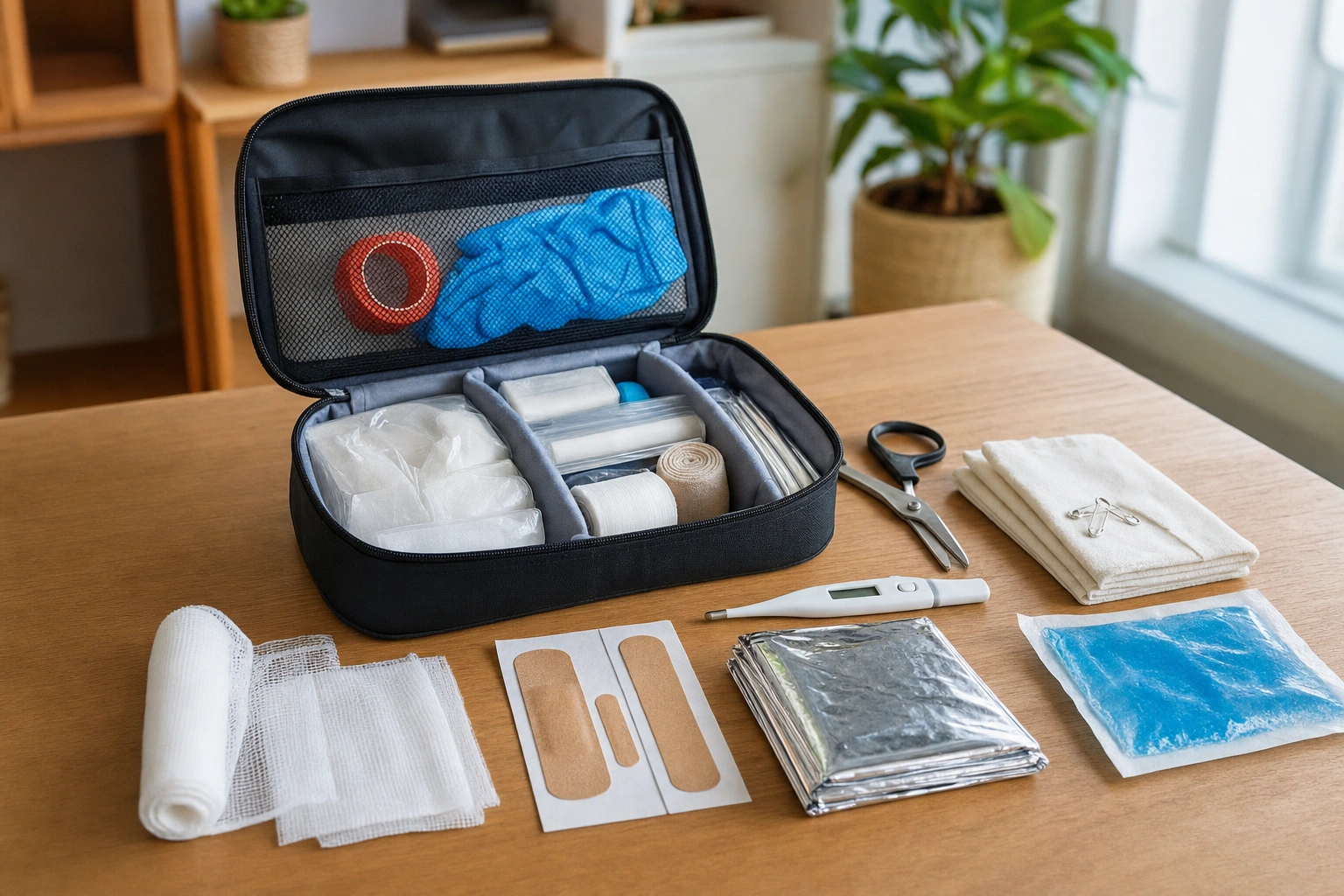
A first aid kit is not a substitute for medical care, professional training or emergency services. It is a practical collection of supplies that helps you provide immediate, short-term care while assessing the situation and arranging further help when necessary.
The best kit is not necessarily the largest or most expensive. It should contain clean protective equipment, wound dressings, tools for simple injuries, basic medicines where appropriate, and clear instructions. It should also be easy to find, regularly checked and adapted to the people and risks in your home, workplace, vehicle or community.
What Makes a First Aid Kit Useful?
A useful kit supports three immediate priorities: protecting the injured person and the first aider, controlling the problem, and obtaining additional help. For example, disposable gloves reduce contact with blood, sterile gauze can help control bleeding, and a written emergency contact list makes it easier to seek assistance under pressure.
Before opening the kit, check that the scene is safe. Do not rush into traffic, fire, exposed electricity, aggressive animals, unsafe buildings or other hazards. If the situation is life-threatening, contact the local emergency service as soon as possible. A first aider should work within their level of training and should not delay professional care while searching for a particular item.
Essential Items for a Basic First Aid Kit
1. Protective equipment
- Disposable gloves: Include several pairs, preferably nitrile or another suitable material. Gloves help reduce contact with blood and other body fluids, although they do not replace handwashing.
- Hand sanitiser or soap: Soap and clean running water are preferred when available. Sanitiser is useful when washing facilities are not immediately accessible.
- Face shield or pocket mask: A one-way barrier can provide protection during rescue breaths if the first aider has been trained to give them.
- Protective waste bags: These help contain used dressings, gloves and other contaminated materials until they can be disposed of safely.
Wash or sanitise your hands before and after providing care whenever possible. Avoid touching your face while wearing gloves, and remove gloves carefully so that the contaminated outer surface does not touch your skin.
2. Materials for cuts and bleeding
- Plasters in different sizes: These are suitable for small, clean cuts and grazes.
- Sterile gauze pads: Gauze can absorb blood and cover wounds. Several sizes are useful.
- Non-stick wound dressings: These are helpful for burns and wounds where ordinary gauze might stick to the injured area.
- Roller or conforming bandages: These can hold a dressing in place and provide light support. They must not be wrapped so tightly that circulation is affected.
- Adhesive tape: Medical tape secures dressings and bandages.
- Triangular bandage: This can support an injured arm as a sling or hold a dressing in place.
- Haemostatic dressing, where appropriate: Some kits may include a specialist bleeding-control dressing. It should be used only according to its instructions and any training received.
For heavy bleeding, place a sterile dressing or clean cloth over the wound and apply firm, direct pressure. Keep pressure on the wound and seek urgent medical help. If blood soaks through, add another dressing on top rather than repeatedly removing the first one. Do not remove an object deeply embedded in a wound; apply pressure around it and obtain professional help.
3. Supplies for burns
- Burn dressings or sterile non-stick dressings: These can protect a burn after it has been cooled.
- Cling film or a clean food-grade plastic covering: In some first aid guidance, a loose layer may be used temporarily over a cooled burn if a suitable dressing is unavailable. It should not be wrapped tightly around a limb.
- Clean water access: This is more important than a special cream. Cool the burn under cool, clean running water for about 20 minutes as soon as possible, if safe to do so.
Remove jewellery and loose clothing near the burn before swelling develops, but do not pull away anything stuck to the skin. Do not apply ice, butter, toothpaste, oils or unapproved creams. Seek urgent medical care for large, deep or electrical burns, burns caused by chemicals, burns to the face, hands, feet, genitals or major joints, and burns in very young children or vulnerable adults.
4. Simple tools
- Blunt-ended scissors: These can cut tape, clothing or dressings safely. Use care around the skin.
- Tweezers: Useful for removing small, visible splinters. Do not use them to probe deeply into a wound.
- Safety pins: These can secure a triangular bandage or sling.
- Digital thermometer: A thermometer is more reliable than judging fever by touch alone. Clean it according to the manufacturer’s instructions.
- Instant cold pack: A wrapped cold pack may help with swelling or minor sprains. Never place it directly on bare skin and do not apply it to numb or damaged skin for long periods.
- Emergency blanket: A foil blanket can help reduce heat loss while waiting for help, particularly after shock, exposure or an accident.
- Small torch: This is useful in a vehicle, power cut or poorly lit location.
A small first aid guide, waterproof notepad and pen are also valuable. Record what happened, when it happened, what care was given and any changes in the person’s condition. This information can assist clinicians or emergency responders.
Medicines to Consider Carefully
Medicines are not essential for every basic kit, and they require more care than dressings. If you include them, keep them in their original, clearly labelled packaging and follow the instructions on the label. Check whether the person has allergies, is pregnant, has a chronic condition or takes other medicines.
- Paracetamol: This may be used for pain or fever when it is suitable for the person and the labelled dose is followed. Avoid duplicate products that contain paracetamol, as accidental overdose can seriously damage the liver.
- Ibuprofen: This may help with some pain and inflammation, but it is not suitable for everyone. It may be inappropriate for some people with stomach ulcers, kidney problems, certain asthma symptoms, pregnancy or particular medicine interactions. Ask a pharmacist if unsure.
- Oral rehydration solution: Sachets can be useful during diarrhoea or vomiting. Mix them exactly as directed using safe water; do not make a stronger or weaker mixture. Severe dehydration, persistent vomiting, blood in stool, confusion or serious illness requires medical care.
- Antihistamine: A suitable non-prescription antihistamine may help some mild allergic symptoms, but it does not replace emergency treatment for breathing difficulty, collapse or swelling of the mouth and throat.
- Personal medicines: People with conditions such as asthma, diabetes or severe allergies should have their prescribed emergency medicines available, clearly labelled and within their expiry dates.
Do not place antibiotics, prescription medicines, loose tablets or someone else’s medication in a shared kit. Do not give aspirin to children or teenagers for viral illnesses, and never give any medicine to an unconscious person or someone who cannot swallow safely. When in doubt, consult a pharmacist or healthcare professional.
Items That Should Not Be Used as First Aid
Some popular home remedies can worsen an injury or delay appropriate care. Avoid applying toothpaste, coffee, flour, butter, cooking oil or household chemicals to burns or open wounds. Do not pour strong disinfectants into deep wounds unless directed by a qualified professional. Alcohol and hydrogen peroxide can irritate tissue and are not generally suitable for routine wound cleaning.
Do not use a tight tourniquet unless you have been trained and the circumstances justify it. Do not attempt to straighten a suspected fracture, push a dislocated joint back into place or remove a deeply embedded object. Do not give food, drink or medicine to a person who is unconscious, confused or awaiting urgent surgery.
Adapting the Kit to Its Location
A home kit may need plasters, dressings, a thermometer, medicines and supplies for children or older adults. Keep it in a known, accessible place, but away from young children. A workplace kit should reflect hazards such as machinery, chemicals, construction materials, kitchens or outdoor work. It should be easy to reach, clearly marked and supported by trained first aiders.
A vehicle kit should tolerate heat, dust and movement. Include reflective equipment if roadside work is likely, but do not put yourself in danger while helping after a collision. A travel kit may need extra dressings, rehydration solution, personal medicines, insect-bite protection and copies of important medical information. For farms, workshops and businesses, consider eye protection, larger dressings and supplies suited to the known risks, while following workplace safety requirements.
In a Kenyan or other African setting, a kit may be especially useful where travel time to a health facility is long or where people work outdoors. However, first aid supplies should complement, not replace, access to trained healthcare workers, safe transport and reliable communication.
How to Check and Maintain a First Aid Kit
- Choose a responsible person: At home, this might be an adult household member. At work, assign responsibility according to the organisation’s procedures.
- Inspect the kit regularly: Check dressings, gloves and medicines for expiry dates, damage, moisture and contamination.
- Replace used items promptly: A kit is not ready if its most important dressing was used during the previous incident.
- Keep contents organised: Store bleeding-control supplies together, medicines separately and instructions where they can be found quickly.
- Label personal medicines: Make the owner, medicine name and instructions clear, while protecting privacy.
- Review changing risks: Update the kit after moving house, buying a vehicle, starting a new job, welcoming a baby or taking a trip.
- Practise basic skills: Everyone responsible for a kit should know how to call for help, use gloves, apply direct pressure and recognise when an injury is beyond home care.
Store the kit somewhere cool, dry and accessible. Avoid locking it away so securely that nobody can reach it during an emergency. In a vehicle, protect medicines and heat-sensitive items from extreme temperatures, and check the kit after long journeys.
When First Aid Is Not Enough
Seek urgent medical help for severe bleeding, difficulty breathing, chest pain, signs of stroke, loss of consciousness, serious burns, suspected spinal injury, major fractures, poisoning, severe allergic reactions, seizures that do not stop, or any rapidly worsening condition. Also seek professional advice for animal or human bites, deep puncture wounds, eye injuries and wounds that may need stitches or a tetanus assessment.
While waiting for help, keep the person as comfortable and still as possible, monitor breathing and responsiveness, and follow instructions from emergency services. If the person is unconscious and not breathing normally, begin the emergency response you have been trained to provide. A basic first aid kit can support care, but training and rapid communication are often more important than having every possible item.
Applying This in Practice
To build a practical kit today, start by identifying the three most likely risks in your setting. For a family home, these may include minor cuts, burns and fever. For a small workshop, they may include cuts, eye contamination and sprains. Buy enough protective equipment and dressings for more than one incident, add carefully selected tools, and include only medicines that users understand.
Next, place the kit where people can find it without instructions. Add a list of local emergency contacts, the location of the nearest health facility and the names of trained first aiders if relevant. Finally, rehearse a simple scenario: one person calls for help, another collects the kit, and another stays with the injured person. This reveals missing supplies and unclear responsibilities before a real emergency occurs.
Key Takeaways
- Build a kit around protection, bleeding control, burns, simple tools, personal needs and clear instructions.
- Use gloves, wash your hands and check that the scene is safe before giving first aid.
- For heavy bleeding, apply firm direct pressure and seek urgent medical help.
- Cool burns with cool running water; avoid ice, butter, toothpaste and household remedies.
- Include medicines only when their safe use, dosing and suitability are understood.
- Check expiry dates, replace used supplies and adapt the kit to its location and likely risks.
- Recognise life-threatening symptoms early and contact emergency or professional medical services without delay.
No comments yet.