
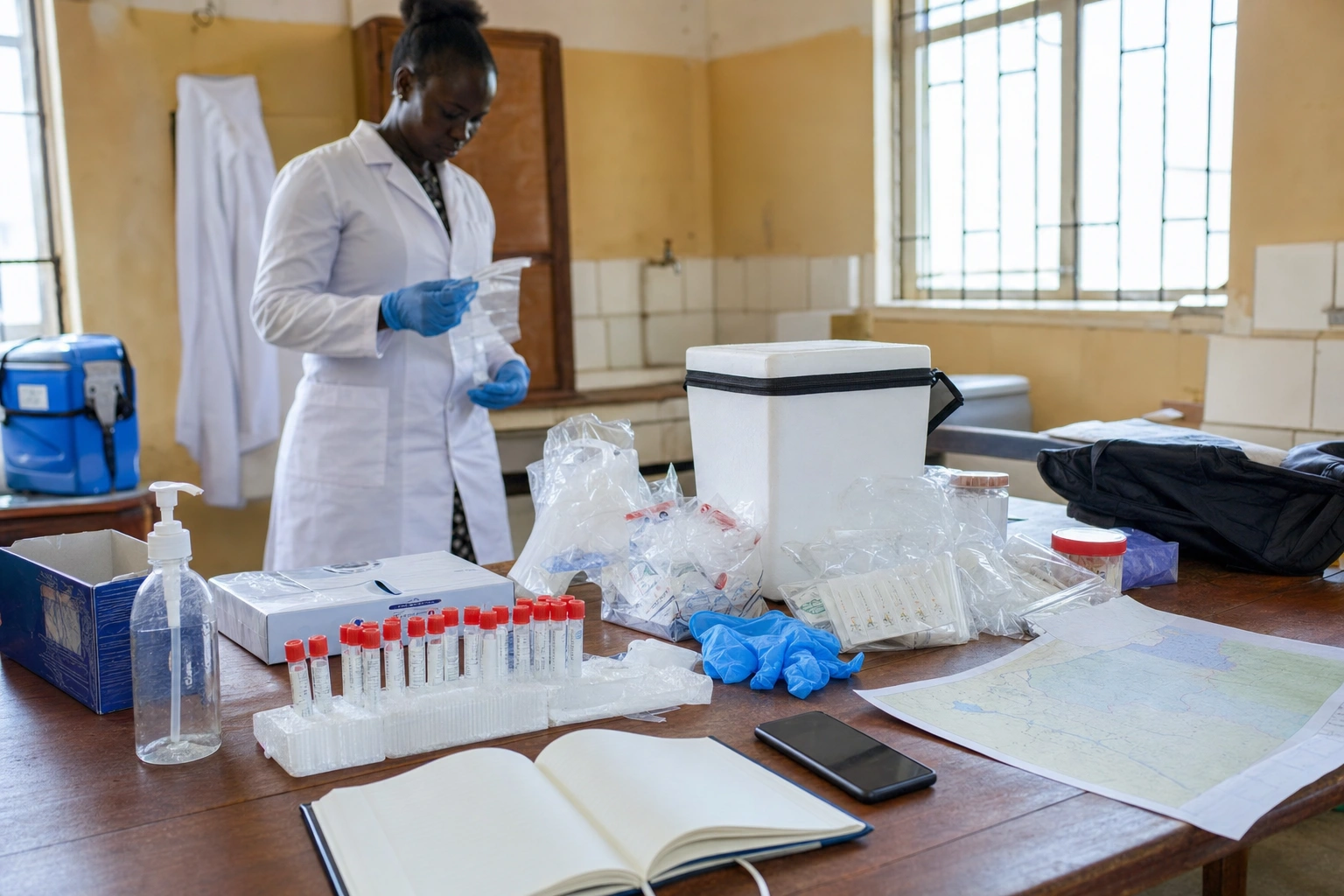
When an infectious disease begins spreading, the response is not limited to treating people who are already ill. Public health brings together surveillance, laboratory science, healthcare, communication, community leadership and government coordination to reduce transmission and protect those at greatest risk.
This work is often most visible during a crisis, but effective outbreak control usually depends on preparation carried out long before the first case is recognised. Understanding the role of public health helps individuals, organisations and communities respond more responsibly when health threats emerge.
What public health means during an outbreak
Public health focuses on protecting the health of populations rather than treating one patient at a time. Clinicians diagnose and care for individuals, while public health teams look for patterns across households, workplaces, schools, hospitals, counties or countries. Their central questions include: Where is the disease spreading? Who is most at risk? How is transmission occurring? Which measures can reduce harm?
An outbreak may involve a sudden increase in cases in a particular place or group. The illness may be infectious, such as a respiratory infection, food-borne disease or viral haemorrhagic fever. Public health action is also relevant when an unusual cluster has an unknown cause. The response must be proportionate to the evidence, adapted as information changes and designed to protect health without creating avoidable social or economic harm.
Detecting threats through surveillance
Early detection is one of the most important public health functions. Surveillance is the systematic collection, analysis and interpretation of health information. It can involve reports from health facilities, laboratory results, community health workers, schools, pharmacies, veterinary services and other sources.
Surveillance does not simply count cases. Teams examine whether the number of illnesses is higher than expected, whether cases are connected, which age groups are affected and where transmission may be occurring. For example, several people from the same neighbourhood arriving at clinics with similar symptoms may suggest a common exposure. A rise in severe illness among a particular group may indicate that additional protection or clinical support is needed.
Good surveillance depends on clear case definitions, timely reporting and reliable data. A suspected case may meet certain symptom or exposure criteria, while a confirmed case has additional laboratory or other accepted evidence. These categories help authorities compare information consistently, although they may change as scientific understanding develops.
Why speed and accuracy both matter
Delays allow an outbreak to grow, but inaccurate information can lead to fear, wasted resources or harmful decisions. Public health teams therefore balance speed with verification. They may issue an initial alert while an investigation is still under way, clearly explaining what is known, what is uncertain and what people should do.
Investigating how transmission occurs
Once an unusual cluster is identified, an outbreak investigation attempts to discover its source, route and extent. Investigators collect information about symptoms, dates of illness, movements, contacts, food or water exposures, healthcare visits and other relevant circumstances. They may compare people who became ill with people who did not, looking for shared exposures.
This process is sometimes described as finding the chain of transmission. A person may have acquired an infection through close contact, contaminated food, a mosquito bite, unsafe water or another route. Different diseases require different investigative approaches. Understanding the route matters because control measures should target the actual risk rather than rely on assumptions.
For instance, if a cluster is associated with a contaminated food item, removing the food and investigating its handling may be more useful than imposing broad restrictions on unrelated activities. If transmission occurs mainly through close respiratory contact, ventilation, staying home when ill, masking in appropriate situations and reducing crowded exposure may be considered alongside other measures.
Testing, laboratory work and reliable evidence
Laboratories help confirm diagnoses, identify pathogens and sometimes determine whether samples are related. Testing can support individual care, but during an outbreak it also provides population-level evidence. Results can show where cases are occurring, whether a suspected cluster is real and whether control measures are having an effect.
Testing is most useful when it is linked to a clear public health question. Teams need to consider who should be tested, when testing is likely to detect infection, how samples will be collected safely and how results will be communicated. A negative result does not always rule out infection, particularly if the test is taken too early or the person is tested outside the appropriate window.
Laboratory findings are interpreted alongside symptoms, exposure history and other surveillance information. Public health decisions should not depend on a single number or isolated result. They require careful assessment of the quality and limitations of the available evidence.
Contact tracing, isolation and quarantine
Contact tracing is the process of identifying people who may have been exposed to an infected person, informing them of their risk and providing guidance. It can help people recognise symptoms early, seek care appropriately and avoid exposing others. Contact tracing may be carried out by trained health workers using interviews, records and other lawful sources of information.
Isolation separates people who are infected from those who are not, while quarantine limits the movement of people who may have been exposed until it is clear whether they are infected. The exact duration and conditions depend on the disease, evidence and public health guidance. These measures should be explained respectfully and supported with practical assistance where possible, such as access to healthcare, food, income protection or safe accommodation.
Contact tracing is not simply a technical exercise. It depends on trust. People may be reluctant to share information if they fear stigma, loss of employment, discrimination or disclosure of private details. Confidentiality, respectful communication and clear explanations improve cooperation and protect dignity.
Preventing transmission in communities
Public health uses several layers of prevention rather than relying on one action. Measures may include vaccination, hand hygiene, safer food and water practices, improved ventilation, vector control, personal protective equipment, prompt treatment and temporary changes to gatherings or services.
Vaccination can reduce the risk of infection, severe disease or transmission depending on the vaccine and disease. During an outbreak, public health teams may organise targeted vaccination, catch-up campaigns or outreach to groups that face barriers to access. They must also monitor safety, communicate honestly about benefits and risks, and respond to questions without dismissing legitimate concerns.
Environmental measures are equally important. A water-borne outbreak may require water treatment, sanitation improvements and advice on safe storage. A mosquito-borne disease may require removal of breeding sites and other vector-control activities. In healthcare settings, infection prevention includes hand hygiene, appropriate equipment, cleaning, safe waste management and procedures that reduce exposure between patients and staff.
Risk communication and community engagement
People cannot make informed decisions if they do not receive understandable and timely information. Risk communication explains the nature of the threat, the level of uncertainty, recommended actions and where to obtain further guidance. It should use clear language and avoid unnecessary technical terms.
Effective communication is two-way. Public health teams need to listen to community concerns, rumours and practical difficulties. A recommendation may be medically sound but difficult to follow if people lack clean water, paid sick leave, transport or a safe place to isolate. Community health workers, local administrators, religious leaders, teachers and trusted civil society groups can help adapt messages to local realities.
Transparency is especially important when guidance changes. New information may alter the assessment of risk, and explaining why advice has changed can prevent people from interpreting updates as incompetence or concealment. Communication should also avoid blaming individuals or communities, since stigma can drive illness underground and discourage people from seeking help.
Supporting healthcare systems
Outbreak response includes protecting the health system itself. A sudden increase in patients can overwhelm clinics, hospitals, laboratories and ambulance services. Public health planners work with healthcare providers to estimate demand, organise referral pathways, protect staff, manage supplies and maintain essential services for people with other conditions.
Healthcare workers may need training in case recognition, infection prevention, safe specimen collection and the use of protective equipment. Facilities may separate suspected cases from other patients and establish triage processes so that people receive the appropriate level of care. Protecting staff is not only a workplace responsibility; it helps preserve the workforce needed to care for the wider population.
Continuity planning matters because an outbreak does not eliminate other health needs. Antenatal care, childhood immunisation, chronic disease management, emergency treatment and mental health support may all be affected if services are disrupted. A strong response seeks to control the outbreak while keeping essential care available.
Protecting vulnerable groups and promoting equity
Outbreaks rarely affect everyone equally. Risk may be higher for older adults, people with certain health conditions, infants, pregnant people, healthcare workers, people living in crowded settings and those who cannot easily avoid exposure at work. Social conditions such as poverty, insecure housing, limited transport and unequal access to healthcare can increase both exposure and the consequences of illness.
Equity means identifying these differences and directing support accordingly. This may involve mobile clinics, accessible information, translated materials, community-based services, protection for frontline workers or practical help for households asked to isolate. Treating everyone identically is not always fair when people face different levels of risk and different barriers to following guidance.
Ethics, rights and responsible decision-making
Public health measures can affect movement, privacy, work, education and family life. Authorities therefore have a responsibility to justify interventions, use the least restrictive effective approach and review measures as evidence changes. Decisions should be lawful within the relevant jurisdiction, transparent and based on a genuine health objective.
Ethical outbreak response also considers proportionality, fairness and accountability. Data should be collected and shared responsibly, with appropriate safeguards for personal information. Communities should have opportunities to ask questions and raise concerns. Strong public health protects both physical wellbeing and the dignity and rights of the people it serves.
Working across sectors and borders
Outbreaks do not respect organisational boundaries. Public health authorities may need to work with hospitals, laboratories, schools, businesses, transport providers, local government, agriculture, water and sanitation services, animal health professionals and community organisations.
The One Health approach recognises that human, animal and environmental health are connected. This is particularly relevant when diseases can pass between animals and people or when environmental conditions influence transmission. Cooperation across sectors can improve early warning and help address the conditions that allow outbreaks to occur.
Cross-border collaboration is also important when people, goods or pathogens move between regions. Sharing information, coordinating public advice and maintaining appropriate surveillance can reduce duplication and close gaps in response.
Recovery and learning after an outbreak
When case numbers decline, public health work continues. Teams assess whether transmission has truly been interrupted, restore routine services, support affected households and monitor for renewed spread. They may also examine what worked, what failed and which groups were missed.
This review should be practical rather than blame-focused. It can lead to improvements in laboratory capacity, reporting systems, emergency plans, staff training, community partnerships and supplies. Recovery is also an opportunity to address weaknesses that made the outbreak more damaging, such as poor sanitation, limited access to primary care or inadequate communication channels.
Applying This in Practice
Individuals and organisations can support public health during an outbreak by taking a few deliberate steps:
- Use trusted sources: Check guidance from recognised public health authorities and healthcare professionals rather than relying on forwarded messages or unverified social media posts.
- Act on symptoms and exposure: Follow current advice about testing, staying home, seeking care and informing relevant contacts. Do not conceal important exposure information from health workers.
- Reduce avoidable transmission: Practise the measures recommended for the specific disease, which may include hand hygiene, safer food handling, ventilation, vaccination or avoiding close contact when unwell.
- Plan for continuity: Businesses, schools and community groups should identify how essential work can continue while protecting staff, clients and visitors.
- Communicate respectfully: Share accurate information without naming, shaming or blaming people who are ill. Make advice accessible to people with different languages, abilities and resources.
- Notice barriers: If people cannot follow guidance because of transport, income, housing or access problems, raise those barriers with local leaders or health services. Practical solutions often improve cooperation more than repeated warnings.
Key Takeaways
- Public health detects outbreaks by collecting, analysing and interpreting information across communities.
- Investigation and laboratory evidence help identify how disease spreads so that controls target the actual risk.
- Contact tracing, isolation and quarantine work best when people receive clear guidance, confidentiality and practical support.
- Risk communication must be timely, transparent, two-way and adapted to local circumstances.
- Outbreak response includes protecting healthcare systems and maintaining essential services for other health needs.
- Equity, ethics and community trust are central to effective disease control, not optional additions.
No comments yet.