
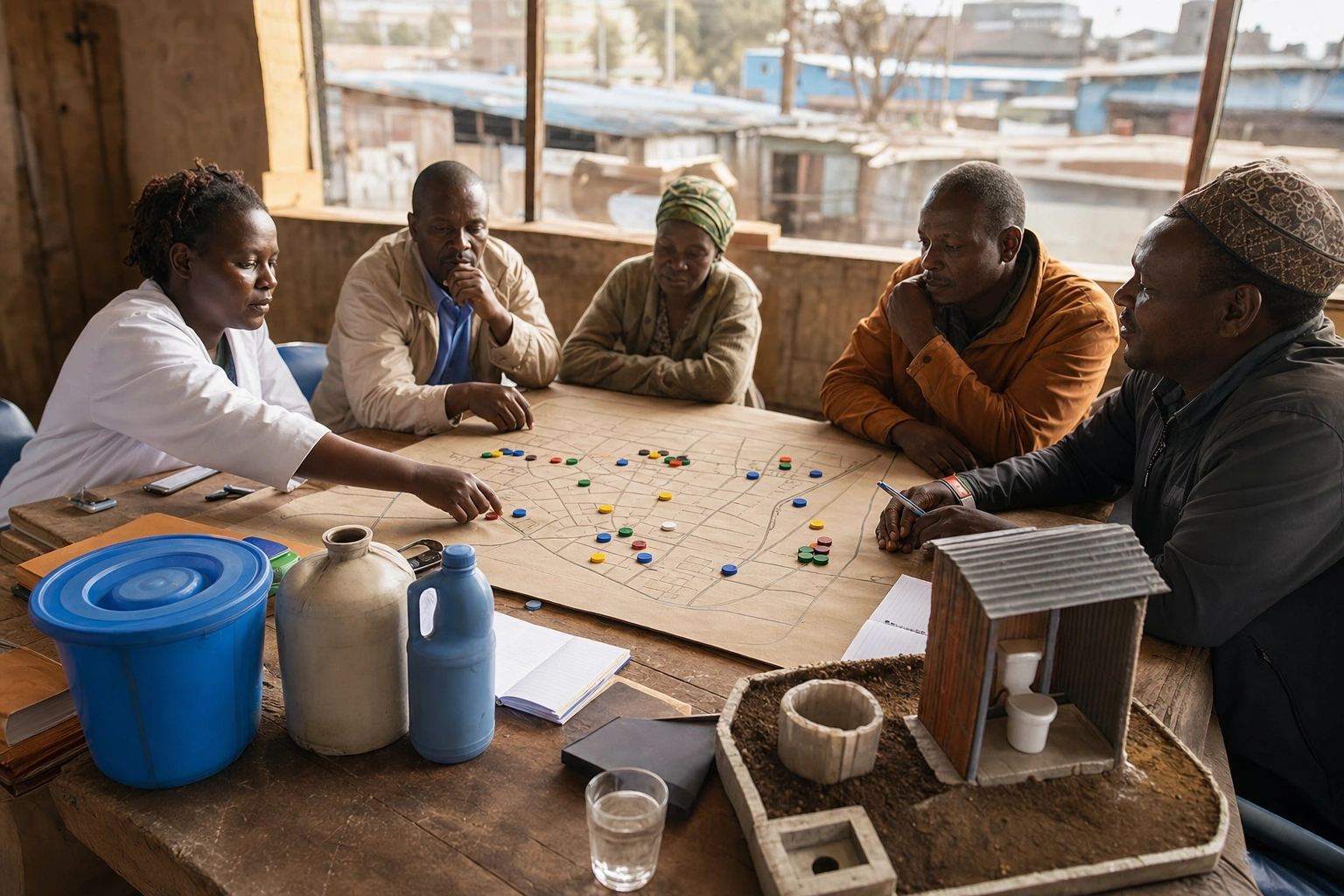
Public health is often associated with hospitals, clinics, laboratories and government departments. Yet many of the conditions that shape health are found in homes, schools, workplaces, markets, places of worship and neighbourhoods. Communities influence what people know, the choices they can make, the help they receive and the environments in which they live.
For this reason, improving public health is not only the responsibility of doctors or public authorities. It also depends on meaningful participation from residents, community organisations, local leaders, educators, employers, faith groups and other trusted networks. When communities help identify problems and design solutions, health initiatives are more likely to be relevant, trusted and sustained.
What community involvement means in public health
Community involvement is the process through which people who share a place, identity, interest or common concern participate in decisions and actions that affect their health. A community may be a rural village, an urban estate, a group of young people, people living with a particular condition, or residents connected through a cultural or faith network.
Involvement can take different forms. At the simplest level, people may receive information about a health campaign. A stronger form involves consultation, where residents share their experiences before a programme is designed. Genuine participation goes further: community members help define priorities, plan activities, deliver services, monitor results and recommend improvements.
This distinction matters. A campaign that merely tells people what to do may overlook practical barriers such as transport costs, inconvenient clinic hours, language, disability access or mistrust of institutions. A participatory approach creates space for those realities to shape the response.
Why communities matter for public health
Local knowledge reveals the real problem
Health professionals bring valuable technical knowledge, but residents understand the daily circumstances behind a health issue. They may know which water points are unreliable, where waste accumulates, which roads become impassable during rainy seasons or why people delay visiting a clinic.
For example, if a community has low attendance at an antenatal clinic, the reason may not be a lack of awareness. Women may face long distances, fear of poor treatment, childcare responsibilities, costs or appointment times that conflict with work. Listening to residents helps decision-makers address the actual obstacle rather than assuming that more posters or lectures will solve it.
Trust improves communication and uptake
People are more likely to listen to health information when it comes through a trusted and familiar source. Community health workers, teachers, local administrators, religious leaders, peer educators and respected elders can explain information in locally understandable ways and identify rumours or concerns early.
Trust does not mean that every local belief is medically correct. It means that respectful relationships make it easier to discuss evidence, correct misinformation and encourage appropriate care. Communication is more effective when it acknowledges people's experiences instead of dismissing them.
Collective action changes environments
Many public health problems cannot be solved by individual behaviour alone. A person may want to avoid unsafe water, but still depend on a contaminated source. A family may wish to keep its surroundings clean, but struggle when rubbish collection is irregular. Young people may want to exercise, but lack safe public spaces.
Communities can organise around shared environmental and social conditions. Activities may include maintaining drainage, improving waste disposal, protecting water sources, creating safe walking groups, advocating for accessible services or supporting food and hygiene standards in local institutions. Collective action can make healthy choices more practical for everyone.
Community networks extend the reach of services
Health systems often have limited staff, funding and physical facilities. Community-based structures can help services reach people who are missed by formal institutions. Trained community health workers may provide health education, basic screening, referrals, follow-up visits and support for treatment adherence within defined responsibilities.
Community groups can also identify people who may need additional support, including older adults living alone, people with disabilities, households affected by poverty and individuals experiencing stigma. Their role should complement, not replace, qualified clinical care. Clear training, supervision, referral pathways and protection of confidentiality are essential.
Key areas where communities improve health
Health education and prevention
Communities help translate general health guidance into everyday practice. A local session on hand hygiene, for instance, becomes more useful when it considers water availability, the cost of soap and the places where people prepare food. Similarly, discussions about malaria prevention, vaccination, sexual health or non-communicable diseases should use language and examples that fit the audience.
Effective education is two-way. People should be able to ask questions, describe difficulties and challenge unclear advice. Demonstrations, peer discussions, radio programmes, school activities and local-language materials can reinforce formal health messages. The aim is not simply to transfer information but to support informed decisions and practical action.
Early identification and referral
Community members are often the first to notice changes in health. A trained volunteer, teacher, neighbour or family member may recognise signs that require professional attention. Early referral can reduce delays, particularly for conditions where prompt care matters.
However, community involvement must avoid turning untrained people into informal diagnosticians. Their role is to recognise warning signs, provide accurate basic information, encourage care and connect individuals with an appropriate service. Confidentiality and consent should be respected, especially for sensitive concerns such as mental health, HIV, sexual and reproductive health or violence.
Support for long-term conditions
People living with diabetes, hypertension, asthma, mental health conditions or other long-term illnesses often need support beyond a clinic appointment. Families and peer groups can encourage medication routines, healthier food choices, physical activity, follow-up visits and emotional wellbeing.
Peer support can reduce isolation because people are learning from others who understand similar experiences. Nevertheless, peer groups should not promote unverified treatments or pressure individuals to disclose private information. Their strongest contribution is practical and emotional support alongside professional medical advice.
Outbreak preparedness and response
During an infectious disease outbreak, communities can help share timely information, identify emerging concerns, support affected households and encourage appropriate use of health services. Local networks may also help counter rumours, coordinate practical assistance and communicate changes in guidance.
Preparedness is stronger when relationships are built before an emergency. Communities should know where to obtain reliable information, how to report concerns and how to support people who may face exclusion. Response plans also need to consider language, disability, transport, livelihoods and the risk of stigma.
Mental health and social wellbeing
Social connection is an important part of wellbeing. Community groups can create spaces where people receive practical support, learn coping strategies and find routes to professional help. Schools, workplaces, faith communities and local organisations may help reduce isolation and notice when someone is struggling.
Community support is not a substitute for psychological or psychiatric care when that care is needed. It should be delivered with sensitivity, boundaries and referral options. Public discussion of mental health should avoid blame and should protect people from gossip, discrimination and forced disclosure.
Principles of effective community participation
Participation should be meaningful
Inviting residents to a meeting does not automatically give them influence. Participation is meaningful when people can help shape priorities and when decision-makers explain how their views affected the final plan. If a suggestion cannot be adopted, the reason should be communicated clearly.
Inclusion must be deliberate
The most vocal people in a meeting may not represent the whole community. Women, young people, older adults, people with disabilities, minority groups, migrants and households with limited income may face barriers to participation. Meetings should be accessible in location, language, timing and format.
Organisations should also consider who controls resources and whose concerns have traditionally been ignored. Inclusion is not achieved by placing one representative in a room; it requires listening to different experiences and addressing unequal power.
Respect and cultural understanding matter
Public health programmes should work with local values while remaining clear about evidence and safety. Cultural understanding helps practitioners communicate effectively, but it should not be used to stereotype an entire population. Communities are diverse, and individuals within the same area may hold different beliefs and needs.
Transparency builds accountability
People are more likely to support a programme when they understand its purpose, funding arrangements, expected benefits and limitations. Health information should be honest about uncertainty. Community members should know how to provide feedback, report harm or raise concerns about service quality.
Evidence and local experience should work together
Public health decisions should be informed by reliable evidence, professional expertise and the lived experience of affected people. Local stories can reveal important barriers, but they should be combined with appropriate data rather than treated as a complete substitute for research or clinical assessment.
Common challenges and how to address them
Community participation can become symbolic if authorities make decisions before consultation or involve residents only to promote a predetermined plan. The remedy is to involve communities at the earliest stage, define their influence and report back on decisions.
Another challenge is volunteer fatigue. Community workers and local organisers may be expected to provide extensive support without adequate training, payment, equipment or supervision. Sustainable programmes budget for these needs and avoid relying indefinitely on unpaid labour.
Misinformation can also spread quickly through social networks. Simply labelling a concern as false may not change minds. A better response is to listen, identify the source of confusion, explain what is known and unknown, and provide a trusted route for further questions.
Confidentiality is a further concern in close-knit settings. A person may avoid seeking help if they fear that neighbours or local volunteers will discuss their situation. Training, private referral systems, consent procedures and appropriate record handling are therefore important.
How to design a community-focused health initiative
- Define the health concern. Describe the problem clearly and identify who is most affected. Avoid beginning with a solution before understanding the issue.
- Listen to the community. Use respectful discussions, interviews, surveys, observation or existing local forums. Include people who may not usually attend public meetings.
- Identify causes and barriers. Consider behaviour, income, housing, transport, safety, education, service quality, social norms and the physical environment.
- Agree on realistic priorities. Choose actions that are important, feasible and measurable. Clarify which responsibilities belong to households, community groups, health facilities and public authorities.
- Co-design the intervention. Decide together on messages, delivery channels, schedules, referral procedures and safeguards. Use local knowledge without compromising medical accuracy.
- Train and support participants. Provide role descriptions, supervision, materials, feedback channels and referral guidance. Do not assign tasks beyond a person's competence.
- Monitor both results and experience. Track participation, service access, referrals and relevant health indicators where appropriate. Also ask whether people felt respected, included and able to influence decisions.
- Adapt and communicate. Share progress honestly, respond to feedback and change the programme when evidence or local circumstances require it.
Applying This in Practice
Suppose residents in a growing Kenyan settlement are concerned about repeated diarrhoeal illness among young children. A weak response would distribute general advice without investigating local conditions. A stronger process would bring together residents, community health workers, health facility staff, school representatives, water providers and local administrators.
Together, they might map water sources, identify periods when supply is interrupted, discuss household storage practices and understand why families choose particular sources. The group could then agree on practical actions such as targeted hygiene demonstrations, clearer information about safe storage, reporting of damaged infrastructure and referral guidance for children showing danger signs.
The initiative should not assume that every household can immediately purchase equipment or change routines. It should ask what affordable options are available, who is responsible for infrastructure problems and how residents can report difficulties. Progress could be reviewed through community feedback, health-facility observations and follow-up discussions. This example shows how public health improves when technical guidance and local problem-solving reinforce each other.
Individuals can contribute too. A professional might support accurate communication through a workplace or professional association. A business owner can improve hygiene and safety practices for employees and customers. A parent can participate in a school health committee. A resident can share reliable information, support a neighbour in accessing care or raise a concern through the appropriate local channel. Small actions become more effective when they connect to organised, accountable efforts.
Key Takeaways
- Communities provide local knowledge that helps public health programmes address real barriers rather than assumed problems.
- Trust, respectful communication and familiar networks can improve the reach and use of health information and services.
- Community action can change shared environments, including water, sanitation, safety, transport and access to support.
- Meaningful participation involves communities in identifying priorities, designing responses, monitoring progress and improving services.
- Community-based support should complement professional care, with training, supervision, confidentiality and clear referral pathways.
- Effective initiatives combine reliable public health evidence with lived experience and deliberate inclusion of less-heard groups.
No comments yet.