
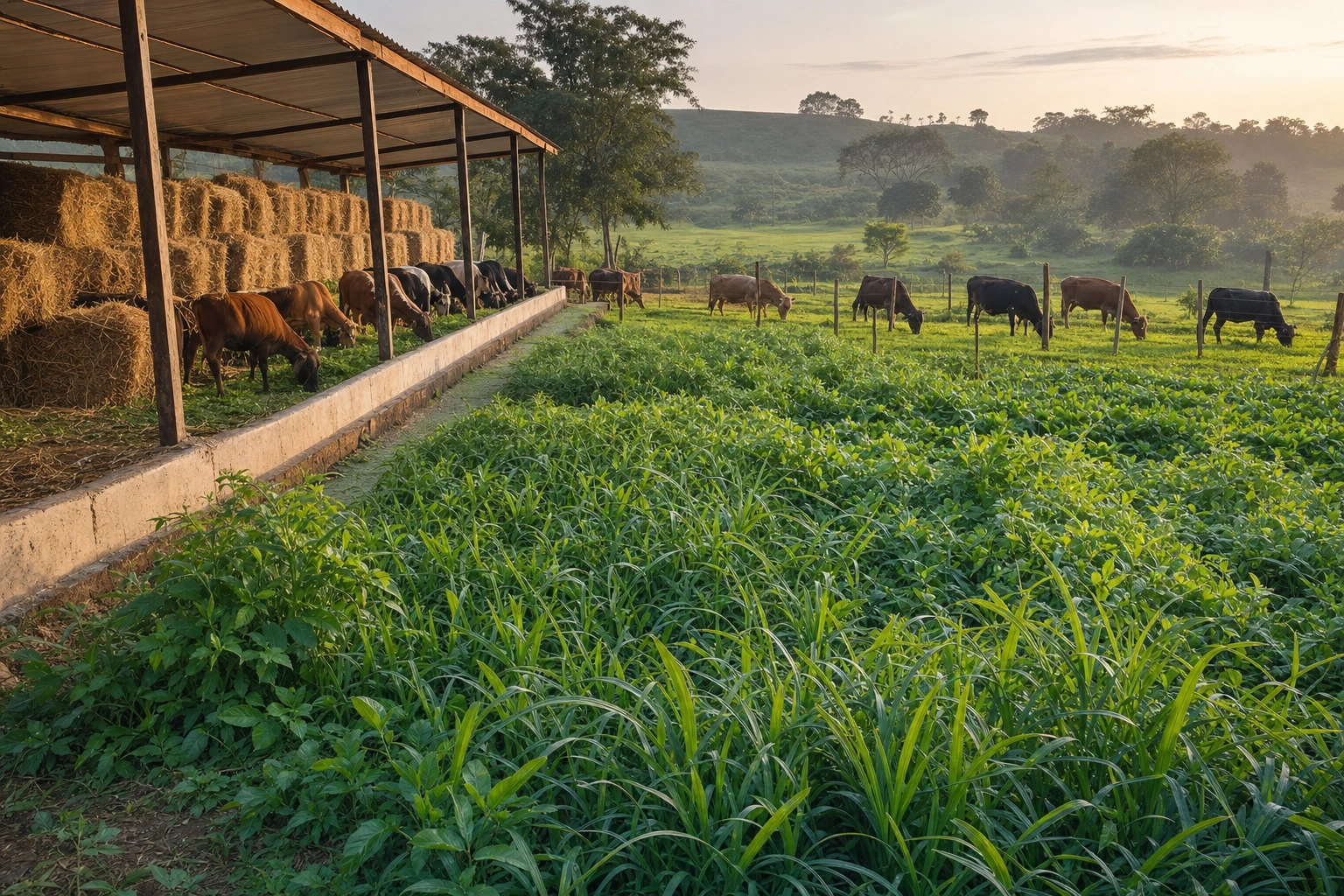
Pasture and fodder are among the most important resources in livestock farming. They supply the energy, protein, fibre, minerals and water-related nutrients that animals need for maintenance, growth, reproduction and production of milk, meat, eggs or work. When feed is inadequate or poorly balanced, animals lose condition, mature slowly, reproduce less successfully and become more vulnerable to disease.
Good livestock management therefore begins with a realistic feed plan. Whether a farmer keeps dairy cattle in Kiambu, beef cattle in Laikipia, goats in Turkana, sheep in Lesotho or mixed livestock in another part of the world, the central question is similar: how can enough safe, nutritious feed be provided throughout the year? Understanding the role of pasture and fodder helps farmers answer that question while protecting land, controlling costs and improving animal welfare.
Understanding Pasture and Fodder
Pasture is land covered with grasses, legumes, herbs or other plants that livestock graze directly. It may be natural rangeland, planted grassland, a managed paddock, a fallow field or a crop residue area used under controlled conditions. Pasture can be permanent or seasonal, and its quality changes according to rainfall, soil fertility, plant maturity and grazing pressure.
Fodder refers to plants or plant parts collected and offered to animals, usually through cut-and-carry feeding. Fodder may include Napier grass, forage sorghum, fodder oats, lucerne, desmodium, tree leaves, crop residues and conserved feeds such as hay or silage. In everyday farming language, the terms are sometimes used broadly, but the main distinction is that animals harvest pasture themselves, while farmers harvest and present fodder to them.
Both resources can come from grasses, legumes and browse plants. Grasses often provide useful energy and fibre, while legumes such as lucerne and desmodium can contribute more protein when grown and managed appropriately. Browse plants, including suitable fodder trees and shrubs, may be particularly valuable for goats and in dry areas. However, every plant must be assessed for suitability, safety, nutritional value and local adaptation before it is introduced.
Why Pasture and Fodder Matter
They provide the basic nutrients for production
Livestock require different nutrients for different purposes. Maintenance feed supports breathing, movement, body temperature and normal body functions. Additional nutrients are required for growth, pregnancy, milk production, wool, eggs, work or recovery from illness. Pasture and fodder provide much of this foundation, although high-producing animals may also need carefully selected supplements.
The quality of a forage depends on its plant species, stage of growth, soil conditions, harvesting method and storage. Young, leafy forage is generally more digestible than old, fibrous material. As plants mature, stems become tougher and animals may consume less of the available nutrients. This does not mean mature forage has no value; it means it may need to be combined with better-quality feeds or used for animals with lower nutritional demands.
They support healthy digestion
Ruminants such as cattle, sheep and goats depend on a functioning rumen to digest fibrous plant material. Adequate fibre encourages normal chewing and saliva production, helping maintain a suitable rumen environment. Very low-fibre diets or sudden changes in feed can disturb digestion and contribute to health problems.
Forage is also important for animals that are not ruminants. Horses, donkeys and other herbivores need appropriate roughage for normal digestive function. The exact balance differs by species, age, body condition and production stage, so farmers should avoid assuming that one feed programme suits every animal on the farm.
They reduce feeding costs
Purchased feeds can be expensive, especially when transport costs rise or supplies become scarce. A well-managed pasture or fodder plot allows a farm to produce more of its own feed. This can reduce dependence on commercial hay, bran or concentrates, although producing forage still involves costs such as land preparation, seed, labour, fertiliser, water, harvesting and storage.
The financial benefit is greatest when farmers calculate the full cost of each feed source rather than focusing only on its purchase price. A fodder crop that produces reliable feed close to the livestock unit may save labour and transport. Conversely, a crop that requires heavy inputs but performs poorly in local conditions may not be economical.
Pasture, Fodder and Animal Productivity
Feed quantity and feed quality influence almost every productive result on a livestock farm. Animals receiving enough nutritious forage are more likely to maintain good body condition, reach breeding condition at the appropriate time and recover well after giving birth. Dairy animals may produce more consistent milk when their diet is adequate, while growing animals can achieve more even development.
However, pasture and fodder are not magic solutions by themselves. Productivity also depends on genetics, water, housing, disease control, parasite management, heat stress, breeding and handling. A farmer should therefore treat forage as one part of an integrated management system.
Feed quality is especially important for animals with high demands. A lactating dairy cow, a pregnant ewe near lambing, a rapidly growing calf or a working donkey may require better nutrition than a mature animal in maintenance. Separating animals into practical feeding groups can help farmers use limited forage more efficiently. For example, the best leafy fodder may be reserved for young stock or lactating animals, while mature hay is used for animals with lower requirements.
Benefits for Soil, Water and the Wider Farm
Protecting the soil
Healthy pasture plants cover the soil surface, reducing exposure to wind and rain. Their roots help hold soil in place, while plant residues contribute organic matter as they decompose. This can support soil structure and improve the land's ability to absorb and retain water. Poorly managed grazing has the opposite effect: repeated grazing of the same plants can leave bare ground, encourage erosion and reduce future forage production.
Supporting nutrient cycling
Livestock return part of the nutrients they consume through manure and urine. When animals graze well-managed land, these nutrients can contribute to pasture growth. In cut-and-carry systems, manure can be collected and applied to crop or fodder fields, helping connect livestock and crop production.
Nutrient cycling is not automatic. Nutrients can be lost through erosion, runoff, leaching or removal of fodder from the farm. Farmers should observe soil fertility and, where possible, use soil testing and locally appropriate advice to guide manure use, lime or fertiliser applications.
Improving resilience
A diverse feed base can make a farm less vulnerable to drought, delayed rains, frost, pests or market disruption. Deep-rooted plants may remain productive when shallow-rooted species have dried out. Conserved hay and silage can bridge periods when pasture is unavailable. Fodder trees and shrubs may provide additional browse during difficult seasons, provided they are suitable and managed safely.
Diversity does not mean planting every available species. It means choosing a sensible combination of plants with different growth patterns, maturity periods and uses. Local climate, soil, water availability and livestock species should guide these choices.
Managing Pasture for Long-Term Productivity
Pasture management aims to balance animal demand with plant recovery. A simple grazing plan should consider the size of the grazing area, number and type of animals, expected forage growth, water points and the length of the rainy and dry seasons.
- Inspect the pasture regularly. Look at plant height, leaf cover, bare patches, weeds, signs of erosion and evidence of overgrazing.
- Allow recovery. Move animals or reduce grazing pressure before plants are repeatedly cropped down. The required recovery period changes with rainfall, species and growth rate.
- Control stocking pressure. Too many animals for the available forage can damage the pasture even when the land appears productive at the beginning of the season.
- Use water and shade points carefully. Livestock often concentrate around these areas, creating trampling, bare soil and manure accumulation. Moving facilities or managing access can reduce local damage.
- Prevent the spread of weeds and unwanted plants. Identify weeds correctly before removing or treating them, and avoid practices that damage useful species.
Rotational grazing can help some farms use pasture more evenly, but it is not simply a matter of dividing land with fences. Rotation works best when the timing, animal numbers and recovery periods match actual plant growth. A poorly planned rotation can still lead to overgrazing.
Producing and Conserving Fodder
Fodder production should begin with the feed gap the farm is trying to solve. A farmer may need green feed during a dry season, extra protein for dairy animals, emergency feed during drought, or a reliable source of roughage for animals kept near the homestead. The purpose should guide the crop choice.
Common options include perennial grasses, annual fodder crops, legumes, browse plants and crop residues. Before planting, consider rainfall, soil type, drainage, available labour, water, seed or planting material, livestock preferences and the risk of competition with food crops. Use healthy planting material and seek local agricultural guidance where a plant's suitability is uncertain.
Hay
Hay is forage dried to a moisture level that allows it to be stored without harmful heating or mould growth. It is usually made from grasses, legumes or a mixture. For better quality, forage is commonly cut when it contains a good balance of leafy material and has not become excessively mature. It should be dried carefully, protected from rain and stored off the ground in a well-ventilated place.
Mouldy, dusty or visibly spoiled hay can harm animals. Storage losses can be reduced by keeping bales or loose hay dry, preventing contact with damp soil and checking the store regularly.
Silage
Silage is forage preserved by fermentation in conditions with limited oxygen. It can be useful where green forage is abundant during one period but scarce later. Good silage requires suitable material, correct chopping, firm packing, an effective seal and careful removal during feeding. Air entering the stored material can cause spoilage.
Silage should have a pleasant fermented smell rather than a rotten odour, and visibly mouldy material should not be fed. Farmers should introduce conserved feeds gradually and maintain cleanliness around feeding areas.
Crop residues and supplements
Maize stover, cereal straw and other residues may provide valuable fibre after harvest, but their nutrient content can be limited, especially when they are mature. They may be improved through chopping, treatment where technically and safely appropriate, or combination with protein-rich forages and other feeds. Farmers should avoid feeding residues contaminated with chemicals, soil, mould or foreign objects.
Matching Feed to Livestock Needs
A practical feed plan begins with an inventory of animals. Record the species, number, age, body condition and production stage. Next, list available pasture, fodder, crop residues, conserved feed, water and purchased supplements. Estimate which resources are abundant and which will become scarce as the season changes.
For example, a small dairy farm may allocate a productive fodder plot to daily cut-and-carry feeding, conserve surplus grass as hay before the dry season and use suitable legume forage to improve the ration. A pastoral household may protect key grazing areas, move animals according to available forage and reserve purchased or conserved feed for breeding animals during the most difficult period. A mixed farm may use crop residues for roughage while returning manure to fodder fields.
Observe the animals as well as the feed. Changes in body condition, appetite, manure consistency, milk yield, growth, coat or hair condition and behaviour can indicate that the ration needs review. These signs do not identify a specific disease, so persistent problems should be discussed with a qualified animal health or livestock professional.
Applying This in Practice
- Map the feed resources. Identify grazing areas, fodder plots, water sources, storage facilities and periods when each resource is available.
- Estimate demand. Group animals by species, size and production stage, then consider how their needs will change during pregnancy, lactation, growth or work.
- Plan for the feed gap. Decide how much hay, silage, standing forage or alternative feed should be prepared before the dry season or another predictable shortage.
- Improve one management practice at a time. This might be earlier fodder harvesting, better storage, controlled grazing, reseeding a bare area or separating high-need animals.
- Monitor results. Keep simple records of feed use, animal condition, milk or weight changes, labour and costs. Use the records to adjust the next season's plan.
Farmers should also consider safety. Introduce new forages gradually, prevent animals from accessing poisonous plants, provide clean water and avoid sudden changes in diet. In areas where drought, flooding or conflict affects access to grazing, early planning and cooperation with local extension services or farmer groups can help households make informed decisions.
Key Takeaways
- Pasture is grazed directly, while fodder is harvested and offered to livestock; both can form the foundation of a balanced feeding system.
- Forage supplies energy, protein, fibre and other nutrients needed for maintenance, growth, reproduction and production.
- Young, leafy forage is often more digestible than mature, stemmy material, so harvesting time and storage strongly affect feed value.
- Controlled grazing protects plant recovery, soil cover and future pasture production.
- Hay, silage and suitable crop residues can reduce the effects of seasonal feed shortages when prepared and stored correctly.
- A reliable feed plan matches available resources with the needs of different animal groups and is reviewed through observation and simple records.
No comments yet.