
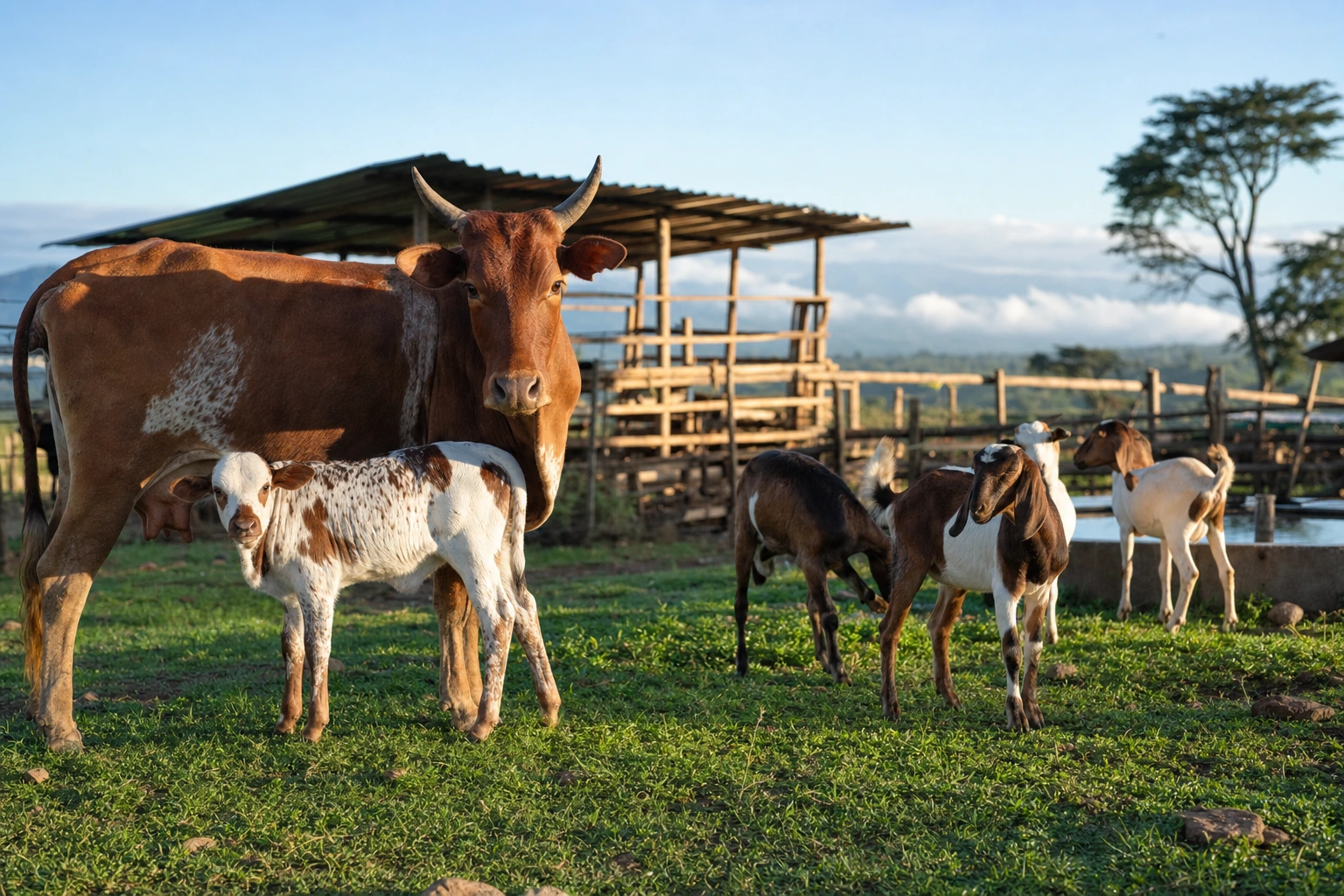
For a livestock enterprise, herd growth is not simply a matter of keeping more animals. It is the result of a chain of successful events: healthy females must conceive, carry pregnancies safely, give birth, raise viable young and remain productive for future breeding. If any link is weak, the herd may appear busy while its numbers, productivity or profitability stagnate.
Understanding reproduction helps farmers plan grazing, housing, feed, labour, veterinary care and sales. It also helps them distinguish between biological growth—an increase in animal numbers—and productive growth, where the additional animals contribute to a stronger and more profitable enterprise.
What herd growth really means
Herd growth is the change in the number and quality of animals over a defined period. A simple way to view it is:
Herd size at the end of a period = starting herd + births and purchases ? deaths and sales.
However, this basic calculation does not show whether the herd is improving. A farm may have more animals because it retained weak, unproductive stock, while a well-managed farm may sell older or poor-performing animals and still increase the value of its herd.
Reproduction affects growth through several measures:
- Conception rate: the proportion of eligible females that become pregnant after breeding.
- Pregnancy or kidding/lambing/calving success: the proportion of pregnancies that result in healthy offspring.
- Birth rate: the number of offspring born in relation to the breeding females.
- Survival rate: the proportion of young animals that remain alive and healthy until weaning or another planned stage.
- Generation interval: the time between one generation of breeding animals and the next.
- Replacement rate: the number of young females needed to replace animals removed from the breeding herd.
These measures are connected. A high conception rate is of little value if many pregnancies are lost or young animals die soon after birth.
How reproduction increases herd numbers
In most livestock systems, the main reproductive contribution comes from females. A bull, ram, buck or boar can serve many females, but each female has biological limits. This means that the number of productive breeding females, their age, health and fertility strongly influence the speed of herd growth.
Consider a small dairy or beef farm with ten healthy cows. If most cows calve regularly and their calves survive, the farm can retain selected heifers as replacements while selling or transferring other animals. If only a few cows become pregnant, or if calving intervals become too long, the farm may need to purchase replacements. That increases costs and can introduce disease.
In goats and sheep, herd growth can sometimes be faster because females may produce twins or have more than one offspring in a birth. Yet multiple births also increase demands for nutrition, shelter, observation and early care. A farm should therefore measure surviving offspring, not merely the number born.
Reproduction also determines when a young female enters the breeding herd. Keeping every female offspring may increase numbers quickly, but it can create overcrowding and feed shortages. A sound plan identifies which animals have the health, structure, growth and genetic qualities needed for future production.
Female fertility is the main driver
Female fertility is influenced by age, body condition, previous reproductive history, disease, nutrition and management. A female that is too thin may fail to cycle or may struggle to maintain pregnancy. A female that is excessively fat can also experience reproductive difficulties, especially around birth.
Young females should generally be bred when they have reached suitable maturity and body development, rather than simply because they have reached a particular age. The appropriate point differs between species, breed and production system. Breeding too early can compromise the young female’s own growth and increase problems during birth. Delaying breeding for too long, however, raises feeding costs without adding offspring.
After giving birth, the female needs time to recover, produce milk and return to reproductive activity. Poor nutrition, heavy disease burdens and excessive stress can lengthen the period before she becomes pregnant again. A longer interval between births means fewer offspring over her productive life and fewer replacements for the farm.
Farmers should also watch for repeat breeders—females that fail to conceive after several well-managed breeding opportunities. Before removing such an animal, investigate possible causes, including an infertile male, incorrect heat detection, poor timing, infection or inadequate nutrition. If the problem is persistent and the animal is not economically useful, culling may be more sensible than repeatedly spending money on treatment.
The role of males in herd reproduction
One male can influence the reproductive performance and genetic direction of many offspring. A fertile bull, ram, buck or boar can therefore have a large positive or negative effect on herd growth.
Before the breeding season, males should be assessed for general health, body condition, legs and feet, reproductive organs and ability to mate. Where veterinary services are available, a breeding soundness examination can provide additional assurance. A male that is lame, underfed, injured or infertile may fail to serve females, even if he appears healthy at a distance.
The male-to-female ratio depends on species, age, terrain, mating method and management system. A young male may not be able to serve as many females as a mature, experienced male. Farmers should follow professional guidance for their particular animals rather than using one ratio for every farm.
Genetic selection matters as well. A male should be chosen for traits that support the enterprise, such as growth, milk yield, disease tolerance, sound structure, mothering ability or local adaptation. Using a related male repeatedly can increase inbreeding, which may reduce performance and fertility over time. Planned replacement of males and careful records help manage this risk.
Nutrition connects reproduction with growth
Nutrition affects nearly every stage of reproduction. Animals need sufficient energy, protein, minerals, vitamins and clean water for normal cycling, conception, pregnancy, birth and milk production. Feed shortages often become reproductive problems before they become obvious losses in body weight.
Body condition scoring is a practical way to monitor whether breeding females are too thin, suitable or over-conditioned. The exact scoring system varies by species, but the principle is consistent: assess the animal’s fat and muscle reserves at important stages such as weaning, breeding, late pregnancy and after birth.
Strategic feeding can improve reproductive results. For example, a farmer may improve pasture quality before breeding, provide conserved fodder during a dry season, or offer suitable supplementary feed to females carrying multiple offspring. The aim is not to feed every animal the same amount. Nutritional support should be directed towards animals with the greatest reproductive demands.
Mineral deficiencies can affect fertility, but indiscriminate use of mineral products can also be wasteful or unsafe. Farmers should seek advice suited to local soils, feeds and livestock species. Clean water is equally important: inadequate access can reduce feed intake, milk production and general health.
Timing, heat detection and controlled breeding
Successful mating depends on timing. A female must be in heat, the male must be fertile and mating or insemination must occur at the appropriate stage. Missed heat periods can extend the time between births and reduce the number of offspring produced each year.
Signs of heat differ among species but may include restlessness, increased vocalisation, mounting or standing to be mounted, changes in appetite, and swelling or discharge around the reproductive tract. These signs are not always obvious, particularly in hot weather, under extensive grazing or when animals are observed only once a day.
Regular observation, good lighting and simple records improve detection. Some farms use controlled breeding seasons, while others allow males to remain with females throughout the year. Controlled breeding can make feeding, supervision and marketing more predictable. Continuous breeding may suit systems where feed is available year-round, but it can make births harder to manage and produce young animals of different ages.
Artificial insemination can introduce desirable genetics without keeping a breeding male on the farm, but it requires accurate heat detection, correct handling and timely technical support. It is a management tool, not a substitute for nutrition, disease control or good records.
Pregnancy, birth and the survival of young animals
Pregnancy losses reduce herd growth before an offspring is even born. Risks include infectious disease, poor nutrition, physical injury, heat stress and inadequate care. Pregnant animals should have access to suitable feed, water, shade or shelter, and a clean environment where possible.
The period around birth deserves close attention. Difficult births can kill the offspring, injure the mother and reduce future fertility. Farmers should know the normal signs of labour and seek veterinary assistance when labour is prolonged, the animal is exhausted or the presentation appears abnormal. Unnecessary intervention can also cause injury, so assistance should be careful and hygienic.
After birth, the young animal needs prompt access to colostrum, warmth, protection from weather and predators, and a clean place to rest. Colostrum provides important early nourishment and immune protection. Weak, chilled or rejected young animals require immediate attention. Inadequate early care can lead to slow growth, disease or death, all of which reduce the benefit of successful mating.
For dairy animals, hygienic milking and a sensible balance between milk use and calf or kid nutrition are important. For meat animals, the mother’s milk production and mothering ability strongly influence early growth. A record of poor mothering, repeated offspring losses or very low weaning weights can guide future culling decisions.
Health and biosecurity protect reproductive performance
Diseases affecting the reproductive tract can cause infertility, abortion, stillbirths or weak offspring. Other illnesses reduce body condition and make conception less likely. A practical health programme should include routine observation, vaccination and parasite control according to local veterinary advice, quarantine for newly purchased animals, and prompt isolation of sick livestock.
New animals should not be mixed immediately with the established herd. They may carry infections that are not visible at purchase. A period of separation, observation and appropriate testing or treatment can protect the whole enterprise.
Clean equipment and good hygiene are particularly important during assisted births, artificial insemination, castration and other procedures. Farmers should avoid moving breeding males between herds without understanding the disease risks. Community coordination can help where animals share grazing areas, watering points or breeding services.
Records turn reproduction into a management decision
Without records, farmers may remember unusual births or serious illnesses but miss gradual declines in fertility. Useful records can be simple and paper-based. For each breeding female, record identification, date of mating, male used, expected birth date, actual birth date, number born, number surviving and any health problems.
These records help answer practical questions:
- Which females conceive early and produce healthy offspring?
- Which animals repeatedly return to heat or fail to become pregnant?
- Are births concentrated when feed is available, or during a difficult season?
- Which mothers raise offspring that grow well?
- Is a particular male associated with poor conception or weak young animals?
- How many replacement females are needed each year?
For example, if a Kenyan smallholder records that many females fail to conceive during the dry season, the solution may involve adjusting the breeding calendar, improving dry-season feed or reducing herd pressure on available pasture. The record changes a vague impression into a management problem that can be investigated.
Growth must be balanced with carrying capacity
A herd can grow biologically faster than the farm can support it. More animals require more pasture, water, housing, labour, veterinary care and capital. Overcrowding increases competition for feed and can raise disease pressure. It may also damage grazing land and reduce the condition of breeding females.
Before retaining replacements, estimate the farm’s carrying capacity and feed supply across the whole year. Consider the number of adult animals, pregnant females, young stock, breeding males and animals kept temporarily for sale. A plan that looks affordable during the rainy season may fail during a long dry period.
Herd growth should therefore include planned sales and culling. Remove animals with persistent infertility, serious structural problems, poor mothering performance, repeated disease or low productivity when replacement options are available. Selling unproductive stock can release feed for fertile, healthy animals and improve the herd’s average performance.
Applying This in Practice
- Set a production objective. Decide whether the enterprise prioritises milk, meat, breeding stock, fibre, eggs or a combination. The desired output determines which reproductive traits matter most.
- Count and classify the herd. Separate breeding females, breeding males, young replacements, animals for sale and animals requiring special care.
- Check reproductive readiness. Assess body condition, health, age, reproductive history and structural soundness before breeding.
- Prepare feed and facilities. Plan forage, supplements, water, shade, clean birth areas and emergency support before animals become pregnant.
- Manage mating deliberately. Use suitable males, monitor heat or follow a controlled breeding plan, and avoid relying on an untested or unhealthy male.
- Protect pregnancies and newborns. Observe late-pregnant females, respond appropriately to difficult births, provide colostrum and monitor young animals closely.
- Review the records. At the end of each breeding cycle, compare conception, births, survival, weaning and culling results. Change one or two management practices at a time so their effects can be assessed.
Key Takeaways
- Herd growth depends on conception, successful births, young-animal survival and sensible retention of replacements.
- Healthy, well-nourished breeding females are the main foundation of steady herd expansion.
- Breeding males influence many offspring, so fertility, soundness and genetic suitability should be checked.
- Good nutrition, disease control, heat detection and birth supervision reduce reproductive losses.
- Records reveal which animals and management practices are supporting or limiting growth.
- Productive herd growth must remain within the farm’s feed, land, water, labour and financial capacity.
No comments yet.