
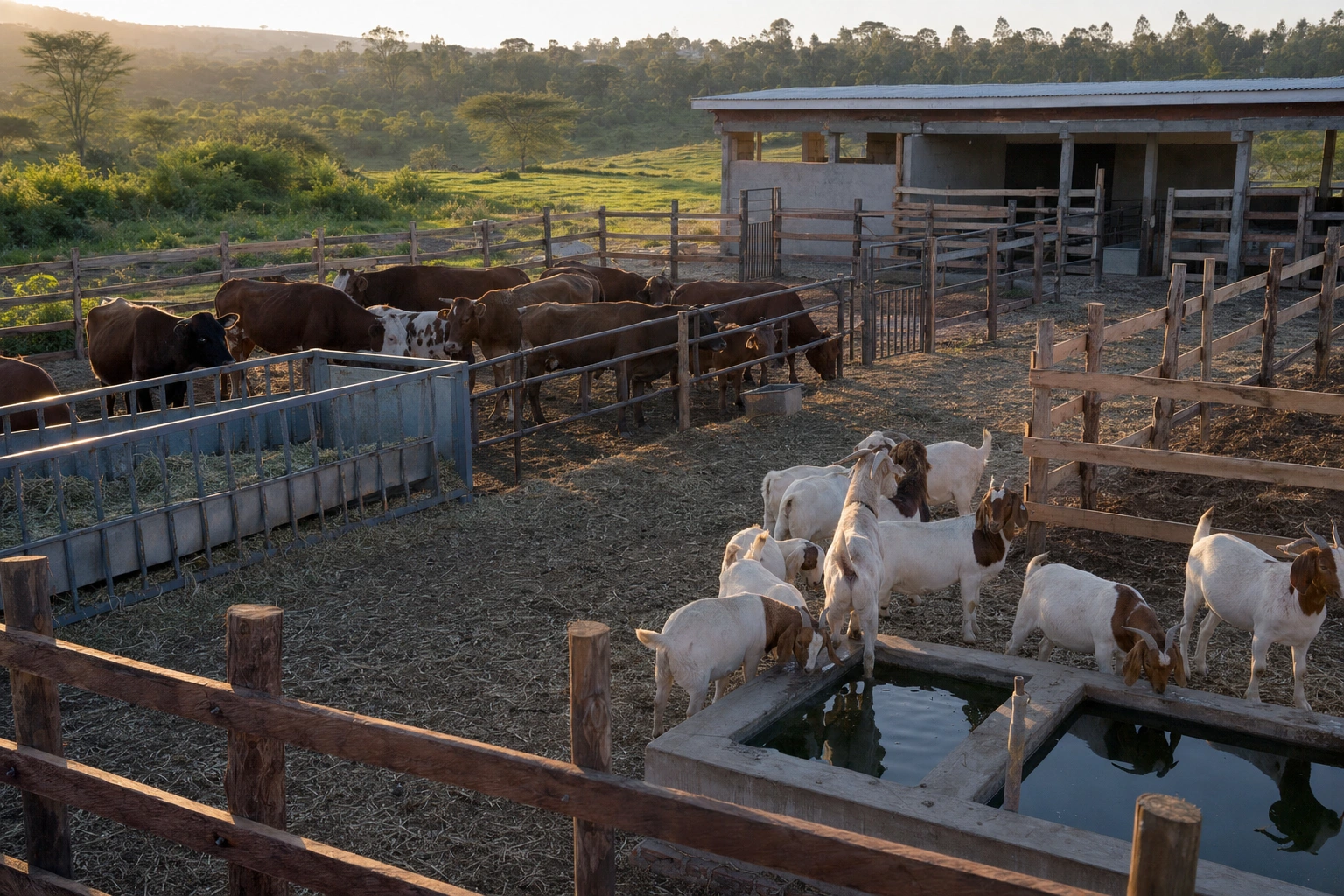
Disease prevention is one of the most important responsibilities in livestock farming. Healthy cattle, goats, sheep, pigs and poultry grow more efficiently, reproduce more reliably and provide safer products. By contrast, disease can reduce weight gain, milk or egg production, fertility and survival while increasing treatment costs and labour demands.
Prevention is not a single action such as vaccinating animals once a year. It is a planned system of reducing risks, detecting problems early and responding correctly. This approach is valuable for a smallholder keeping a few goats, a pastoral household moving cattle between grazing areas, and a commercial poultry or dairy enterprise. The details differ, but the central principle is the same: prevent avoidable disease before it becomes expensive and difficult to control.
Why Disease Prevention Matters
It protects animal productivity
Disease interferes with the normal functions that make livestock profitable. An animal suffering from infection may eat less, digest feed poorly or use nutrients to fight illness rather than grow or produce milk. A dairy cow with a health problem may produce less milk, while a hen affected by disease may lay fewer eggs. Young animals are especially vulnerable because illness can impair growth and increase mortality.
Prevention helps animals remain healthy enough to express their productive potential. Good health does not remove every production challenge, but it reduces the losses associated with avoidable infections, parasites and management-related disorders.
It reduces financial losses
When disease appears, a farmer may face the cost of veterinary consultation, medicines, transport, labour and replacing dead animals. There may also be income lost through reduced production, delayed sales, lower market value or restrictions on animal movement. In a small enterprise, the death of even one breeding animal can have a significant effect on future stock.
Preventive measures often require regular planning and modest expenditure, but they are usually easier to manage than an emergency outbreak. A farmer who maintains clean housing, follows a vaccination plan and isolates newly purchased animals is investing in risk reduction.
It supports food safety and public health
Some livestock diseases can affect people, either directly through contact with infected animals or indirectly through contaminated milk, meat, eggs or other products. Safe handling, proper cooking, clean milking practices and veterinary guidance are therefore important beyond the farm itself.
Using medicines responsibly is also part of food safety. Farmers should follow the instructions for each veterinary product, including the correct dose, route of administration and withdrawal period where one applies. A withdrawal period is the time that must pass after treatment before milk, meat or eggs should enter the food supply. Farmers should never assume that a product is safe for every species or condition.
It protects the wider farming community
Livestock diseases can spread between farms through animals, people, vehicles, equipment, feed, water, insects and contaminated clothing or footwear. An outbreak on one farm may therefore affect neighbours, markets and local livelihoods. Reporting unusual illness and following movement or veterinary advice can help protect the wider community.
How Livestock Diseases Spread
Understanding transmission helps a farmer identify practical control points. Disease-causing organisms may spread through several routes:
- Direct contact: infection can pass when healthy animals mix closely with infected animals or their bodily fluids.
- Indirect contact: shared water troughs, feed containers, ropes, milking equipment, transport vehicles and tools may carry contamination.
- Air and droplets: coughing, sneezing and close housing can allow some respiratory infections to move between animals.
- Feed and water: contaminated feed, stagnant water or poor-quality storage can expose many animals at once.
- Parasites and vectors: ticks, flies, mosquitoes and worms may transmit disease or weaken animals.
- New or returning animals: animals introduced from markets, other farms or communal grazing areas may carry infection without obvious signs.
- People and movement: visitors, workers and traders can transfer organisms on hands, clothing, footwear or vehicles.
This is why disease prevention must cover the whole production system rather than focusing only on animals that already look sick.
Core Measures for Preventing Disease
1. Maintain strong biosecurity
Biosecurity means the everyday practices used to prevent diseases from entering a farm and spreading within it. Effective biosecurity does not necessarily require expensive infrastructure. It begins with sensible routines.
Limit unnecessary visitors and record important movements of people, animals and vehicles. Keep farm footwear and protective clothing separate where possible. Clean and disinfect equipment before it is used with another group of animals, especially equipment shared between farms. Avoid allowing livestock to mix casually with neighbouring animals when their health and vaccination status are unknown.
Separate species when practical. For example, keeping poultry away from areas used by pigs or ruminants can reduce cross-contamination and make cleaning easier. Within a herd or flock, reduce overcrowding and separate animals according to age or production group where the housing system allows it.
2. Quarantine new and returning animals
Quarantine means keeping newly acquired or returning animals separate from the established herd or flock for a period determined with veterinary advice. This allows the farmer to observe them and arrange appropriate examination, testing or vaccination before mixing.
Quarantine facilities should have separate feeding and watering equipment. Care for the established animals first and the quarantined animals afterwards, rather than moving from potentially higher-risk animals to healthy stock. Clean hands, footwear and tools after working in the quarantine area.
Do not judge an animal’s health solely by appearance. Some animals may carry infection without showing clear signs. Ask about the animal’s origin, previous vaccination and treatment history, and consult a qualified animal-health professional about the safest introduction procedure.
3. Use vaccination correctly
Vaccination prepares an animal’s immune system to respond more effectively to particular diseases. It is one of the most useful preventive tools, but it works best as part of a wider health plan. Vaccination does not protect against every disease, and protection may depend on the animal’s age, health, previous vaccination history and exposure risk.
Farmers should obtain a locally appropriate vaccination schedule from a veterinary professional or recognised animal-health service. Follow the product instructions carefully, including storage, handling, dose and route of administration. Vaccines may lose effectiveness if they are stored incorrectly, exposed to unsuitable temperatures or used after their recommended date.
Vaccinate healthy animals according to the plan. Sick, stressed or poorly nourished animals may not respond as expected, so professional advice is important when deciding whether to vaccinate a particular group. Keep records of the date, product, batch or identifying information where available, animals treated and any follow-up dose required.
4. Provide clean water, safe feed and suitable housing
Good management strengthens animals and removes opportunities for infection. Provide clean water regularly and clean drinkers often enough to prevent heavy contamination with faeces, mud or rotting material. Store feed in a dry, protected place where rodents, birds and other animals cannot easily contaminate it.
Housing should provide adequate ventilation without creating harmful draughts. Remove manure and wet bedding, repair sharp or unsafe structures and avoid overcrowding. Damp, dirty housing encourages the build-up of organisms and can increase respiratory, digestive and skin problems. In poultry and pig systems, all-in, all-out management may help with cleaning between groups where it is practical.
Nutrition is also part of prevention. Animals receiving an appropriate diet are better able to maintain body condition, reproduce and respond to health challenges. Feed requirements vary by species, age, pregnancy, lactation and production level. Sudden changes in feed can cause problems, so changes should be introduced carefully.
5. Control parasites and disease vectors
External parasites such as ticks, lice and mites can irritate animals, cause blood loss or transmit disease. Internal parasites can damage the digestive system and reduce growth or body condition. Control should be based on local risk, animal species, age, grazing pattern and professional advice.
Do not use dewormers or other parasite treatments automatically and repeatedly without guidance. Unnecessary or incorrect use can waste money and contribute to reduced effectiveness over time. Keep records of treatments and observe whether animals improve. Pasture management, clean housing, appropriate stocking levels and targeted treatment can work together to reduce parasite pressure.
6. Observe animals every day
Early detection can prevent a minor problem from becoming a herd or flock emergency. During routine observation, look for changes in appetite, drinking, movement, breathing, posture, manure, body condition, milk yield, egg production or behaviour. Check whether animals are separating themselves from the group, hiding, coughing, drooling or showing unusual discharge.
Farmers do not need to diagnose every illness themselves. Their role is to notice change, record useful information and seek help promptly. A simple notebook can record dates, animal identification, signs observed, treatments given, deaths, births and production changes. This information helps a veterinary professional identify patterns and make better decisions.
7. Isolate sick animals and seek advice
An animal showing signs of infectious disease should be separated from healthy animals where safe and practical. Use dedicated equipment for the sick animal, and handle healthy stock before sick stock. Dispose of manure, bedding and waste carefully so that contamination is not carried to feed stores, water sources or other pens.
Contact a veterinary professional or trained animal-health worker when illness is severe, several animals are affected, deaths occur unexpectedly, production falls sharply or signs do not improve. Seek urgent advice for unusual signs or suspected diseases that may spread quickly. Avoid selling, slaughtering, moving or lending an affected animal without appropriate guidance, because movement can spread disease and may create food-safety risks.
Prevention Through Good Farm Planning
Prevention becomes more reliable when it is written into the farm routine. Start by listing the animals kept, their main disease risks, current housing conditions, sources of replacement stock and available veterinary services. Then identify the weakest points. These might include an unprotected water source, shared equipment, uncontrolled animal purchases, overcrowded housing or missing treatment records.
Next, create a simple calendar. It can include vaccination dates, parasite-control reviews, housing cleaning, equipment maintenance, breeding checks and routine observation. The plan should be realistic for the farm’s labour, finances and local conditions. A plan that is followed consistently is more valuable than an expensive plan that cannot be maintained.
When purchasing animals, consider health as well as price, size and appearance. Ask where the animals came from and whether relevant health records are available. Transport animals with enough space and ventilation, avoid unnecessary stress and inspect them after arrival. Stress can make animals more vulnerable and may hide early signs of illness.
Common Prevention Mistakes
- Waiting until animals are visibly sick: disease may already have spread by the time obvious signs appear.
- Mixing new animals immediately: this removes the opportunity to observe and assess them separately.
- Sharing needles: reusing needles between animals can transfer infection and cause injury. Follow veterinary guidance on safe injection practices.
- Using leftover medicines: a medicine suitable for one animal or disease may be wrong for another and may delay proper treatment.
- Ignoring records: without dates and treatment details, it is difficult to know what was done or what is due next.
- Overlooking water and equipment: clean-looking animals can still be exposed through contaminated drinkers, buckets or tools.
- Moving or selling sick animals: this can spread infection and may put other farmers and consumers at risk.
Applying This in Practice
Consider a small dairy farm that buys two replacement heifers. A preventive approach would begin before the animals arrive. The farmer would ask about their source and health history, prepare a separate pen, provide clean water and feed, and arrange professional advice on examination, vaccination and parasite control. The heifers would be observed for changes in appetite, manure, breathing and general condition before joining the existing herd.
The farmer would also clean shared equipment, care for the resident herd before the new arrivals and record all treatments and observations. If one heifer developed diarrhoea or a cough, isolation and early advice could reduce exposure to the rest of the herd. This example shows that prevention is a chain of connected actions: careful purchasing, quarantine, hygiene, observation and timely response.
For a poultry keeper, the same reasoning may involve buying chicks from a reliable source, cleaning the brooder between groups, controlling visitors, protecting feed from rodents, providing suitable ventilation and following a locally appropriate vaccination programme. For goats grazing communally, it may involve monitoring body condition, managing access to clean water, checking for ticks and seeking advice when several animals show similar signs.
Key Takeaways
- Disease prevention protects animal productivity, farm income, food safety and the wider farming community.
- Biosecurity includes controlling movement, cleaning equipment, limiting unnecessary contact and reducing overcrowding.
- Quarantine new or returning animals and observe them before mixing them with established livestock.
- Use vaccination, parasite control and veterinary medicines according to professional guidance and product instructions.
- Clean water, safe feed, suitable housing and good nutrition help animals withstand health challenges.
- Observe livestock every day, keep clear records, isolate sick animals and seek advice promptly when illness appears.
No comments yet.