
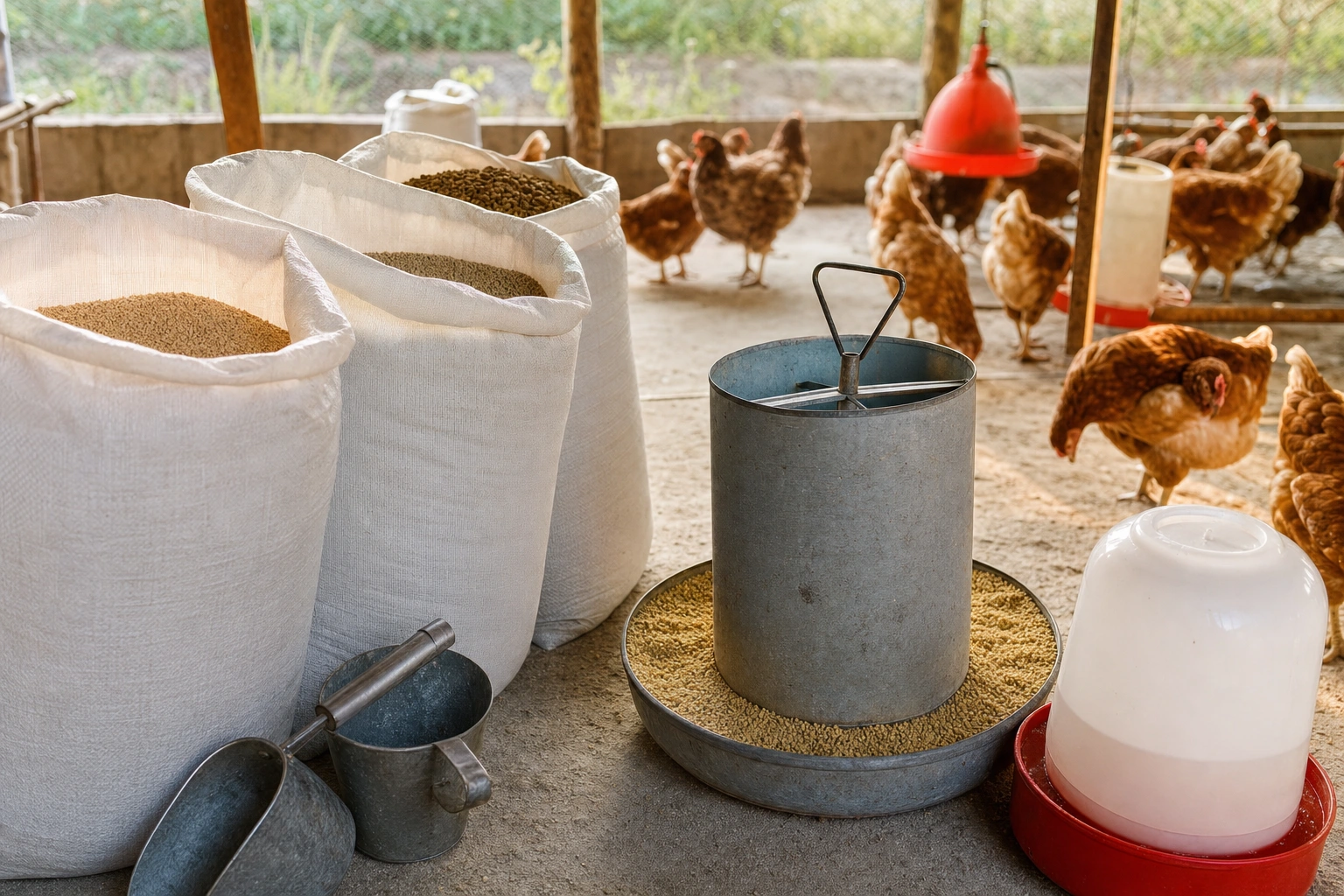
Nutrition is one of the most important management factors in poultry production because every stage of a bird’s life depends on an adequate supply of nutrients. Chicks need nutrients for rapid growth and the development of muscles, bones and organs. Broilers need them to convert feed into meat efficiently, while laying hens require a carefully balanced diet to produce eggs consistently and maintain body condition.
A flock may have good housing, quality chicks and effective disease-control measures, yet still perform poorly if its feed or water is inadequate. Poor nutrition can appear as slow growth, uneven flock size, weak bones, low egg production, poor shell quality, excessive mortality or unnecessary feed costs. Understanding poultry nutrition helps farmers make better decisions rather than treating every production problem as a disease issue.
What Poultry Nutrition Involves
Poultry nutrition is the provision and use of feed ingredients that supply energy, protein, amino acids, vitamins, minerals, fibre and water. These nutrients work together. A diet can contain enough feed by weight but still fail to meet the bird’s needs if one important nutrient is deficient, unavailable or poorly balanced.
Nutrition also involves more than choosing ingredients. It includes feed storage, feed presentation, access to feeders, water availability, feeding frequency and the age or production purpose of the birds. A broiler, a layer, a chick and an indigenous chicken do not have identical nutritional requirements.
Energy
Energy fuels movement, body maintenance, growth and egg production. Common energy sources in poultry diets include maize, wheat, sorghum and other cereal grains, as well as suitable vegetable oils or fats. When a diet does not provide enough usable energy, birds may eat more if feed is available, grow slowly or produce fewer and smaller eggs.
Excessive energy can also create problems. In laying birds, an overly energy-dense diet may contribute to excessive body weight, while in growing birds it can lead to an imbalance between energy and protein. The aim is not simply to maximise energy, but to balance it with the other nutrients the bird requires.
Protein and amino acids
Protein is needed for muscle, feathers, enzymes, hormones and tissue repair. However, birds do not use protein as a single substance; they require specific amino acids that make up proteins. Ingredients such as soybean meal, fish meal, sunflower meal and other protein sources can contribute to the diet, but their nutritional value and quality differ.
A feed may contain a reasonable crude-protein level while still being short of an essential amino acid. This is why commercial feed formulation considers amino-acid balance rather than protein percentage alone. Proper formulation can improve growth and egg production without relying on unnecessary amounts of expensive protein ingredients.
Vitamins and minerals
Vitamins are required in small quantities but support metabolism, immunity, vision, reproduction and normal development. Minerals such as calcium, phosphorus, sodium and trace minerals are important for bones, muscle function, eggshell formation and other body processes.
Calcium is especially important in laying hens because eggshell production places a continuing demand on the bird. Calcium must be supplied in the correct amount and in a form that the bird can use. Phosphorus also needs to be balanced with calcium. Too little or an unsuitable balance may contribute to poor skeletal development or thin-shelled eggs.
Fibre and additives
Poultry need some fibre, but high-fibre ingredients can reduce the amount of energy and nutrients birds obtain from a given quantity of feed. Ingredients that are fibrous, mouldy or poorly processed may therefore lower performance even when they appear inexpensive.
Depending on the production system and professional advice, feeds may contain additives such as enzymes, antioxidants, probiotics or other approved products. These should not be treated as substitutes for clean water, good ingredients, sound hygiene and a properly balanced ration. Farmers should follow product instructions and use only products permitted by relevant regulations.
Why Water Is a Nutrient
Water is sometimes overlooked because it is not mixed into the feed, but it is essential for digestion, circulation, temperature control, waste removal and egg formation. Birds can reduce their feed intake when clean water is unavailable, and this quickly affects growth or production.
Provide fresh, safe water throughout the day. Drinkers should be positioned so that all birds can reach them easily, and they should be cleaned regularly to prevent the build-up of feed, droppings, algae and biofilm. Leaking drinkers make litter wet, which can increase odour, contamination and foot or respiratory problems. Water lines and tanks also require inspection, particularly during hot weather.
Changes in water intake can provide an early warning that something is wrong. Reduced drinking may be linked to illness, poor water quality, blocked drinkers or environmental stress. Unusually high intake may also indicate heat stress, feed-related problems or disease. Records and daily observation help the farmer notice such changes promptly.
Feeding Birds According to Their Stage
The correct feed depends on the bird’s age, breed, production objective and environment. Using one ration for every stage may be convenient, but it can waste money or leave birds short of important nutrients.
Chicks and growers
Young chicks have small digestive systems and high nutrient needs relative to their body size. A starter ration is normally formulated to support early growth and development. It should be palatable, fresh, easy to consume and suitable for the type of bird being raised.
As birds grow, they usually move to a grower ration. This diet supports continued development while avoiding the unnecessary nutrient density of a starter feed. Feed changes should be managed carefully. A sudden change in texture, ingredient composition or taste can reduce intake, so a gradual transition is often useful when practical.
Broilers
Broilers are selected for rapid meat production and efficient feed conversion. Their diets must provide an appropriate balance of energy, amino acids, minerals and vitamins for each growth phase. If the ration is too low in key nutrients, growth and uniformity may suffer. If it is poorly balanced or fed without regard to management, birds may develop excessive fat or skeletal and mobility problems.
Feed intake, body weight, flock uniformity, litter condition and mortality should be monitored together. A good result is not merely a heavy bird; it is healthy, marketable growth achieved with sensible feed use and acceptable welfare.
Layers
Point-of-lay pullets need a suitable transition to layer feed. Laying hens require nutrients for maintenance, body condition and egg production. Calcium is particularly important, and the availability and size of calcium sources can affect how effectively hens use it during the period when shells are formed.
Farmers should monitor egg numbers, egg size, shell strength, body weight and feed intake. A sudden decline may be related to nutrition, but it may also result from age, heat, disease, lighting, stress or poor water access. Looking at the whole production system prevents an incorrect diagnosis.
Indigenous and dual-purpose chickens
Indigenous chickens are often kept in free-range or semi-intensive systems where they obtain part of their diet from scavenging. Scavenging can provide insects, seeds and plant material, but the supply varies with season, land access and flock size. It should not automatically be assumed to meet all nutritional needs, especially for growing chicks or laying hens.
Supplementary feed can help improve consistency. Locally available ingredients may be useful if they are safe, properly processed and included in a balanced ration. For example, cereal grains can supply energy, while suitable oilseed meals may supply protein. However, farmers should avoid guessing ingredient proportions based only on appearance or price. A feed specialist can help assess nutrient content and formulate a practical supplement.
Feed Quality, Storage and Safety
Even a well-designed ration can fail if ingredients are poor quality. Feed should be free from visible mould, unusual odours, excessive dust, insects and contamination. Mouldy feed may contain mycotoxins, which are harmful substances produced by some fungi. Their effects can vary, but contaminated feed may reduce performance and compromise flock health.
Store feed in a dry, clean and well-ventilated area. Keep bags off the floor and away from walls where moisture can collect. Protect them from rain, rodents, insects and direct sunlight. Use older safe feed first, while checking that it has not deteriorated. Do not mix new feed with spoiled feed in an attempt to dilute a problem.
Home-mixed feed can reduce costs and use local ingredients, but it requires careful weighing and formulation. Small errors in an ingredient such as a mineral premix can have a large effect because such products are included in small quantities. Use accurate scales, follow a tested formula and mix thoroughly. Never substitute ingredients casually, particularly when replacing protein sources, minerals or premixes.
Reducing Feed Waste
Feed is often the largest operating cost in poultry production, so waste directly reduces profitability. Waste may result from poorly designed feeders, overfilling, rodents, dampness, spillage or birds scratching feed onto the floor.
Use feeders that are appropriate for the birds and adjust their height as the flock grows. Fill them to a sensible level rather than to the top. Check for cracked equipment and observe whether birds can reach the feed without crowding. Store feed securely and clean up spills promptly. These simple measures preserve feed quality and reduce attraction for pests.
Feed conversion is another useful management measure. It compares the amount of feed used with the live weight gained or eggs produced, depending on the enterprise. It should be interpreted alongside mortality, flock health and market requirements. A low feed use figure is not a success if birds are underweight or laying hens are losing body condition.
Recognising Nutrition-Related Problems
Nutrition-related problems rarely have one unmistakable sign. Slow growth may reflect poor feed quality, insufficient access, disease, cold stress, parasites or overcrowding. Thin-shelled eggs may be associated with calcium or vitamin problems, but age, heat and disease can also play a role.
Begin with basic checks: Is the correct feed being used for the birds’ stage? Is it fresh and stored properly? Are feeders and drinkers clean and accessible? Has intake changed? Are birds of similar size, or is the flock uneven? Are there changes in litter, droppings, mortality or behaviour?
When a problem persists, consult a qualified animal-health professional, livestock adviser or feed specialist. Laboratory testing of feed or water may be appropriate in some cases. Avoid adding several products at once because this makes it difficult to identify what helped or caused a further problem.
Applying This in Practice
- Identify the production objective. Decide whether the flock is being raised for meat, eggs, breeding or household use. This determines the type of ration and the performance measures that matter.
- Match feed to age and stage. Use suitable starter, grower, finisher, developer or layer feed rather than treating all birds alike.
- Check water before changing feed. Confirm that water is clean, available and flowing properly, especially when birds suddenly reduce feed intake.
- Inspect feed every day. Look for mould, dampness, pests, bad odours and contamination. Record when feed was delivered and how long it remains in storage.
- Measure what is happening. Keep simple records of feed used, body weight or egg numbers, mortality, unusual symptoms and major management changes.
- Investigate patterns, not isolated signs. Compare feed and water intake with flock behaviour, housing conditions, weather and health observations.
- Seek advice before making major substitutions. A cheaper ingredient is only economical if it is safe, available, digestible and nutritionally appropriate.
Key Takeaways
- Nutrition must be balanced for the bird’s age, breed and purpose; one ration does not suit every production stage.
- Energy, amino acids, vitamins, minerals, fibre and clean water work together to support growth, health and egg production.
- Fresh, mould-free feed and hygienic water are as important as the written feed formula.
- Layers need carefully managed calcium and phosphorus, while broilers need balanced diets that support efficient, healthy growth.
- Indigenous chickens may benefit from supplementary feed because scavenging supplies vary by season and location.
- Accurate records of feed use, growth, eggs, water intake and mortality help reveal problems early.
- Reducing spillage, storing feed correctly and seeking expert advice before substitutions can protect both flock performance and profit.
No comments yet.