
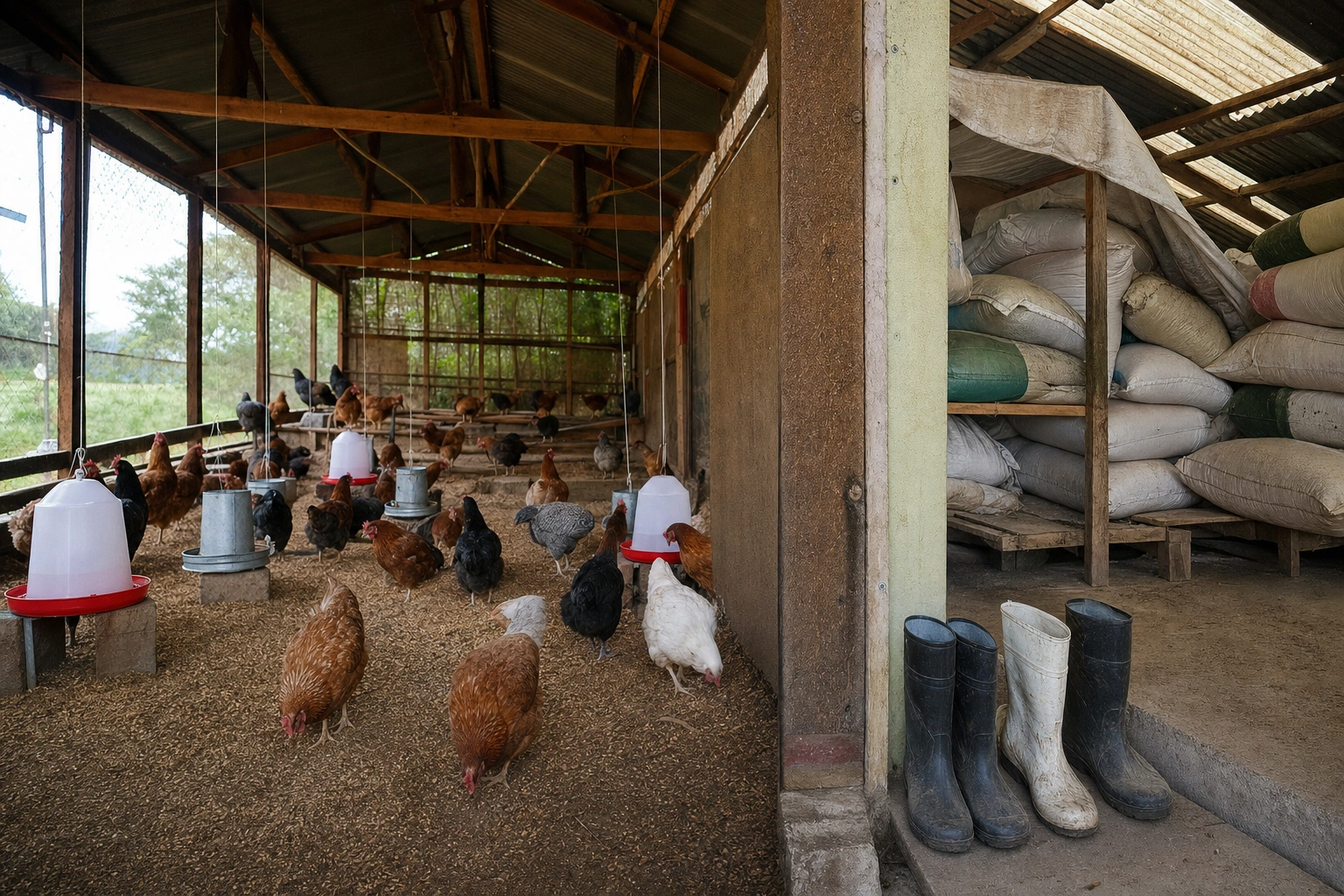
Healthy poultry depend on more than good feed and clean water. Disease usually develops when a disease-causing organism, a vulnerable bird and an enabling environment come together. A flock may be exposed to infection, for example, but show little illness if its immunity, nutrition and housing are strong. The same infection can spread rapidly when birds are overcrowded, stressed or exposed to contaminated equipment.
Understanding the common causes of disease helps farmers move beyond treating symptoms. Whether you keep indigenous chickens in a Kenyan homestead, broilers for the market or layers in a commercial unit, prevention begins with identifying how a problem entered the flock, why it spread and which conditions made the birds vulnerable.
What Causes Disease in Poultry?
The causes of poultry disease are commonly grouped into two broad categories: infectious causes and non-infectious causes. Infectious diseases are caused by organisms that can enter and multiply in the bird or spread between birds. Non-infectious problems arise from factors such as poor nutrition, injuries, toxins, extreme temperatures, genetic weakness or management mistakes.
These categories often overlap. Poor ventilation does not itself cause every respiratory disease, but it increases dust, ammonia and moisture, which can damage the respiratory tract and make infection more likely. Likewise, inadequate nutrition may not introduce a virus, but it can reduce growth, egg production and resistance to disease.
Infectious Causes of Poultry Disease
Viruses
Viruses are microscopic infectious agents that reproduce inside living cells. They can cause respiratory, digestive, nervous-system or reproductive problems, depending on the virus involved. Important viral diseases affecting poultry include Newcastle disease, infectious bronchitis, infectious bursal disease and avian influenza. The exact diseases present vary by location, species, vaccination status and production system.
Viral infections may spread through droppings, respiratory secretions, saliva, feathers, contaminated surfaces, footwear, clothing, crates, vehicles and wild birds. Some infections spread quickly through a flock, while others cause more serious illness in young birds or birds whose immunity is poor.
Antibiotics do not cure viral infections. Prevention depends on measures such as appropriate vaccination programmes, sound biosecurity, limiting contact with unknown birds and obtaining professional advice when unusual illness or sudden deaths occur. Farmers should follow local veterinary guidance because disease reporting and control requirements differ between countries and situations.
Bacteria
Bacteria can cause disease in several ways. Some enter through contaminated feed or water and affect the digestive system. Others infect the respiratory tract, bloodstream, joints or reproductive organs. Examples of bacterial problems in poultry include salmonellosis, fowl cholera, colibacillosis and infectious coryza.
Bacterial disease is more likely when birds drink contaminated water, consume spoiled feed, encounter dirty litter or suffer injuries and stress. Rodents, wild birds, insects, contaminated equipment and infected replacement birds can carry bacteria into a flock. Chicks may also become infected through contaminated hatching environments or poor handling.
Not every bird carrying bacteria will look sick, and some bacteria can be transmitted through poultry products if food safety practices are poor. Diagnosis is important because different bacteria respond differently to medicines, and inappropriate antibiotic use can fail to solve the problem, delay proper treatment and contribute to antimicrobial resistance. Farmers should seek veterinary guidance rather than routinely giving antibiotics whenever birds appear unwell.
Parasites
Parasites live on or inside poultry and take nutrients, cause irritation or damage tissues. External parasites include mites, lice, fleas and ticks. They may cause itching, feather damage, anaemia, restlessness and reduced production. Some are more active at night and hide in cracks, nest boxes or housing materials during the day.
Internal parasites include worms and coccidia. Coccidiosis is caused by microscopic organisms that multiply in the intestinal tract. It is particularly important in young birds and can cause diarrhoea, poor growth, weakness and, in serious cases, death. Worm infections may lead to weight loss, poor feed conversion and reduced laying, although signs can be less obvious.
Parasite problems are encouraged by wet litter, overcrowding, contaminated ground, poor cleaning and repeated use of the same areas without an effective management plan. However, routine use of medicines without diagnosis is not a substitute for hygiene and monitoring. Treatment choices should be based on veterinary advice, the bird’s age and production purpose, and the required withdrawal periods for meat or eggs.
Fungi and moulds
Fungi can affect poultry directly or produce toxins that harm birds. Damp litter, humid stores and poorly dried feed create favourable conditions for mould growth. Mouldy feed may contain mycotoxins, which can reduce growth, weaken immunity, damage organs or lower egg production. Birds may not always reject contaminated feed, so visible mould should be treated as a warning rather than the only sign of danger.
Fungal respiratory disease can also develop when spores accumulate in dusty bedding, hatcheries or poorly maintained housing. Prevention includes keeping feed dry, protecting stores from rain and rodents, rotating stock, avoiding long storage in hot and humid conditions, and removing damp or mouldy material safely. Do not assume that visibly removing the mould from feed makes the remaining feed safe.
Non-Infectious Causes of Poultry Disease
Poor nutrition and feed-related problems
Birds need a balanced supply of energy, protein, amino acids, vitamins, minerals and clean water. A deficiency or imbalance can produce poor growth, weak bones, feather problems, low egg production, thin shells, reduced hatchability or susceptibility to infection.
Examples include inadequate calcium or an imbalance of calcium and phosphorus affecting shell quality and skeletal health, and insufficient protein reducing growth and feather development. Feed that is too rich, poorly mixed or unsuitable for the bird’s age can also cause problems. Chicks, growers, layers and broilers have different nutritional requirements, so one ration should not automatically be used for every stage.
Water is part of nutrition. A flock may tolerate a short reduction in feed more easily than a disruption in water access. Dirty, salty, chemically contaminated or warm water can reduce intake and contribute to illness. Drinkers should be easy to clean, protected from faecal contamination and checked regularly for leaks or blockages.
Poor housing, ventilation and litter
Housing affects disease risk through temperature, air quality, moisture, light, space and cleanliness. Poor ventilation allows ammonia and dust to build up. Ammonia from wet litter irritates the eyes and respiratory tract and may make birds more vulnerable to respiratory infection. Excess moisture also supports the survival and multiplication of some pathogens and parasites.
Overcrowding increases contact between birds, contamination of feed and water, competition and heat stress. It also makes it harder to keep litter dry. Inadequate space at feeders or drinkers can cause smaller or weaker birds to receive less feed and water.
Temperature problems are especially dangerous for chicks. Young birds cannot regulate body temperature as effectively as adults, so cold conditions can cause huddling, poor feeding and deaths, while excessive heat can lead to panting, dehydration and reduced production. Sudden changes in temperature, draughts and wet birds can also increase stress.
Stress and poor management
Stress does not always create a disease on its own, but it can lower resistance and make existing infections more severe. Common stressors include transport, handling, sudden changes in feed, mixing unfamiliar birds, excessive noise, predator attacks, heat, overcrowding and irregular lighting.
Birds respond better to consistent routines. Introduce feed changes gradually where possible, handle birds calmly, reduce unnecessary disturbance and provide shade and adequate ventilation during hot weather. Keep records of events such as moving birds, changing feed or introducing new stock. If illness appears soon afterwards, these records can help identify contributing factors.
Injuries, aggression and harmful behaviour
Pecking, cannibalism, broken bones and wounds may result from overcrowding, inadequate feeder space, excessive light, boredom, nutritional imbalance or mixing birds of very different sizes. Injured skin creates an entry point for bacteria, while birds attracted to blood may worsen the damage.
Prevention involves identifying the underlying trigger rather than simply removing injured birds. Improve space and access to feed and water, reduce sources of disturbance, inspect the flock frequently and separate severely injured birds for appropriate care. Housing should protect birds from predators and sharp edges that can cause cuts or fractures.
Toxins and chemical exposure
Poultry can be poisoned by mould toxins, pesticides, rodenticides, unsuitable disinfectants, contaminated water, poisonous plants or chemicals stored near feed. Incorrectly mixed medicines or disinfectants can also harm birds. Signs vary and may include sudden deaths, weakness, diarrhoea, nervous behaviour, breathing difficulty or a rapid fall in production.
Store chemicals securely and separately from feed, label all containers, follow product instructions and prevent treated surfaces from being accessible until they are safe. Never place pesticides or medicines in unmarked containers. When several birds become ill suddenly, consider possible poisoning alongside infectious disease and seek urgent veterinary assistance.
Genetics, age and production stage
Age and genetic background influence disease risk. Chicks have developing immune systems, while older layers face the demands of prolonged egg production. Broilers grow rapidly and may be affected by leg or heart problems when nutrition, stocking density and environmental conditions are poorly managed.
Some breeds or individual birds may be more suited to particular climates or production systems than others. Choosing healthy stock from reliable sources, maintaining suitable breeding records and avoiding uncontrolled breeding can reduce problems. It is also important to match management to the bird’s production purpose rather than applying the same routine to indigenous chickens, broilers and layers.
How Disease Enters and Spreads Through a Flock
Disease commonly enters through new birds, eggs, people, equipment, vehicles, feed, water or contact with wild animals. A farmer may unintentionally carry organisms on boots, clothing, hands, crates or tools from one poultry house to another. Shared equipment is particularly risky when it is moved without cleaning and disinfection.
Once inside, disease can spread through droppings, dust, feathers, saliva, nasal discharge, contaminated litter and direct contact. Flies, rodents and wild birds may move organisms between housing areas. Wind can carry dust over short distances, while poor drainage can move contamination into water sources.
A practical way to assess risk is to ask three questions: How could the organism enter? How could it multiply? and How could it reach more birds? For example, buying unverified birds may introduce infection; overcrowding and wet litter may allow it to multiply; shared drinkers, footwear and handling may spread it across the flock.
Recognising Warning Signs Early
Early observation can limit losses, but a sign alone rarely identifies the cause. Monitor appetite, water consumption, droppings, breathing, activity, growth, mortality, egg number and shell quality. Watch for coughing, sneezing, nasal discharge, swollen eyes, ruffled feathers, isolation, paralysis, lameness, diarrhoea, pale combs or sudden changes in behaviour.
Look for patterns rather than relying on one bird. Are only chicks affected, or all age groups? Did illness begin after new birds arrived, a feed change or a period of extreme heat? Are deaths sudden or gradual? Is the problem concentrated near a particular drinker, feeder or section of the house?
Separate visibly sick birds where practical, limit visitors and equipment movement, and contact a qualified animal-health professional promptly. Do not sell, slaughter, move or give away birds from a flock with unexplained illness without obtaining advice. Sudden deaths, severe respiratory signs, nervous signs or unusual mortality require urgent attention because some diseases can spread rapidly and may have animal-health or public-health implications.
Preventing Common Causes of Disease
- Buy carefully: obtain birds or hatching eggs from a trustworthy source and ask about health history and vaccination. Avoid introducing birds that show illness.
- Use quarantine: keep new birds separate from the established flock for an appropriate period advised by a veterinary professional. Use separate equipment and observe them daily.
- Control access: restrict unnecessary visitors, provide dedicated footwear or clean boots, and place cleanable entry points at poultry houses.
- Clean systematically: remove manure and dirty litter, wash surfaces, allow them to dry and use suitable disinfectants according to label directions. Disinfection is less effective when surfaces are covered with organic matter.
- Protect feed and water: keep feed dry and off the floor, clean storage areas, control rodents and maintain drinkers so they do not leak or become contaminated.
- Manage stocking and ventilation: provide adequate space, fresh air without harmful draughts, dry litter, shade and protection from extreme weather.
- Follow a vaccination plan: use vaccines appropriate to local disease risks and administer them according to professional and product guidance. Vaccination supports prevention but does not replace biosecurity.
- Keep records: record purchases, vaccinations, feed changes, egg production, deaths and treatments. Good records make unusual patterns easier to detect and discuss with an adviser.
Applying This in Practice
When a flock develops a problem, begin with a calm, structured assessment. First, protect the remaining birds by limiting movement between houses and separating affected birds where appropriate. Second, check immediate conditions: water availability, feed quality, temperature, ventilation, litter moisture and signs of chemical exposure. Third, review recent changes, including new birds, visitors, transport, vaccination, feed, weather and housing.
Next, collect useful information for a veterinary professional. Note the number and age of birds affected, the date signs began, the number of deaths, the main symptoms and any management changes. Keep feed labels and treatment records. Avoid combining several medicines or using leftover drugs without advice, because this can hide signs, cause residues in eggs or meat and make diagnosis more difficult.
For a smallholder in western Kenya, for example, a sudden drop in egg production after heavy rain should prompt checks of wet litter, leaking drinkers, feed storage, ventilation and possible disease exposure—not just an immediate change of medicine. In a commercial broiler house, uneven growth may require examination of feeder access, drinker pressure, stocking density, temperature and feed quality alongside infectious causes.
Key Takeaways
- Poultry disease may be infectious, non-infectious or the result of several interacting causes.
- Viruses, bacteria, parasites and fungi can enter through birds, people, equipment, feed, water and wild animals.
- Overcrowding, wet litter, poor ventilation, heat, stress and weak nutrition make disease more likely or more severe.
- Observe patterns in appetite, droppings, breathing, growth, egg production and mortality to detect problems early.
- Quarantine new birds, control access, clean equipment, protect feed and water, and follow an appropriate vaccination plan.
- Seek veterinary advice for unexplained illness, sudden deaths or suspected poisoning, and avoid indiscriminate medicine use.
No comments yet.