
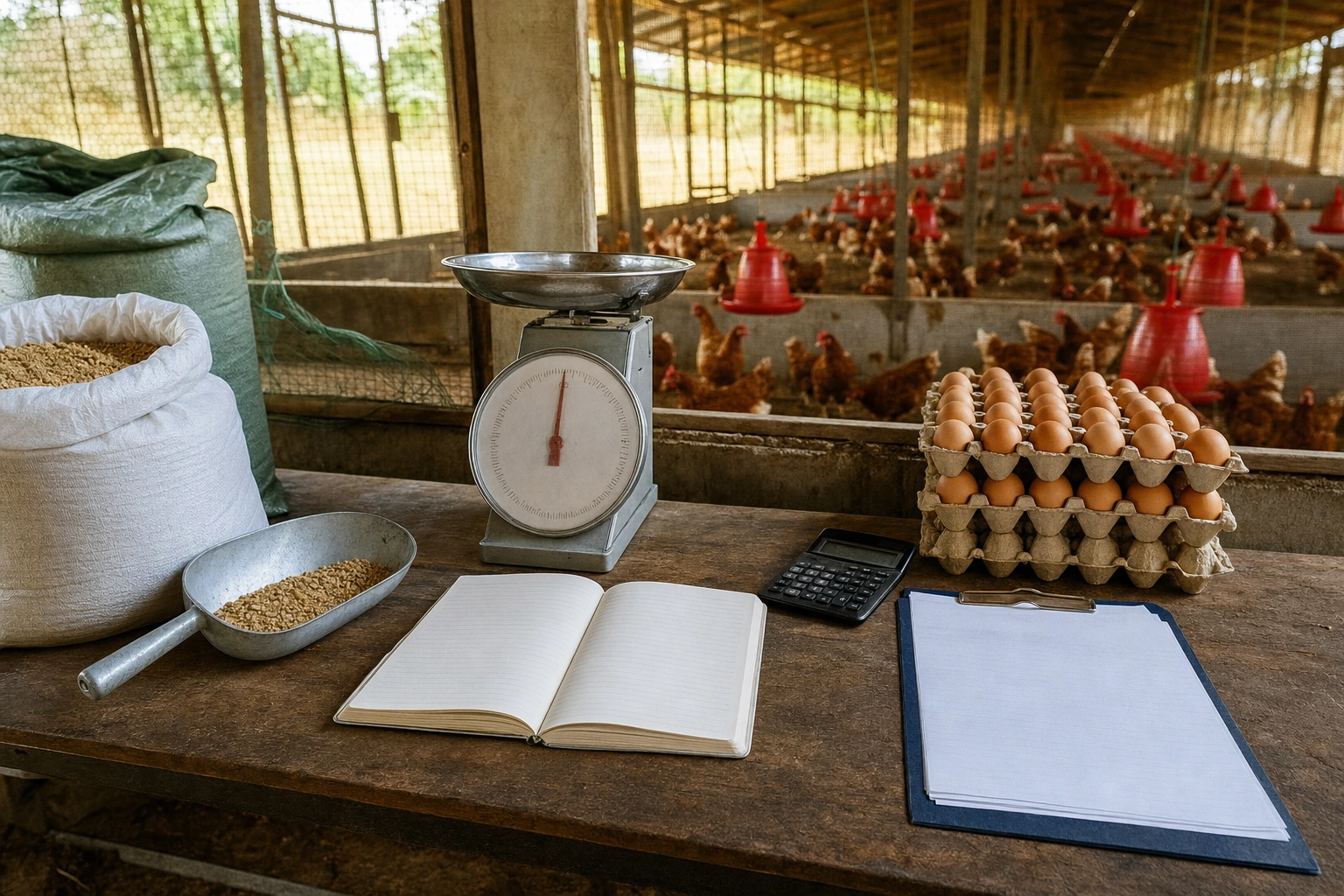
Poultry farming involves many daily decisions: how much feed to provide, when to vaccinate, whether birds are growing as expected, which hens are laying well and whether sales are covering costs. Without reliable records, these decisions are often based on memory or guesswork. With records, a farmer can see what is happening in the flock and respond using evidence.
Poultry records do not need to be complicated or expensive. A notebook, printed form, spreadsheet or mobile application can work well if information is entered consistently and used regularly. The aim is not to collect data for its own sake, but to turn routine observations into practical farm management decisions.
What Are Poultry Records?
Poultry records are written or digital accounts of important activities, inputs, events and results on a poultry farm. They may cover the number of birds, feed use, egg production, deaths, medication, vaccinations, sales, purchases and expenses.
A useful record answers questions such as:
- How many birds are currently on the farm?
- How much feed was used during a particular period?
- How many eggs were collected, sold, broken or rejected?
- When were birds vaccinated or treated?
- How many birds died, and what was the suspected cause?
- Did a flock make a profit after all relevant costs were included?
Records become especially valuable when they are linked to a specific flock or production batch. For example, a farmer should be able to distinguish the performance of a group of layers that arrived in January from that of another group that arrived later. Mixing information from different flocks can hide problems and make comparisons unreliable.
Why Records Matter in Poultry Farm Management
They improve planning
Farmers need to plan purchases of feed, vaccines, medicines, packaging and equipment. Records show the rate at which supplies are being used. If a flock normally consumes a certain amount of feed each week, the farmer can arrange purchases before the stock runs out rather than making an emergency purchase at an inconvenient time.
Records also support planning for labour and housing. A farmer who knows the number and age of birds can prepare suitable space, drinkers, feeders and transport arrangements. This is important when chicks are growing, when birds are moved between houses or when mature birds are being sold.
They reveal changes in flock performance
Production figures can show whether birds are performing as expected. A gradual fall in egg numbers may be related to age, seasonal conditions, feed quality, disease, stress, lighting or overcrowding. A sudden fall requires quicker investigation. Without daily or weekly figures, the change may only be noticed after it has become serious.
For broilers, weight records help the farmer assess growth and decide whether birds are ready for market. If birds are consuming feed but gaining weight slowly, the farmer can investigate feed quality, disease, water access, temperature, ventilation or stocking density.
They control costs and protect cash flow
Feed is often one of the largest operating costs in poultry production, so it should be recorded carefully. Other costs include chicks, transport, labour, litter, vaccines, medicines, electricity, water, repairs, packaging and market fees. Recording these costs helps the farmer calculate the real cost of producing eggs or meat.
A business may appear busy while still losing money. For example, frequent egg sales can create regular cash inflows, but those sales do not automatically mean the enterprise is profitable. Profit can only be assessed after comparing income with the costs incurred to generate it.
They support early problem detection
Changes in mortality, feed intake, water consumption, egg quality, body weight or behaviour may be early warning signs. A mortality record can show whether deaths are isolated incidents or part of a pattern. A record of medication can prevent repeated or inappropriate treatment and helps the farmer discuss the flock’s history with a qualified animal-health professional.
Records do not replace professional veterinary advice. They make that advice more useful because the farmer can provide clear information about dates, symptoms, numbers affected and actions already taken.
Essential Poultry Records to Keep
Flock inventory and movement records
Begin with a record of birds entering and leaving the farm. Note the date, type of bird, breed or strain where relevant, number received, supplier, age and purchase price. Record additions, transfers, sales, slaughter and deaths. A simple flock balance can be checked using this principle:
Closing flock number = opening flock number + birds received ? birds sold or transferred ? birds that died.
If the calculated closing number does not match the physical count, investigate the difference. An incorrect bird count affects feed calculations, mortality rates, stock valuation and expected sales.
Feed and water records
Record the type and quantity of feed purchased, the date received, the supplier and the quantity issued to each flock. Where possible, record wastage, damaged feed and remaining stock. Feed should be stored in a clean, dry, secure place, and stock should be rotated so older feed is used appropriately.
Water consumption can also be useful. A sudden change may indicate a problem with drinkers, environmental conditions, feed, disease or access to water. The figures should be interpreted alongside weather, bird age and production results rather than treated as a diagnosis by themselves.
Health, vaccination and treatment records
Health records should include the date, flock affected, signs observed, number of birds affected, number of deaths, suspected cause, advice received and action taken. Vaccination records should show the vaccine name, date administered, flock, method of administration and any relevant batch or expiry information available on the product.
When medicines are used, record the product, dose or instructions followed, date, reason for use and person responsible. Farmers should observe the required withdrawal period for eggs or meat according to the product instructions and professional advice. Products should not be used casually or mixed without appropriate guidance.
Egg production and quality records
Layer farmers can record the number of eggs collected during each collection period, usually by day. Separate sound eggs from cracked, dirty or otherwise rejected eggs. Also record eggs sold, eggs used at home, eggs given away and stock remaining. This provides a clearer picture of both production and income.
A useful indicator is the laying rate:
Laying rate (%) = number of eggs collected ÷ number of live hens × 100.
For example, if 180 live hens produce 144 eggs in one day, the laying rate is 80 per cent. The figure should be compared with the flock’s age, breed, feeding programme and previous performance. A single day may be unusual, but a sustained change deserves investigation.
Growth and body-weight records
For meat birds, weigh a sample of birds at regular intervals using the same method each time. Record the date, number weighed, total weight or average weight and any observations. Consistent weighing helps identify whether growth is on track and whether different groups are developing unevenly.
Farmers can also calculate feed conversion when they have reliable feed and weight data:
Feed conversion ratio = feed consumed ÷ live-weight gain.
A lower ratio generally means less feed was used for each unit of weight gained, but comparisons are meaningful only when the birds, period, feed and measurement methods are reasonably similar. Spilled feed, feed remaining in storage and deaths should be considered when interpreting the result.
Sales, purchases and expense records
Record every sale with the date, product, quantity, price, customer or market channel and amount received. Record purchases and expenses in the same way. Separate farm expenses from household spending. If a vehicle, building or piece of equipment serves several activities, allocate costs using a reasonable and consistent method.
These records help calculate gross income, operating costs and profit. They also support pricing decisions. A farmer who knows the cost per tray of eggs or per kilogram of live bird is in a stronger position when negotiating with traders, institutions, shops or direct customers.
How to Build a Simple Record-Keeping System
- Choose the unit of record. Decide whether information will be organised by flock, house, batch, production cycle or individual bird. For most small and medium poultry farms, a separate page or file for each flock is practical.
- List the decisions the records must support. These might include ordering feed, checking mortality, setting prices, scheduling vaccination, selecting replacement birds or deciding when to sell.
- Create simple forms. Use columns for date, flock, activity, quantity, cost, observations and person responsible. Avoid collecting information that nobody will review.
- Record events close to the time they happen. Enter egg collections daily, feed issues when feed is issued and deaths as soon as they are identified. Delayed entries are more likely to be forgotten or estimated inaccurately.
- Check the figures. Compare the written bird count with the physical count, compare feed issued with stock remaining and check that sales totals agree with cash received or invoices.
- Review records on a fixed schedule. A daily check may cover mortality, feed, water and production. A weekly review can examine trends, stock levels and tasks due. A monthly review can assess costs, income and flock performance.
For a small farm, a notebook divided into sections may be enough. A spreadsheet becomes useful when there are several houses, customers or production cycles. Digital tools can reduce calculation errors, but they still require accurate data entry, backups and clear responsibility for updating the records.
Turning Records into Management Decisions
Records become useful when the farmer asks what a change means and what action is justified. Consider a flock whose egg production has fallen for two consecutive weeks. The farmer can compare the production record with feed intake, water access, mortality, vaccination history, bird age, temperature and recent management changes. This process narrows the possible causes instead of blaming one factor immediately.
Suppose feed use has risen while body-weight gain has slowed. The farmer may inspect feeders for spillage, check whether the feed is fresh and correctly formulated, confirm that all birds can access it and look for signs of illness. If the problem is not explained by management checks, professional advice may be needed.
Financial records can lead to a different decision. If eggs are selling regularly but the cost per tray is higher than the average selling price, the farmer may need to reduce wastage, improve purchasing, change the sales channel, adjust flock size or review pricing. The correct response depends on the evidence and the farm’s objectives.
Common Record-Keeping Mistakes
- Recording only good results: Omitting deaths, rejected eggs or unpaid sales creates a misleading picture.
- Combining all flocks: Mixed records make it difficult to identify which birds are performing poorly.
- Using estimates when counts are possible: Guessing feed use, egg numbers or expenses weakens calculations.
- Failing to record non-cash costs: Labour, transport, repairs and depreciation may be overlooked when assessing profitability.
- Changing measurement methods: Weighing birds with different equipment or recording feed in inconsistent units makes comparisons unreliable.
- Keeping records but never reviewing them: Data has little value if it is not used to guide action.
- Ignoring privacy and security: Customer details, financial information and farm plans should be stored safely and shared only when appropriate.
Applying This in Practice
A poultry farmer in Kenya managing a flock of layers could start with five daily columns: live birds, eggs collected, rejected eggs, feed issued and deaths. A sixth section could record sales and expenses. At the end of each week, the farmer can calculate the laying rate, check whether mortality is changing, compare feed use with the previous week and review the quantity of eggs still in stock.
For a broiler enterprise, the weekly form could include live bird numbers, feed received, feed used, sample weights, deaths, treatments and expected sale date. At marketing time, the farmer can compare the actual sales income with the recorded cost of chicks, feed, health care, labour, transport and other expenses.
Start with a system that can be maintained. Accurate five-minute entries made consistently are more valuable than an elaborate form that is abandoned after one week. Assign responsibility if several people work on the farm, and explain what each person must record. At review time, write down the action arising from the figures, such as ordering feed, repairing drinkers, seeking veterinary advice or changing the sales plan.
Key Takeaways
- Keep records by flock or production batch so performance can be compared accurately.
- Record birds, feed, water, health events, eggs or weights, sales and expenses consistently.
- Use simple calculations such as laying rate, flock balance and feed conversion to understand performance.
- Review records regularly and investigate changes in production, mortality, consumption or costs.
- Include rejected products, wastage, labour, transport and other costs when assessing profitability.
- Choose a notebook, spreadsheet or digital tool that the farm team can update accurately and maintain.
No comments yet.