
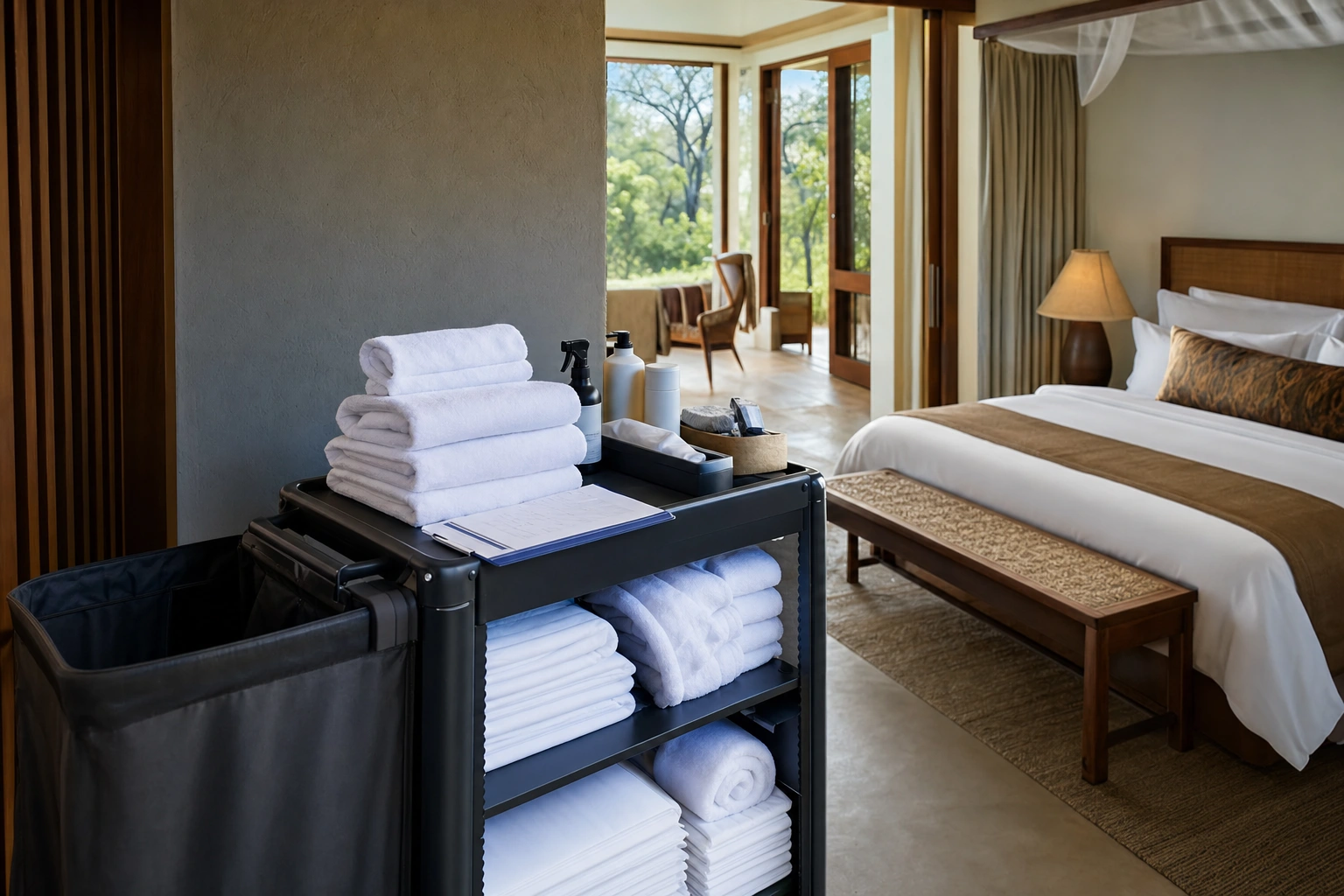
A housekeeping supervisor is the link between a hotel’s housekeeping manager and the room attendants, public-area cleaners and laundry staff who keep the property operating. The role is not limited to checking whether rooms look clean. It involves organising people, protecting standards, controlling resources, responding to guest needs and ensuring that rooms are ready safely and on time.
In hotels, lodges, serviced apartments, hospitals and other accommodation businesses, housekeeping is closely connected to the guest experience. A well-presented room supports comfort, trust and repeat business, while a missed detail can lead to complaints even when other departments have performed well. Effective supervision therefore combines practical knowledge of cleaning with communication, planning, coaching and sound judgement.
What Is a Housekeeping Supervisor?
A housekeeping supervisor is a frontline leader responsible for monitoring and coordinating housekeeping operations during a particular shift, section or work period. The supervisor may report to an executive housekeeper or housekeeping manager and may oversee room attendants, housemen, public-area attendants, linen-room staff or outsourced cleaning teams.
The exact duties differ according to the size and type of property. In a small guesthouse, one supervisor may inspect rooms, issue supplies and support cleaning directly. In a large city hotel or safari lodge, several supervisors may each manage a floor, building, villa area or specialist section.
The supervisor’s central responsibility is to make sure that work is completed according to the property’s procedures. This normally includes cleanliness, presentation, safety, timing, equipment care, stock control and professional conduct.
Core Responsibilities of a Housekeeping Supervisor
1. Planning and allocating daily work
At the beginning of a shift, the supervisor reviews the day’s operational information. This may include occupied rooms, expected departures, early arrivals, stayover services, vacant rooms, out-of-order rooms, special requests and rooms requiring additional attention.
Work is then divided according to the number of available staff, room types, floor layouts, staff experience and expected workload. Fair allocation matters because an unrealistic assignment can lead to rushed cleaning, incomplete inspections or staff fatigue. A good supervisor considers both productivity and the time needed to meet the required standard.
For example, a room attendant cleaning several departure rooms may need a different assignment from a colleague responsible mainly for lighter stayover services. Rooms with extra beds, kitchen facilities, balconies or accessibility features may also require different preparation times.
2. Inspecting rooms and public areas
Inspection is one of the most visible duties of a housekeeping supervisor. It should be systematic rather than based on a quick glance. The supervisor checks whether the room is clean, functional, correctly supplied and ready for the next guest.
A room inspection may cover:
- Entrance, floors, corners, skirting boards and surfaces
- Bed linen, pillows, mattress presentation and visible stains
- Bathroom sanitation, towels, toiletries, mirrors and drainage
- Dust, hair, odours, marks, insects or signs of damage
- Lighting, switches, air conditioning, television and other guest-use items
- Furniture arrangement, curtains, windows and general presentation
- Guest supplies and property-specific amenities
- Safety concerns, maintenance defects and lost property
Supervisors may also inspect corridors, lifts, stairways, lounges, public toilets, restaurants’ support areas and other shared spaces. The inspection should identify both visible cleanliness issues and conditions that could affect safety or the guest’s ability to use the room comfortably.
3. Controlling room status and readiness
Housekeeping supervisors work with room-status information to show whether a room is occupied, vacant, dirty, inspected, ready, out of order or unavailable for another reason. In properties using a computerised system, the supervisor may update or verify these statuses. In smaller establishments, a written board, checklist or radio communication may be used.
Accuracy is essential. If a room is incorrectly marked as ready, the front office may assign it to an arriving guest before it has been properly inspected. If a clean room remains incorrectly marked as unavailable, the property may lose an opportunity to sell it. Supervisors therefore communicate promptly with reception and report changes such as maintenance problems, extended cleaning time or a room that needs re-servicing.
4. Coordinating with other departments
Housekeeping does not operate in isolation. The supervisor communicates with front office staff about arrivals, departures, room priorities and guest requests. Maintenance teams may be contacted about faulty plumbing, lighting, locks, air conditioning or hot water. Laundry staff coordinate linen movement, while security may assist with lost property, suspicious activity or access concerns.
Clear communication should include the relevant room or area, the problem, the action required and the urgency. Instead of saying that “a room has a problem”, a useful report might identify that a bathroom tap is leaking and the room should not be released until maintenance has checked it.
In a Kenyan beach hotel, mountain lodge or city property, coordination may also be affected by transport arrangements, water availability, power interruptions or distance between accommodation units. A supervisor must plan realistically while continuing to protect hygiene and guest safety.
5. Managing linen, amenities and cleaning supplies
Supplies are operational resources, not minor details. The supervisor monitors the use and availability of bed sheets, towels, toiletries, refuse bags, chemicals, gloves, cloths and other items. Shortages can delay room release, while excessive use increases costs and may create avoidable waste.
Stock control involves checking what is available, issuing supplies appropriately, recording damaged or missing items and reporting reorder needs before an emergency occurs. Chemicals must be stored, labelled and used according to workplace instructions. Cleaning products should never be mixed unless the manufacturer’s instructions specifically allow it, because some combinations can create dangerous fumes.
Supervisors also ensure that linen is separated appropriately, damaged items are removed from service and clean linen is protected from contamination. In accommodation businesses with laundry facilities, they may monitor collection, sorting, washing, folding and distribution processes.
6. Supporting health, safety and environmental standards
A supervisor has a responsibility to reduce risks to guests, staff and visitors. This includes keeping floors dry or clearly warning people when cleaning is in progress, storing equipment safely, using personal protective equipment where required and reporting hazards promptly.
Safe practice also covers lifting, pushing cleaning carts, handling broken glass, dealing with sharps and responding to spills. Supervisors should make sure staff understand emergency procedures and know when an issue must be escalated rather than handled alone.
Environmental responsibility can be supported through careful use of water, electricity, chemicals, linen and disposable items. For instance, equipment should be switched off when not needed, chemicals should not be overused and waste should be separated where the property has suitable systems. Sustainable practice must remain consistent with hygiene requirements and the property’s operating procedures.
Leadership and People Management
Housekeeping supervisors achieve results through people. Their leadership affects work quality, morale and staff retention. A supervisor should give clear instructions, demonstrate tasks when necessary and check understanding, especially when a new employee joins the team.
Coaching is more effective when feedback is specific. Instead of saying “clean better”, the supervisor might explain that dust remains along the bedside table’s edge and demonstrate how to inspect less visible surfaces. This makes the standard observable and gives the employee a practical way to improve.
Supervisors also manage attendance, punctuality, uniform standards, break arrangements and conduct according to the employer’s policies. When performance or behaviour problems arise, the supervisor should record facts, listen fairly and follow the correct reporting process. Personal criticism, public embarrassment and inconsistent treatment can damage trust and make problems harder to resolve.
Good supervisors recognise that staff may have different levels of experience and different strengths. One team member may be particularly efficient with rooms, while another may have strong knowledge of public areas or linen handling. Appropriate delegation develops capability without lowering standards.
Skills Required for the Role
Technical cleaning knowledge is necessary, but it is only one part of effective supervision. Important skills include:
- Observation: noticing small defects, hygiene concerns and presentation problems before guests do.
- Organisation: arranging people, rooms, supplies and priorities within available time.
- Communication: giving clear instructions and sharing accurate information with colleagues and managers.
- Problem-solving: responding calmly to complaints, shortages, delays and maintenance issues.
- Time management: balancing room readiness with thorough inspections and staff support.
- Numeracy and record keeping: tracking linen, supplies, room assignments and reported defects.
- Confidentiality and discretion: respecting guest privacy and handling lost property properly.
- Customer awareness: understanding that cleanliness, order and responsiveness influence the guest’s overall experience.
Language skills can also be valuable in diverse workplaces. A supervisor may need to communicate with local staff, international guests, contractors and managers from different backgrounds. Simple, respectful and unambiguous language helps prevent mistakes.
Handling Guest Requests and Complaints
Although front office staff often receive complaints first, housekeeping supervisors may need to investigate or resolve issues relating to cleanliness, linen, odours, missing amenities or room presentation. The first step is to listen without becoming defensive. The supervisor should establish what happened, apologise for the inconvenience where appropriate and identify a realistic corrective action.
For example, if a guest reports that a bathroom was not properly serviced, the supervisor can inspect the room, arrange immediate re-cleaning and check the result before confirming that the issue has been addressed. If the problem involves a faulty shower or persistent odour, the supervisor should involve maintenance and keep the relevant department informed.
Complaints should be treated as information about a process, not merely as an unpleasant interaction. If the same issue occurs repeatedly, the supervisor should investigate whether the cause is inadequate training, a supply problem, unclear procedures or excessive workload.
A Practical Housekeeping Supervision Cycle
- Review information: check occupancy, arrivals, departures, special requests, staffing and known maintenance issues.
- Set priorities: identify rooms and areas that must be completed first and explain the reason to the team.
- Assign work: distribute tasks fairly, considering room difficulty, staff capability and available time.
- Prepare resources: confirm that carts, linen, chemicals, equipment and protective items are available.
- Monitor progress: walk through work areas, answer questions and identify delays before they affect room release.
- Inspect completed work: use a consistent checklist or sequence rather than relying on memory.
- Communicate status: update front office, maintenance and management about readiness, defects or changes.
- Record and review: document incidents, lost property, shortages, re-cleaning and unresolved issues for follow-up.
This cycle helps the supervisor move from reacting to problems towards controlling the operation. It also creates a record that can support training and service improvement.
Applying This in Practice
Consider a small lodge preparing for several afternoon arrivals. The supervisor first reviews which guests are checking in, whether any have requested extra beds and which rooms have departed. The team is divided between departure rooms, stayover rooms and public areas. Before work begins, the supervisor checks that clean linen and bathroom supplies are sufficient.
During the shift, one room attendant reports a blocked sink. Rather than releasing the room and hoping the issue will be fixed later, the supervisor reports it to maintenance, marks the room appropriately and reallocates work so another ready room can be prioritised. After cleaning, the supervisor inspects the room using the same sequence for every area, checks that the sink has been repaired and updates the room status only when both cleanliness and functionality are acceptable.
At the end of the shift, the supervisor records the maintenance issue, notes any supply shortage and briefs the next shift. This simple discipline protects guest service and gives management useful information for preventing similar delays.
Key Takeaways
- A housekeeping supervisor coordinates people, rooms, supplies and standards rather than only checking cleanliness.
- Room inspections should cover hygiene, presentation, functionality, safety and correct guest supplies.
- Accurate room-status communication helps front office staff sell available rooms without creating avoidable guest problems.
- Specific coaching and fair task allocation improve both staff performance and service consistency.
- Safe chemical use, equipment handling, linen control and hazard reporting are essential supervisory duties.
- Complaints should be investigated for their underlying process or training causes, not simply corrected once.
No comments yet.