
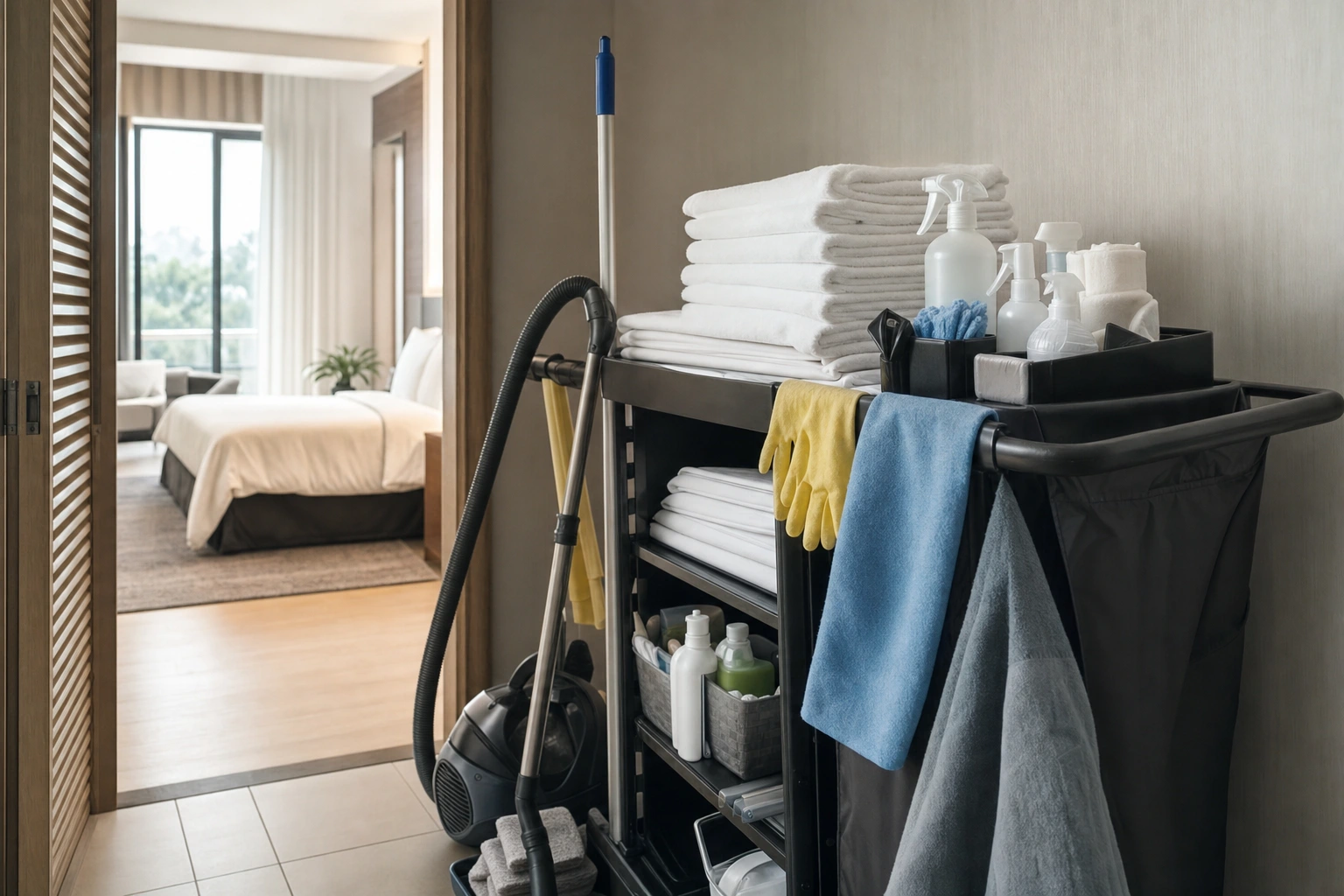
Housekeeping equipment and supplies are the practical resources that enable accommodation businesses to maintain clean, safe and welcoming environments. They include everything from vacuum cleaners, mops and trolleys to detergents, disinfectants, bin liners, gloves and guestroom amenities. Although these items may appear routine, their quality and proper use have a direct effect on operational efficiency, hygiene standards, staff safety and the guest experience.
In a hotel, lodge, serviced apartment, guesthouse or hospital accommodation department, housekeeping teams work across bedrooms, bathrooms, public areas, kitchens, offices and outdoor spaces. Each area has different cleaning demands. Understanding the role of equipment and supplies helps managers control costs while giving staff the right tools to complete work thoroughly, safely and consistently.
Understanding the Difference Between Equipment and Supplies
Housekeeping equipment refers mainly to durable tools and machines that can be used repeatedly over a long period. Examples include vacuum cleaners, floor-polishing machines, carpet extractors, steam cleaners, brooms, brushes, buckets, cleaning trolleys and laundry equipment. Some equipment is manually operated, while other items use electricity, batteries or water pressure.
Housekeeping supplies are consumable or replaceable materials used during cleaning and guest service. Examples include detergents, disinfectants, glass cleaner, furniture polish, toilet cleaner, scouring pads, cloths, paper products, refuse bags, personal protective equipment and guest amenities such as soap and shampoo. Supplies are gradually used up and must be reordered regularly.
The distinction matters for budgeting and control. Equipment is generally purchased as a capital item and requires maintenance, repair and eventual replacement. Supplies form part of regular operating expenditure. A hotel may own a vacuum cleaner for several years but purchase vacuum bags, cleaning chemicals and replacement filters repeatedly.
Why Housekeeping Equipment and Supplies Matter
They support hygiene and sanitation
Cleanliness is not simply an aesthetic concern. Proper equipment and suitable cleaning products help remove dirt, dust, stains, microorganisms, odours and waste from guest and staff areas. For example, a bathroom may require a toilet brush, disinfectant, non-abrasive cloths, a squeegee and appropriate protective gloves. Using only a dry cloth or a general-purpose product would not provide the same level of cleaning.
Equipment also affects the quality of sanitation. A vacuum cleaner with an effective filter can remove dust and particles more efficiently than a damaged machine. A clean mop head used with the correct dilution of floor cleaner is more effective than a dirty mop that spreads soil from one room to another.
They improve efficiency and productivity
Well-chosen equipment reduces the time and physical effort required for routine tasks. A housekeeping trolley allows a room attendant to carry linen, amenities, waste bags and cleaning materials in one organised unit. A vacuum cleaner designed for hotel carpets can cover large areas more quickly than a small domestic model. A floor machine can produce a consistent finish in a lobby or corridor when used by a trained operator.
Efficiency does not mean rushing. It means planning work so that staff spend less time searching for items, repeating tasks or dealing with equipment failure. A properly stocked trolley, for instance, can prevent unnecessary trips between a guestroom and the linen store.
They protect staff and guests
Cleaning work involves risks such as slips, trips, chemical exposure, manual handling injuries, cuts and electrical hazards. Suitable equipment and supplies help reduce these risks. Wet-floor signs warn guests and colleagues about temporary hazards. Gloves protect the hands from chemicals and contaminated materials. Long-handled tools can reduce excessive bending, while equipment with safe electrical cables lowers the risk of shocks and trips.
Safety depends on correct use as well as availability. A disinfectant may be useful when diluted according to its instructions but dangerous if mixed with another chemical. Staff should never combine cleaning chemicals unless the product instructions specifically permit it. Chemical containers should remain labelled and should not be transferred into unmarked bottles.
They influence the guest experience
Guests may not see the housekeeping store, but they notice the results of housekeeping work. Clean floors, polished surfaces, fresh linen, pleasant odour control and well-presented bathrooms communicate care and professionalism. In contrast, visible dust, streaked mirrors, stained upholstery or poorly maintained amenities can undermine confidence in the entire property.
Equipment and supplies also affect comfort. Good-quality linen, functioning irons, reliable hairdryers, clean waste bins and properly presented toiletries contribute to a guest's perception of value. In a Kenyan safari lodge, for example, housekeeping may need equipment suitable for dusty paths, outdoor verandas and locally distinctive building materials. In a city hotel, the priority may include efficient carpet care, lift-area cleaning and rapid room turnaround.
Main Categories of Housekeeping Equipment
Manual cleaning equipment
Manual equipment includes brooms, dustpans, brushes, mops, buckets, squeegees, dusters, scrapers and cleaning cloths. These tools remain important because they are flexible, relatively affordable and useful in areas where machines cannot easily operate. Colour-coded cloths and mop heads can help separate equipment used for bathrooms, bedrooms, food service areas and general surfaces.
Manual tools should be selected for the surface and task. A soft brush may be suitable for delicate upholstery, while a stiff brush may be needed for outdoor paving. Microfibre cloths can be useful for capturing dust and cleaning smooth surfaces, but they must be laundered correctly and replaced when worn.
Mechanical and electrical equipment
Mechanical equipment includes vacuum cleaners, wet-and-dry vacuums, carpet-cleaning machines, floor scrubbers, polishers, steam cleaners and pressure washers. These machines can improve consistency and reduce labour for large areas, but they require training, inspection and planned maintenance.
A machine should not be selected merely because it is powerful. Managers should consider noise, energy use, storage space, spare parts, availability of technical support and suitability for local conditions. A large machine may be inappropriate for a small guesthouse with narrow corridors, while a battery-powered model may be useful where electrical access is limited but charging and battery replacement must be planned.
Housekeeping trolleys and storage equipment
Trolleys, shelves, cupboards, laundry hampers and storage bins support organisation. A trolley should have enough space for clean linen, amenities, cleaning products and waste separation without becoming unstable or difficult to move. Stores should be dry, ventilated, secure and arranged so that frequently used items are easy to reach.
Good storage also supports stock control. Items can be grouped by category, labelled clearly and arranged using a first-in, first-out approach where appropriate. This helps staff identify shortages, avoid unnecessary over-ordering and use products before their recommended dates.
Laundry and linen equipment
Depending on the property, housekeeping may use washing machines, dryers, ironing equipment, linen trolleys, folding tables and laundry scales. These resources help maintain the availability and presentation of sheets, pillowcases, towels, uniforms and other textiles.
Correct sorting is essential. Linen may be separated by colour, fabric, level of soiling or intended use. Overloading a machine can reduce cleaning quality and increase wear. Excessive heat or unsuitable chemicals can damage fabric, shorten its useful life and increase replacement costs.
Main Categories of Housekeeping Supplies
Cleaning and sanitation chemicals
Cleaning chemicals include detergents, degreasers, disinfectants, glass cleaners, toilet cleaners, descalers, furniture-care products and air-care products. Each product should have a defined purpose. A detergent helps remove soil, while a disinfectant is intended to reduce microorganisms when used on a suitable surface and under the correct conditions.
Staff need clear instructions about dilution, contact time, application method, storage and personal protection. Buying a wide range of products without training can create confusion and waste. In many operations, a smaller selection of versatile products, supported by clear procedures, is easier to manage than numerous overlapping chemicals.
Cleaning accessories and disposable items
These supplies include sponges, scouring pads, microfibre cloths, mop heads, vacuum bags, spray bottles, gloves, masks where required, bin liners and paper towels. Although each item may be inexpensive, poor control can create significant cumulative costs. A department should monitor usage and investigate unusual increases rather than assuming that more consumption is always evidence of better cleaning.
Guestroom and bathroom amenities
Guest supplies may include soap, shampoo, conditioner, shower caps, drinking water where provided, tissues, toilet paper, laundry bags, stationery and other approved amenities. The selection should reflect the property's service level, target market and environmental policy. Supplies should be replenished according to room standards rather than personal preference.
Presentation matters. Amenities should be clean, undamaged, correctly positioned and consistent across comparable rooms. If a property offers refillable dispensers, those dispensers require careful cleaning, inspection and controlled refilling to maintain hygiene and appearance.
How to Select Appropriate Equipment and Supplies
- Assess the property and surfaces. Identify the number and type of rooms, floor coverings, bathroom finishes, outdoor areas, high-traffic zones and special facilities. Marble, timber, ceramic tiles, glass and fabric each require different care.
- Define the cleaning task. Clarify whether the item is needed for dust removal, stain treatment, disinfection, polishing, laundry, waste handling or guest presentation. This prevents unsuitable substitutions.
- Compare total cost, not only purchase price. Consider durability, energy and water consumption, chemical dilution, repairs, spare parts, staff time and disposal. A cheaper machine may become expensive if it breaks down frequently.
- Check safety and usability. Equipment should be comfortable to handle, suitable for staff strength and compatible with the working environment. Product labels and safety information should be available in a form staff can understand.
- Test before wide adoption. Trial a new mop, chemical or machine in a controlled area. Check cleaning results, surface compatibility, ease of use and staff feedback before purchasing large quantities.
- Set standards and reorder levels. Establish what each room or area should receive, how much stock should be held and when a reorder should be triggered. This reduces both shortages and excessive stock.
Using Equipment and Supplies Correctly
Housekeeping departments should use standard operating procedures for routine tasks. A room-cleaning procedure may specify the order of work, such as ventilating the room, removing waste, stripping used linen, cleaning high surfaces, sanitising the bathroom, vacuuming or mopping, replacing supplies and conducting a final inspection. The sequence should reduce cross-contamination and avoid cleaning an area twice.
Equipment should be cleaned after use. A vacuum may need its bag or container emptied and its filter checked. Mop heads and cloths should be collected for laundering rather than left wet in a trolley. Brushes and buckets should be rinsed, dried and stored properly. Neglected equipment can develop odours, spread dirt and deteriorate quickly.
Supervisors should inspect equipment regularly for damaged plugs, exposed wires, loose handles, broken wheels, blocked filters and worn brushes. Faulty equipment should be labelled and removed from service until repaired. A simple maintenance log can record inspections, faults, repairs and replacement dates.
Stock Control and Cost Management
Effective stock control balances availability with financial discipline. A housekeeping store may use bin cards, stock sheets or a digital inventory system to record receipts, issues, balances and reorder levels. Staff who collect supplies should follow an authorised process so that consumption can be traced to rooms, floors or work areas when necessary.
Managers can control costs by standardising products, reducing unnecessary variations, measuring chemical concentrates accurately and preventing misuse. Training is particularly important because incorrect dilution may either produce poor results or waste product. Linen and amenity costs can also be managed through accurate room-status information, appropriate replacement policies and careful handling.
Purchasing decisions should consider reliable supply. A remote lodge or small property may need contingency stock because deliveries can take longer. However, excessive stock can occupy valuable space, tie up cash and create storage or expiry problems. Local suppliers may offer practical advantages, provided product quality, consistency and safety documentation are satisfactory.
Sustainability in Housekeeping Operations
Housekeeping can reduce environmental impact through durable equipment, concentrated products, controlled dispensing, responsible laundry practices and careful water use. Microfibre systems, when correctly laundered, may reduce the amount of chemical product needed for some tasks. Energy-efficient machines can lower consumption over their working life, although their suitability and maintenance requirements should still be assessed.
Waste separation should follow the property's procedures and local arrangements. Refillable amenities may reduce packaging, but they must be managed hygienically. A sustainability measure should never compromise cleaning standards, infection control or guest safety. The best approach is to combine environmental responsibility with measurable operating procedures.
Applying This in Practice
Consider a 30-room guesthouse in Nakuru that wants to improve housekeeping performance. The supervisor begins by listing every area and surface, then observes how staff currently work. The review finds that bathroom cloths are being used in bedrooms, the vacuum filter is blocked, and cleaning chemicals are stored without a clear dilution guide.
The guesthouse responds by introducing colour-coded cloths, a daily equipment check, labelled chemical bottles and a simple trolley checklist. It purchases a suitable replacement filter and trains staff to clean and store mop heads correctly. The supervisor then inspects a sample of rooms using a checklist covering odour, dust, bathroom sanitation, linen presentation, floor condition and replenishment of amenities.
This example shows that improved housekeeping does not always begin with expensive machinery. Better results may come from matching tools to tasks, organising supplies, maintaining equipment and making expectations clear. New purchases are most valuable when they solve an identified operational problem.
Questions to Consider
- Which areas of the property require specialised equipment rather than basic manual tools?
- Are cleaning chemicals clearly labelled, correctly diluted and stored safely?
- Can staff find all required items on a properly organised trolley?
- How often are vacuum cleaners, floor machines, laundry equipment and other assets inspected?
- Which supplies are being wasted, overused or frequently unavailable?
- Would a change in equipment or product improve cleaning quality, staff safety or environmental performance?
Key Takeaways
- Equipment is generally durable and reusable, while supplies are consumed and regularly replaced.
- The right tools improve hygiene, productivity, staff safety and the guest experience.
- Equipment and chemicals must be matched to the surface, task and operating environment.
- Training, labelling, correct dilution and routine maintenance are as important as purchasing quality products.
- Stock records, reorder levels and standard room requirements help control housekeeping costs.
- Sustainable choices should reduce waste and resource use without compromising cleanliness or safety.
No comments yet.