
Guest room cleaning is more than removing rubbish and changing bed linen. It is a controlled process that combines hygiene, presentation, safety, privacy and efficient use of time. A well-cleaned room should feel fresh, orderly and ready for the next guest without appearing over-handled or carelessly arranged.
For housekeepers, supervisors and hospitality managers, following a consistent process is important because every room contains several work areas: the entrance, sleeping area, bathroom, storage spaces and guest-service items. A reliable sequence reduces cross-contamination, prevents forgotten tasks and makes the final inspection easier.
Why a Standard Cleaning Process Matters
Guests may not observe every action a housekeeper takes, but they notice the results. Dust on a bedside table, hair in a bathroom, a stained glass or an incorrectly prepared bed can affect their confidence in the entire property. Consistency is therefore a central part of service quality.
A standard process also helps housekeeping teams manage different room conditions. A checkout room may require a full clean and replenishment, while an occupied room may need a lighter service that respects the guest's belongings and privacy. Rooms marked for maintenance, deep cleaning or inspection may require additional procedures.
Good procedures provide four practical benefits:
- Hygiene: surfaces, linen and bathroom facilities are cleaned in a controlled order.
- Efficiency: staff avoid unnecessary movement and repeated work.
- Safety: chemical products, sharps, wet floors and damaged equipment are handled responsibly.
- Quality control: supervisors can assess rooms against a clear and repeatable standard.
Before Entering the Guest Room
1. Review the room status
Housekeeping should begin with accurate information from the hotel's room-status system, board or handover. Confirm whether the room is vacant and dirty, vacant and clean, occupied, due for departure, out of order or awaiting inspection. The correct status determines the type of service required.
Priority may be given to rooms needed for arriving guests, but the exact order should follow the property's operating procedures. A housekeeper should not assume that a room is empty simply because luggage is not visible. Always follow the approved procedure for occupied rooms and rooms where the guest has requested privacy.
2. Prepare the trolley and equipment
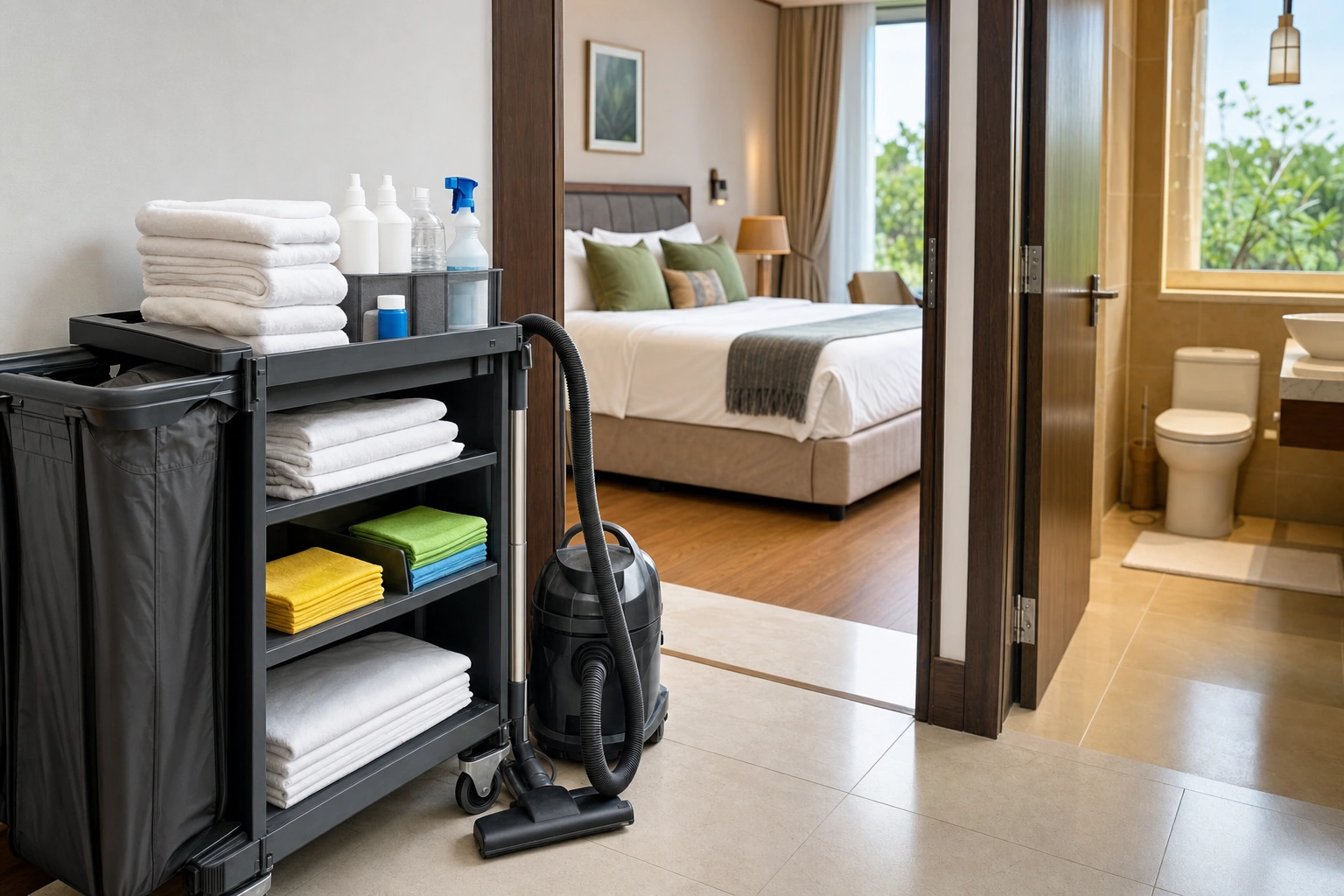
A properly arranged trolley saves time and limits unnecessary trips to the housekeeping store. Depending on the property, it may contain clean sheets and pillowcases, towels, rubbish liners, toilet tissue, guest amenities, cloths, a vacuum cleaner, broom, mop, dustpan, gloves and approved cleaning products.
Before starting, check that equipment is clean, functional and safe. A vacuum with a damaged cable, a leaking bottle or a loose mop handle should not be used. Cleaning products should remain in their original, clearly labelled containers and should never be mixed. Staff should follow the manufacturer's instructions and the hotel's chemical-safety procedures.
3. Follow the entry procedure
Knock and announce the housekeeping department according to the property's procedure. Pause to allow the guest to respond, and repeat the announcement if necessary. If the room is occupied, obtain permission before entering unless an emergency or a specific hotel policy applies.
When entering a vacant room, keep the door secured in the approved position rather than blocking it in a way that creates a hazard. Switch on the lights and check the general condition of the room. Look for unusual smells, water leaks, broken fixtures, exposed electrical parts, pests, smoke or items that could create an immediate risk.
Report hazards promptly. Housekeepers should not attempt repairs outside their training. If a serious issue affects safety or the room's usability, the room may need to be placed on a maintenance hold until the responsible department has assessed it.
The Recommended Cleaning Sequence
The exact order may differ between properties, but a practical sequence usually moves from assessment and ventilation to rubbish removal, linen handling, dusting, bathroom cleaning, floor care, replenishment and inspection. The aim is to work from cleaner areas to dirtier areas and from higher surfaces to lower surfaces.
1. Air and assess the room
Where appropriate and safe, improve ventilation according to the building's design and hotel policy. Open curtains to increase natural light and identify marks or damage. Do not open windows if this creates a security, weather or air-conditioning problem.
Conduct a quick visual check of furniture, lamps, curtains, walls, ceiling, air-conditioning controls, television equipment and guest supplies. Note missing or damaged items rather than waiting until the end of the shift. Early reporting helps prevent a room from being released before it is fully ready.
2. Remove rubbish and used items
Wear the required protective equipment and remove rubbish carefully. Check waste bins, bathroom bins and other approved disposal points. Do not press down rubbish with bare hands. If you find broken glass, a needle, a sharp object or an unknown substance, stop and follow the property's procedure for hazardous items.
Collect used towels and linen separately from general waste. Avoid shaking linen, because this can spread dust and particles. Place it directly into the designated linen bag or container. Check the bed and room carefully for guest property before removing anything.
3. Inspect for lost property
Lost property may be found in drawers, wardrobes, under the bed, behind curtains, in the bathroom or among linen. Search methodically, especially in places that are easy to overlook. Do not keep, use or move an item unnecessarily.
Record and hand over lost property according to the hotel's established procedure. The record commonly includes the room, date, time, description and person who found the item, although each property should use its own approved system. Privacy and chain of custody matter even when the item appears inexpensive.
4. Strip and remake the bed
Remove used linen carefully and check the mattress protector, pillows, bed base and headboard. Look for stains, damage or objects caught between the mattress and frame. Report linen that is torn, heavily stained or otherwise unsuitable rather than hiding the problem beneath fresh bedding.
Make the bed using the property's approved method. Ensure the sheet and duvet or blanket are evenly positioned, corners are secure and the pillows are clean and correctly arranged. The finished bed should look neat without excessive pulling that damages fabric or creates an uncomfortable sleeping surface.
Use clean linen only, and keep it off the floor. If a guest has displayed a sign requesting limited service or has given a specific preference, follow the applicable policy while maintaining required hygiene standards.
5. Clean high and frequently touched surfaces
Dust and wipe surfaces in a consistent direction, usually from higher surfaces to lower ones. Clean areas such as the headboard, bedside tables, telephone, remote control, light switches, handles, desk, chair arms, luggage rack and wardrobe handles. Frequently touched surfaces deserve particular attention because many people may contact them between room services.
Use the correct cloth and product for each surface. A product suitable for a bathroom may damage wood, metal or electronic equipment. Apply liquids to a cloth when appropriate rather than spraying directly onto sockets, switches, screens or control panels. Allow the surface to remain wet for the required contact time where the product instructions specify one, then dry or finish it as directed.
6. Clean the bathroom systematically
The bathroom should be cleaned with dedicated equipment and cloths to prevent the transfer of microorganisms to the sleeping area. Begin by removing rubbish and used towels, then apply approved cleaning products according to instructions. Allowing a product time to work can reduce excessive scrubbing, but never leave chemicals unattended in a way that could endanger guests or staff.
Clean the mirror, shelves, sink, taps, counter, shower or bath, fittings, toilet and floor. Pay attention to hair, water marks, soap residue, fingerprints, corners and areas behind or beneath fixtures. The toilet should be cleaned with the designated equipment and in the correct order for the property. Do not use the same cloth or tool for the toilet and other bathroom surfaces.
Rinse or wipe surfaces as required, dry taps and polished fittings to reduce visible marks, and replace towels and amenities neatly. Check that drains are clear, the toilet flushes correctly, the shower operates, hot and cold water controls are usable and no leak is visible. Report any defect rather than compensating for it with extra cleaning.
7. Clean floors and lower areas
Vacuum carpets, paying attention to edges, corners, beneath furniture and areas around the bed. For hard floors, sweep or vacuum before mopping so that loose dirt does not spread. Use the correct method for the floor material and place a warning sign where a wet floor could create a slipping risk.
Clean skirting boards, visible marks on walls and lower furniture where required by the room standard. Do not move heavy furniture in a way that could damage the floor or cause injury. If a carpet is stained or a floor is damaged, report it for the appropriate maintenance or specialist-cleaning response.
8. Replenish and arrange the room
Replace the items specified by the property's room checklist, such as drinking glasses, water, tissue, toilet paper, toiletries, stationery, laundry information or refreshment supplies. Check that packaging is clean and undamaged and that items are placed consistently.
Arrange curtains, chairs, cushions, luggage racks and other furnishings according to the hotel's standard. The room should be functional as well as attractive: guests should be able to reach switches, use the desk, open storage spaces and move safely around the room.
Cleaning Occupied Rooms
Occupied rooms require additional care because the guest's belongings, personal documents and routines must be respected. Do not open bags, read papers, rearrange private items or discard anything that is not clearly rubbish under the hotel's policy.
Work neatly around belongings and return items to their original position where they must be moved to clean. If the guest is present, communicate courteously and ask whether there are specific priorities, such as fresh towels or a particular cleaning time. If the guest has requested privacy, follow the hotel's procedure for recording and rescheduling service.
Some guests may have accessibility needs, medical equipment or religious and cultural items in the room. Handle all property respectfully. When uncertain, ask a supervisor rather than making assumptions.
Inspection Before Releasing the Room
Cleaning is not complete until the room has been inspected. The housekeeper should carry out a self-check, and the supervisor should perform the level of inspection required by the property. Use a room checklist instead of relying only on memory.
Inspect the room from the guest's point of view. Check that:
- the bed is clean, even and free from hair or marks;
- surfaces are dust-free and frequently touched areas have been addressed;
- the bathroom is dry, clean, odour-free and properly supplied;
- lights, switches, television equipment, air-conditioning controls and plumbing work as expected;
- curtains, furniture and amenities are correctly arranged;
- floors, corners and areas beneath furniture have been checked;
- there is no rubbish, lost property or cleaning equipment left behind; and
- maintenance problems have been reported and the room status has been updated accurately.
Stand near the entrance and look back into the room. This final view can reveal crooked curtains, an uneven bed, an untidy chair or an item left in an unusual position. The room should then be closed and released through the approved communication system, such as a housekeeping report or property-management system.
Common Mistakes to Avoid
- Starting without a room-status check: this can lead to entering an occupied room incorrectly or preparing a room that has a maintenance issue.
- Using one cloth everywhere: this increases the risk of transferring dirt between areas.
- Cleaning around, rather than under, objects: visible surfaces may look acceptable while dust remains beneath appliances or furniture.
- Ignoring odours: an unusual smell may indicate dampness, waste, a plumbing problem or another issue that cleaning alone will not solve.
- Overusing chemicals: more product does not necessarily mean better cleaning and may damage surfaces or create unsafe fumes.
- Failing to report defects: a clean room can still be unsuitable if a lock, light, tap or air-conditioning unit does not work.
- Skipping the final inspection: small omissions are easiest to correct before a guest enters.
Applying This in Practice
Housekeeping teams can turn the process into a practical daily routine by using a room checklist divided into preparation, bedroom, bathroom, floors, replenishment and inspection. Supervisors can review repeated issues, such as missed shower drains or empty amenity holders, and provide focused coaching rather than general criticism.
For a small guesthouse, the same principles apply even when one person performs several roles. Prepare supplies before entering, separate bathroom equipment from bedroom equipment, record maintenance issues immediately and leave enough time for a final inspection. In a busy hotel, clear handovers between housekeeping, reception, laundry and maintenance are equally important.
Ask yourself three questions when reviewing a room: Is it hygienically clean? Is everything safe and functional? Would a guest know where to find and use each item? These questions help connect cleaning activity with the guest's actual experience.
Key Takeaways
- Check the room status and prepare safe, clean equipment before entering.
- Work in a consistent sequence, moving from higher and cleaner areas towards lower and dirtier areas.
- Use dedicated bathroom equipment and follow product instructions; never mix cleaning chemicals.
- Respect guest belongings, privacy and lost-property procedures in occupied or checkout rooms.
- Report damage, hazards, leaks and equipment faults instead of hiding them through extra cleaning.
- Inspect the room from the guest's viewpoint before updating its status and releasing it.
No comments yet.