
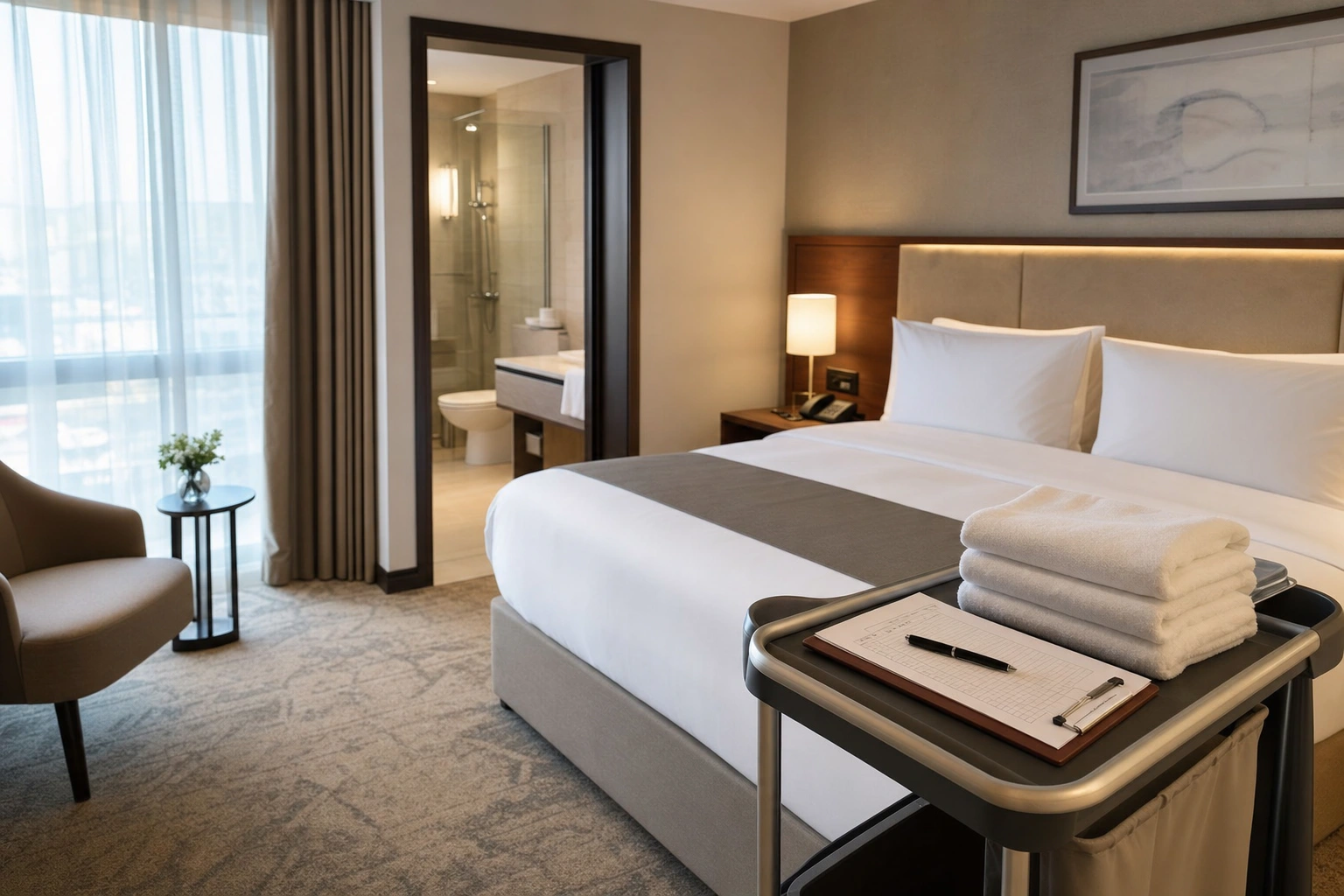
In hospitality, a clean room is not simply a pleasant feature; it is part of the promise a hotel makes to every guest. Visitors expect beds to be prepared correctly, bathrooms to be hygienic, supplies to be available and the room to feel safe and cared for. Housekeeping inspections provide the system that helps a property deliver this standard consistently, whether it has ten rooms or several hundred.
An inspection is not only a search for dust or missing towels. It is a structured review of cleanliness, presentation, maintenance conditions, safety and readiness for sale. When inspections are carried out fairly and followed by useful feedback, they help housekeeping teams prevent complaints, identify training needs and protect the reputation of the whole business.
What a Housekeeping Inspection Involves
A housekeeping inspection is a planned examination of a guest room, public area or service space against agreed standards. The person carrying out the inspection may be an executive housekeeper, supervisor, duty manager, quality officer or another trained team member. The inspection normally takes place after a room attendant has completed cleaning, before the room is released for a guest, or at scheduled intervals in occupied and public areas.
The inspector compares what is found with a standard rather than relying only on personal preference. For example, the standard may specify that a bed must be wrinkle-free, bathroom fixtures must be free from visible residue, waste bins must be lined and emptied, and guest supplies must be replenished according to the property’s procedure.
Standards should be clear enough for different people to apply consistently. If one supervisor considers a small mark acceptable while another rejects the room, staff may become confused and guests may receive an uneven experience. A useful inspection system therefore combines written standards, practical training and regular communication.
Why Inspections Maintain Quality
They create consistency
Housekeeping involves many small actions, and small omissions can affect the guest’s overall impression. A room may look generally tidy but still contain hair in the bathroom, fingerprints on mirrors, an unclean kettle or a missing hand towel. A systematic inspection gives supervisors a way to check the details that are easy to overlook during a busy shift.
Consistency is especially important when a hotel has several teams, different shifts or temporary staff. The guest should receive the same basic standard regardless of who cleaned the room or whether the booking was made in Nairobi, Mombasa, Kisumu or another destination. Inspections turn a broad expectation such as keep rooms clean into observable requirements.
They protect guest health and safety
Cleanliness has a direct relationship with guest confidence. Inspections can identify hygiene concerns such as poorly cleaned toilets, used linen left behind, contaminated cleaning equipment or waste that has not been removed. They can also reveal hazards including loose carpets, broken sockets, wet floors, damaged glass, blocked exits or faulty locks.
Housekeeping staff are often among the first employees to notice maintenance and safety problems because they enter rooms regularly. An inspection process should therefore allow them to report faults rather than treating their work as limited to cleaning. A broken shower fitting or exposed electrical problem should be recorded and referred to the appropriate department promptly.
They prevent complaints and protect reputation
Many guest complaints arise from visible failures that could have been corrected before check-in. An inspection before a room is released provides a final opportunity to replace a stained pillowcase, remove dust from a ledge or repair a malfunctioning light. Preventing a problem is usually more effective than apologising after a guest has experienced it.
Quality also influences reviews, repeat business and recommendations. A single disappointing room may affect how a guest judges the restaurant, service team and entire property. Housekeeping inspections help protect the brand by making room readiness a shared operational responsibility.
They support coaching and accountability
An inspection record can show patterns over time. If the same team repeatedly misses balcony areas, replenishes supplies incorrectly or fails to report maintenance faults, the supervisor can investigate the cause. The problem may be inadequate training, unrealistic room assignments, poor equipment, unclear instructions or rushed work rather than a lack of effort.
Used well, inspection results support coaching instead of blame. The supervisor can explain what was found, demonstrate the correct method and agree on a follow-up check. Accountability still matters, but it becomes more constructive when it is based on observable evidence and a clear standard.
What Inspectors Check
A complete inspection considers the room as a guest experiences it, moving logically through the space. The exact checklist varies by property, but common categories include the following:
- Entrance and general presentation: the door, lock, handle, signage, corridor appearance, lighting, odour and visible marks.
- Bedroom and sleeping area: bed linen, mattress presentation, pillows, furniture, floors, curtains, windows, lighting, temperature controls and surfaces.
- Bathroom: toilet, basin, taps, shower or bath, mirrors, tiles, drains, towels, toiletries, ventilation and floor dryness.
- Supplies and equipment: drinking water where provided, stationery, hangers, bins, television controls, hairdryers, kettles and other room amenities.
- Cleanliness and hygiene: dust, hair, stains, fingerprints, waste, odours and signs that high-touch areas have been cleaned correctly.
- Safety and maintenance: locks, electrical fittings, smoke detection equipment where applicable, emergency information, loose fixtures, leaks and damaged furnishings.
- Energy and environmental practice: correct operation of lights and appliances, appropriate use of water and proper separation or disposal of waste according to the property’s procedure.
The inspection should include less obvious areas. Guests may look behind doors, under beds, around bedside tables and inside cupboards. A room that is clean only at eye level may pass a quick glance but fail a proper quality check.
Types of Housekeeping Inspections
Pre-arrival or vacant-room inspections
This is the most familiar form of inspection. After cleaning, a supervisor checks the room before it is marked ready for sale or guest arrival. The purpose is to confirm that the room meets the property’s standard and that any defects have been addressed.
Not every room needs to be inspected in exactly the same way at every moment, but new staff, rooms with previous complaints, rooms after maintenance work and high-priority arrivals may require closer attention. The inspection approach should be planned rather than random and unexplained.
Occupied-room inspections
Occupied rooms may be checked as part of routine quality control, deep-cleaning schedules or a response to a guest request. Staff must respect privacy, follow the hotel’s access procedure and obtain the necessary permission. The inspection should never become an excuse to handle personal belongings unnecessarily or disregard confidentiality.
Public-area inspections
Lobby floors, lifts, corridors, public toilets, conference spaces, restaurants and pool areas contribute strongly to a property’s image. Public-area inspections are often scheduled at different times because cleanliness requirements change throughout the day. A lobby may be acceptable at 7 a.m. but require attention after a busy check-in period.
Deep-cleaning and periodic inspections
Periodic inspections examine work that is not completed during every daily service. These checks may cover upholstery, curtains, mattresses, high ledges, vents, grout, storage areas and equipment condition. A room can appear clean while gradually accumulating dirt in areas that are rarely disturbed, so periodic inspection prevents standards from declining slowly.
How to Conduct an Effective Inspection
- Start with the standard. Use a current checklist or set of operating procedures. The inspector should know which items are essential, which are presentation preferences and which require immediate escalation because they involve safety or hygiene.
- Inspect in a consistent sequence. Moving through each room in the same order reduces omissions. For example, begin at the entrance, continue through the sleeping area, inspect storage and equipment, then examine the bathroom and finish with a whole-room view.
- Use observation and, where appropriate, simple tests. Look, touch only where suitable and permitted, listen for unusual equipment noise and check that fixtures operate correctly. A visual inspection alone may not reveal a leaking tap, a loose handle or a remote control with flat batteries.
- Record findings accurately. Notes should describe the issue rather than make a personal judgement. Dust on the television stand is more useful than the room is poor. Specific records allow the correct person to take action and make later verification possible.
- Classify the result. Some properties use categories such as pass, minor correction, major correction and out of service. A missing tissue box is different from a faulty door lock. Classification helps the team prioritise work and prevents serious issues from being treated as minor presentation defects.
- Give timely feedback. When possible, discuss the result close to the task. Explain what needs to change, why it matters and how the correct standard is achieved. Feedback should be respectful and focused on the work.
- Verify corrective action. A problem is not fully managed when it has merely been reported. The supervisor should confirm that the item was corrected, referred to maintenance or otherwise resolved before the room is released.
Making Checklists Useful
A checklist should support professional judgement, not replace it. If it is too short, important details may be missed. If it is excessively long or repetitive, staff may tick boxes without genuinely inspecting the room. The best checklist reflects the guest journey and highlights risks that matter to the property.
Use clear language and group related items together. Include a space for comments, the room or area number, date, inspector and follow-up action. Digital systems can make it easier to track recurring defects, but a well-designed paper form can also work effectively where connectivity or devices are limited.
Managers should review checklists when room design, amenities, cleaning products or safety procedures change. For example, adding a coffee station creates new inspection points such as equipment cleanliness, supply levels and electrical safety. A checklist that no longer reflects the operation can create false confidence.
Common Inspection Mistakes
Inspecting only when a complaint occurs
Reactive checks focus attention on individual failures but do not provide a reliable picture of daily performance. Routine inspections are needed to identify risks before guests report them.
Focusing on appearance while ignoring function
A room can look attractive but still have a broken air-conditioning control, blocked drain or faulty lock. Quality includes both presentation and operation.
Using inspection as punishment
If staff believe every inspection is designed to find fault, they may hide mistakes or rush to create a superficial appearance of quality. A strong culture treats inspections as part of the operating system while still requiring staff to meet agreed standards.
Failing to close the loop
Repeatedly recording the same defect without solving its cause wastes time and damages morale. If a particular floor repeatedly has low water pressure or a particular vacuum cleaner performs poorly, the issue may require maintenance, purchasing or management attention.
Applying This in Practice
Imagine a medium-sized hotel in Mombasa preparing rooms during a busy holiday period. A room attendant finishes a departure room and marks it clean. The supervisor then checks the entrance, bed, bathroom, supplies and safety points. The inspection reveals that the room is clean but the balcony door does not lock properly and one bedside lamp is not working.
The supervisor records both findings, informs maintenance and keeps the room unavailable until the lock has been repaired or the duty manager has approved an appropriate alternative. The missing lamp may also need attention, but the lock is the higher priority because it affects guest security. After maintenance responds, the supervisor verifies the repair rather than relying only on a verbal assurance.
The record can later help management identify patterns. If several rooms have faulty balcony locks, the solution may be a planned maintenance review rather than repeated room-by-room reporting. If inspections show that attendants frequently miss balcony cleaning, the supervisor may revise the training demonstration, adjust time allocations or improve access to suitable equipment.
For a housekeeping supervisor, useful questions include:
- Are our standards clear enough for a new team member to follow?
- Which defects are most likely to affect health, safety or guest trust?
- Are inspections carried out consistently across shifts and room types?
- Do staff receive feedback soon enough to improve?
- Are repeated findings being solved at their root cause?
- Can the inspection records help coordinate housekeeping, maintenance and front office?
Key Takeaways
- Housekeeping inspections compare rooms and public areas with clear, agreed standards.
- Effective inspections check cleanliness, presentation, supplies, safety and equipment function.
- Consistent checklists reduce missed details and make quality more reliable across shifts.
- Findings should be recorded specifically, prioritised according to risk and followed through to resolution.
- Inspections work best as coaching and quality-control tools, not as systems for blame.
- Repeated defects should be analysed for underlying causes involving training, equipment, maintenance or procedures.
No comments yet.