
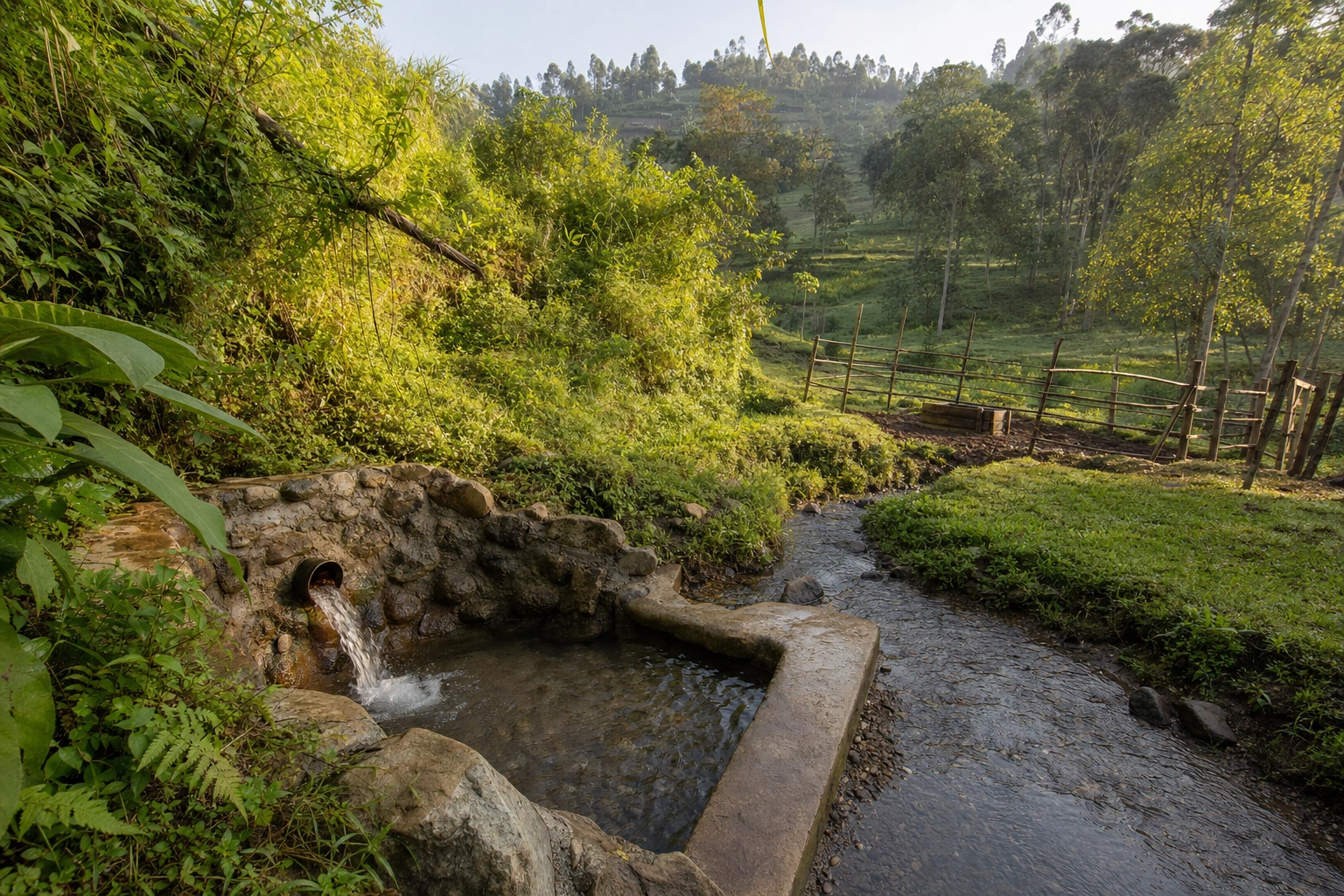
Water sources are part of the natural systems that make homes, farms, businesses and ecosystems possible. Rivers, springs, lakes, wetlands, wells and groundwater recharge areas provide drinking water, support food production and sustain biodiversity. Yet these sources are often threatened by pollution, soil erosion, over-abstraction, poorly planned development and changing rainfall patterns.
Government agencies, scientists and water-service providers have important responsibilities, but they cannot protect every water source alone. People who live, work and depend on a catchment usually observe changes first and understand local conditions in detail. When communities are organised, informed and included in decision-making, they can help prevent damage, monitor risks and encourage fairer use of water.
Why Communities Matter in Water Protection
A water source does not exist in isolation. Rain falling on farms, roads, forests, homes and grazing land may eventually flow into a stream, lake or underground aquifer. This means that activities far from the visible water body can affect its quality and quantity.
Local communities are often closest to these activities. Farmers may notice declining spring flow, fishers may observe changes in aquatic life, and residents may identify new sources of waste or unusual smells in a stream. This local knowledge can complement technical assessments and help identify problems before they become expensive or difficult to reverse.
Community involvement also improves the practicality of protection measures. A rule designed without considering how people obtain fuel, graze livestock, irrigate crops or access transport may be difficult to follow. Communities can help design solutions that protect water while recognising legitimate livelihood needs.
Major Threats to Community Water Sources
Pollution from homes, farms and businesses
Untreated wastewater, discarded plastics, oil, detergents and other household or commercial waste can enter watercourses. Farms may contribute soil, manure, fertilisers and pesticides through surface runoff. Small workshops, markets and construction sites can also release contaminants if waste is poorly managed.
Pollution is not always visible. Water may look clear while carrying harmful microorganisms or chemicals. For this reason, communities should avoid assuming that clear water is automatically safe to drink. Protection must include preventing contamination at its source and using appropriate treatment before consumption.
Soil erosion and loss of vegetation
Vegetation slows rainfall, helps soil absorb water and reduces the amount of sediment entering rivers and reservoirs. When hillsides, riverbanks or wetlands lose vegetation, rain can carry soil into water bodies. Heavy sediment loads may make water treatment more difficult, reduce storage capacity and damage aquatic habitats.
Deforestation, cultivation too close to riverbanks, uncontrolled grazing, fires and poorly planned paths can all increase erosion. Restoring vegetation is therefore not simply an environmental activity; it is also a water-management measure.
Overuse and competing demands
Water sources can decline when withdrawals exceed the rate at which water is naturally replenished. Competition may arise among households, farmers, livestock keepers, industries and ecosystems. During dry periods, disagreements may become more serious, especially where access rules are unclear or enforcement is weak.
Communities can help reduce these pressures by agreeing on fair schedules, protecting recharge areas, repairing leaks and supporting efficient irrigation. However, local agreements should work alongside relevant public authorities and formal water-management requirements.
Climate variability and extreme events
Longer dry periods can reduce streamflow and groundwater recharge, while intense rainfall can cause flooding, erosion and sudden contamination. A community that protects wetlands, maintains vegetation and keeps drainage channels clear is often better prepared for these changes than one that reacts only after a crisis.
How Communities Protect Water Sources
1. Mapping the catchment and identifying risks
The first practical step is to understand where water comes from, how it moves and who depends on it. A community can create a simple map showing springs, wells, rivers, wetlands, farms, settlements, roads, waste-disposal points and areas prone to erosion.
Participatory mapping is valuable because different groups see different risks. Farmers may identify runoff routes, women and children may know which sources are used daily, pastoralists may understand seasonal access points, and older residents may remember how a river or spring has changed over time.
The map does not need to be technically perfect to be useful. It should help answer practical questions: Where is contamination most likely to enter? Which areas need vegetation protection? Which users depend on the same source? Where can water be collected safely during a drought?
2. Protecting the land around water
Water-source protection begins beyond the water's edge. Communities can maintain vegetation along streambanks, prevent cultivation or construction in sensitive areas where appropriate, stabilise eroding slopes and protect wetlands from dumping and uncontrolled drainage.
Useful measures may include planting suitable native vegetation, creating grass strips, using contour-based soil and water conservation, directing livestock to managed watering points and keeping access paths from causing unnecessary bank damage. Restoration should be based on local ecological conditions. Planting unsuitable species or clearing natural vegetation for poorly planned projects can create new problems.
3. Improving waste and sanitation practices
Communities can reduce contamination by organising collection and safe disposal of solid waste, keeping latrines and drainage systems away from water points where feasible, and discouraging washing, bathing or vehicle cleaning directly at protected sources. Markets, schools and health facilities also need practical waste-management arrangements.
Education is most effective when it is connected to clear alternatives. Telling people not to dump waste is unlikely to work if there is no collection point or if disposal costs are unaffordable. Community planning should therefore identify realistic services, responsibilities and maintenance arrangements.
4. Monitoring water sources regularly
Community monitoring can provide an early warning system. Volunteers or water-user groups may record flow levels, visible pollution, unusual odours, bank erosion, waste accumulation and changes in vegetation. They can also note when a source dries earlier than usual or when a new activity appears nearby.
Simple observations do not replace laboratory testing. If water is intended for drinking, appropriate testing is important, particularly after flooding, suspected contamination or changes in taste and smell. Community observations should be shared with qualified water officers, laboratories or service providers when technical assessment is needed.
Good monitoring records are consistent. A group can choose a small number of indicators, assign responsibilities, use the same locations and record dates and weather conditions. Over time, these records can reveal patterns and support evidence-based decisions.
5. Creating fair local rules
Shared water sources need agreed rules. These may cover access times, livestock watering, maintenance duties, protection zones, waste disposal, payment for repairs and responses to damage. Rules should be understandable, publicly discussed and applied fairly.
Fairness requires attention to groups that may otherwise be excluded, including women, young people, people with disabilities, tenants, small-scale producers and households located downstream. A committee that represents only the most powerful users may make decisions that increase conflict or leave important needs unrecognised.
Local rules should also be consistent with national and county-level institutions, permits and environmental requirements. Community management is strongest when it complements formal governance rather than trying to replace technical oversight or legal authority.
The Importance of Collective Action
Protecting a water source is usually more effective when users cooperate across a whole catchment. One household may keep its compound clean, but pollution from an upstream settlement can still affect downstream users. Similarly, a farmer may protect a riverbank while erosion continues on neighbouring land.
Collective action can take many forms. A water-user association may organise maintenance days, coordinate source protection and manage contributions for repairs. Schools can involve learners in stream observation and environmental education. Farmers' groups can share soil-conservation practices. Local businesses can reduce waste and support source-management activities without using contributions as a substitute for proper compliance.
Cooperation is not always easy. Different users may have unequal incomes, power or access to alternative sources. Effective groups need transparent records, clear roles, a process for handling complaints and regular communication. Trust grows when decisions, funds and responsibilities are visible.
Balancing Conservation with Livelihoods
Water protection measures must consider how people earn a living. Restricting access to a river without providing another safe water point may create hardship. Prohibiting cultivation in an erosion-prone area may require support for alternative land-management practices. Protecting a wetland may affect people who depend on farming, grazing or harvesting natural materials.
This does not mean that harmful activities should be ignored. It means that durable solutions should address both environmental risks and human needs. Examples include improving irrigation efficiency, introducing controlled livestock access, supporting soil conservation, providing reliable waste services and developing alternative income opportunities where restrictions are necessary.
Local knowledge is particularly valuable here. Residents may know which areas flood, which plants stabilise a bank, where groundwater is found or which traditional practices have conserved a spring. Such knowledge should be listened to carefully and combined with scientific advice rather than treated as either automatically correct or irrelevant.
Water Protection in an African Context
Across many African communities, a single source may serve domestic users, livestock, small businesses and farms. Seasonal rivers and springs can be especially important where piped supply is limited or unreliable. In parts of Kenya, for example, a community may depend on a spring or river within a larger catchment while also facing pressure from cultivation, settlement and changing rainfall.
In such settings, protecting the source may involve fencing or clearly marking the immediate area, creating separate livestock access, maintaining vegetation upstream, controlling waste and establishing a rota for cleaning and inspections. These actions work best when source users agree on responsibilities and when problems can be referred promptly to the appropriate technical authorities.
The same principles apply globally. Whether the setting is a rural watershed, an urban wetland or a groundwater-dependent settlement, water security depends on managing the relationship between land, people and water.
Applying This in Practice
A community, organisation or local business can begin with a manageable water-source protection plan.
- Identify the source and users. List the river, spring, wetland, well or borehole being protected, then identify households, farms, institutions, businesses and ecosystems that depend on it.
- Walk the surrounding area. Look for waste, damaged vegetation, erosion, leaking sanitation systems, risky drainage routes and activities that could affect water quality or quantity.
- Rank the risks. Consider which threats are most immediate, which affect the largest number of people and which can be addressed with available resources.
- Agree on specific actions. Choose practical measures such as clearing waste, stabilising a bank, protecting a recharge area, improving livestock access or arranging water testing.
- Assign responsibility. Name the people or groups responsible for each task, set realistic dates and identify how tools, funds or technical advice will be obtained.
- Monitor and review. Keep simple records, report serious problems and revise the plan when rainfall, land use or community needs change.
Individuals can contribute by disposing of waste safely, maintaining sanitation, avoiding unnecessary pollution, reporting damage and participating in local water discussions. Businesses can inspect drainage, manage waste responsibly, prevent spills and support efficient water use. Institutions such as schools and places of worship can model good practice and share reliable information.
Key Takeaways
- Communities are often the first to notice changes in water quality, flow and surrounding land.
- Protecting a water source requires managing the whole catchment, not only the visible river, spring or well.
- Vegetation, soil conservation, sanitation and responsible waste management reduce major risks to water.
- Community monitoring provides useful early warnings but should be supported by appropriate technical testing.
- Local water rules should be transparent, inclusive, fair and consistent with formal authorities and requirements.
- Successful protection measures balance environmental needs with the livelihoods of people who depend on water.
No comments yet.