
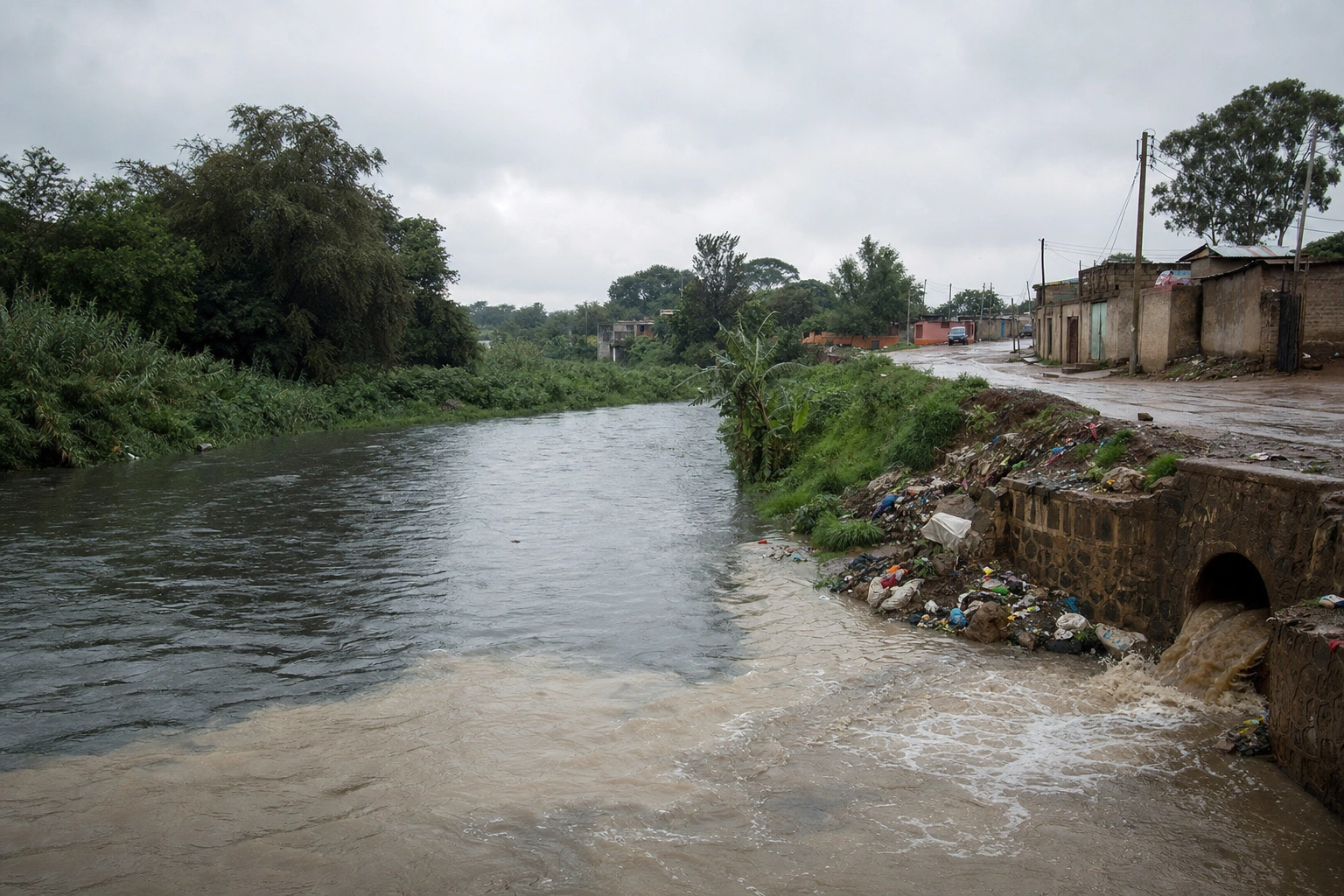
Water pollution occurs when harmful substances or forms of energy enter a river, lake, wetland, groundwater system, estuary or ocean and reduce the water’s quality or its ability to support life and human use. The pollution may be visible, such as floating plastic, or almost impossible to detect without testing, such as disease-causing organisms, dissolved chemicals or excess nutrients.
Understanding the main causes is essential for effective water management. A polluted stream is rarely the result of one careless action alone. Sewage, farm chemicals, poorly managed waste, industrial activity, soil erosion and stormwater can interact across an entire catchment. This article explains the major causes, the pathways pollutants follow and the practical steps that households, enterprises and public authorities can take to reduce the problem.
What Makes Water Polluted?
Water quality is affected when a substance or condition makes water unsafe, unusable or damaging to ecosystems. Pollution can alter the water’s physical appearance, chemical composition or biological condition. For example, sediment can make water cloudy, fertiliser can increase nutrient levels, and untreated sewage can introduce pathogens.
Some pollutants remain near the place where they are released, while others travel long distances. Rain can carry oil and litter from roads into a river. A chemical discharged upstream may affect communities, farms and ecosystems downstream. Groundwater pollution can be even more difficult to manage because contaminants may move slowly through soil and rock and remain hidden for years.
Water pollution is often grouped into two categories:
- Point-source pollution: pollution released from an identifiable location, such as a drainage pipe, factory outlet, wastewater-treatment plant or mine discharge.
- Non-point-source pollution: pollution carried from widespread areas by rainfall, irrigation or surface runoff. Agricultural fields, roads, construction sites and urban neighbourhoods are common examples.
This distinction matters because point sources can often be monitored and controlled at the outlet, whereas non-point pollution requires changes across a wider landscape.
1. Untreated or Poorly Treated Sewage
Domestic sewage is one of the most serious causes of water pollution. It contains human waste, food residues, detergents, oils, medicines and other household substances. When sewage enters water without adequate treatment, it can introduce bacteria, viruses, parasites and other disease-causing organisms.
Sewage also contains organic matter. Microorganisms break down this material and use dissolved oxygen in the process. If too much organic matter enters a water body, oxygen levels can fall. Fish and other aquatic organisms may then struggle to survive, particularly in slow-moving or enclosed waters.
Inadequate sanitation contributes to the problem in several ways. Leaking sewer lines, overflowing septic tanks, damaged pit latrines and illegal connections can allow waste to reach surface water or groundwater. During heavy rainfall, drainage systems may overflow and carry mixed stormwater and sewage into rivers. In rapidly growing towns, sanitation infrastructure may not expand as quickly as the population, increasing pressure on existing systems.
Effective responses include safe sanitation facilities, regular maintenance of sewerage systems, proper emptying of septic tanks and reliable wastewater treatment. Households and businesses should not pour oils, solvents, medicines or harsh chemicals into drains because these substances can interfere with treatment processes and contaminate receiving water.
2. Agricultural Runoff
Farming supports food production and livelihoods, but poorly managed agricultural land can release pollutants into nearby water. Rain or irrigation water may wash fertilisers, manure, pesticides, herbicides, sediment and animal waste from fields into streams, dams and lakes.
Fertilisers commonly contain nitrogen and phosphorus. These nutrients are necessary for plant growth, but excessive amounts can trigger rapid growth of algae and aquatic plants. This process, known as eutrophication, can reduce water clarity and disturb the balance of an ecosystem. When large quantities of algae die and decompose, oxygen may be consumed, creating conditions that are harmful to fish and other organisms.
Pesticides can affect organisms that were not intended to be targeted, especially when they are applied immediately before rainfall or used at the wrong concentration. Animal manure may add nutrients, pathogens and organic matter. Soil erosion from bare or sloping fields adds sediment, which can cover fish-spawning areas, reduce light penetration and carry attached chemicals into water.
Farmers can reduce runoff by maintaining vegetation along waterways, planting cover crops, using contour farming, applying fertiliser according to crop needs and avoiding chemical application before heavy rain. Well-managed grazing, secure manure storage and carefully designed drainage also help keep pollutants on the farm rather than in the river.
3. Industrial Discharge
Factories, workshops and processing facilities may produce wastewater containing oils, solvents, acids, alkalis, dyes, salts, metals or other substances. The type of pollution depends on the industrial activity and the materials used. Food-processing wastewater may contain high levels of organic matter, while metalworking or mining-related operations may release metals and other chemical residues.
Industrial pollution can occur through a direct discharge, accidental spill, leaking storage container or poorly managed waste area. Even where a facility has treatment equipment, pollution can result if the system is badly designed, poorly operated or not maintained. Illegal discharge and inadequate monitoring can make the problem more difficult to identify.
Good industrial water management begins with preventing pollution at its source. Businesses can substitute less hazardous materials, reduce water use, separate clean water from contaminated water, reuse process water where appropriate and treat wastewater before release. Staff training, spill-response plans, secure chemical storage and regular testing are important because prevention is usually safer and less expensive than cleaning a contaminated water body.
4. Urban Runoff and Poor Drainage
In natural landscapes, soil and vegetation absorb and filter a significant portion of rainfall. In towns and cities, roofs, roads, pavements and other hard surfaces prevent water from soaking into the ground. Rainwater then flows rapidly over these surfaces, collecting pollutants before entering drainage channels, rivers, wetlands or the sea.
Urban runoff may contain oil and fuel residues, brake and tyre particles, litter, dust, heavy metals, pet waste, detergents and sediment from construction sites. The first strong rainfall after a dry period can wash a large amount of accumulated material into a waterway.
Blocked drains make the situation worse. Litter and soil can obstruct water flow, causing flooding and allowing polluted water to spread through neighbourhoods. Poorly planned drainage can also erode riverbanks and carry large quantities of sediment downstream.
Solutions include regular drain maintenance, enforcement against illegal dumping, permeable surfaces, rain gardens, detention ponds, tree planting and protection of wetlands. Construction sites should control exposed soil, cover material stockpiles and prevent cement wash water from entering drains. These measures manage both water quantity and water quality.
5. Solid Waste and Plastic Pollution
Solid waste becomes a water-pollution problem when it is dumped near waterways, carried by wind or rain, or handled in poorly managed disposal sites. Plastic bags, packaging, bottles, fishing gear and other materials can remain in the environment for long periods. Larger items may block drains or injure wildlife, while smaller fragments can be eaten by aquatic animals.
Plastic waste can also carry other pollutants on its surface and may break down into smaller particles. However, it is important not to treat plastic as the only waste concern. Food waste, metals, batteries, electronic waste, used nappies, paint containers and medical waste may release harmful substances or pathogens when they enter water.
Prevention requires reliable waste collection, separation of recyclable materials, safe disposal of hazardous waste and reduced littering. Businesses can redesign packaging and improve storage of waste. Communities can protect drainage channels and water margins, while local authorities need systems that make responsible disposal practical and consistent.
6. Oil and Fuel Pollution
Oil can enter water from leaking vehicles, fuel stations, machinery, ships, pipelines, workshops and storage tanks. It spreads across the water surface, reducing contact between air and water and coating feathers, fur, plants and other surfaces. Some oil components are toxic to aquatic organisms, while others may settle into sediments.
Small leaks can become significant when repeated over time. A poorly maintained vehicle parked near a drain, for example, may release oil that is eventually carried into a river during rainfall. Larger spills require rapid containment so that the pollutant does not spread further.
Prevention includes routine inspection of tanks and equipment, bunded storage areas, safe refuelling procedures, spill kits and staff training. Used engine oil should be collected for appropriate recovery or disposal rather than poured onto soil or into drains.
7. Mining and Quarrying
Mining and quarrying can affect water through land disturbance, soil erosion, processing waste and drainage from excavated areas. Exposed soil and rock may increase sediment loads. In some settings, water moving through mineral-bearing materials can become acidic or carry dissolved metals. The risk depends on the geology, mining method, waste-management practices and local hydrology.
Mining operations need systems for managing waste rock, tailings, contaminated water and stormwater. Measures may include lined storage areas, sediment ponds, water treatment, progressive land rehabilitation and monitoring upstream and downstream. Communities near mining areas also benefit from transparent water-quality information and clear procedures for reporting spills or unusual changes in water.
8. Land Clearing, Construction and Soil Erosion
Removing vegetation exposes soil to rain and wind. Construction, road building, deforestation, overgrazing and cultivation on unsuitable slopes can therefore increase erosion. The resulting sediment is one of the most widespread physical pollutants in rivers and reservoirs.
Too much sediment makes water cloudy, reduces storage capacity in reservoirs and can smother habitats. It may also carry fertilisers, pesticides, metals and other pollutants attached to soil particles. In coastal areas, sediment can affect estuaries, mangroves and near-shore habitats.
Land managers can reduce erosion through reforestation, terracing, mulching, grassed waterways, controlled grazing and protection of riverbanks. Construction projects should install erosion and sediment controls before earthworks begin, not after muddy runoff has already entered a waterway.
9. Harmful Chemicals and Emerging Contaminants
Many everyday products contain substances that can reach water through household drains, waste disposal or runoff. Examples include cleaning chemicals, paints, personal-care products, medicines, disinfectants and pesticides used around homes. Wastewater treatment may remove some of these substances but not necessarily all of them.
These contaminants are sometimes described as emerging contaminants because monitoring methods, scientific understanding or concern about their environmental effects continue to develop. Their presence does not mean that every water body is dangerously polluted, but it does show why careful chemical use and responsible disposal matter.
People should follow product instructions, avoid using more chemical than necessary and use designated collection systems for medicines, batteries, paints and electronic waste where available. Water managers can reduce risks through source control, treatment improvements and monitoring based on local conditions.
How Water Pollution Causes Combine
Pollution sources often reinforce one another. A cleared hillside may send sediment into a river; that sediment may carry farm chemicals; a nearby settlement may add sewage; and a storm may transport all of these pollutants at once. The combined effect can be greater than the effect of any single source.
This is why water management should use a catchment approach. A catchment is the area from which water drains into a common river, lake or coastal outlet. Protecting water requires coordination among households, farmers, industries, schools, businesses and public authorities across that area rather than focusing only on the visible pollution at one location.
Applying This in Practice
- Identify the pathway: Ask where the pollution starts, how it travels and which water body receives it.
- Separate the source from the symptom: Removing litter from a river is useful, but stopping the dumping or improving collection addresses the cause.
- Prioritise prevention: Reduce hazardous materials, keep waste away from drains and maintain sanitation, storage and drainage systems.
- Use simple controls: Vegetated buffers, covered waste containers, spill kits, erosion barriers and regular drain clearing can prevent pollution from spreading.
- Monitor changes: Record unusual colour, odour, foam, fish deaths, algae growth or repeated flooding, while recognising that testing is needed to identify invisible pollutants.
- Work collectively: Report suspected discharges through the appropriate local channels and involve water users who share the same catchment.
For a small business, this may mean mapping every drain, storing chemicals on an impermeable surface, checking wastewater before discharge and training employees on spills. For a household, it may mean maintaining sanitation facilities, disposing of medicines and oil safely, reducing litter and keeping storm drains clear. For a farm, it may involve soil conservation, careful fertiliser use and a protected strip of vegetation beside a stream.
Key Takeaways
- Major causes of water pollution include sewage, agricultural runoff, industrial discharge, urban stormwater, solid waste, oil, mining and erosion.
- Point-source pollution comes from an identifiable outlet, while non-point-source pollution is carried from wider areas by runoff.
- Excess nutrients can cause eutrophication, while organic waste can reduce dissolved oxygen and harm aquatic life.
- Preventing pollution at its source is usually more effective than trying to clean a contaminated river, lake or groundwater system.
- Good water management combines sanitation, waste control, erosion prevention, safe chemical handling and regular monitoring.
- Because pollutants travel through catchments, households, farms, businesses and authorities must share responsibility for protecting water.
No comments yet.