
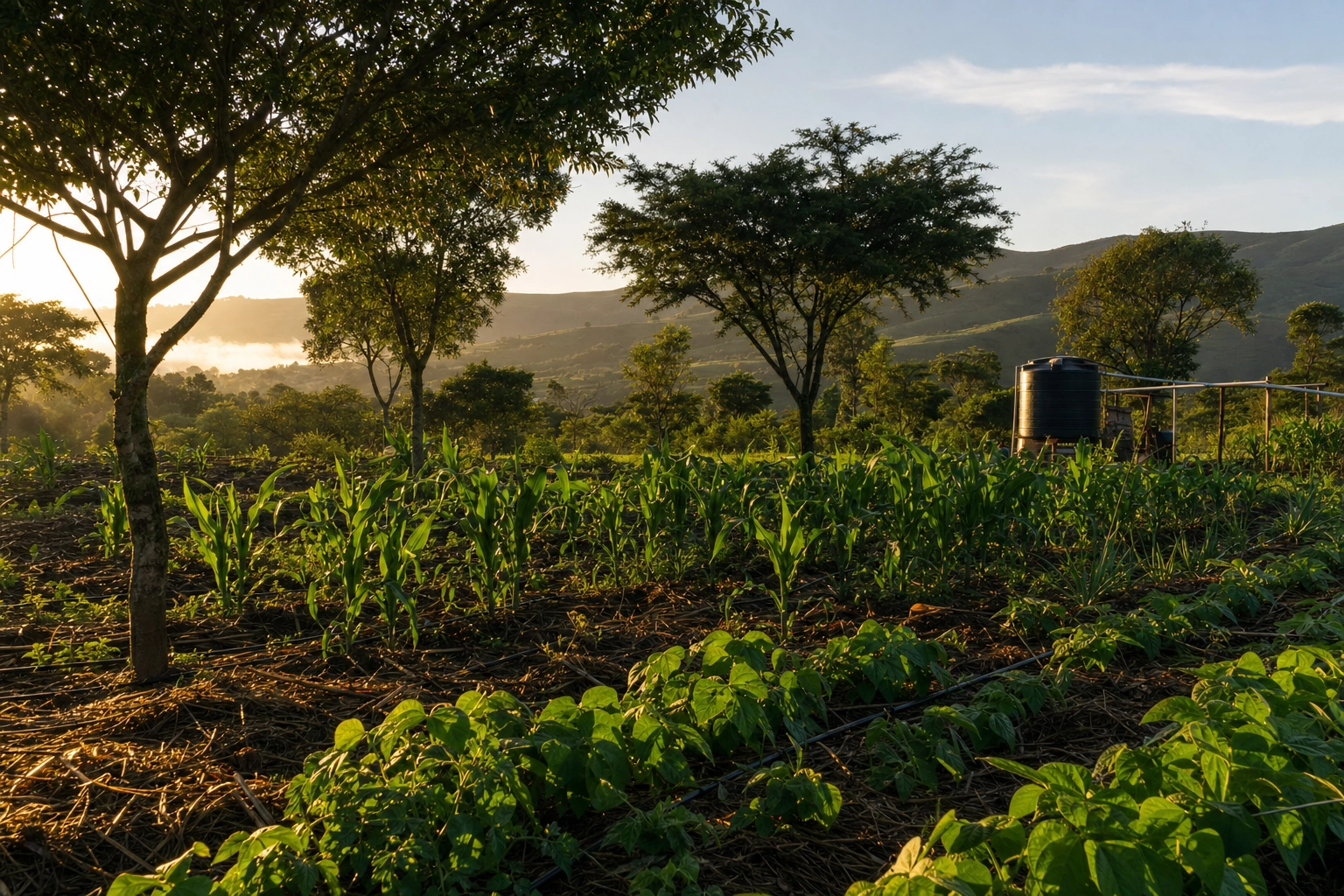
Agriculture sits at the centre of climate action because it is both vulnerable to climate change and capable of helping address it. Farmers depend on predictable rainfall, healthy soils, suitable temperatures and functioning ecosystems, yet farming activities can also contribute to greenhouse gas emissions, soil degradation, deforestation and water stress.
The role of agriculture in climate action is therefore broader than simply planting trees or choosing organic inputs. It involves reducing emissions across food systems, protecting and restoring natural resources, adapting production to changing conditions, and ensuring that climate solutions are fair and practical for farmers, workers and consumers. For an entrepreneur, professional or learner, understanding these connections helps turn climate goals into better decisions on farms, in businesses and across communities.
Why Agriculture Matters to Climate Action
Agriculture influences the climate through several connected activities. Land may be cleared for crops or grazing, releasing carbon stored in vegetation and soils. Livestock produce methane during digestion, while manure can release methane and nitrous oxide. Nitrous oxide is also associated with the use and management of nitrogen fertilisers. Energy used in irrigation, processing, refrigeration and transport may create additional emissions, especially where fossil fuels are used.
At the same time, agricultural land can store carbon and support ecosystems. Healthy soils contain organic matter, trees absorb carbon dioxide as they grow, and well-managed grasslands can protect soil and maintain biodiversity. This means agriculture can be part of the climate solution when production methods improve without causing new environmental or social problems.
A useful way to understand the relationship is through two complementary goals:
- Mitigation: reducing greenhouse gas emissions or increasing the removal and storage of carbon.
- Adaptation: adjusting farming systems so that people, crops, livestock and landscapes can cope with climate impacts.
Strong climate action requires both. A farm that reduces emissions but cannot withstand drought may not remain viable. Similarly, a farm that adapts through heavy energy or chemical use may solve one problem while worsening another.
Reducing Emissions from Crop Production
Crop production can become more climate-friendly through careful soil, water and input management. The aim is not to apply one universal method, because suitable practices depend on the crop, soil type, rainfall, farm size, available technology and local markets.
Building healthy soils
Soil is a living system containing minerals, organic matter, air, water and organisms. Practices that increase soil organic matter can improve structure, water-holding capacity and resistance to erosion. Examples include keeping the soil covered with crop residues or cover crops, reducing unnecessary soil disturbance, rotating crops and applying properly managed compost or manure.
These practices may also contribute to carbon storage in soil. However, soil carbon is not automatically permanent, and the results vary by location and management. Claims about carbon storage should therefore be measured carefully. Farmers and organisations should avoid treating soil-carbon projects as a substitute for reducing emissions at their source.
Using fertiliser precisely
Nitrogen is essential for crop growth, but applying more than the crop can use may lead to pollution, financial waste and increased nitrous oxide emissions. Better management begins with understanding the crop's nutrient needs and the soil's condition. Farmers can improve efficiency by applying the right nutrient, in the right amount, at the right time and in the right place.
Soil testing, split applications, targeted placement and combining mineral fertilisers with suitable organic sources can all support more precise decisions. Legumes may contribute nitrogen to farming systems, although their benefits depend on species, soil conditions and management. Precision does not necessarily require expensive equipment; a well-kept farm record and locally appropriate advice can also improve decisions.
Managing water and energy
Irrigation can protect yields, but pumping and distributing water may require significant energy. Efficient irrigation scheduling, maintenance of pipes, drip systems where appropriate, rainwater harvesting and moisture-conserving soil practices can reduce water and energy demand. Solar-powered pumps may reduce dependence on diesel in some settings, but their environmental and financial value depends on equipment quality, battery management, water availability and responsible abstraction.
Agroforestry and Landscape Restoration
Agroforestry combines trees with crops, livestock or both. Trees on farms can provide shade, fruit, fuelwood, fodder, timber, wind protection and habitat while storing carbon. In parts of East Africa, farmers may grow crops alongside carefully selected trees, maintain trees on boundaries or use fodder shrubs to support livestock. The most suitable arrangement depends on rainfall, competition for water and light, land rights, maintenance needs and household priorities.
Agroforestry can support adaptation as well as mitigation. Tree roots may help stabilise soil, canopies can reduce heat stress and leaf litter can contribute organic matter. Yet planting trees is not automatically beneficial. Inappropriate species may consume scarce water, spread beyond managed areas or compete with crops. Trees also require protection from livestock, fire and harvesting pressures.
Landscape restoration extends the focus beyond individual farms. Protecting watersheds, wetlands, rangelands and natural forests can improve water regulation, biodiversity and soil stability. Effective restoration usually involves local communities because people who depend on land and water must have a meaningful role in decisions, maintenance and benefits.
Climate-Smart Livestock Systems
Livestock contribute to food security, income, manure supply and cultural life, particularly for many pastoral and mixed-farming communities. They also create climate pressures through methane from digestion, manure emissions, feed production, land use and energy consumption.
Climate action in livestock does not mean applying one rule to every herd. It means improving productivity and resilience while reducing emissions per unit of useful output where possible. Healthy animals, appropriate breeds, reliable veterinary care, balanced feed and good grazing management can improve results. Better animal health may reduce losses and help households produce more from a manageable herd rather than expanding numbers without sufficient pasture or water.
Grazing management can include planned movement, protection of degraded areas, maintaining ground cover and allowing vegetation to recover. These approaches can support soil protection and reduce erosion, although outcomes depend on stocking pressure, rainfall and land governance. Manure can be safely managed and used as a nutrient resource, but storage and application need care to avoid water pollution and emissions.
Climate-resilient livestock planning should also consider heat stress, changing disease patterns, water shortages and the need for alternative income. In arid and semi-arid areas, access to weather information, fodder reserves, functioning markets and early action during drought can be as important as a particular farm technology.
Adaptation: Preparing Agriculture for a Changing Climate
Climate change can affect agriculture through higher temperatures, shifting rainfall patterns, droughts, floods, stronger storms, new pest pressures and changing growing seasons. These impacts do not occur equally. A smallholder farmer, a commercial horticulture business and a pastoral household may face different risks and have different resources for responding.
Adaptation begins with risk assessment. Farmers and organisations can ask:
- Which climate hazards have affected production in recent years?
- Which crops, animals, buildings, roads or water sources are most exposed?
- What would happen if rainfall arrived late or stopped early?
- Which actions are affordable, reversible and beneficial under several possible futures?
Possible responses include drought-tolerant or early-maturing varieties, diversified crops, water storage, shade, improved drainage, adjusted planting dates, weather forecasting, index-based or other appropriate insurance products, and stronger post-harvest storage. Diversification can reduce dependence on one harvest, but it must be matched with viable markets, suitable skills and access to finance.
Indigenous and local knowledge can strengthen adaptation when combined respectfully with scientific information. Farmers often understand local soils, seasonal signals, livestock behaviour and landscape changes in detail. Climate services become more useful when forecasts are communicated in forms that support decisions, such as when to plant, whether to move livestock or how much seed to purchase.
Food Systems Beyond the Farm
Agriculture's climate role continues after harvest. Processing, cold storage, packaging, transport, retail and cooking all use resources and energy. Poor storage can cause food to spoil, wasting the land, water, labour and energy used to produce it. Businesses can reduce these pressures through better inventory systems, appropriate storage, efficient equipment, local or regional sourcing where practical, and improved use of by-products.
Food waste reduction is not only a household responsibility. Farmers need reliable market information, processors need suitable quality standards and storage, and retailers need purchasing systems that do not encourage avoidable losses. In Kenya and elsewhere, enterprises that turn agricultural residues into animal feed, compost, bioenergy or other useful products may create value, but they should assess safety, transport costs and the risk of removing residues that are needed to protect soil.
Consumers also influence demand through purchasing choices, food preparation and acceptance of seasonal variation. However, individual choices should not distract from the responsibilities of companies, investors and public institutions to improve infrastructure, standards and access to climate-resilient options.
Making Climate Action Fair and Practical
Climate action can create unintended harm if it ignores livelihoods and unequal access to resources. A new technology may be useful for a large farm but unaffordable for a smallholder. A carbon project may restrict customary land use without fair participation. A conservation measure may protect an ecosystem while reducing access to grazing or fuel without providing alternatives.
Good agricultural climate action should therefore consider affordability, labour, gender, land tenure, youth participation, indigenous rights, food security and access to finance. Farmers should understand what a programme requires, who owns the data, how benefits are shared and what happens if climate conditions make targets impossible. Participation should be meaningful rather than limited to presenting a completed plan.
Businesses can support fairer transitions by offering long-term contracts, technical assistance, accessible finance and transparent purchasing standards. Governments and development organisations can help through extension services, research, rural infrastructure, early-warning systems and policies that reward environmental stewardship without placing unreasonable burdens on farmers.
Measuring Progress Responsibly
Climate claims need evidence. A project may report reduced fuel use, improved yields, lower fertiliser losses, increased tree survival or greater water efficiency. The most useful measurement begins with a clear baseline and a defined period of comparison.
Measurements should include more than carbon. Important indicators may cover farm income, yield stability, soil condition, water quality, biodiversity, labour requirements, food safety and household resilience. A practice that increases carbon storage but reduces food production or intensifies water competition may not be a good solution in its local context.
Professionals should be cautious about confusing an activity with an outcome. Planting seedlings is an activity; surviving trees that are protected and continue growing represent a stronger outcome. Distributing drought-tolerant seed is an activity; maintaining production and income during dry conditions is a more meaningful adaptation result.
Applying This in Practice
A farmer, agribusiness or community organisation can begin with a manageable climate-action plan:
- Map the system. Record major inputs, energy use, water sources, crops, livestock, waste streams and climate-related risks.
- Identify the largest practical opportunities. These might include reducing fertiliser losses, protecting soil, improving storage, repairing irrigation or restoring a degraded area.
- Test before scaling. Try a suitable practice on a small area or with a defined group, then compare costs, labour, yields and environmental results.
- Include local knowledge and affected people. Ask farmers, workers, women, young people and nearby communities what could work and what risks they see.
- Track several outcomes. Monitor production, income, resource use and environmental indicators rather than relying on a single carbon figure.
- Review after each season. Keep what performs well, adjust what needs improvement and stop practices that create unacceptable harm.
For an entrepreneur, this process can reveal opportunities in climate advisory services, efficient irrigation, seed systems, storage, renewable energy, soil testing, restoration work and agricultural waste management. The strongest ventures solve a real production problem while making environmental benefits measurable and accessible.
Key Takeaways
- Agriculture supports climate action through both mitigation, which reduces emissions, and adaptation, which helps farming cope with climate risks.
- Healthy soils, precise nutrient use, efficient water management and reduced energy demand can improve environmental and farm performance together.
- Agroforestry and landscape restoration can store carbon, protect water and strengthen resilience when species and land-use arrangements are locally suitable.
- Livestock climate action should focus on animal health, appropriate feeding, grazing management, manure care and resilience to heat, drought and disease.
- Climate solutions must consider livelihoods, land rights, affordability, food security and fair participation rather than focusing on carbon alone.
- Progress is more credible when activities are linked to measured outcomes such as surviving trees, lower resource use, stable yields and improved resilience.
No comments yet.