
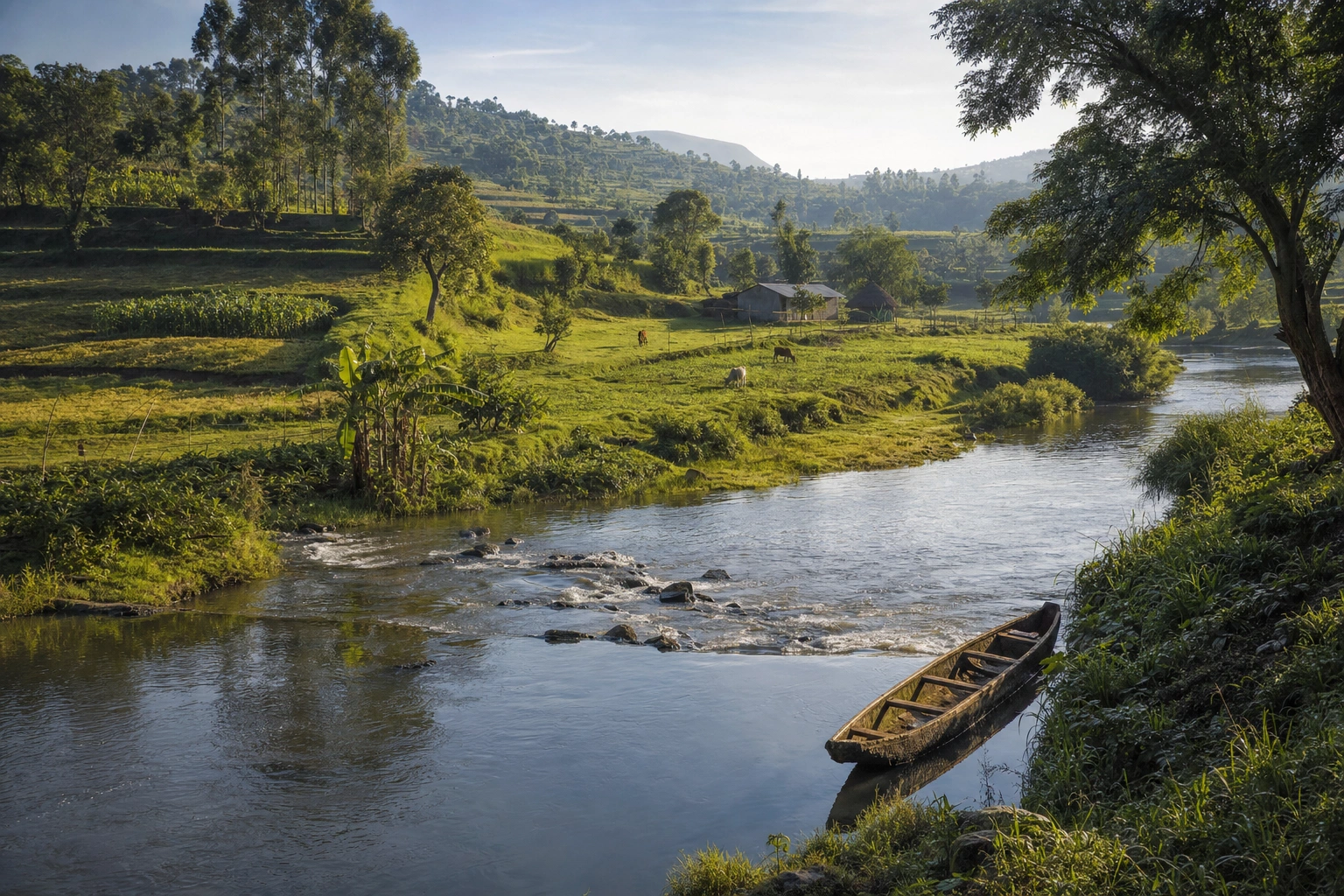
Natural resources are the materials, living systems and environmental conditions that people depend on to meet their needs and earn a living. They include land, water, forests, wildlife, fisheries, minerals, soil, sunlight and plant life. Livelihoods are the ways people secure food, income, housing, health, education and other necessities. The relationship between natural resources and livelihoods is therefore direct: when resources are productive and accessible, they can support well-being; when they are degraded, restricted or unequally controlled, people’s economic security is put under pressure.
This relationship is especially visible in rural and coastal communities, but it also affects towns and cities. Urban households depend on water catchments, agricultural land, energy sources, building materials and ecosystems beyond city boundaries. Understanding this connection helps individuals, businesses, communities and governments make decisions that protect both nature and the people who rely on it.
How Natural Resources Support Livelihoods
Natural resources contribute to livelihoods in several connected ways. The most obvious is through direct use. A farmer may depend on fertile soil, rainfall and water for irrigation. A fisher may depend on healthy rivers, lakes or coastal waters. A pastoralist may rely on grazing land and seasonal water points. A household may collect firewood, grow food, keep livestock or use medicinal plants.
Natural resources also support employment and business activity. Forests provide materials for carpentry, construction, furniture-making and beekeeping. Rivers and lakes can support fishing, transport, tourism and small-scale irrigation. Landscapes and wildlife may attract visitors, creating work for guides, accommodation providers, craftspeople, drivers and food vendors. Minerals can generate employment and public revenue, although extraction can also create serious environmental and social risks if it is poorly managed.
A useful way to understand these benefits is to group them into four categories:
- Provisioning benefits: food, water, fuel, fibre, timber and medicinal resources.
- Regulating benefits: flood control, water purification, soil protection, pollination and climate regulation.
- Cultural benefits: recreation, tourism, spiritual practice, identity and heritage.
- Supporting functions: soil formation, nutrient cycling and habitats that allow other benefits to exist.
Some benefits are sold in markets, while others are not. A farmer may sell maize, but the value of pollinating insects, groundwater recharge and erosion control may not appear on a receipt. Nevertheless, these less visible functions can determine whether production remains possible in the future.
Livelihoods Also Affect Natural Resources
The relationship works in both directions. People do not merely receive benefits from nature; their decisions influence the condition of natural resources. Farming methods, settlement patterns, fishing practices, grazing pressure, energy choices, waste disposal and industrial activity can either conserve or damage the environment.
For example, a farmer who maintains ground cover, plants trees and uses water carefully may improve soil health and reduce runoff. Another farmer who repeatedly cultivates steep slopes without protection may lose topsoil and reduce the land’s productivity. Similarly, responsible fishing can maintain fish populations, while destructive gear or harvesting during breeding periods can reduce future catches.
Resource use is not always harmful simply because it involves extraction. People must use land, water and materials to live. The important questions are how much is used, how quickly it is renewed, who benefits, who bears the costs and whether future users are being considered. Sustainable management aims to keep resource use within the capacity of ecosystems to recover and continue providing benefits.
Renewable and Non-Renewable Resources
The difference between renewable and non-renewable resources is important for livelihood planning. Renewable resources, such as forests, fish, fertile soil and freshwater, can recover or be replenished under suitable conditions. However, renewable does not mean unlimited. A forest may regenerate when harvesting is controlled, but repeated clearing, fire or drought can prevent recovery. Fish populations may reproduce, but excessive catches can reduce them faster than they can replenish.
Non-renewable resources, such as many minerals and fossil fuels, form over very long periods and cannot be replaced within a human lifetime. Their extraction may provide jobs, infrastructure and government revenue, but it can also cause land disturbance, pollution, displacement and conflict over benefits. Responsible management requires transparent decisions about extraction, environmental safeguards, rehabilitation and how income will support communities beyond the period of production.
Renewable and non-renewable resources may also interact. For instance, mining can affect rivers, farmland and grazing areas. Energy projects can improve access to electricity while changing land use or water flows. A decision that appears economically valuable in the short term may weaken other livelihood systems if its wider effects are ignored.
Why Resource Degradation Threatens Livelihoods
Resource degradation occurs when the quality, quantity or productive capacity of a natural resource declines. Common forms include soil erosion, deforestation, overgrazing, water pollution, wetland loss, declining fish stocks, habitat destruction and excessive groundwater extraction.
Degradation can reduce income directly. Lower soil fertility may lead to smaller harvests or greater spending on inputs. Polluted water can increase the time and cost involved in finding safe supplies. Declining fish catches can reduce household earnings and food availability. Loss of vegetation may force pastoralists to travel further for pasture and water. These pressures often affect people with the fewest alternatives most severely.
Environmental decline can also create hidden costs. When a nearby water source becomes unreliable, household members may spend more time collecting water rather than studying, farming or working. When local fuelwood becomes scarce, families may purchase fuel or travel further. When floods become more damaging because wetlands or forests have been cleared, households may lose homes, tools, crops and business stock.
Resource degradation may also increase conflict. Farmers and pastoralists may compete over water and grazing land. Communities may disagree with investors or authorities over access to forests, minerals, beaches or conservation areas. Such tensions are not caused by environmental scarcity alone; governance, unequal access, insecure land rights and limited participation can make them worse.
Livelihood Diversity and Resilience
Many households combine several livelihood activities rather than depending on one resource. A family may grow crops, keep poultry, run a small shop, sell handmade products and receive income from casual work. This diversity can reduce risk because a poor harvest does not necessarily remove every source of income.
Natural resource management should therefore consider the whole livelihood system. Protecting a forest may conserve water and biodiversity, but if communities lose access to essential products without viable alternatives, pressure may shift elsewhere. Likewise, a conservation rule may be environmentally sound but difficult to sustain if affected households are excluded from decisions or receive no fair benefit.
Resilience means the ability to withstand shocks, adapt to change and recover without destroying the resource base. Diversified income, savings, secure land rights, local institutions, skills, access to markets and reliable information can all strengthen resilience. Healthy ecosystems are part of this resilience because they provide a buffer against drought, floods, heat and other pressures.
Principles of Sustainable Natural Resource Management
Sustainable natural resource management involves planning and using resources in ways that meet present needs while maintaining their ability to support future generations. Good management normally combines ecological knowledge with local experience, economic analysis and fair decision-making.
Assess the resource and its limits
Before a resource is used, managers need to understand its condition, renewal rate and importance to different users. A water source should be assessed in relation to seasonal rainfall, household needs, livestock, farming and downstream users. A forest assessment should consider timber, fuelwood, wildlife habitat, watershed protection and cultural value.
Include the people who depend on it
Communities, workers, businesses, women, young people, Indigenous groups and other affected users may experience the same resource differently. Inclusive participation can reveal practical knowledge and identify effects that a technical assessment might miss. Participation should involve more than informing people after decisions have already been made; it should provide a meaningful opportunity to influence choices.
Match use with regeneration
Harvesting, grazing, fishing and water abstraction should be kept within levels that allow recovery. Tools may include seasonal restrictions, protected areas, rotational grazing, replanting, soil conservation, catch limits, efficient irrigation and restoration of damaged sites. These measures work best when rules are clear, monitored and considered legitimate by users.
Share benefits and responsibilities fairly
People are more likely to support conservation when they can see fair benefits and when responsibilities are distributed reasonably. Benefit-sharing may involve employment, community services, improved infrastructure, access to markets or locally managed enterprises. It is also important to examine who pays the costs of conservation and who receives the profits from resource extraction.
Use adaptive management
Environmental conditions change because of rainfall variation, population growth, markets, technology and climate pressures. Management plans should therefore be reviewed using evidence from monitoring and local experience. If a grazing plan causes pasture decline or a fishing rule is not protecting stocks, the approach should be adjusted rather than defended simply because it was written in an original plan.
Examples from Everyday Economic Life
Consider a smallholder farmer in western Kenya. The farm depends on soil fertility, rainfall, pollinators and access to water. Planting trees, maintaining terraces, applying compost and protecting waterways can improve long-term productivity. These practices may require labour or an initial investment, but they can reduce erosion and help the farm remain productive through difficult seasons.
In a dryland county, pastoralist livelihoods depend on mobility, grazing areas and access to water. Blocking traditional movement routes or concentrating animals around a small number of water points can intensify pressure on pasture. Participatory grazing plans, negotiated access arrangements, fodder production and maintenance of water infrastructure can help protect both livestock and rangelands.
Along the coast or near a major lake, fishing households depend on aquatic ecosystems as well as markets, equipment and transport. Protecting breeding areas, reducing damaging practices and improving storage can support future catches and reduce post-harvest losses. Alternative income activities may also reduce the need to catch fish when stocks are low.
In an urban setting, natural resources may seem distant, but the connections remain clear. A restaurant depends on food, water and energy. A construction company depends on sand, stone, timber and water. A town depends on drainage systems, wetlands and trees to manage heat and heavy rainfall. Businesses that reduce waste, use resources efficiently and choose responsible suppliers can lower environmental pressure while improving operational resilience.
Applying This in Practice
Anyone involved in a community project, farm, enterprise or public programme can use a simple resource-and-livelihood assessment.
- List the important resources. Identify the land, water, forests, fisheries, wildlife, energy sources and ecosystem services that support the activity.
- Map users and benefits. Ask who uses each resource, for what purpose, at which time of year and with what level of access.
- Identify pressures. Look for pollution, overuse, land conversion, insecure access, weak enforcement, waste and activities that may reduce future productivity.
- Examine trade-offs. Consider who gains, who loses, what benefits are immediate and what costs may appear later.
- Choose practical safeguards. Examples include water-saving equipment, soil protection, restoration, waste reduction, sustainable sourcing, agreed harvesting rules and emergency plans.
- Monitor results. Track both environmental signs and livelihood outcomes, such as water quality, vegetation recovery, yields, costs, income, access and conflicts.
Useful questions include: Is the resource being used faster than it can recover? Are vulnerable users being heard? Does the plan protect future income as well as current needs? Are conservation costs and benefits fairly distributed? What information would show whether the approach is working?
Key Takeaways
- Natural resources support livelihoods through food, water, materials, income, ecosystem services and cultural value.
- Livelihood activities can either conserve natural resources or reduce their quality and future productivity.
- Renewable resources are not unlimited; they must be used at rates that allow recovery.
- Resource degradation can reduce income, increase household costs, deepen vulnerability and create conflict.
- Sustainable management combines ecological limits, local knowledge, inclusive decisions, fair benefit-sharing and regular monitoring.
- Diversified livelihoods and healthy ecosystems help households and businesses withstand environmental and economic shocks.
No comments yet.