
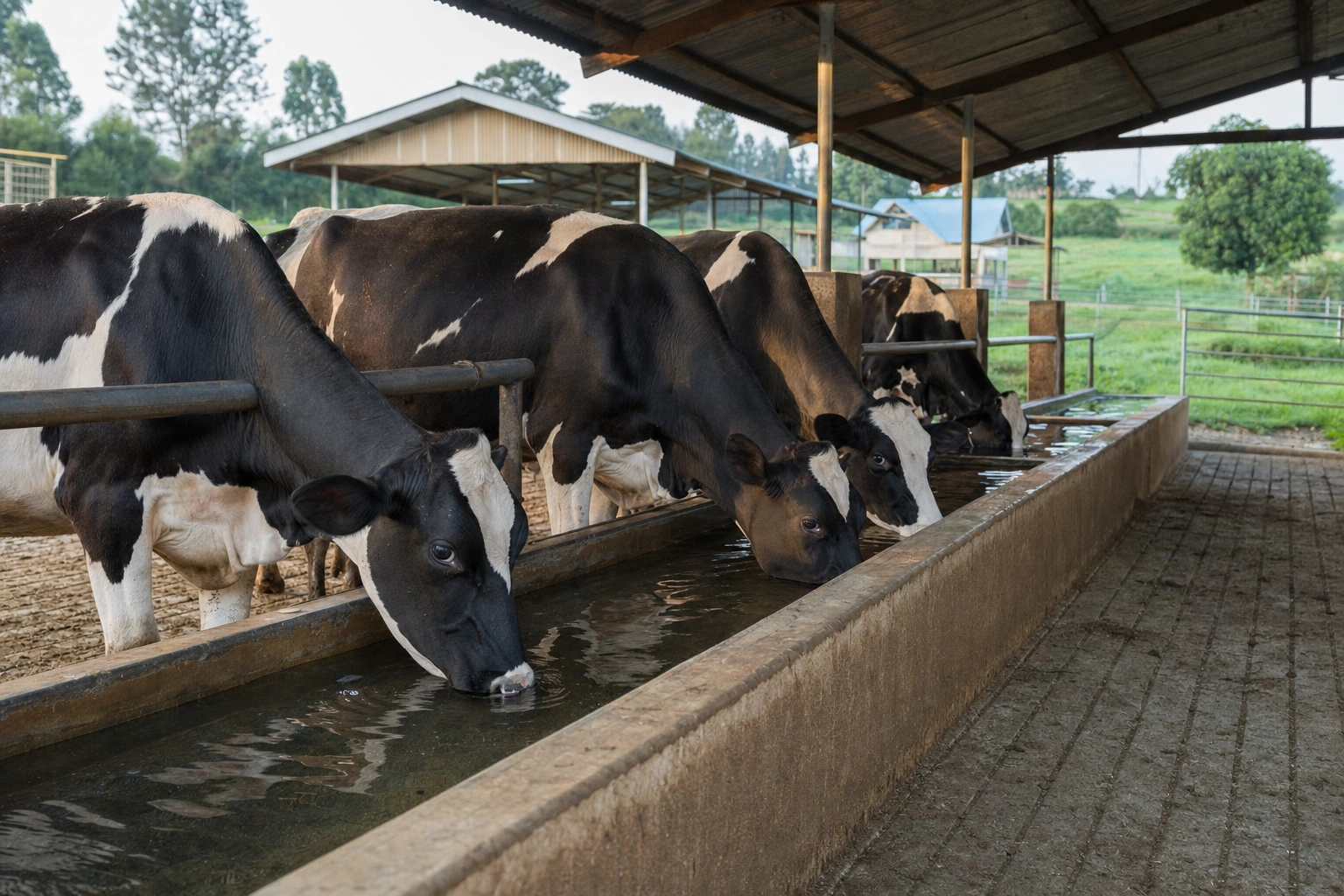
Water is central to every part of dairy production. A cow may receive excellent feed, appropriate housing and careful veterinary attention, but poor access to clean water can still reduce feed intake, milk yield, growth and reproductive performance. Unlike some feed ingredients, water cannot be replaced by supplements or corrected later without consequences.
For dairy farmers, water management means more than placing a container in the cowshed. It involves providing enough water, keeping it clean, positioning it correctly, checking flow rates and adapting the supply to weather, diet, stage of lactation and the number of animals using each drinking point. These principles apply to smallholder farms, zero-grazing units and larger commercial dairies alike.
Why water matters in dairy production
Water is a major component of milk, which means that milk production places a continuous demand on the cow's body. Milk contains a high proportion of water, so a lactating cow must replace the fluid secreted during milking as well as the water lost through breathing, urine, faeces and sweating.
Water also performs several essential functions:
- Digestion: It helps soften feed, supports movement of digesta through the digestive tract and contributes to normal rumen function.
- Milk synthesis: It provides the fluid base needed for milk production.
- Temperature regulation: Cows use water intake, sweating and respiration to help control body temperature, particularly in hot conditions.
- Blood circulation: Adequate body fluids support the transport of nutrients, hormones and waste products.
- Waste removal: Water is required for urine production and the removal of metabolic waste.
- Body maintenance: Growing calves, pregnant cows and dry cows all need water for normal tissue development and physiological function.
When water intake falls, the effects can appear throughout the production system. The cow may eat less, ruminate less effectively and produce less milk. In hot weather, insufficient water can also increase heat stress, which may affect fertility and animal comfort.
How much water do dairy cows need?
There is no single water allowance that suits every cow. Requirements vary according to live weight, milk yield, dry-matter intake, diet, temperature, humidity, wind, exercise, pregnancy and the moisture content of the feed.
As a practical guide, a lactating dairy cow may consume several tens of litres of water per day, with high-producing cows in hot conditions sometimes requiring substantially more. Water intake can rise sharply when milk production is high because milk contains so much water. A cow producing 25 litres of milk, for example, is losing a large volume of fluid through milk alone and needs frequent opportunities to drink.
Farmers should treat general figures as planning guides rather than fixed rules. The most useful questions are:
- Is water available at all times?
- Can several cows drink without crowding or intimidation?
- Does the supply refill quickly after animals drink?
- Do cows drink more during the hottest parts of the day?
- Are young stock and cows in separate groups receiving suitable access?
Water also comes from feed. Fresh grass and silage contain considerable moisture, whereas dry hay, concentrates and some crop residues contribute much less. A cow eating a dry ration therefore depends more heavily on the drinking-water supply than one consuming lush forage. Feed moisture can reduce the amount a cow drinks, but it does not remove the need for clean water.
The relationship between water intake and milk yield
Milk production is closely linked to feed intake, and feed intake is influenced by water availability. If a cow cannot drink comfortably after eating, she may reduce her next meal or spend less time at the feed trough. Lower feed intake means less energy and fewer nutrients available for milk synthesis.
This relationship is particularly important in intensive systems. Cows often drink soon after eating and after milking. If the water point is far from the feeding area, blocked by mud or too small for the herd, cows may postpone drinking. A short-term reduction may be difficult to notice, but repeated restriction can contribute to lower production and poorer body condition.
Water deprivation can also make a cow appear dull, reduce rumination and increase the risk of dehydration. In severe cases, dehydration affects circulation and general body function. Even before severe signs develop, a farm may notice a sudden drop in milk yield, harder manure, reduced appetite or unusual competition around the water point.
Water and heat stress
Heat stress is a major reason water management becomes more important during hot seasons. Cows generate heat through normal metabolism and fermentation in the rumen. High-producing cows generate more metabolic heat, while humidity and limited air movement make it harder for animals to cool themselves.
During hot weather, cows may drink more frequently and may change their daily pattern by eating more during cooler hours. If water is limited, dirty or warm, they may not compensate adequately for fluid loss. Heat stress can reduce feed intake and milk production and may also interfere with oestrus expression and conception.
Practical responses include placing clean water in shaded, easily reached locations, checking drinkers several times a day and ensuring that the water system can refill quickly. In a zero-grazing unit in Kenya, for instance, a farmer should consider whether cows returning from milking or feeding can reach water without walking through slurry or competing with a dominant animal. Shade, ventilation and a reliable water supply work together; water alone cannot correct all heat-stress problems.
Water quality is as important as water quantity
Cows may avoid water that smells, tastes or looks unappealing. Contaminated water can also introduce disease-causing organisms or excessive levels of substances that affect health. Common sources of contamination include manure, feed, algae, dead animals, soil, detergents and runoff from chemical storage areas.
Good water-quality management includes the following practices:
- Clean troughs regularly: Empty and scrub drinking containers before slime, algae or settled dirt builds up.
- Prevent manure contamination: Position troughs away from dunging areas and repair damaged flooring that allows faeces to enter the water.
- Protect the source: Keep wells, tanks, springs and collection points protected from livestock, fuel, pesticides and household waste.
- Watch for unusual changes: A sudden colour, odour or taste change should be investigated rather than ignored.
- Test when necessary: If animals have unexplained digestive problems, poor performance or repeated illness, water testing may help identify a problem.
Water that is safe for people is not automatically suitable for livestock in every situation, particularly where storage tanks or delivery pipes are poorly maintained. Farmers should seek advice from a qualified animal-health professional or water laboratory when contamination is suspected.
Designing an effective drinking-water system
A good system combines adequate volume, suitable height, reliable flow and convenient placement. The exact design depends on the housing system, herd size and available water source, but several principles are widely useful.
Provide more than one drinking point
One small trough can create competition, especially in a group containing dominant and timid animals. More than one drinking point allows cows to spread out and reduces the chance that a lower-ranking animal will be pushed away. Separate groups, such as milking cows, dry cows and young stock, should each have dependable access.
Place water near important activity areas
Water should be easy to reach from the feeding area and, where appropriate, near the exit from the milking parlour. It should not be so close to the feed that splashed water spoils the ration. The route should have firm, non-slippery footing and good drainage.
Check flow and storage capacity
A trough that eventually fills may still be inadequate if it refills too slowly during peak drinking periods. Observe the system after milking and during hot weather. Check pipes, valves, pumps and floats, and keep reserve storage for interruptions. A tank can provide security, but only if it is covered, clean and large enough for the herd's needs.
Match equipment to the animals
Drinkers must be accessible to adult cows without forcing them to kneel or stretch awkwardly. Calves require equipment that they can reach safely and that can be cleaned easily. Automatic drinkers can reduce labour, but they still need inspection because a blocked valve or faulty float can restrict supply without being immediately obvious.
Water for calves and young stock
Calves need clean water from an early age, even when they are receiving milk or a milk replacer. Water supports the development of the rumen and encourages intake of calf starter feed. It should be offered separately from milk, because mixing milk and drinking water in the same container can interfere with hygiene and feeding management.
Calf water containers should be easy to reach, protected from faecal contamination and cleaned frequently. In hot conditions, calves can become dehydrated quickly, especially if they have diarrhoea or fever. Signs such as weakness, sunken eyes, dry gums or reduced interest in feed require prompt attention from an animal-health professional.
Heifers also need reliable water as they grow. Inadequate water access can reduce feed intake and delay development, which may affect the age and condition at which they enter the milking herd.
Managing water during drought or supply interruptions
Water shortages require planning before the main source fails. Farmers can calculate the approximate daily requirement of each animal group, then compare it with available storage and delivery capacity. The plan should account for drinking, cleaning equipment and other farm uses without allowing essential livestock water to be displaced.
During a shortage:
- Prioritise drinking water for calves, lactating cows and animals showing signs of heat stress or illness.
- Inspect every trough, pipe, tap, pump and tank to find leaks or blockages.
- Reduce contamination by covering storage tanks and controlling access around the water source.
- Use water carefully for cleaning while maintaining milking hygiene and animal health.
- Arrange a safe alternative source early rather than waiting until animals are visibly dehydrated.
Do not assume that stagnant surface water is safe simply because animals are willing to drink it. During drought, water may become more concentrated with minerals or contaminated by manure and runoff. If an alternative source is introduced, gradual monitoring and professional advice are sensible, particularly when animals show digestive changes or reduced intake.
Simple signs that water management needs attention
Routine observation is one of the most useful farm-management tools. Watch cows at different times of day, including after feeding and milking. A healthy, well-managed herd should be able to approach water without prolonged queuing, aggressive competition or hesitation.
Investigate the system if you observe:
- A sudden or unexplained fall in milk yield.
- Reduced feed intake or less rumination.
- Many cows waiting around one trough.
- Dirty, slimy or foul-smelling water.
- Wet, muddy flooring around drinkers.
- Repeatedly empty troughs during hot periods.
- Young stock avoiding their water containers.
- Signs of dehydration, heat stress or digestive disturbance.
Keeping a simple record of milk yield, weather conditions, water repairs and cleaning dates can help connect production changes with management problems. The purpose is not to create unnecessary paperwork, but to identify patterns before they become expensive.
Applying This in Practice
A practical water audit can be completed in a short farm walk. Start at the water source and follow the full route to every animal group. Confirm that the source is protected, storage is adequate and pipes are not leaking. Then inspect each trough for cleanliness, accessibility, refill speed and drainage.
Next, observe the animals rather than relying only on equipment checks. Are timid cows able to drink? Do cows return from milking to a convenient water point? Can calves reach their containers? Is water available during the hottest part of the day? Finally, write down the highest-priority correction, such as repairing a float valve, adding shade, moving a trough away from manure or increasing storage capacity.
For example, if a smallholder farmer notices lower afternoon milk yields during a hot month, the cause may not be feed quality alone. A blocked pipe, a dirty trough or a single crowded drinking point could be limiting water intake. Checking these factors alongside feed, health and heat management gives the farmer a more reliable basis for action.
Key Takeaways
- Water supports digestion, temperature control, waste removal, body maintenance and milk synthesis.
- Lactating cows need frequent access to more water than dry cows, calves or animals eating moisture-rich feed.
- Clean water encourages intake; dirty, contaminated or inaccessible water can reduce health and production.
- Provide enough drinking points, fast refill rates, safe footing and convenient access near feeding and milking areas.
- Hot weather, high milk yield, dry diets, pregnancy and illness can increase water requirements.
- Inspect water sources, tanks, pipes and troughs routinely, and investigate sudden changes in intake or milk yield.
No comments yet.