
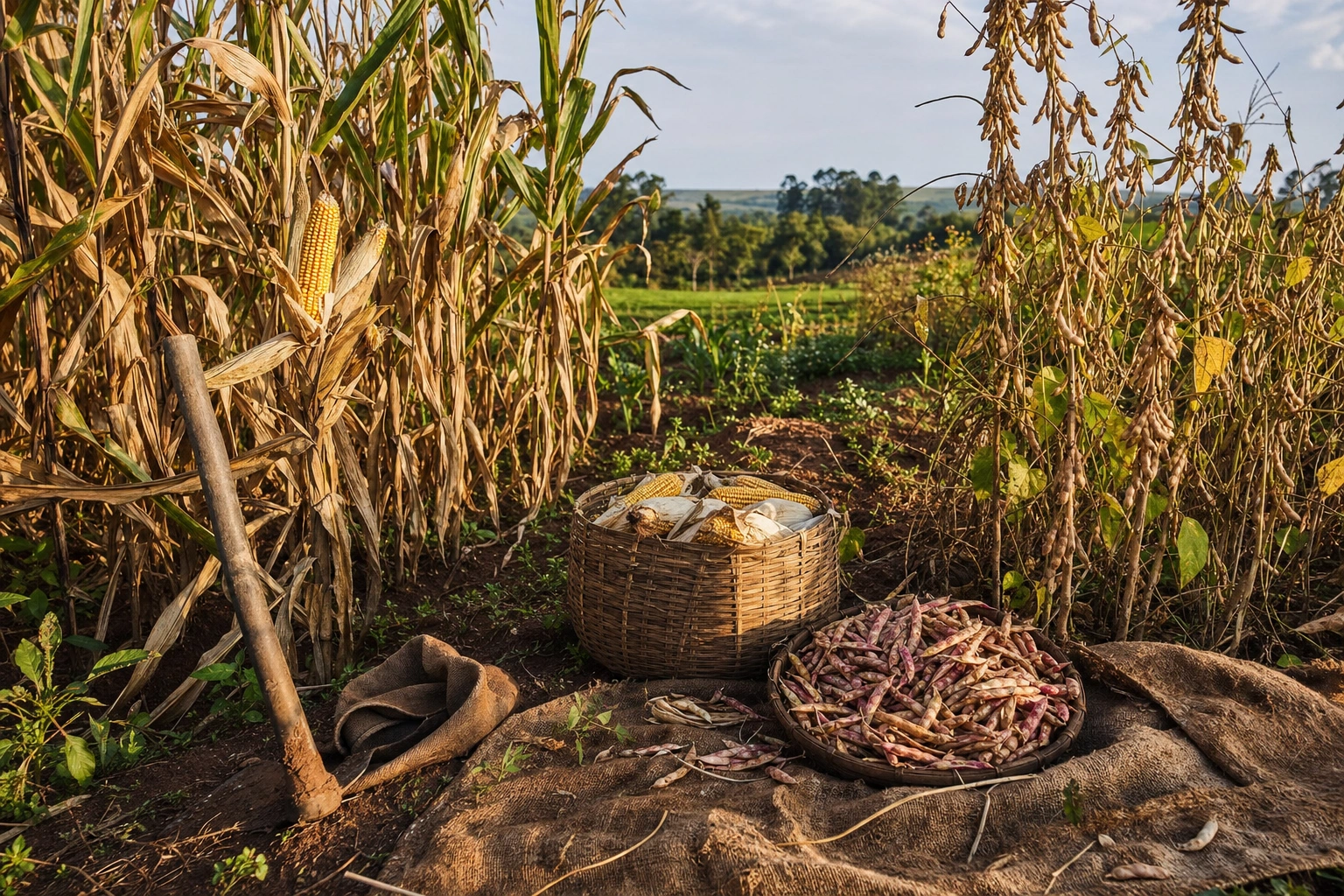
Harvest timing is one of the most important decisions in crop farming. A crop can be healthy, well fertilised and carefully protected, yet still lose value if it is harvested too early or left in the field for too long. The right timing helps farmers protect yield, quality, storage life and market opportunities.
Harvesting is not simply a matter of choosing a date on the calendar. It involves observing the crop, understanding its intended use, checking field and weather conditions, preparing labour and equipment, and deciding whether the produce is ready for immediate sale, processing or storage. These decisions are especially important for smallholders and commercial growers who may have limited drying, storage or transport facilities.
What Harvest Timing Means
Harvest timing is the decision about when a crop has reached the most suitable stage for removal from the field. The best stage depends on the crop and its purpose. Produce intended for fresh consumption may be harvested while it is still firm and immature, whereas grain intended for long-term storage usually needs to reach physiological maturity and then be dried to a safe moisture level.
Two useful ideas help explain this decision:
- Physiological maturity: the point at which the crop has completed most of its biological development and has reached its maximum dry matter or seed development.
- Harvest maturity: the stage at which the crop is most suitable for a particular use, such as fresh sale, processing, seed, animal feed or storage.
These stages are not always identical. For example, green beans are harvested while their pods are tender, long before the seeds become fully mature. A maize crop harvested for green consumption is treated differently from maize harvested as dry grain. Good timing therefore begins with a clear answer to the question: What is this crop going to be used for?
Why Harvest Timing Matters
Protecting yield
Harvesting too early can reduce the amount of saleable product. Immature grains, fruits or roots may be smaller, lighter or less developed. In some crops, early harvesting also means that the produce contains more water, increasing the weight that must be transported and the effort required for drying.
Delaying harvest can also reduce yield. Mature grain may fall from the plant, pods may split, fruits may drop or roots may become damaged by pests and diseases. Birds, rodents, insects and livestock can cause additional losses when a crop remains unprotected in the field.
Maintaining quality
Quality includes appearance, taste, texture, size, cleanliness, colour and freedom from damage. A tomato picked too early may not develop the desired flavour or colour. A fruit harvested when overripe may bruise easily during transport. Vegetables left too long in hot conditions can lose firmness and freshness.
For grains and pulses, quality also depends on sound, fully developed seed. Crops harvested under wet conditions may be difficult to thresh or dry and may develop mould if stored before their moisture content is reduced.
Improving storage life and safety
Harvested crops continue to respire, and some produce continues to ripen. Cuts, bruises and insect damage speed up deterioration. Correct timing reduces the period during which produce is exposed to field hazards and makes it easier to carry out careful handling, sorting and storage.
For cereals and legumes, safe storage requires proper drying as well as timely harvesting. A crop that appears mature may still contain too much moisture for storage. Farmers should use a reliable moisture meter where possible or follow locally recommended drying and storage practices. Drying on clean surfaces and protecting produce from rain, animals and contamination are essential.
Supporting better prices
Markets often reward uniform, clean and good-quality produce. Harvesting at the appropriate stage can help a farmer meet buyer specifications and avoid selling damaged or overripe produce at a discount. Timing can also affect whether the farmer sells during a period of strong demand or when many growers are bringing the same crop to market.
However, delaying harvest purely in the hope of a higher price is risky. Weather damage, falling prices, theft and deterioration may outweigh any expected benefit. A sound decision compares the possible price gain with the cost and risk of keeping the crop in the field.
Signs That a Crop Is Ready
Farmers should use several maturity indicators rather than relying on a single sign. The most useful indicators vary by crop, variety and growing environment.
Colour and appearance
Colour changes are important in many fruits and vegetables. A tomato may move from green towards the colour preferred by the market. Bananas may be harvested at a mature green stage for transport and ripened later. Onions may develop dry outer skins and tops that bend over as they mature.
Colour alone can be misleading. Water stress, disease, nutrient problems or unusual weather can change the appearance of a plant without indicating proper maturity. It should therefore be considered alongside other signs.
Size, firmness and texture
Marketable size is often part of the buyer's specification. Cabbages, cucumbers, eggplants and root crops are commonly judged by size and firmness. A crop that is too small may not provide an acceptable return, while one that is too large can become fibrous, tough or difficult to sell.
Firmness should be tested gently to avoid bruising. For fresh produce, the desired texture may be crisp and tender. For fruits intended for transport, slightly firm produce may be safer than fruit that is fully soft.
Seed and pod development
In beans, peas and other legumes, the correct stage depends on whether the product is sold as a fresh vegetable or as dry seed. Fresh pods are generally harvested while they are tender and before the seeds become hard. Dry beans are harvested when most pods and seeds have matured, but before excessive shattering or weather damage occurs.
For maize, signs of dry-grain maturity can include dry husks, hardened kernels and a dark layer at the base of the kernel. The crop may still require field drying or artificial drying before safe storage. Farmers should not assume that a dry-looking husk automatically means the grain is ready for storage.
Days from planting and growing conditions
Seed packets, extension advice and previous farm records can provide an estimated maturity period. This is useful for planning, but it is not a substitute for field observation. Planting date, variety, soil fertility, temperature, rainfall, pests and disease can all alter the time required to mature.
Keeping farm records helps improve future decisions. Record the planting date, variety, notable weather conditions, first signs of maturity, harvest date, yield and post-harvest losses. Over several seasons, these records become a practical guide for the local farm.
Harvest Timing for Different Crop Groups
Cereals and pulses
Maize, wheat, sorghum, millet, beans and other grain crops must be mature enough to produce well-developed grain but harvested before avoidable field losses become serious. Watch for lodging, insect damage, bird activity, mould, pod shattering and periods of rain.
Where possible, plan harvesting so the crop can be dried promptly. Harvesting a large area just before expected rain may create a bottleneck if there is not enough labour, drying space or equipment. It may be better to begin with the most mature or vulnerable section of the field, then continue as capacity allows.
Root and tuber crops
Potatoes, cassava, sweet potatoes and other root crops may be harvested over a broader window than many fruits. Nevertheless, maturity affects size, skin strength, cooking quality and storage performance. Harvesting should be coordinated with soil moisture: very wet soil can make lifting difficult and can increase mud and damage, while excessively dry soil may make roots harder to remove without cuts.
Roots and tubers should be handled carefully because wounds allow decay organisms to enter. If the crop is intended for immediate consumption, the harvest stage may differ from that used for storage or processing.
Fruits
Fruit maturity should be matched to the distance and conditions of the market. Produce sold locally may be picked closer to eating maturity. Produce travelling farther may need to be picked at a firm stage that allows it to withstand handling and transport.
Harvest during the coolest practical part of the day, such as early morning, while avoiding harvesting when produce is wet if this increases the risk of spreading disease or complicates packing. Use clean, suitable containers and avoid dropping fruit into piles.
Leafy and other vegetables
Leafy vegetables lose water quickly after harvest. Their quality is usually best when harvested at the appropriate size and moved rapidly into shade. Removing damaged leaves, reducing rough handling and keeping produce cool can be as important as choosing the correct harvest day.
Some vegetables can be harvested in several passes. Selective harvesting allows mature produce to be picked while smaller items remain in the field. This approach may improve uniformity but requires reliable labour and regular field visits.
Weather, Labour and Equipment Planning
A harvest decision is also a management decision. Before the crop reaches maturity, confirm who will harvest it, what tools are required, where it will be placed, and how it will reach the buyer or storage facility.
- Inspect the crop regularly: begin closer monitoring as the expected maturity period approaches.
- Check the weather outlook: identify risks from rain, strong winds, extreme heat or unusually dry conditions.
- Prioritise vulnerable areas: harvest sections affected by pests, disease, lodging or waterlogging where delay could cause rapid loss.
- Prepare tools and containers: sharpen cutting tools, clean equipment and provide containers that reduce bruising and contamination.
- Confirm post-harvest capacity: make sure there is enough space for sorting, drying, cooling, packing or temporary storage.
- Coordinate transport and buyers: avoid harvesting more produce than can be moved or sold within a reasonable time.
Labour shortages are a common cause of delayed harvesting. Staggering planting dates, using appropriate equipment and arranging labour early can reduce this risk. Mechanisation may improve speed, but machinery must be adjusted for the crop and used under suitable field conditions to limit damage.
Common Mistakes to Avoid
Harvesting everything at once
Not every plant in a field matures on the same day. Harvesting selectively or in stages can improve quality, especially for fruit, vegetables and crops with uneven growth. A whole-field harvest may be appropriate for some grains, but only when the crop and available post-harvest facilities support it.
Relying only on the calendar
The number of days stated for a variety is an estimate under particular growing conditions. A crop exposed to drought, excessive rain, poor fertility or disease may mature differently from the expected schedule.
Ignoring the buyer's requirements
A farmer may produce a healthy crop but lose value if it does not meet requirements for size, colour, moisture, cleanliness or packaging. Discuss specifications with buyers before harvest where possible, and sample the crop rather than making assumptions.
Leaving harvested produce in the sun
Harvesting is only the first part of the process. Direct sun, rough handling and delayed transport can quickly reduce quality. Move produce to shade, sort it carefully and begin drying, cooling or marketing without unnecessary delay.
Applying This in Practice
Use a simple harvest-readiness plan for each crop. Start by writing down the intended use: fresh market, processing, seed, feed or storage. Next, list two or three maturity indicators that can be checked in the field. For example, a dry-bean grower might examine pod colour, seed hardness and the risk of pod shattering. A tomato grower might check colour stage, firmness and the distance to market.
Walk through the field and inspect representative plants rather than judging only the edge of the plot. If maturity is uneven, mark areas for separate harvesting. Estimate the likely volume and compare it with available labour, containers, drying space and transport. This prevents a well-timed harvest from becoming a post-harvest loss.
Finally, review the result after selling or storing the crop. Ask which maturity signs were most reliable, whether the harvest was too early or late, how much produce was lost, and what delayed handling. These observations can improve the next planting season more effectively than relying on general advice alone.
Key Takeaways
- Choose the harvest stage according to the crop's intended use, not simply the calendar.
- Use several maturity indicators, including colour, size, firmness, seed development and field condition.
- Harvesting too early can reduce development and quality; harvesting too late increases field losses and damage.
- Plan labour, tools, containers, drying, storage and transport before the crop becomes ready.
- Match harvest timing to the distance, handling conditions and specifications of the target market.
- Keep records of planting, maturity, harvest dates and losses to improve future decisions.
No comments yet.