
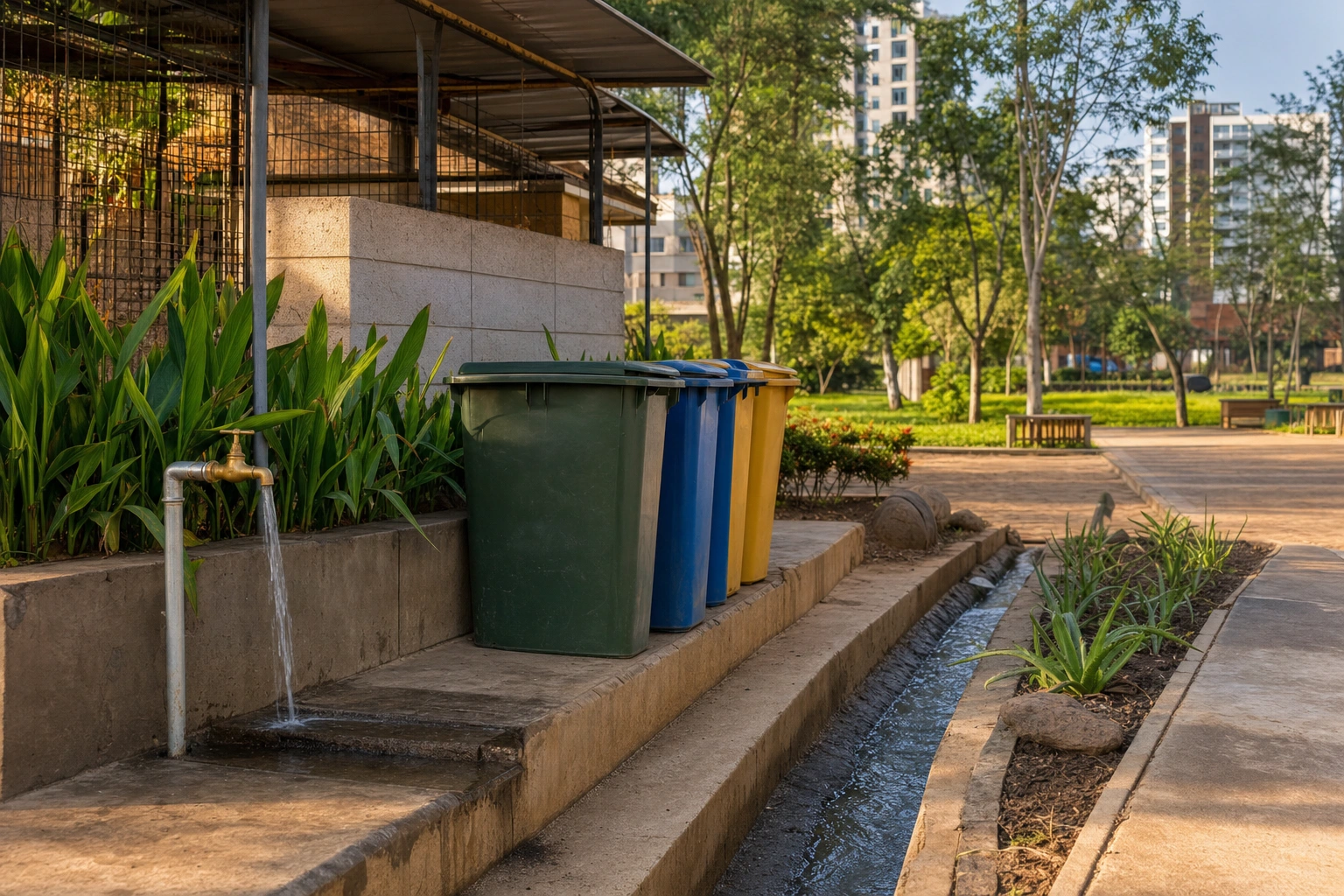
Environmental responsibility is the practice of recognising our effect on the natural world and acting to reduce harm while protecting the resources that support life and livelihoods. It applies to personal choices, workplaces, farms, schools, communities, businesses and governments. It is not limited to climate change or conservation; it also includes waste, water, energy, land, biodiversity, pollution and the way products are designed and used.
Environmental awareness is the starting point. When people understand where resources come from, how pollution is created and what happens to waste after disposal, they are better placed to make responsible decisions. Awareness becomes meaningful when it changes behaviour, improves systems and encourages accountability.
What Environmental Responsibility Means
Environmental responsibility involves three connected ideas. First, people and organisations should understand the environmental consequences of their actions. Secondly, they should take reasonable steps to prevent or reduce avoidable damage. Finally, they should accept responsibility for improving practices when harm occurs or when better information becomes available.
For an individual, this might mean using water carefully, avoiding unnecessary single-use items, separating waste where facilities exist, choosing durable products and considering how far goods have travelled. For a business, it could involve reducing energy consumption, managing hazardous materials properly, preventing pollution, using resources efficiently and communicating honestly about environmental performance.
Responsibility does not mean that every person or organisation has the same capacity or impact. A household, a manufacturing company and a public authority have different roles. However, each can identify the decisions within its control and improve them. The most useful approach is practical rather than perfectionist: understand the main sources of impact, prioritise them and make consistent improvements.
Why Environmental Responsibility Matters
Protecting essential resources
Clean air, safe water, fertile soil, forests, wetlands and healthy oceans are not optional luxuries. They support food production, health, housing, transport, industry and economic activity. When these systems are damaged, the effects can appear through polluted water, declining harvests, soil erosion, flooding, rising treatment costs or reduced access to natural resources.
In many African communities, livelihoods depend directly on land, rainfall, rivers, lakes, forests and grazing areas. Responsible management of these resources helps protect both current incomes and the ability of future generations to meet their needs. In an urban setting, the same principle applies to drainage systems, clean neighbourhoods, reliable water supplies and healthy public spaces.
Reducing pollution and health risks
Pollution can enter the air, water and soil through transport, burning waste, industrial processes, agricultural chemicals, untreated wastewater and poorly managed rubbish. Some pollution is visible, such as plastic waste in a drainage channel. Other pollution is less obvious, including contaminated groundwater, indoor air pollution or chemical residues.
Reducing pollution improves the places where people live and work. It can lower exposure to harmful substances, reduce blocked drainage and protect animals and plants. Good environmental practices are therefore closely linked to public health, although environmental responsibility should not be presented as a substitute for professional medical or public-health advice.
Strengthening resilience
Responsible environmental management helps people and organisations prepare for changing conditions. Protecting vegetation can reduce erosion. Maintaining wetlands can support water regulation. Improving soil health can make farms less vulnerable to periods of poor rainfall. Efficient buildings and equipment can reduce dependence on expensive or unreliable energy supplies.
Resilience means having the capacity to cope with disruption and recover without causing greater harm. A business that depends on one vulnerable source of water, energy or raw materials may face operational problems when conditions change. Environmental planning encourages it to understand these dependencies and consider practical alternatives.
Supporting sound economic decisions
Environmental responsibility is often treated as a cost, but poor environmental management can also create costs. Waste represents materials and money that have already been paid for. Excess energy use raises operating expenses. Pollution can damage equipment, affect relationships with communities and lead to clean-up requirements. Inefficient water use can increase bills and threaten continuity of operations.
Resource efficiency can therefore support both environmental and financial objectives. A small enterprise that prevents spoilage, repairs equipment, controls unnecessary lighting and stores materials carefully may reduce waste while improving its margins. The purpose is not to claim that every environmental action produces immediate savings, but to examine the full costs and benefits of decisions.
Environmental Awareness and Everyday Decisions
Environmental awareness helps people connect ordinary actions with wider systems. Before buying, using or discarding something, it is useful to ask several questions:
- What resources were needed to produce this item?
- How long is it likely to be used?
- Can it be repaired, reused, shared or recycled through a reliable local system?
- Could I choose an option that uses less energy, water or packaging?
- What will happen to it when I no longer need it?
These questions do not require consumers to investigate every product in detail. They simply encourage a shift from short-term convenience to life-cycle thinking. A product has environmental effects before it reaches the shop, during its use and after disposal. Sometimes the most responsible choice is to buy nothing; sometimes it is to choose a durable product; and sometimes it is to maintain or repair what is already available.
Waste management provides a clear example. The preferred order is generally to prevent unnecessary waste first, then reduce consumption, reuse items, repair them where possible and recover materials through appropriate recycling systems. Disposal remains necessary for some materials, but it should not be the first response when better options are available.
Environmental Responsibility in Organisations
Organisations influence the environment through their buildings, procurement, transport, production methods, waste, staff practices and relationships with suppliers. Environmental responsibility is more effective when it is built into management systems rather than left to one enthusiastic employee.
1. Understand the organisation's main impacts
Begin with a simple environmental review. List the main activities and identify where the organisation uses energy, water, paper, fuel, raw materials and packaging. Record the types of waste produced and note any risks involving chemicals, emissions, wastewater or land.
A small Kenyan retail shop, for example, might focus first on refrigeration, lighting, packaging, stock spoilage and disposal of damaged goods. A construction firm may need to prioritise dust, noise, fuel, construction waste, soil disturbance and material storage. The priorities will differ, so copying another organisation's programme without examining local conditions may produce little value.
2. Set specific objectives
Broad intentions such as “go green” are difficult to manage. Objectives should describe the desired change and how progress will be checked. Examples include reducing avoidable paper printing, improving segregation of waste, repairing leaking taps, purchasing more durable equipment or reducing unnecessary vehicle journeys.
Where measurements are available, use them. Energy bills, water records, procurement invoices, waste collection records and maintenance logs can reveal patterns. Where precise measurement is not yet possible, begin with a clear process measure, such as checking equipment monthly or ensuring that staff know how to handle a particular waste stream.
3. Change processes, not only individual behaviour
Staff reminders can help, but reminders alone are weak when the workplace makes responsible action difficult. If recycling containers are unclear, inconvenient or collected as mixed waste, people may not use them properly. If procurement policies reward the lowest purchase price without considering durability, the organisation may buy items that cost more over their useful life.
Effective change combines information with practical systems. Provide suitable bins, maintain equipment, design sensible purchasing rules, train relevant staff and assign responsibility for follow-up. Leadership matters because employees are more likely to take environmental procedures seriously when managers apply them consistently.
4. Review results and improve
Environmental responsibility is an ongoing process. Review what changed, what did not work and what unintended effects appeared. For instance, replacing paper forms with digital records may reduce paper use but increase electricity demand or exclude people who lack reliable access to digital tools. A balanced review considers the whole process rather than celebrating one isolated change.
Environmental Responsibility in Communities
Many environmental challenges are shared. One household cannot solve blocked drainage if waste is being dumped across a neighbourhood, and one farmer cannot protect a water source if upstream pollution continues. Community action can connect individual responsibility with collective solutions.
Useful community activities may include organised clean-up and waste-education efforts, protection of local trees and water sources, maintenance of shared spaces, composting initiatives where suitable, and discussions between residents, businesses and local authorities. Such activities work best when responsibilities are clear and when the underlying service problem is recognised. Public education cannot replace reliable waste collection, safe sanitation or effective enforcement, but it can strengthen those systems when communities are involved.
Local knowledge is also valuable. Residents often understand seasonal flooding, water access, soil conditions and changes in local wildlife better than an outside observer. Responsible planning should listen to this knowledge while also using appropriate technical expertise. Participation should be respectful and should not place the entire burden of environmental protection on communities that lack adequate services or decision-making power.
Common Barriers to Responsible Action
Convenience and habit
People often repeat familiar actions even when they know a better alternative. Make the responsible choice easier by placing collection points where waste is generated, providing refill options, publishing clear procedures and making efficient equipment simple to operate.
Limited information
Environmental claims can be confusing. Terms such as “natural”, “eco-friendly” or “green” may not explain what has actually improved. Ask for specific information: Does the product last longer? Does it use less energy? Is the packaging reduced? Is there a reliable system for repair, reuse or recovery?
Cost and access
Some environmentally preferable options require an initial investment or may not be available locally. Responsible decision-making should consider affordability and fairness. A practical solution may be to extend the life of existing equipment, share resources, buy collectively, improve maintenance or make one high-impact change at a time.
Greenwashing
Greenwashing occurs when environmental communication creates a more responsible impression than the evidence supports. Avoid relying on vague claims or attractive imagery alone. Look for clear descriptions of the action taken, the part of the product or operation affected and the limits of the claim. Honest communication includes progress and remaining challenges.
Applying This in Practice
Whether you are managing a household, a shop, a farm, a school or an office, the following process can turn awareness into action:
- Map your activities: list the main uses of energy, water, materials, transport and land, along with the waste or pollution they create.
- Choose priorities: focus on impacts that are large, frequent, risky or relatively easy to improve. Do not attempt every change at once.
- Set a practical action: define who will act, what will change and when it will be reviewed.
- Provide the means: supply the tools, information, storage, maintenance or budget needed to make the action realistic.
- Measure or observe progress: compare bills, quantities, records, photographs, maintenance reports or feedback before and after the change.
- Correct unintended effects: check whether the solution has shifted the problem elsewhere, such as replacing one form of waste with another.
- Share learning: explain what worked, what did not and what others can reasonably adopt.
For personal decisions, a simpler version is to pause before purchasing or disposing of something. Consider whether the item is necessary, whether an existing item can serve the purpose, how long the new item will last and what disposal options are genuinely available. For professional decisions, add questions about suppliers, operating costs, worker safety, community effects and the organisation's ability to monitor results.
Questions to Consider
- Which environmental impact is most significant in my home, workplace or business?
- What evidence would show that a proposed improvement is working?
- Who may be affected by the decision, including people outside the organisation?
- Am I reducing the problem or simply moving it to another stage of the process?
- What small system change would make responsible behaviour easier for others?
Key Takeaways
- Environmental responsibility means understanding impacts, reducing avoidable harm and accepting accountability for improvement.
- Environmental awareness becomes valuable when it changes purchasing, use, maintenance, disposal and organisational decisions.
- Protecting water, soil, air, biodiversity and other natural systems supports health, livelihoods, resilience and economic activity.
- Organisations should identify their main impacts, set specific objectives, provide practical systems and review results.
- Preventing waste, reducing consumption, reusing and repairing items should be considered before disposal.
- Effective environmental action must reflect local conditions, available services, fairness and the real life-cycle effects of a decision.
No comments yet.