
Biodiversity is the variety of life on Earth, including plants, animals, fungi, microorganisms and the ecosystems in which they live. It can be observed in a forest, wetland, grassland, coral reef, farm, river or even an urban garden. Healthy biodiversity supports food production, pollination, clean water, soil fertility, climate regulation and cultural life.
Although governments, conservation organisations and scientists have important roles, communities are often closest to the land and resources that need protection. Farmers, fishers, pastoralists, forest users, local businesses, schools and neighbourhood groups make daily decisions that can either strengthen or weaken ecosystems. Protecting biodiversity therefore works best when communities are respected as knowledgeable partners rather than treated merely as beneficiaries or sources of environmental damage.
Why Community Action Matters
Many biodiversity challenges are local in their immediate effects. A wetland may be drained for construction, a river may be polluted by waste, a forest edge may be cleared for fuelwood, or a grassland may be overgrazed. These changes may appear small individually, but their combined effect can reduce habitats, disrupt food chains and make ecosystems less resilient.
Local people are also well placed to notice environmental changes. Fishers may observe that certain species are becoming less common. Farmers may recognise changes in pollinator activity or soil conditions. Pastoralists may identify altered grazing patterns, while residents may notice disappearing birds, drying streams or the spread of unfamiliar plants. When this knowledge is combined with scientific monitoring, communities can help identify problems early and respond more effectively.
Community involvement also improves the fairness and durability of conservation. A protected area that ignores local livelihoods may create conflict or encourage illegal use. By contrast, conservation measures developed with affected communities are more likely to reflect local realities, distribute benefits fairly and gain long-term support.
Learn What Biodiversity Exists Locally
Effective protection begins with understanding what is present. A community does not need advanced scientific equipment to create a useful record of local biodiversity. Residents can map important habitats, identify common and rare species, record seasonal changes and document threats.
A school environmental club, for example, could survey trees and birds around its grounds. A neighbourhood group might map drainage channels, streams, wetlands and mature trees. Farmers could record which insects visit flowering crops and which natural features attract birds or other helpful organisms. Local observations can be written in notebooks, photographed or recorded through suitable biodiversity and citizen-science platforms.
Good observation should be careful and respectful. People should avoid disturbing nests, removing rare plants, handling wildlife unnecessarily or entering dangerous areas. Species identification should be checked using reliable field guides, conservation organisations, museums, universities or experienced local experts. When observations are shared publicly, sensitive information about the locations of threatened species may need to be protected.
Protect and Restore Habitats
Species cannot survive without suitable habitats. Community conservation can therefore focus not only on individual animals or plants, but also on the places that support them.
Protect remaining natural areas
Existing habitats are often more valuable and less costly to protect than damaged areas are to restore. Communities can help by preventing unnecessary clearing, reporting illegal dumping, keeping livestock away from fragile regeneration areas and supporting locally agreed rules for the use of forests, wetlands, rivers and grazing land.
In Kenya and other parts of Africa, community groups may be involved in protecting springs, riparian zones, rangelands, coastal areas or community forests. The precise rules will depend on local law, land ownership and ecological conditions. The important principle is to clarify who makes decisions, which activities are permitted, how rules are monitored and how disputes are handled.
Restore damaged ecosystems carefully
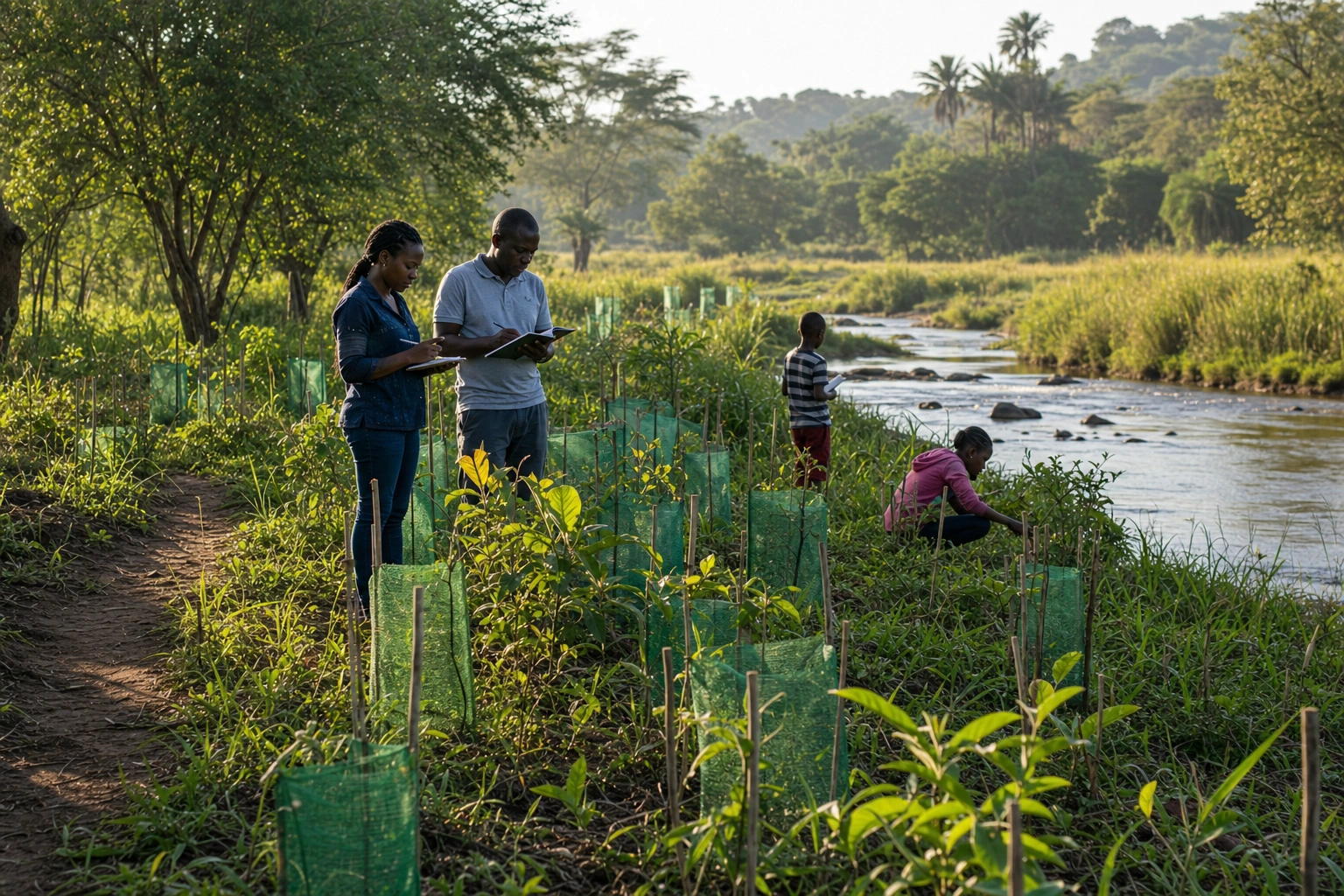
Restoration is more than planting trees. It may involve removing invasive plants, allowing native vegetation to regenerate, repairing a stream bank, controlling erosion, re-establishing a wetland or improving the condition of a coral reef or mangrove area. Restoration should begin with an assessment of why the ecosystem was damaged. Planting without addressing the underlying problem can waste time and resources.
Where planting is appropriate, locally suitable native species are generally preferable because they are adapted to the local environment and support relationships with native insects, birds and other organisms. Planting a single species over a large area may create a visually green landscape without recreating a diverse ecosystem. A mixture of suitable species, natural regeneration and protection from grazing or fire may produce better results.
Restoration projects should include follow-up care. Young plants may need protection from browsing, watering during establishment or removal of competing invasive vegetation. Communities can monitor survival, vegetation recovery, soil stability and the return of wildlife rather than measuring success only by the number of trees planted.
Use Natural Resources Sustainably
People depend on biodiversity for food, medicine, construction materials, fuel, income and cultural practices. Protecting biodiversity does not mean that all natural resource use must stop. It means using resources in ways that allow populations and ecosystems to recover.
For fisheries, sustainable practices may include respecting locally agreed closed seasons, avoiding destructive gear, protecting breeding areas and following legal requirements. For forests and woodlands, communities can reduce pressure through efficient cooking technologies, agroforestry, careful harvesting and the protection of seed-producing trees. In grazing areas, planned movement of livestock and protection of dry-season resources can reduce pressure on vegetation and water sources.
Farmers can support biodiversity by maintaining hedgerows, trees, field margins, ponds or uncultivated strips where appropriate. Crop diversity can reduce dependence on a single variety and provide habitat for beneficial organisms. Integrated pest management, which combines monitoring, prevention and targeted control, can reduce unnecessary harm to pollinators and other non-target species.
Sustainable use must also consider equity. A rule that protects a forest while removing essential access for poorer households may be difficult to maintain and may place an unfair burden on people with few alternatives. Conservation planning should therefore examine who depends on a resource, who benefits from it, who bears the cost of restrictions and what practical alternatives are available.
Reduce Pollution and Waste
Pollution damages biodiversity in many forms. Plastic waste can injure or be swallowed by animals. Untreated wastewater can reduce water quality. Excess fertiliser may enter rivers and encourage excessive plant or algal growth. Oil, chemicals, smoke and discarded fishing materials can also harm organisms and habitats.
Community action can begin with prevention. Households, schools and businesses can separate waste where local systems allow, reduce single-use materials, store chemicals safely and avoid dumping waste into drains or waterways. Market centres and neighbourhood associations can organise clean-ups, but collection and disposal must be planned properly; moving rubbish from one location to another is not a complete solution.
Waterways deserve particular attention because pollution can travel downstream and affect many communities. Protecting vegetation along riverbanks, keeping livestock waste away from water points and maintaining functioning sanitation systems can improve conditions for aquatic life as well as human health. Community monitoring can help identify repeated pollution sources and provide evidence for discussions with local authorities or responsible businesses.
Support Wildlife Without Creating New Risks
Well-intentioned actions can sometimes harm biodiversity. Feeding wild animals may change their behaviour, spread disease or encourage conflict. Releasing pets or aquarium species into the environment can introduce predators, diseases or invasive species. Removing young animals from the wild, buying products made from threatened species or keeping wildlife in unsuitable conditions can also contribute to harm.
Communities can support wildlife by protecting habitat, keeping a safe distance, securing food and waste, reducing avoidable disturbance and reporting injured or threatened animals to appropriate wildlife authorities or rescue professionals. People should not attempt to handle dangerous wildlife or manage serious human-wildlife conflict without expert guidance.
Where wildlife moves through farms or settlements, practical measures may include securing livestock at night, protecting crops with suitable barriers, maintaining escape routes and using locally appropriate deterrents. Responses should aim to reduce conflict without harming non-target species. Compensation, land-use planning and community-based conservation agreements may also be relevant, depending on the local context and legal framework.
Preserve Indigenous and Local Knowledge
Local and Indigenous knowledge can contribute significantly to biodiversity protection. Communities may have detailed understanding of seasonal water sources, medicinal plants, animal behaviour, weather patterns, grazing routes and culturally protected sites. This knowledge often comes from long observation and practical experience.
It should not be extracted or used without consent. Researchers, conservation groups and development organisations should involve knowledge holders respectfully, explain how information will be used and recognise community rights and contributions. Sacred groves, cultural forests and other protected places may hold ecological as well as cultural importance, but their significance should be understood within the community rather than reduced to a tourism attraction.
Combining local knowledge with ecological science can produce stronger decisions. For example, local observations may help determine when a species appears or when a river changes, while scientific methods may help measure population trends or water quality. Neither form of knowledge should automatically be dismissed or treated as sufficient for every question.
Build Biodiversity into Local Decisions
Biodiversity protection becomes more effective when it is included in ordinary decisions about housing, roads, farming, energy, tourism and business. Before a project begins, communities can ask which habitats may be affected, whether important breeding or feeding sites are present, how water flows may change and whether less damaging alternatives exist.
Local planning meetings, public consultations and community organisations provide opportunities to raise these questions. Participation is more meaningful when information is accessible, meeting times are practical and women, young people, people with disabilities, minority groups and resource-dependent households can contribute safely. A small group of influential residents should not be assumed to represent everyone.
Businesses can contribute by reducing their environmental footprint, sourcing materials responsibly, preventing pollution and supporting restoration that is transparent and locally appropriate. However, conservation claims should be based on measurable actions rather than vague promises. A company that funds tree planting, for instance, should also consider its own land use, waste, water consumption and supply chains.
Teach and Involve the Next Generation
Environmental education is most effective when learners connect ideas to places they know. Schools can establish native plant gardens, study soil and water, monitor birds, reduce waste and investigate how food reaches the community. Youth groups can use photography, storytelling, mapping and drama to share local environmental knowledge.
Adults also benefit from practical learning. Farmers may need training in soil conservation or integrated pest management. Fishers may benefit from information about breeding areas and sustainable gear. Community health workers, local leaders and business owners can learn how pollution and habitat loss affect livelihoods and wellbeing.
Learning should encourage careful observation and problem-solving rather than fear or blame. A community that understands why a wetland matters, who depends on it and what threats it faces is better prepared to negotiate realistic protection measures.
Applying This in Practice
A community group starting a biodiversity project can use the following sequence:
- Choose a defined place and purpose. Start with a river section, school compound, grazing area, forest edge, coastline or neighbourhood rather than trying to address every environmental problem at once.
- Record the baseline. Map habitats, list visible species, identify resource users and document pollution, erosion, invasive species or other threats.
- Listen to different groups. Speak with elders, young people, farmers, pastoralists, fishers, traders, local authorities and conservation practitioners. Note where interests or responsibilities differ.
- Select realistic actions. These might include protecting a spring, restoring a riverbank, reducing waste, improving grazing management, planting native species or monitoring a threatened habitat.
- Assign responsibilities. Decide who will coordinate, who will provide tools or knowledge, how costs will be covered and how progress will be reported.
- Measure and adapt. Track indicators such as plant survival, water clarity, waste collected through an approved system, wildlife observations or compliance with agreed rules. Change the approach when evidence shows that it is not working.
Successful community conservation is not defined by one clean-up day or one planting event. It is built through consistent care, fair decision-making, reliable monitoring and a willingness to improve. Small groups can make meaningful progress, especially when they connect their work with schools, local government, scientists, responsible businesses and neighbouring communities.
Key Takeaways
- Communities protect biodiversity most effectively when local experience and scientific knowledge are used together.
- Protecting existing habitats is usually more reliable than trying to restore ecosystems after severe damage.
- Sustainable resource use must allow ecosystems to recover while also considering the needs and rights of local people.
- Native habitat restoration requires suitable species, protection, follow-up care and monitoring—not simply planting large numbers of trees.
- Reducing pollution, preventing invasive species and avoiding disturbance can protect wildlife in everyday settings.
- Conservation decisions are stronger when women, young people, resource users and other affected groups participate meaningfully.
No comments yet.