
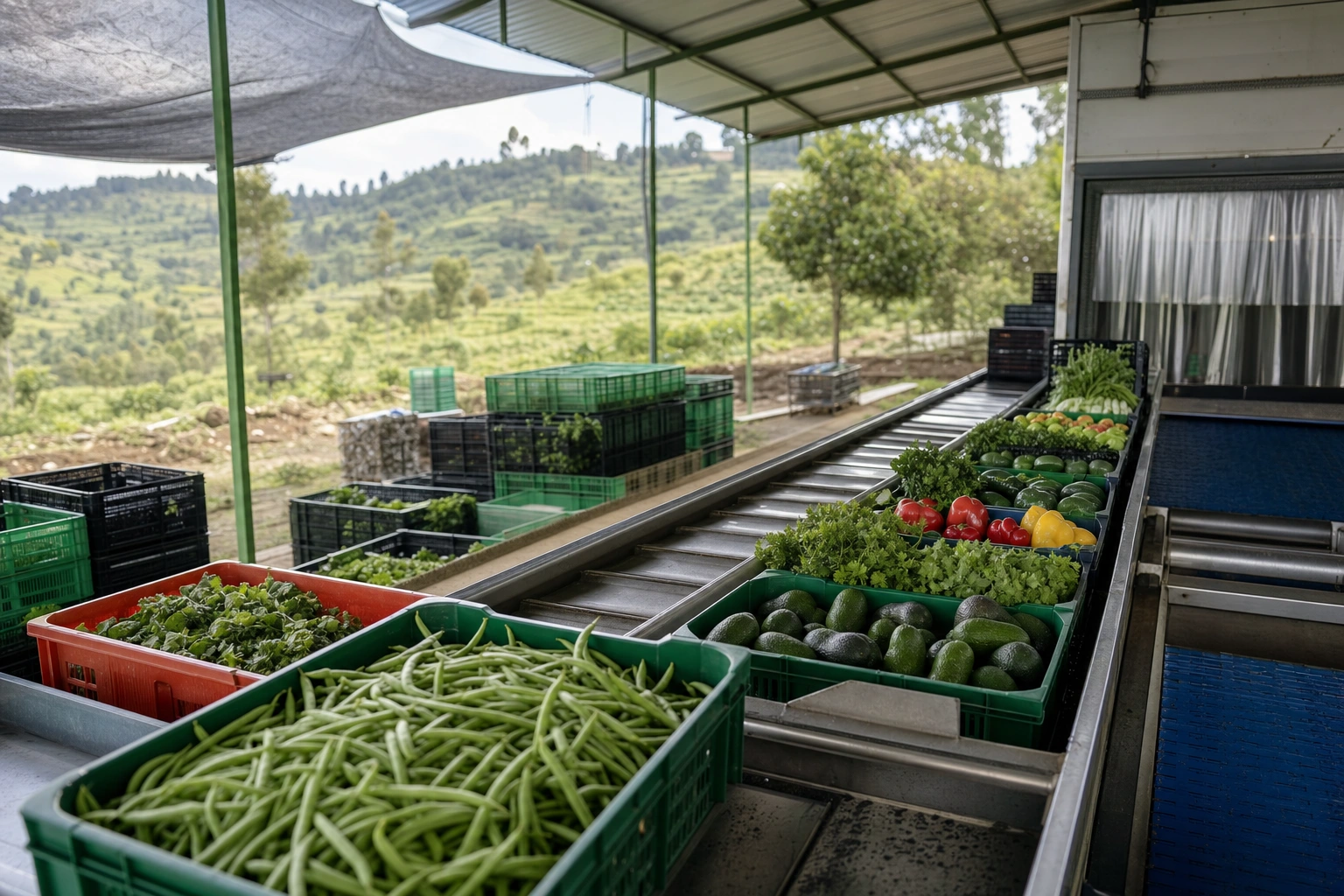
Horticulture is the branch of agriculture concerned with growing fruits, vegetables, flowers, herbs, ornamental plants and other high-value crops. In Kenya, it has developed into one of the country’s most dynamic agricultural activities, linking smallholder farms, commercial estates, exporters, transporters, processors, retailers and households.
The growth of horticulture in Kenya is not only an export story. Fresh produce is increasingly important in local diets, urban food systems, hospitality, food processing and income generation. At the same time, Kenyan growers operate in a demanding environment where quality, water management, climate resilience, market access and compliance can determine whether a business succeeds.
What Has Driven the Growth of Horticulture in Kenya?
Several factors have supported the expansion of horticulture. These factors work together rather than operating in isolation.
Favourable growing conditions
Kenya has a wide range of altitudes, temperatures, soils and rainfall patterns. This allows different parts of the country to specialise in different crops. Areas around Mount Kenya and the central highlands are associated with vegetables, fruits and flowers, while the Rift Valley has important flower-growing zones. Eastern Kenya supports various fruit and vegetable activities, and coastal areas can support crops suited to warmer conditions.
Altitude can also influence crop quality and production timing. Cooler highland conditions may help some flowers and vegetables develop slowly, while warmer areas can support crops requiring higher temperatures. However, favourable conditions do not remove the need for irrigation, soil improvement, pest management and careful crop selection.
Growing demand in local and international markets
Kenya’s expanding towns and cities have increased demand for convenient, fresh and diverse food. Supermarkets, restaurants, hotels, schools, hospitals and food processors require reliable supplies of vegetables, fruits and herbs. Urban consumers may also be willing to pay more for clean, well-presented and consistently available produce.
International demand has encouraged investment in products such as cut flowers, avocados, green beans, peas, herbs and selected fruits. Export markets can provide attractive opportunities, but they also require growers to meet strict expectations concerning quality, traceability, packaging, food safety, delivery schedules and permitted chemical residues.
Improved transport and market connections
Horticulture depends on speed because many products deteriorate after harvesting. Improvements in roads, air freight connections, cold storage, packhouses and distribution networks have made it easier to move produce from farms to domestic and overseas buyers.
Transport alone is not enough. A farmer may produce an excellent crop but still lose income if harvesting is delayed, packaging is unsuitable or produce is exposed to heat. The growth of the sector has therefore encouraged attention to post-harvest handling, grading, cooling and logistics.
Private investment and technical knowledge
Commercial farms, exporters, input suppliers, financial institutions, development programmes and research organisations have contributed to the professionalisation of horticulture. Farmers have gained access to improved planting materials, greenhouses, irrigation systems, fertigation, crop-protection advice and production records.
Smallholders have also participated through farmer groups, cooperatives, contract arrangements and out-grower relationships. These models can help producers reach buyers and share knowledge, although their success depends on fair agreements, transparent grading and reliable payment.
The Main Components of Kenya’s Horticulture Industry
Fresh vegetables
Vegetables form an important part of both domestic and export horticulture. Common examples include cabbages, tomatoes, onions, leafy vegetables, French beans, peas and other speciality crops. Production ranges from open-field farming to protected cultivation in greenhouses or shade structures.
Fresh vegetables are sensitive to harvesting time and handling. Leaves can wilt, tomatoes can bruise and beans can lose quality if they are stored poorly. Farmers therefore need to understand the requirements of their target market before planting. A crop intended for a local market may have different packaging and delivery needs from one intended for export.
Fruits
Fruit production has expanded as consumers and buyers seek products such as avocados, mangoes, passion fruit, bananas, citrus and berries. Fruit trees can provide longer-term income, but they require patience and careful management. Farmers must consider the time before trees begin producing, access to quality seedlings, pollination, pruning, pest control, harvesting methods and market timing.
Fruit production also illustrates why market planning matters. If many farmers plant the same variety at the same time, supply may exceed demand during the harvest season. Production decisions should therefore be based on buyer requirements, local consumption patterns, processing opportunities and realistic estimates of costs and prices.
Flowers and ornamental plants
Kenya is widely recognised for its flower industry, particularly cut flowers grown for international markets. Flower production involves specialised varieties, greenhouse or field systems, irrigation, post-harvest treatment, grading, cold-chain management and careful scheduling around market demand.
The sector has created opportunities in farming, packhouse work, farm management, logistics, quality assurance and export services. It has also faced scrutiny over water use, labour conditions, chemical management and environmental performance. These concerns have encouraged producers to improve resource efficiency and demonstrate responsible practices.
Nursery plants, herbs and emerging products
Horticulture also includes tree seedlings, landscaping plants, culinary herbs, medicinal plants and other niche products. These activities may serve local households, landscapers, hotels, institutions and specialised exporters. Although a niche market may be smaller, it can offer attractive returns when a producer understands customer needs and maintains consistent quality.
How the Horticulture Value Chain Works
A value chain describes the connected activities that move a product from an idea or input to the final consumer. Understanding this chain helps farmers and entrepreneurs identify where value is created and where losses occur.
- Planning and market research: The producer identifies a crop, target customer, expected quality, production period and likely selling channel.
- Inputs and production: This includes land preparation, quality seed or seedlings, water, fertiliser, crop protection, labour and farm records.
- Harvesting: Produce is picked at the maturity stage required by the buyer. Harvesting during cooler hours may help protect quality, depending on the crop and system.
- Sorting and grading: Produce is separated according to size, appearance, maturity and defects. Grading makes it easier to meet different market specifications.
- Packing and storage: Appropriate containers protect produce from bruising, contamination and moisture loss. Cooling and suitable storage extend usable life.
- Transport and marketing: Produce moves through farm-gate sales, local markets, wholesalers, retailers, institutions, processors or exporters.
- Consumption or processing: The product reaches households, food-service businesses or processors. Processing can turn surplus or lower-grade produce into juice, dried products, sauces or other foods.
Each stage affects the final price and the farmer’s share of value. Selling ungraded produce immediately after harvest may be simple, but it can limit bargaining power. On the other hand, grading, packing, storage or processing requires additional investment and management. The best option depends on scale, capital, skills and the buyer’s requirements.
Technology and Professionalisation
Technology has changed how many horticultural enterprises operate. Drip irrigation can deliver water close to plant roots, while greenhouses and shade structures can help manage growing conditions. Soil testing supports more informed fertiliser decisions, and digital tools can assist with farm records, weather information, stock management and communication with buyers.
Technology should be selected because it solves a specific problem, not simply because it appears modern. A greenhouse without reliable water, ventilation, crop knowledge or a market plan may become an expensive structure with poor returns. Similarly, an irrigation system requires maintenance, appropriate water quality and an operating budget.
Professionalisation also involves record keeping. Useful records may include planting dates, varieties, input applications, labour, irrigation, harvest volumes, rejected produce, sales and customer feedback. These records help a grower calculate profitability and investigate problems. They also support traceability, which allows a buyer to understand where and how produce was grown.
Challenges Limiting Further Growth
Climate and water pressure
Unpredictable rainfall, drought, floods, heat and changing pest patterns can disrupt production. Horticultural crops often need dependable water at specific stages, but water resources are limited and may be shared with households, livestock, industry and ecosystems.
Climate resilience requires more than installing irrigation. It may include water harvesting, efficient irrigation, soil mulching, drainage, shade, wind protection, drought-tolerant varieties, crop diversification and careful planting schedules. Producers must also understand local water rules and avoid practices that damage rivers, wetlands or groundwater resources.
Pests, diseases and chemical management
Pests and diseases can reduce yields and make produce unacceptable to buyers. Integrated pest management combines monitoring, farm hygiene, resistant varieties, biological methods, cultural practices and carefully chosen crop-protection products. Spraying without identifying the problem can increase costs, harm beneficial organisms and create residue risks.
Where chemicals are used, farmers need to follow product labels, observe pre-harvest intervals, store products safely and keep application records. Export and institutional markets may impose additional requirements. Professional advice is valuable when a pest or disease is difficult to identify.
Post-harvest losses and inconsistent quality
Losses can occur through poor harvesting, rough handling, heat exposure, unsuitable packaging, delays and weak storage. Inconsistent size or maturity can also lead to rejection or lower prices. Simple improvements—clean crates, shaded collection points, better harvesting tools and organised dispatch—can make a meaningful difference.
Market and financial risks
Prices may change because of seasonal supply, weather, transport costs, exchange rates, buyer demand and competition. A farmer who plants solely because a crop was profitable in the previous season may face difficulty if market conditions have changed.
Financial planning should include seed, fertiliser, labour, water, packaging, transport, certification, loan costs, wastage and family labour where appropriate. Comparing expected revenue with the full cost of production gives a more realistic picture than looking at the selling price alone.
Opportunities for Farmers and Entrepreneurs
Future opportunities exist across the value chain, not only in primary production. Entrepreneurs can provide seedlings, irrigation installation, soil testing, farm advisory services, aggregation, cold storage, packaging, transport, processing, digital marketplaces and compliance support.
Value addition is particularly important. Processing can reduce dependence on immediate fresh sales and create products with a longer shelf life. Examples include dried fruit, frozen vegetables, fruit pulp, juice, sauces, herbs and prepared produce. However, processing requires food-safety controls, suitable equipment, reliable packaging and a clear customer base.
Smallholders may improve their position by working collectively. Groups can purchase inputs, share equipment, coordinate planting, consolidate volumes and negotiate with buyers. Collective action is most effective when members follow agreed quality standards and the group maintains transparent records.
There is also room for more sustainable horticulture. Efficient water use, renewable energy where feasible, responsible input management, soil conservation, reusable or recyclable packaging and reduced food waste can improve both environmental performance and business resilience. Sustainability is strongest when it lowers avoidable costs or meets a real customer requirement while protecting productive resources.
Applying This in Practice
A person planning a horticultural enterprise can use the following sequence before investing heavily:
- Define the customer: Decide whether the target is a local market, retailer, hotel, processor, institution, wholesaler or exporter.
- Confirm the specification: Ask what variety, size, maturity, packaging, delivery frequency and quality standard the buyer requires.
- Assess the production site: Examine soil, water availability, drainage, road access, labour and security. Test soil and water where appropriate.
- Prepare a realistic budget: Include establishment costs, recurring inputs, labour, transport, packaging, losses and a contingency for unexpected problems.
- Start with a manageable scale: A pilot plot can reveal production and marketing problems before more capital is committed.
- Keep records and review results: Compare planned and actual yields, costs, rejections, prices and customer feedback.
- Improve one constraint at a time: Focus first on the problem causing the greatest loss, whether it is water reliability, pests, grading, transport or market information.
For learners and business owners, the central lesson is that horticulture is both a biological activity and a commercial system. A good crop is necessary, but it is not sufficient. Profitability depends on matching production to demand, protecting quality after harvest, controlling costs and managing natural resources responsibly.
Key Takeaways
- Kenya’s horticulture growth is supported by varied climates, rising demand, improved logistics, investment and technical knowledge.
- Horticulture includes vegetables, fruits, flowers, herbs, nursery plants and other high-value crops for local and international markets.
- Market research should come before planting because buyers differ in variety, quality, packaging, timing and volume requirements.
- Grading, cooling, suitable packaging and reliable transport help reduce post-harvest losses and protect selling prices.
- Efficient water use, integrated pest management, accurate records and responsible chemical handling strengthen farm resilience.
- Entrepreneurial opportunities exist across the value chain, including inputs, aggregation, logistics, processing, storage and compliance services.
No comments yet.