
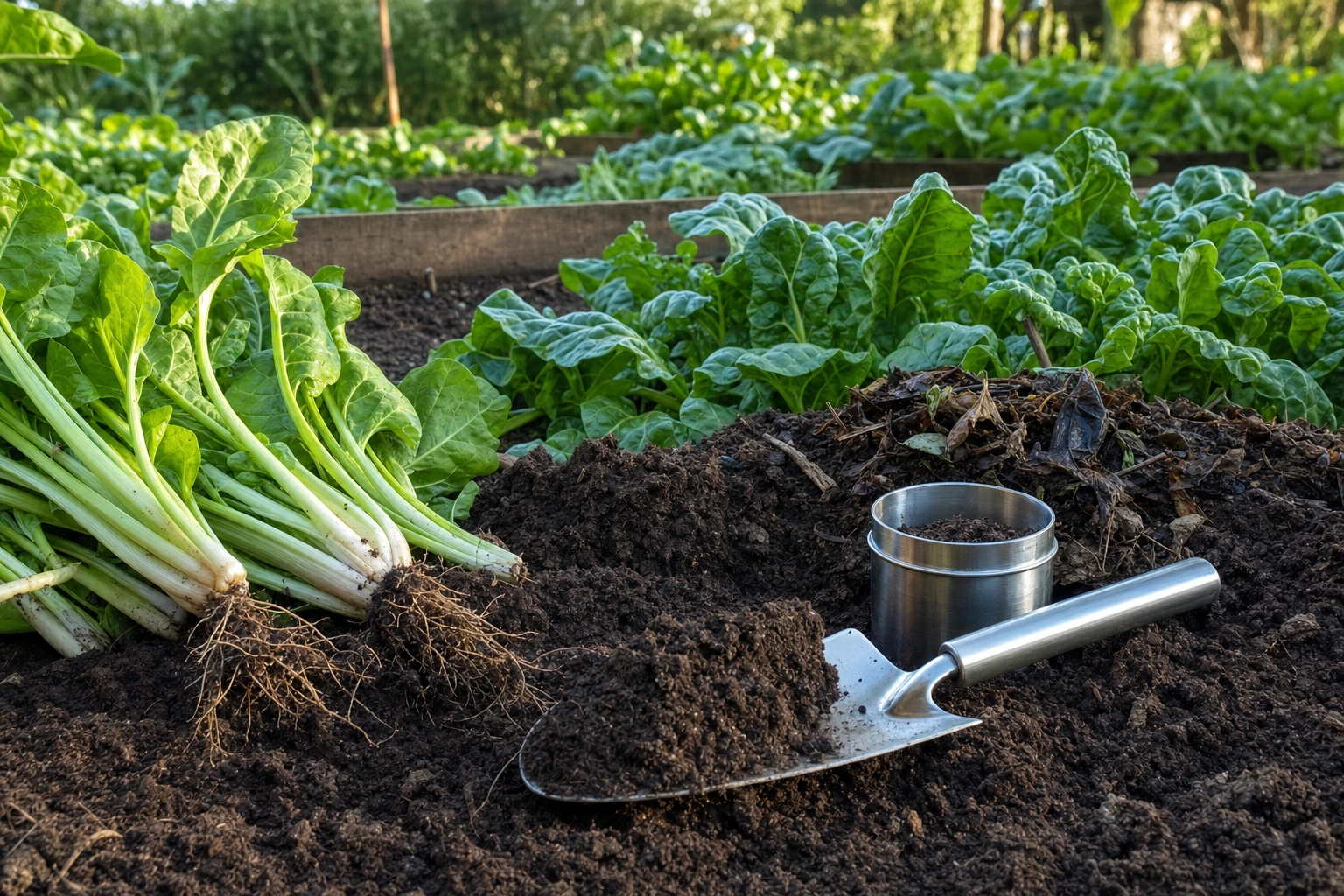
Soil fertility in horticulture is the soil’s capacity to supply plants with the nutrients, water, air and root-supporting conditions they need for healthy growth. It is not simply a matter of adding fertiliser. A fertile soil must also have suitable structure, adequate organic matter, balanced chemistry, active biological life and enough drainage for roots to function properly.
For a vegetable grower in Kenya, a fruit producer in Ghana, a nursery operator in the United Kingdom or a home gardener anywhere in the world, soil fertility directly affects plant establishment, leaf development, flowering, fruit quality and resistance to stress. Understanding the soil allows you to apply inputs more accurately, reduce waste and protect the productive capacity of the land.
What Soil Fertility Means in Horticulture
Soil fertility describes the availability of essential plant nutrients in forms that roots can absorb. However, nutrient availability depends on more than the total amount present in the soil. Soil pH, moisture, temperature, texture, organic matter and microbial activity all influence whether a nutrient is accessible to a crop.
Soil fertility is closely related to, but different from, soil productivity. Fertility concerns the soil’s ability to provide nutrients and support root growth. Productivity is broader: it includes fertility, irrigation, crop variety, pest management, climate, labour, spacing and other factors that determine yield and quality. A fertile soil cannot compensate for severe water stress, poor planting material or unmanaged disease.
Horticultural crops often have high nutrient demands because they are harvested for leaves, roots, flowers or fruits. Many are grown intensively, sometimes several times each year. If nutrients removed in harvested produce are not replaced appropriately, fertility can decline. This is especially important in small plots where the same beds are used continuously.
The Main Components of Fertile Soil
Plant nutrients
Plants require several essential nutrients. The primary macronutrients are nitrogen, phosphorus and potassium. Secondary macronutrients include calcium, magnesium and sulphur. Plants also need smaller quantities of micronutrients such as iron, zinc, boron, manganese, copper, molybdenum, chlorine and nickel.
Nitrogen supports leafy growth, chlorophyll formation and protein production. Deficiency commonly appears as pale or yellow older leaves and weak growth, although yellowing can have other causes. Excess nitrogen may produce soft, overly leafy plants, delay maturity and increase the risk of certain pest and disease problems.
Phosphorus is involved in energy transfer, root development and reproductive growth. It is particularly important during establishment and flowering, but adding large quantities to soil that already contains enough phosphorus is neither efficient nor environmentally responsible.
Potassium helps regulate water movement, enzyme activity and plant strength. Adequate potassium can support crop quality and tolerance of some stresses, but a potassium fertiliser is not a universal remedy for weak plants.
Calcium contributes to cell walls and growing-point development, while magnesium is part of the chlorophyll molecule. Sulphur supports proteins and certain plant compounds. Micronutrients are needed in small amounts, yet a deficiency can seriously affect growth. The correct approach is to diagnose a need before applying a concentrated micronutrient product, because excesses can also harm plants.
Organic matter
Organic matter comes from decomposed plant residues, animal manures, compost, cover crops, roots and other biological materials. It improves aggregation, water-holding capacity and nutrient retention, particularly in sandy soils. It can also improve aeration and workability in some heavy soils.
Organic matter is not the same as immediately available fertiliser. Compost and manure release nutrients gradually, and their nutrient content varies according to the original material, storage and degree of decomposition. Well-matured compost is generally safer around crops than fresh manure, which may contain weed seeds, pathogens, high salt levels or forms of nitrogen that can damage roots.
Soil structure and texture
Soil texture refers mainly to the proportions of sand, silt and clay. Sandy soils drain quickly but may lose water and nutrients rapidly. Clay soils can hold nutrients well but may become waterlogged, compacted or difficult to cultivate when too wet. Loam is often productive because it combines useful drainage with water and nutrient retention, although every texture can be managed effectively.
Soil structure describes how individual particles form aggregates. Good structure creates pores of different sizes: larger pores allow air and drainage, while smaller pores retain water. Repeated cultivation, walking on wet beds, heavy machinery and leaving soil bare can damage structure and increase compaction.
Biological activity
Earthworms, fungi, bacteria and other soil organisms help decompose organic residues and cycle nutrients. Some microorganisms form beneficial relationships with plant roots, while others break down compounds into forms plants can absorb. Biological activity is supported by organic inputs, suitable moisture, oxygen and a diverse cropping system.
Soil organisms are not a substitute for nutrients that are absent, but healthy biological activity can improve the efficiency of nutrient cycling. Excessive disturbance, waterlogging, extreme dryness and repeated misuse of chemical products may reduce biological functions.
Why Soil Testing Matters
Soil testing provides evidence for fertility decisions. A basic test may measure pH, organic matter and selected nutrients. Depending on the laboratory and crop, additional tests may examine salinity, electrical conductivity, texture, micronutrients or exchangeable cations.
Sampling quality is crucial. A single handful from one spot may not represent an entire field. Divide land into areas that differ in soil colour, slope, management history, crop performance or irrigation pattern. Take several small samples from the relevant root zone, mix them in a clean container and submit a representative portion according to the laboratory’s instructions. Avoid unusual locations such as manure heaps, paths, compost piles, field edges or recently fertilised patches unless they are being tested separately.
For established horticultural businesses, test before starting a new production block and repeat testing at a sensible interval. Testing can also be useful when symptoms appear, yields decline, irrigation water changes or fertiliser programmes are altered. A laboratory report should be interpreted alongside crop history, irrigation practices and visual observations rather than treated as an automatic prescription.
Understanding Soil pH
Soil pH indicates how acidic or alkaline the soil is. It affects nutrient availability, microbial activity and the performance of some soil amendments. Many common horticultural crops perform well in a mildly acidic to near-neutral range, but the preferred range differs between crops and growing systems. Crops such as blueberries require more acidic conditions than many vegetables.
When soil is strongly acidic, nutrients such as phosphorus may become less available, while certain elements may reach harmful levels. In alkaline soils, iron, zinc, manganese and phosphorus may be less available even when the total amount in the soil is high. Symptoms such as yellow leaves should therefore not be diagnosed from appearance alone.
Lime is commonly used to raise soil pH, while materials such as elemental sulphur may lower it under suitable conditions. The correct rate depends on the starting pH, soil texture, organic matter and the target pH. Applying amendments without a test can create new imbalances. Changes in pH also take time, so they should be planned before planting where possible.
Building a Soil Fertility Programme
A fertility programme should connect the crop’s needs with the soil’s existing condition. The following process provides a practical framework.
- Identify the crop and production target. Leafy vegetables, root crops, fruiting vegetables, herbs, cut flowers and fruit trees remove nutrients differently. Consider expected yield, crop duration, harvest method and whether residues will be returned to the soil.
- Assess the site. Record soil type, drainage, slope, previous crops, irrigation water, manure history and areas with poor growth. Observe compaction, erosion, crusting, standing water and root development.
- Test the soil. Use a representative sample and obtain an interpretation suited to the crop. If using compost, manure or fertigation, test those inputs where appropriate as well.
- Set priorities. Correct major limitations first. A compacted, waterlogged root zone may need drainage or reduced traffic before additional fertiliser can help. A strongly acidic soil may need pH management before certain nutrients become available.
- Choose the right input. Options include compost, well-decomposed manure, mineral fertilisers, plant-based amendments, lime, gypsum where justified, cover crops and fertigated nutrients. Select products based on the actual deficiency, timing and crop safety.
- Apply nutrients at the right rate, place and time. Split applications can reduce losses for nutrients that move easily with water. Place fertiliser where roots can access it without creating a concentrated salt zone next to seeds or young stems. Follow product instructions and account for nutrients already supplied by organic inputs.
- Monitor and adjust. Track crop colour, growth, flowering, fruiting, yield, quality and any signs of deficiency or toxicity. Keep records of inputs and results so the next crop is managed from evidence rather than guesswork.
Using Organic and Mineral Fertilisers Together
Organic and mineral fertilisers can complement one another. Compost or manure improves soil condition and supplies a range of nutrients, while a mineral fertiliser can provide a more predictable amount of a specific nutrient at a critical growth stage. The combination should be based on analysis and crop demand.
For example, a vegetable grower producing kale and tomatoes may incorporate mature compost before planting to improve soil condition, then use a carefully calculated nutrient application when the crop is established. Tomatoes may require closer attention to potassium and calcium management during fruiting, while leafy crops often have a strong demand for nitrogen. These are general principles, not substitutes for soil and crop assessment.
Fresh manure should not be placed directly against growing stems or used carelessly on crops eaten raw. It may burn roots, contaminate produce or create excessive vegetative growth. Store and handle organic materials responsibly, and observe any food-safety requirements that apply to the production system.
Preventing Nutrient Losses and Soil Degradation
Fertility management includes keeping nutrients in the root zone. Heavy rainfall and excessive irrigation can move soluble nutrients below the roots or into waterways. Bare soil is more vulnerable to erosion, which removes nutrient-rich topsoil. Over-application increases cost and can contribute to environmental pollution.
Use practices that protect the soil, such as mulching, cover cropping, contour-aligned beds where appropriate, maintaining ground cover and reducing unnecessary cultivation. Good drainage prevents prolonged saturation, while efficient irrigation supplies water according to crop and soil conditions rather than on a fixed schedule alone.
Crop rotation can reduce the continuous removal of the same nutrients and interrupt some pest and disease cycles. Legume cover crops may contribute nitrogen through biological fixation, but the amount available to a following crop depends on species, biomass, incorporation and decomposition. Rotation is therefore helpful but does not remove the need to assess fertility.
Recognising Fertility Problems
Common warning signs include slow growth, pale leaves, purpling, scorched leaf margins, poor rooting, blossom-end disorders, small fruits and uneven crop performance. These symptoms can result from nutrient deficiency, but they may also be caused by drought, waterlogging, root damage, pests, disease, temperature stress, salinity or herbicide injury.
Look for patterns. A problem affecting the whole field may indicate soil, water or fertiliser conditions. Symptoms limited to a low-lying area may point to drainage. Damage in bands may reflect fertiliser placement or irrigation distribution. Compare affected plants with healthy plants, inspect roots and review recent management before choosing a treatment.
Applying This in Practice
Before planting a horticultural crop, write a simple fertility plan. Note the field or bed, crop, soil-test results, planned organic inputs, fertiliser products, application dates and irrigation method. Estimate how much nutrient each input supplies rather than counting bags alone. If a compost analysis is unavailable, treat its nutrient contribution cautiously and avoid assuming that all of its nutrients are immediately available.
During production, inspect the crop at regular intervals. Check whether roots are white or healthy-looking where appropriate, whether water is reaching the full root zone and whether new growth differs from older leaves. Keep a record of harvest quantity and quality. At the end of the season, review which inputs produced a useful response and which may have been unnecessary.
For a smallholder or market gardener, this disciplined approach can begin with a soil test, mature organic matter, protected beds and accurate application of any purchased fertiliser. For a larger enterprise, it can extend to block-by-block sampling, irrigation-water testing, tissue analysis, fertigation control and nutrient budgeting. In both cases, the principle is the same: apply what the crop needs, where it can use it, and protect the soil for the next crop.
Key Takeaways
- Soil fertility depends on nutrients, pH, organic matter, structure, moisture, drainage and biological activity working together.
- Use representative soil testing to guide fertiliser and amendment decisions instead of relying on symptoms or guesswork.
- Match nutrient applications to the crop, soil condition, expected yield and nutrients already supplied by compost or manure.
- Improve long-term fertility by protecting soil structure, reducing erosion, managing water and maintaining organic matter.
- Diagnose poor growth by considering nutrients alongside pests, diseases, compaction, salinity, water stress and root problems.
- Keep records of soil tests, inputs, crop performance and harvest results so fertility programmes can be adjusted intelligently.
No comments yet.