
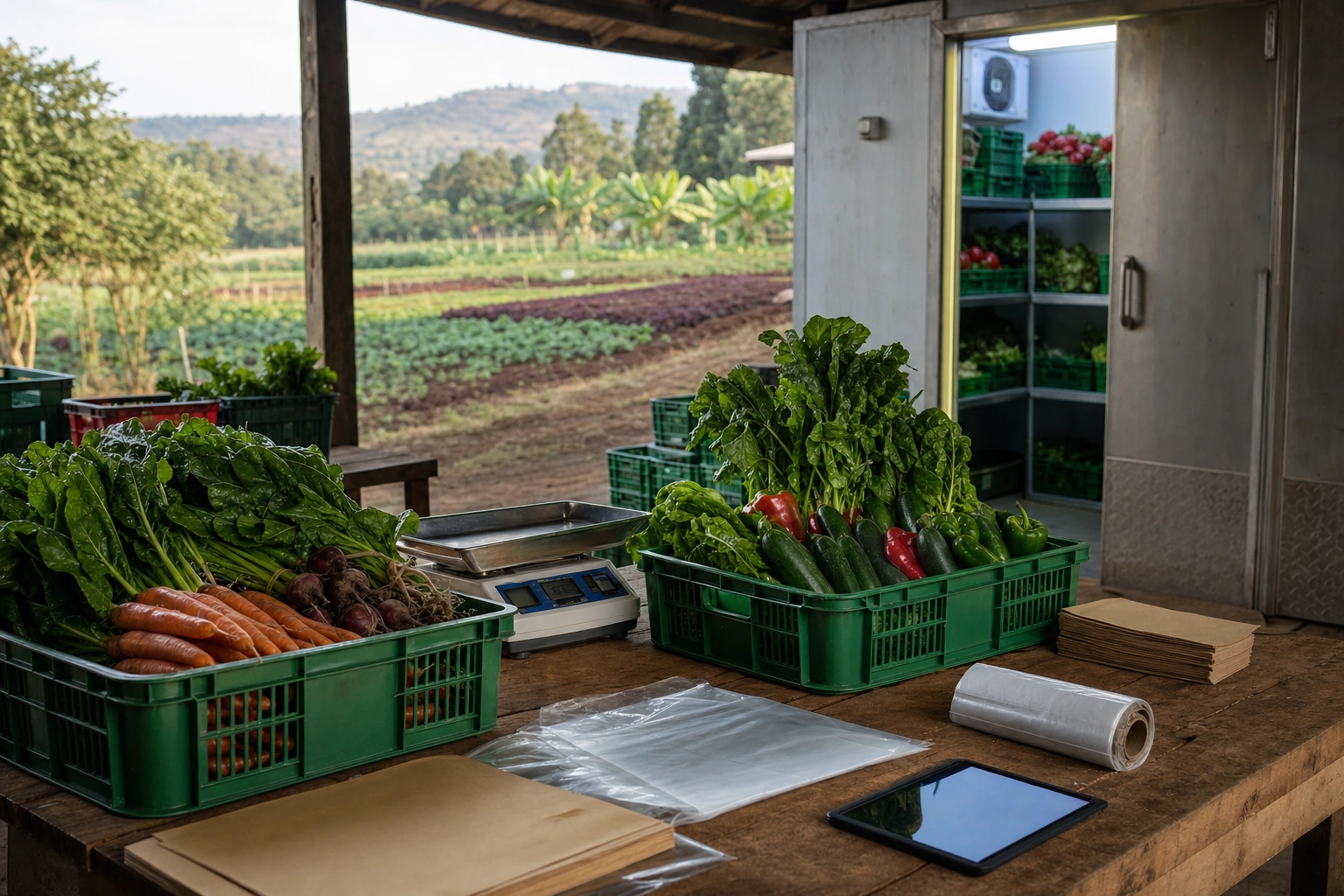
Agriculture is more than the production of crops and livestock. It is a system of connected enterprises that supplies food, fibre, energy, raw materials, employment and services. A farmer growing tomatoes, a cooperative collecting milk, a company processing maize flour and a logistics operator transporting fresh produce are all participating in agribusiness.
An agricultural enterprise creates value when it makes a product or service more useful, accessible, reliable or desirable to a customer. Value may come from producing more efficiently, improving quality, processing raw materials, reducing waste, reaching a better market or solving a practical problem for another business or consumer.
What Agricultural Enterprise Means
An agricultural enterprise is an organised economic activity connected to agriculture. It may involve production, processing, distribution, marketing, finance, technology, equipment, advisory services or retail. Some enterprises operate directly on farms, while others support farming without owning land or producing crops themselves.
Examples include:
- A vegetable farm supplying hotels and schools.
- A hatchery selling healthy day-old chicks to poultry farmers.
- A dairy cooperative collecting, cooling and marketing members' milk.
- A miller converting maize or sorghum into flour.
- A cold-chain business transporting fish, fruit or fresh vegetables.
- A digital service connecting farmers with buyers, weather information or financial products.
- A manufacturer producing irrigation equipment, animal feed or greenhouse materials.
The central business question is not simply, “What can we produce?” It is, “Whose need are we serving, and how can we serve it profitably and responsibly?” This shift from production-first thinking to customer-centred thinking is essential because a product has limited business value if customers do not want it, cannot afford it or cannot obtain it at the right time.
How Value Is Created Along the Agricultural Value Chain
An agricultural value chain describes the stages through which an agricultural product moves from inputs and production to the final user. Value may be added at every stage, although costs and risks also increase as the product moves through the chain.
1. Providing useful inputs
Inputs are the resources used to produce agricultural goods. They include seed, fertiliser, animal feed, veterinary products, tools, machinery, water, buildings and technical knowledge. An input enterprise creates value by making these resources available, suitable and dependable.
For example, a seed supplier adds value by offering varieties that match local growing conditions and customer needs. A feed manufacturer creates value when its product supports healthy animal growth at a cost that makes sense for the farmer. A machinery provider may create value by supplying equipment that saves labour or improves the consistency of farm operations.
Input businesses must pay attention to quality, correct product information, after-sales support and timely delivery. A cheap input that fails at a critical stage can be more expensive for a farmer than a reliable product with a higher purchase price.
2. Producing crops and livestock
Production creates value by converting natural resources, labour, knowledge and purchased inputs into agricultural products. Good production is not only about obtaining a high yield. It also involves controlling costs, maintaining quality, using resources responsibly and producing according to market requirements.
A farmer may create more value by growing a smaller quantity of high-quality herbs for a reliable buyer rather than producing a large quantity of a crop with weak demand. Similarly, a poultry enterprise can improve value by managing hygiene, feed conversion, mortality, record-keeping and delivery schedules rather than focusing only on the number of birds kept.
Production decisions should consider climate, soil, water, labour, available skills, market access and the time between investment and income. An enterprise that ignores these factors may produce successfully but still make a loss.
3. Aggregating and grading products
Many buyers need a consistent supply that a single small producer cannot provide. Aggregators, cooperatives and collection centres create value by combining products from several farmers, checking quality, sorting grades and coordinating deliveries.
Consider a group of smallholder avocado farmers. Individually, each farmer may struggle to fill a large order. Together, they can supply a buyer with sufficient volume and more consistent quality. If the group also sorts fruit by size and maturity, maintains records and uses suitable packaging, it can serve a more demanding market.
Aggregation can improve bargaining power, but it requires trust, transparent weighing, clear payment systems and agreed quality standards. Without these systems, members may sell outside the group or disputes may arise over prices and deductions.
4. Processing and packaging
Processing changes a raw product into a form that is more convenient, durable, safe or valuable. Milk can become yoghurt, fruit can become juice or dried slices, cassava can become flour, and oilseeds can be pressed into cooking oil. Packaging can protect the product, communicate essential information and make handling easier.
Value addition does not always require complex machinery. Cleaning, grading, drying, milling, chilling, portioning and attractive but practical packaging can all improve market value. The correct level of processing depends on customer demand, available capital, food safety requirements, technical skills and the cost of equipment.
Processing also introduces responsibilities. An enterprise must manage hygiene, storage conditions, shelf life, waste, equipment maintenance and any applicable legal or regulatory requirements. A processed product is not automatically more profitable; the additional selling price must cover processing, packaging, labour, energy, transport, compliance and marketing costs.
5. Transporting and storing goods
Timing and condition are major sources of agricultural value. A product that reaches a buyer fresh and on time is more useful than one that arrives late, damaged or spoiled. Transport and storage enterprises therefore create value by reducing distance, delays and losses.
Fresh produce may need shade, ventilation or cooling. Grain may require moisture control and protection from pests. Livestock transport must consider animal welfare and safe handling. A logistics provider that plans routes, uses suitable containers and coordinates collection times can help farmers and buyers reduce waste.
In rural and urban markets across Africa, better storage can also give producers more choice about when to sell. However, holding stock is not always beneficial. Storage costs, price changes, quality deterioration and financing needs must be assessed before deciding to delay a sale.
6. Marketing and selling
Marketing creates value by helping the right customer understand, access and trust a product. It includes market research, branding, pricing, promotion, customer service and distribution. A quality product can still perform poorly if customers do not know where to find it or do not understand why it is worth buying.
An agricultural enterprise should identify its target customer. A household, school, hotel, food processor and supermarket may value different features. Households may prefer affordability and convenience. A hotel may require consistent delivery and uniform size. A processor may prioritise volume, moisture level and dependable supply.
Customer feedback is especially important. It can reveal that a product is too large, too perishable, poorly packaged, difficult to use or delivered at an inconvenient time. Listening to customers enables an enterprise to improve its offer instead of guessing what the market wants.
Forms of Value That Agricultural Enterprises Provide
Value is not limited to a higher selling price. It can take several forms, and successful enterprises often create more than one type at the same time.
- Form value: changing a raw material into a more useful form, such as turning milk into yoghurt.
- Place value: moving a product closer to the customer, such as transporting vegetables from a rural production area to an urban market.
- Time value: making a product available when it is needed, including through storage or planned production.
- Quality value: improving consistency, safety, appearance, freshness or performance.
- Information value: providing useful details about origin, use, handling, quality or preparation.
- Convenience value: saving customers time and effort through portioning, delivery, ready-to-use products or reliable ordering.
- Relationship value: building trust through dependable service, fair communication and consistent fulfilment.
For example, a small enterprise selling cleaned and packaged vegetables to busy urban households may create form value through preparation, place value through delivery, quality value through sorting and convenience value through ready-to-cook portions.
Understanding the Customer Before Investing
Many agribusiness failures begin with investment in production or equipment before demand has been tested. Market understanding should come before expansion. Entrepreneurs can begin by identifying potential buyers and asking practical questions:
- Who is likely to buy the product or service?
- What problem does it solve for that customer?
- How much does the customer currently buy, and how often?
- What quality, packaging and delivery standards are expected?
- Who are the existing suppliers?
- What price range is acceptable to the customer?
- What seasonal changes affect demand or supply?
- How will payment be made, and how long will it take?
Research does not have to begin with an expensive survey. An entrepreneur can visit markets, speak with retailers, compare competing products, examine purchasing patterns and conduct a small trial. The purpose is to replace assumptions with evidence.
Suppose an entrepreneur plans to produce dried mango. Before buying a large dryer, they could test a small batch with shops, schools or food-service businesses. Feedback may show that customers prefer smaller packages, a different level of sweetness or a longer shelf life. Testing early reduces the cost of learning.
Building a Viable Agribusiness Model
A viable enterprise connects customer value with financial sustainability. It should be possible to explain the business in a simple sequence: who the customer is, what is being offered, how it will be produced or delivered, what it will cost and how revenue will be earned.
Start by listing all major costs. These may include land preparation, inputs, labour, water, energy, packaging, transport, rent, repairs, communication, permits, financing and losses. Separate costs that change with production from costs that remain relatively stable. This helps the entrepreneur understand how changes in volume affect profitability.
Next, estimate realistic revenue. Use conservative assumptions about yield, selling price, rejected products, delays and payment periods. A high expected price should not be treated as guaranteed income. Compare expected revenue with total costs, not only with the cost of seed or raw materials.
Cash flow deserves special attention. A business may appear profitable on paper but run out of cash because it pays workers and suppliers before customers pay for deliveries. A simple cash-flow plan should show when money enters and leaves the enterprise. This is particularly important in enterprises with seasonal production or long production cycles.
Managing Risk and Protecting Value
Agriculture is exposed to biological, climatic, market, operational and financial risks. Good enterprises do not eliminate every risk; they identify important risks and prepare reasonable responses.
- Production risk: use suitable varieties, good husbandry, hygiene, monitoring and technical advice.
- Weather risk: improve water management, diversify activities where practical and plan production around local conditions.
- Market risk: avoid dependence on one buyer, understand price movements and develop more than one route to market.
- Quality risk: establish clear standards, keep records and inspect products at important stages.
- Financial risk: control borrowing, prepare budgets and protect working capital.
- Operational risk: maintain equipment, train staff and create procedures for routine tasks.
Diversification can help, but it should be deliberate. Adding unrelated activities without the skills, capital or management capacity to support them may create confusion and losses. A better approach is often to diversify around existing strengths, such as producing vegetables, supplying seedlings and offering farm advisory services to the same customer group.
Creating Value Responsibly
Long-term value depends on more than immediate financial returns. Agricultural enterprises rely on land, water, workers, suppliers, communities and customers. Poor soil management, unsafe working conditions, careless waste disposal or misleading product information can damage the enterprise and the people connected to it.
Responsible practice may include protecting soil structure, using water efficiently, storing agricultural chemicals safely, reducing avoidable waste, treating workers fairly and handling food hygienically. These practices can also strengthen commercial performance by reducing losses, protecting reputation and improving consistency.
Enterprises should consider the full effect of their decisions. For example, a processor may reduce waste by converting by-products into animal feed or compost, provided the resulting product is safe and suitable. A cooperative may create stronger value when it combines market access with transparent governance and timely payment to members.
Applying This in Practice
Use the following process to examine an existing agricultural enterprise or develop a new one:
- Map the chain: list the inputs, production activities, collection points, processing stages, transport steps, buyers and final users.
- Find the weak point: identify where customers experience poor quality, high prices, delays, limited access or unnecessary waste.
- Define the offer: state clearly what the enterprise will provide and why a customer would choose it.
- Test on a small scale: make a limited production or service trial and collect specific feedback.
- Calculate the economics: record total costs, expected revenue, cash-flow timing and the effect of losses or price changes.
- Set operating standards: define acceptable quality, delivery times, handling procedures and record-keeping responsibilities.
- Review and improve: track sales, customer complaints, waste, margins and repeat purchases, then adjust the model.
For a Kenyan vegetable enterprise, this might mean replacing occasional roadside sales with planned deliveries to several restaurants. The enterprise could create additional value through grading, washable crates, reliable delivery times and simple production records. The opportunity would still need to be assessed carefully: restaurants may demand consistent quantities, credit terms may affect cash flow, and rejected produce must be managed.
For a smallholder dairy group, value creation might involve collective milk collection, basic quality checks, cooling and negotiation with a processor. The group would need clear member rules, accurate measurement, maintenance of equipment and a payment system that members trust. The equipment alone would not create value unless the whole operating system worked.
Key Takeaways
- Agricultural enterprises create value by solving customer problems through production, processing, storage, transport, marketing and services.
- Value may come from form, place, time, quality, information, convenience or dependable relationships.
- Market research should come before major investment in crops, livestock, processing equipment or expansion.
- Profitability requires a realistic calculation of total costs, revenue, losses and cash-flow timing.
- Aggregation, grading and reliable coordination can help small producers serve larger or more demanding buyers.
- Risk management, responsible resource use and consistent quality support long-term enterprise performance.
No comments yet.