
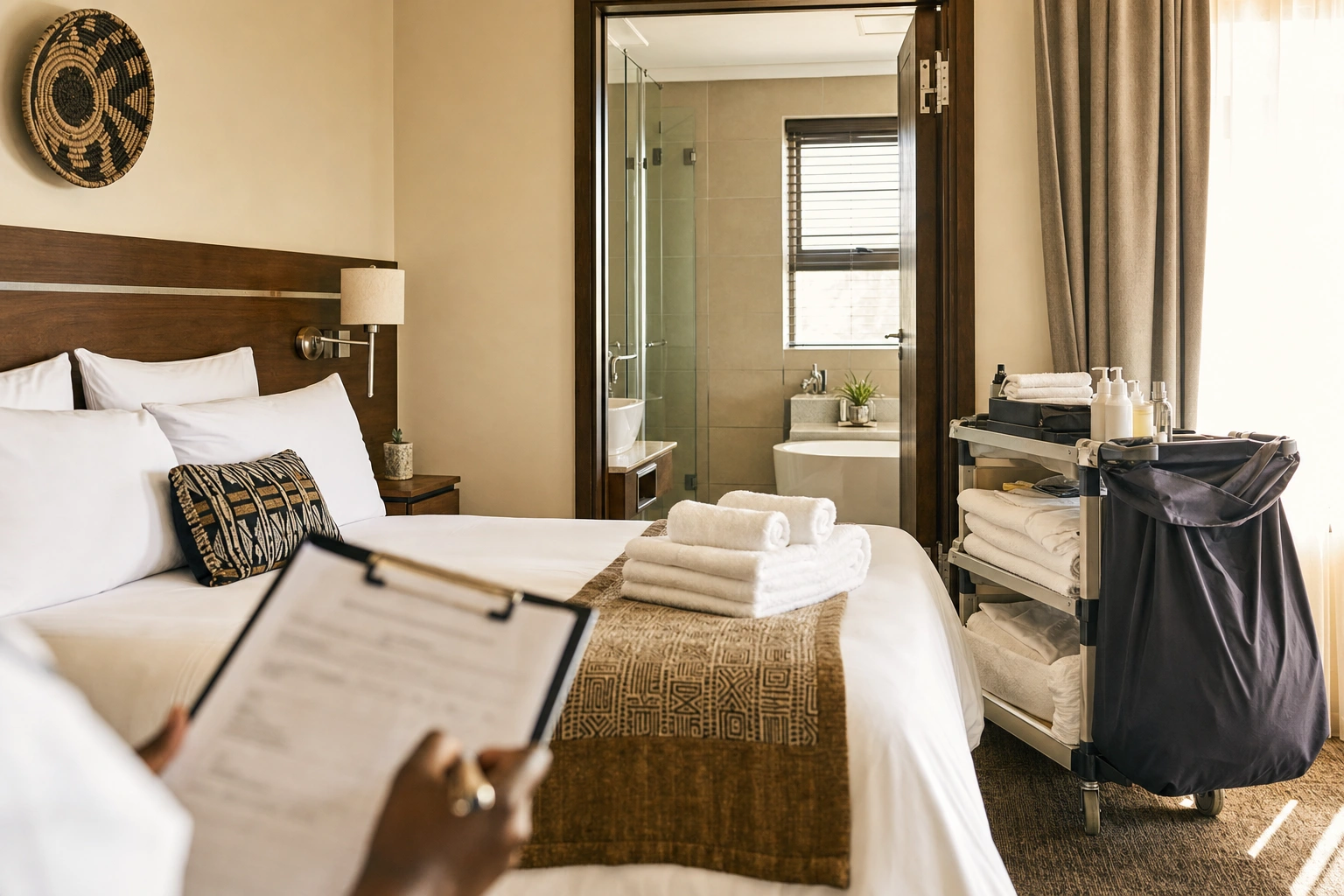
Hotel room cleaning standards are the practical rules and routines that ensure every guest room is safe, hygienic, comfortable and ready for occupancy. They cover much more than making a bed or replacing towels. A well-cleaned room should give the guest confidence that surfaces, fittings, linen, bathroom facilities and amenities have been checked with care.
For hotels, lodges, guesthouses and serviced apartments, consistent housekeeping is both an operational responsibility and part of the guest experience. A room may have attractive décor, but dust, odours, stained linen or overlooked high-touch points can quickly damage a guest’s impression. Clear standards help staff work systematically and help supervisors assess quality fairly.
What Hotel Room Cleaning Standards Include
A cleaning standard describes the expected condition of a room after housekeeping has finished. It normally addresses five connected areas:
- Cleanliness: visible dirt, dust, stains, hair, litter and spills have been removed.
- Hygiene: high-touch and sanitary areas have been cleaned appropriately, with suitable products used according to instructions.
- Presentation: beds, towels, amenities, furniture and equipment are arranged neatly and consistently.
- Functionality: lights, switches, taps, air-conditioning controls, locks and other guest-use items appear to work correctly or are reported.
- Safety: hazards such as wet floors, broken glass, exposed wires, blocked exits or unstable furniture are identified and escalated.
Standards should be specific enough to guide action. “Clean the bathroom properly” is vague. “Remove hair from the shower drain, clean the toilet inside and outside, polish the mirror without streaks and leave the floor dry” gives a room attendant a clearer result to achieve.
Cleaning, Disinfecting and Inspecting
These terms are related but not identical. Cleaning removes dirt, dust, grease, hair and other unwanted material from a surface. It is usually carried out with water, detergent and physical action such as wiping, brushing or scrubbing.
Disinfecting uses an appropriate chemical product to reduce harmful microorganisms on a surface. Disinfection is most effective when the surface has first been cleaned. Staff must follow the product label, including dilution, contact time, ventilation and safe handling instructions. Mixing cleaning chemicals can be dangerous and should never be done unless the product instructions specifically permit it.
Inspection is the quality check that confirms whether the room meets the required standard. Inspection is not a substitute for cleaning. A supervisor or room attendant checks the finished room from the guest’s perspective, looking for missed details, maintenance problems and presentation issues.
Preparing Before Entering the Room
Good results begin before the room attendant starts wiping surfaces. Preparation reduces interruptions, prevents cross-contamination and avoids unnecessary movement between the room and the housekeeping store.
- Review the room status. Confirm whether the room is a departure room, stayover room, vacant room, out-of-order room or priority room. A departure room normally requires a fuller reset than a room occupied by a continuing guest.
- Prepare the trolley. Stock clean linen, towels, guest supplies, bin liners, approved cleaning products, cloths, gloves and relevant equipment. Separate clean items from used or soiled materials.
- Check personal protective equipment. Use the protective equipment required by the property’s procedures and the cleaning product instructions.
- Follow access procedures. Knock, announce housekeeping and wait before entering. Respect privacy signs and hotel policy. If a room cannot be serviced, record or report it according to the property’s process.
- Ventilate where appropriate. Open curtains and, where safe and permitted, allow fresh air into the room. Do not compromise security, weather protection or the guest’s belongings.
- Look for hazards immediately. Report suspicious items, damage, maintenance faults, pests, excessive waste or safety concerns before continuing.
A Reliable Hotel Room Cleaning Sequence
A consistent sequence prevents backtracking and helps staff avoid forgetting important areas. The exact order may vary by property, but the following workflow is widely practical.
1. Remove waste and used items
Collect rubbish carefully and replace bin liners. Remove used glasses, cups, room-service items and other items that housekeeping is authorised to clear. Handle linen according to the property’s laundry and infection-control procedures. Do not shake used linen, as this can spread dust and particles through the room.
2. Strip and inspect the bed
Remove used sheets, pillowcases and protective covers as required. Check the mattress, mattress protector, bed base and surrounding area for stains, damage, lost property or unusual odours. Place clean linen on a clean surface rather than on the floor or a visibly dirty chair.
Make the bed according to the hotel’s standard. The mattress should appear centred, linen should be smooth, pillows should be evenly arranged and decorative items should be clean and correctly positioned. Avoid hiding stains or damage under bedding; report them instead.
3. Clean from high to low
Dust and wipe higher surfaces before lower ones so that particles do not fall onto areas already cleaned. Work systematically around the room. Depending on the furniture, this may include shelves, headboards, lamps, wardrobes, desks, tables, chairs, telephone areas, remote controls and other guest-use surfaces.
Pay particular attention to high-touch points such as door handles, light switches, drawer pulls, control panels and remote controls. Use a suitable cloth and product for each surface. Electronics should not be sprayed directly; apply product to a cloth only when the equipment and product instructions permit it.
4. Clean the bathroom methodically
The bathroom deserves careful attention because guests notice small failures quickly. Remove used towels and supplies, then clean the basin, taps, counter, mirror, toilet, shower or bath, fittings, shelves and floor. Remove hair from visible surfaces and drains where this is part of the routine. Clean from less contaminated areas towards more contaminated areas, using separate or appropriately managed cloths and equipment.
The finished bathroom should be free from hair, soap residue, watermarks, unpleasant odours and visible dust. The mirror should be clear and streak-free. The toilet seat, lid, exterior, flush area and surrounding floor should be clean and dry. Replace towels and amenities according to the property’s standard rather than automatically over-supplying or removing items a continuing guest has chosen to reuse.
5. Replenish and arrange guest supplies
Replace approved amenities such as drinking water, toiletries, tissues, stationery or tea and coffee items according to the room type and occupancy requirements. Check packaging for damage, cleanliness and expiry information where relevant. Arrange supplies consistently so guests can find them easily.
6. Clean the floor last
Vacuum, sweep or mop the floor using equipment suitable for the surface. Pay attention to corners, under furniture and around the bed. If the floor is wet, use the property’s warning procedure and allow it to dry before the room is released. A clean floor is not enough if it creates a slipping hazard.
7. Conduct a final room check
Stand at the entrance and inspect the room as a guest would see it. Check that curtains hang properly, lights and switches appear functional, the temperature controls are set appropriately, furniture is aligned and no cleaning equipment or used materials have been left behind. Confirm that windows and doors are secure according to the property’s procedure.
Important Areas That Are Often Missed
Quality problems frequently occur in small or less visible places. A room attendant or inspector should deliberately check:
- Edges and corners of floors, especially behind doors and under beds.
- Light switches, door handles, wardrobe handles and remote controls.
- Telephones, alarm-clock areas, desk surfaces and chair arms.
- Behind taps, around toilet hinges and beneath bathroom counters.
- Shower screens, grout lines, drains and the underside of toilet seats.
- Dust on headboards, lampshades, curtain rails and air vents.
- Stains or hair on mattress protectors, blankets, upholstery and decorative cushions.
- Water glasses, trays, kettles and coffee-making equipment.
- Odours caused by damp linen, blocked drains, smoking, food or waste.
These details matter in every property, from a Nairobi business hotel to a coastal resort, safari lodge or small guesthouse. The equipment and room design may differ, but guests generally expect the same basic outcome: a clean, orderly and dependable space.
Standards for Linen, Towels and Amenities
Linen should be clean, dry, fresh-smelling and free from unacceptable stains, tears and excessive wear. Housekeeping teams need a clear process for separating soiled linen, damaged items and linen ready for use. If laundry is handled by an external provider, the hotel should still check deliveries and remove items that do not meet its quality standard.
Towels should be folded or displayed consistently and should not be placed where they can become wet or contaminated. Guest amenities should be replenished in the correct quantities and positioned consistently. Where a property offers an environmental towel-reuse programme, the instructions must be clear so that guests and staff understand when towels are to be replaced.
Managing Lost Property, Damage and Maintenance
Room cleaning provides an important opportunity to identify problems, but room attendants should not attempt repairs beyond their training. A loose tap, faulty socket, broken tile, damaged appliance or malfunctioning air-conditioning unit should be recorded and reported through the property’s maintenance system.
Lost property should be handled according to a documented procedure. Staff should avoid putting an item in their pocket or leaving it in the room. The procedure should cover where the item is taken, how it is labelled, who records it and how the guest can make an enquiry. Consistent handling protects both guests and employees.
Damage should also be documented objectively. Describe what was observed, where it was found and when it was reported. Avoid making accusations or guessing who caused the damage.
How Supervisors Can Measure Quality
A housekeeping checklist turns general expectations into observable checks. It may be paper-based or digital, but it should be practical enough to use during real operations. Typical inspection categories include:
- Room entrance, door, lock and immediate presentation.
- Bed, linen, mattress protection and surrounding furniture.
- Dusting, high-touch surfaces and guest-use equipment.
- Bathroom cleanliness, supplies, towels and odour.
- Floor, windows, curtains and visible surfaces.
- Safety, maintenance faults and room functionality.
- Final presentation and correct room status.
Supervisors should distinguish between critical faults and minor presentation issues. A dangerous electrical problem, contaminated item or serious bathroom failure requires urgent action. A slightly misaligned cushion may need correction but should not be treated as the same type of risk. Feedback should identify the exact standard missed and demonstrate the correct method where necessary.
Patterns in inspection results are more useful than isolated criticism. If several rooms repeatedly have streaky mirrors, missing amenities or dusty headboards, the cause may be insufficient time, unclear procedures, poor equipment, inadequate training or weak replenishment controls. Managers should address the process, not only remind individuals to “be more careful”.
Applying This in Practice
A small guesthouse can introduce a dependable standard without expensive technology. First, define what “ready for sale” means for each room type. Next, create a room-by-room checklist using short, observable actions. Train staff by demonstrating the complete sequence in an actual room, then allow them to practise while a supervisor gives specific feedback.
At the start of each shift, check trolley supplies and communicate priority rooms, maintenance issues and special requirements. During the shift, record rooms that could not be serviced and problems that need another department. Before releasing a room, complete a final inspection and update the room status accurately.
When reviewing a failed inspection, ask practical questions: Was the correct product available? Was the cloth clean and suitable? Did the attendant know the expected result? Was there enough time? Was the room unusually difficult? These questions help managers improve training, planning and resources while preserving accountability.
Key Takeaways
- Hotel room cleaning standards define the required condition of a room, including cleanliness, hygiene, presentation, functionality and safety.
- Use a consistent sequence: prepare, remove waste and used items, strip the bed, clean high to low, clean the bathroom, replenish supplies, clean floors and inspect.
- Clean surfaces before disinfecting them, and always follow product instructions for dilution, contact time, ventilation and safe handling.
- Check high-touch points, corners, drains, bed areas, bathroom fittings and guest-use equipment because these are often overlooked.
- Report maintenance faults, damage and lost property through documented procedures rather than attempting unauthorised repairs or making assumptions.
- Use practical inspection checklists and analyse repeated failures to improve training, equipment, scheduling and housekeeping processes.
No comments yet.