
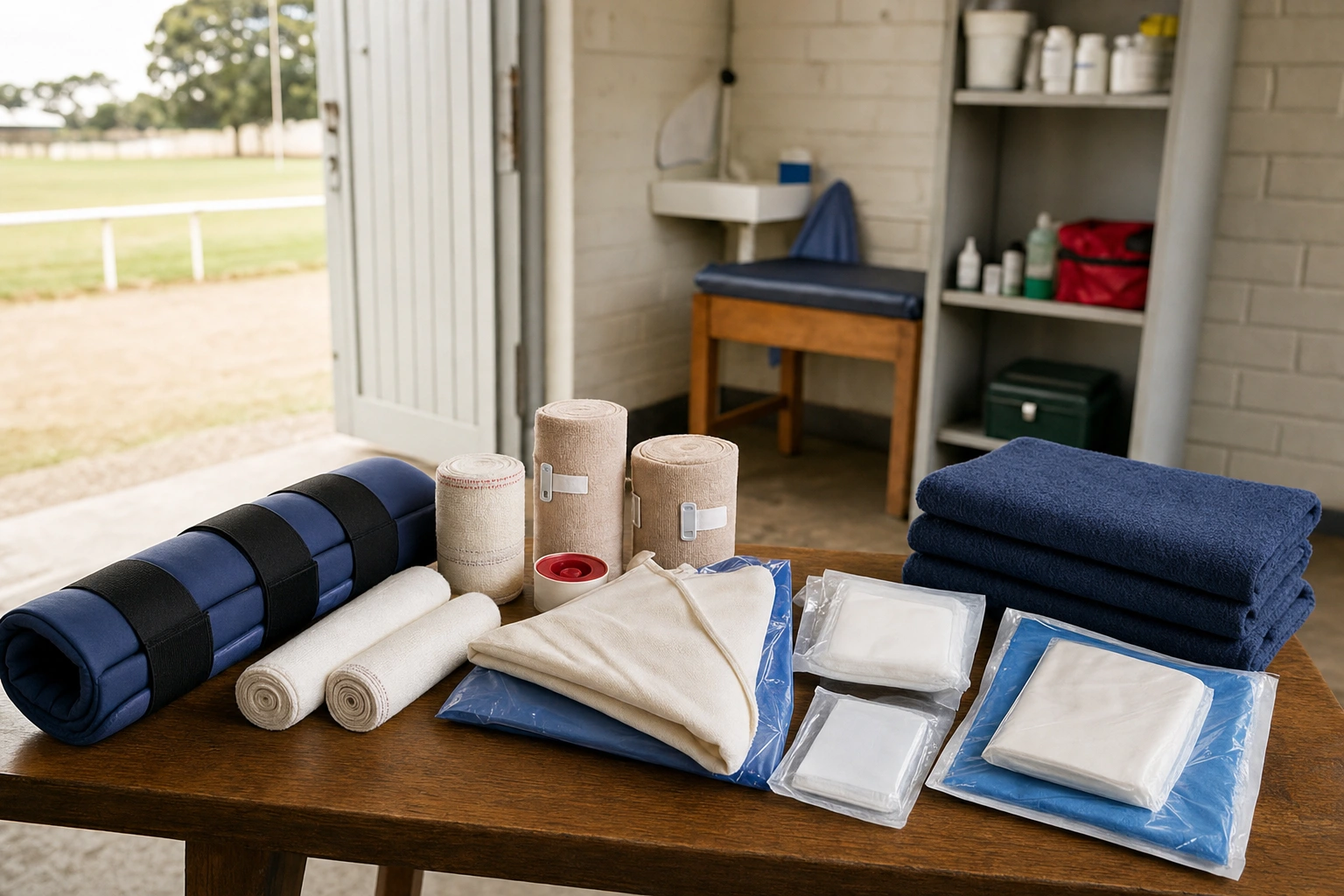
A fracture is a break or crack in a bone, while a sprain is an injury to the ligaments that support a joint. Both can cause pain, swelling and difficulty moving, and it is not always possible to tell them apart without a clinical examination and, in some cases, an X-ray. For first-aid purposes, treat a serious or uncertain injury as a possible fracture.
The main goals are to protect the injured area from further damage, control bleeding and swelling, reduce pain, monitor the person, and arrange appropriate medical assessment. First aid does not replace professional treatment. A seemingly minor injury can involve a small fracture, dislocation, damaged blood vessels, or an injury to nerves.
Understanding Fractures and Sprains
A fracture may be closed, with no break in the skin, or open, where a wound exposes the bone or the bone has pierced the skin. A fracture can also be displaced, meaning the bone ends are no longer correctly aligned. However, the appearance of an injury is not a reliable guide to its severity: a bone may be broken even when the limb looks fairly normal.
A sprain occurs when a ligament is stretched or torn, usually after a joint twists, rolls or is forced beyond its normal range. Ankles, knees, wrists and thumbs are commonly affected. A mild sprain may involve stretching, while a severe sprain may involve a complete ligament tear and significant joint instability.
Typical signs of either injury include pain, tenderness, swelling, bruising and reduced movement. Possible signs of a fracture include a limb that looks deformed or unusually angled, grinding or grating, inability to use the limb normally, marked tenderness directly over a bone, or a wound near the injury. Do not deliberately move the area to test it and do not ask the person to walk on an injured leg merely to find out whether it is broken.
First Priorities at the Scene
- Check for danger. Make sure the area is safe from traffic, falling objects, fire, electricity or other hazards before approaching.
- Assess the person generally. Check responsiveness and breathing. A life-threatening problem takes priority over an arm or leg injury.
- Call for medical help when necessary. Ask someone to contact local emergency services or arrange urgent transport. Give the location, what happened, the number of injured people and any immediate dangers.
- Keep the person still and calm. Support the injured body part in the position found. Do not straighten a deformed limb or force a joint back into place.
- Look for serious bleeding and shock. Deal with these problems while avoiding unnecessary movement of the injured area.
If the person is unconscious and not breathing normally, follow emergency instructions and begin cardiopulmonary resuscitation if you are trained to do so. An injured person who may have fallen from a height, been struck by a vehicle, or suffered a forceful blow may also have a head, neck or spinal injury. Keep the head, neck and back aligned and avoid moving them unless there is immediate danger or movement is required to provide life-saving care.
When to Seek Urgent Medical Help
Seek emergency help immediately for an open fracture, severe bleeding, a visibly deformed limb, an injury with bone visible, or an injury caused by major force. Urgent help is also needed if the person is very pale, confused, faint, unusually drowsy, cold and clammy, or breathing rapidly. These may be signs of shock or another serious injury.
Call for urgent assessment if the injured body part is numb, tingling, unusually cold, pale, blue or grey, or if the person cannot move their fingers or toes. These signs can indicate pressure or damage affecting circulation or nerves. Severe pain that is increasing, rapidly worsening swelling, or a tight bandage that causes new numbness also requires prompt attention.
Professional assessment is particularly important after injuries involving the head, neck, back, chest, abdomen or pelvis, and for injuries in young children, older adults, or people with conditions that affect bones, sensation or circulation. If you are unsure whether an injury is a sprain or fracture, arrange medical evaluation rather than relying on appearance alone.
How to Give First Aid for a Suspected Fracture
1. Support the injury in the position found
Use your hands, clothing, folded towels, cushions or pillows to support the limb. The aim is to prevent movement, not to force the bones into alignment. Ask the person to hold the injured area if they can do so comfortably. Remove rings, bracelets, watches and tight footwear from the affected side before swelling increases, but do not pull an item across a deformed joint or force it off.
2. Control bleeding safely
For an open fracture, cover the wound with a sterile dressing or the cleanest available cloth. Apply gentle pressure around the wound to control bleeding, but do not press directly on protruding bone and do not push the bone back under the skin. Do not wash deeply into the wound or remove embedded objects. If a dressing becomes soaked, add another layer rather than repeatedly lifting the first one.
3. Immobilise without straightening
If trained and if help will be delayed, a splint can reduce movement during transport. A splint should support the injured area and the joints above and below it. Suitable materials may include a padded board, a folded magazine, a rolled blanket or a firm piece of cardboard. Place padding between the splint and the skin, secure it with broad strips of cloth, and tie above and below the injury rather than directly over it.
A splint must not be so tight that it affects circulation. Check the colour, warmth, sensation and movement of the fingers or toes before and after applying it, if the uninjured side provides a useful comparison. If pain, numbness, tingling, paleness, blueness or coldness develops, loosen the securing material and seek urgent medical help. Never use a splint as a reason to delay emergency care.
4. Reduce swelling carefully
A cold pack wrapped in a cloth may help reduce pain and swelling around a closed injury. Apply it for short periods, commonly about 15 to 20 minutes at a time, with breaks between applications. Never place ice directly on the skin, and do not use cold therapy where the person has poor sensation or circulation without professional advice. Do not apply a cold pack over an open wound unless it is specifically protected and medical guidance supports its use.
5. Prepare for transport and treatment
Keep the person warm, but do not overheat the injured area. Avoid giving food or drink if urgent surgery, sedation or anaesthesia may be required. Do not give medicines unless you know they are safe for that person and local guidance allows it. Record what happened, the approximate time, symptoms observed, and any first aid provided. This information can help clinicians.
First Aid for a Sprain
For a suspected sprain without signs of major injury, use a protection and swelling-control approach. Protect the joint from further twisting or impact. Rest it from painful activity, but do not keep it completely still for longer than necessary without medical advice. A wrapped cold pack can help with pain and swelling. Elevate the limb above the level of the heart when practical, especially during the first period after injury.
A compression bandage may provide support and limit swelling, but it should be comfortably firm rather than tight. Start farther from the body and work towards the body if applying a bandage to a limb, while leaving fingers or toes visible when possible. Check regularly for increasing pain, numbness, tingling, unusual colour or coldness. Remove or loosen the bandage if these symptoms appear.
A sprained joint may need a brace or other support, but severe pain, inability to bear weight, substantial swelling, repeated instability, or tenderness directly over a bone should prompt medical assessment. Do not massage the area, apply heat, drink alcohol, or return immediately to sport or heavy work. These actions may increase swelling or conceal worsening symptoms.
Common Mistakes to Avoid
- Do not straighten a bent limb. Unnecessary manipulation can damage blood vessels, nerves and surrounding tissue.
- Do not push exposed bone back into the wound. Cover it and seek urgent medical help.
- Do not test the injury repeatedly. Asking someone to walk, rotate a joint or bend a limb can increase damage.
- Do not tie a splint or bandage too tightly. Recheck circulation, sensation and movement after securing it.
- Do not apply ice directly to skin. This can cause a cold injury, especially when sensation is reduced.
- Do not use traditional substances, oils or powders on an open fracture. They can contaminate the wound and complicate treatment.
- Do not ignore a change in symptoms. Increasing pain, swelling, numbness or colour change requires reassessment.
Monitoring the Person While Waiting
Stay with the injured person where possible. Reassure them, keep them in a comfortable position and observe their breathing, alertness, skin colour and level of pain. Avoid unnecessary movement. If they become less responsive, begin another primary assessment and follow emergency-service instructions.
For a limb injury, compare the injured hand or foot with the uninjured side without moving the fracture. Notice whether the skin is warm and its usual colour, and ask about sensation such as numbness or pins and needles. If the person cannot move the fingers or toes because of pain, do not force movement; report this to medical professionals.
Shock can occur after serious injury or bleeding. Signs may include pale, cool or clammy skin, weakness, dizziness, thirst, nausea, confusion or rapid breathing. Lay the person down if this does not worsen pain or conflict with a suspected spinal, chest or breathing problem. Keep them warm, control visible bleeding and obtain emergency help. Do not give food or drink.
Applying This in Practice
- An ankle twists during a football match. Stop play, check for danger and help the player sit. Protect the ankle, use a cloth-wrapped cold pack, elevate it and apply only gentle compression if there is no concern about fracture or circulation. Arrange assessment if they cannot bear weight or pain is severe.
- A motorcyclist has an obviously angled lower leg. Do not straighten it or remove the helmet unless it is necessary to provide life-saving care. Call emergency services, control any bleeding around the wound, support the leg in its current position and monitor breathing and alertness.
- A child falls and has a swollen wrist. Keep the child calm, remove tight jewellery if it can be done easily, support the wrist with a padded sling or suitable support without forcing movement, and arrange medical assessment. Children may have difficulty describing pain, so changes in use, swelling or tenderness matter.
- A worker catches a finger in machinery. Switch off the equipment if safe, control bleeding, protect the finger, and look for deformity, loss of sensation or colour change. If part of the finger has been severed, wrap it in clean, slightly damp material, place it in a sealed bag, and place that bag on ice without allowing the tissue to touch ice directly. Seek emergency care.
Key Takeaways
- Treat an uncertain serious injury as a possible fracture and avoid unnecessary movement.
- Never straighten a deformed limb or push exposed bone back into a wound.
- Support and immobilise the injured area in the position found, checking circulation after any bandage or splint.
- Cover open fractures, control bleeding around the wound and seek emergency medical help.
- For a straightforward sprain, protect the joint, rest from painful activity, use wrapped cold therapy, compression and elevation carefully.
- Increasing pain, numbness, unusual colour, coldness, severe swelling or signs of shock require urgent assessment.
No comments yet.