
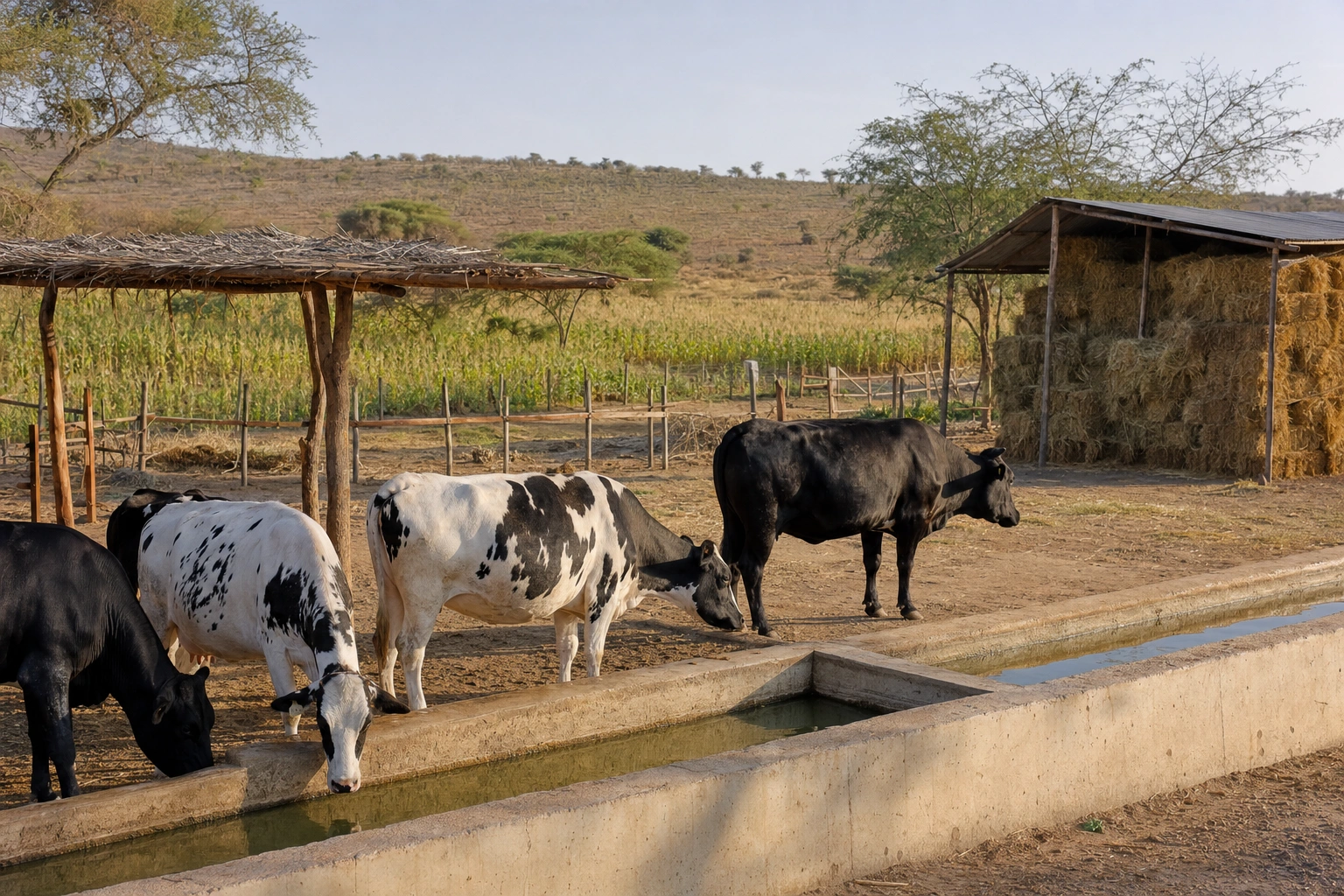
Climate-smart livestock production means managing animals, land, feed, water and farm resources in ways that support reliable livelihoods under a changing climate. It is not a single technology or a special type of animal. Rather, it is a practical approach to producing milk, meat, eggs, hides, manure and other livestock products while preparing for climate risks and limiting avoidable environmental damage.
For farmers, the issue is practical as well as environmental. Droughts, irregular rainfall, heat stress, floods, changing pasture conditions, crop failures and disease pressures can affect household income and food security. A climate-smart livestock system aims to remain productive during these pressures, recover more quickly after shocks and use resources more efficiently.
What climate-smart livestock production involves
Climate-smart agriculture is commonly understood through three connected aims: improving productivity and livelihoods, strengthening adaptation and resilience, and reducing or avoiding greenhouse-gas emissions where this is feasible. These aims often support one another, but not always. A good decision therefore considers the whole farm rather than treating one benefit as proof that a practice is climate-smart.
Productivity and livelihoods
Farmers need systems that provide dependable returns. Better nutrition, healthier animals, reduced mortality, improved breeding decisions and lower feed waste can increase output without simply increasing herd size. Productivity should be measured in relation to resources used. For example, a healthy cow producing more milk from good-quality feed may be more efficient than keeping several poorly nourished animals that require scarce pasture and water.
Adaptation and resilience
Adaptation means reducing vulnerability to climate-related stresses. This may involve keeping drought-tolerant fodder, protecting water sources, selecting animals suited to local conditions, improving shelter from heat and rain, or maintaining financial and feed reserves. Resilience is the ability of the farm system to absorb a shock, continue functioning and recover without losing its productive foundation.
Mitigation
Livestock can contribute to greenhouse-gas emissions through digestion, manure management, feed production, land-use change and energy use. Mitigation involves producing the same or greater output with fewer emissions, preventing land degradation and storing more carbon in well-managed soils and vegetation. It does not require every farmer to measure an exact emissions figure. Many practical improvements, such as reducing animal disease and improving feed quality, can benefit both productivity and emissions efficiency.
Begin with a climate and farm risk assessment
Climate-smart planning starts with understanding the farm’s main risks. A dairy farmer in a highland area may be more concerned about heat, fodder shortages, heavy rainfall and animal diseases, while a pastoral household in an arid region may prioritise water access, pasture mobility and prolonged drought. A poultry keeper may face heat stress, unreliable electricity and disease outbreaks rather than a shortage of grazing land.
List the farm’s key resources and hazards:
- Climate hazards: drought, heatwaves, floods, strong winds, cold periods and unpredictable rainfall.
- Production weaknesses: poor-quality feed, limited water, overcrowding, weak housing, low fertility or high mortality.
- Environmental pressures: overgrazing, soil erosion, loss of vegetation, polluted water or poorly managed manure.
- Market and financial risks: changing prices, high feed costs, limited storage, transport difficulties and lack of emergency funds.
Farmers can then rank each risk by likelihood, potential damage and the cost of responding to it. This prevents investment in impressive but unsuitable solutions. A solar-powered water pump may be valuable where water is available but energy is expensive; it will not solve a problem caused by an absent or contaminated water source.
Choose animals suited to the production environment
Breed selection should match the climate, feed supply, disease environment, labour available and market demand. Highly productive animals can perform well when they receive adequate nutrition, housing, veterinary care and water. However, animals that are poorly matched to local conditions may lose productivity quickly during drought or heat stress and may require expensive purchased inputs.
Locally adapted breeds often possess useful characteristics such as tolerance to heat, ability to walk long distances, resistance or tolerance to local disease challenges, and the capacity to survive on available feeds. This does not mean that local breeds should never be crossbred. Carefully planned crossbreeding can combine adaptation with improved production, but farmers need access to reliable breeding advice and must consider whether they can provide the resulting animals with sufficient feed and healthcare.
Selection should also consider fertility, longevity, temperament, disease history and the ability to maintain body condition. A record of births, illnesses, treatments, growth, milk yield or egg production helps a farmer identify animals that perform consistently rather than relying only on appearance or short-term output.
Build a reliable feed system
Feed is often the largest practical constraint in livestock production. Climate-smart feeding begins with planning for both good seasons and difficult seasons. Farmers can combine grazing, crop residues, fodder crops, conserved forage and appropriate purchased feeds according to local conditions.
Useful actions include:
- Growing or protecting fodder trees, grasses and legumes suited to the local climate and soil.
- Harvesting forage at an appropriate stage and conserving it as hay or silage when conditions allow.
- Storing crop residues under cover and treating or supplementing them appropriately when advised by a qualified livestock professional.
- Using feed troughs and storage areas that reduce trampling, contamination and spoilage.
- Balancing diets rather than providing large quantities of one low-quality feed.
- Keeping a dry-season feed budget based on the number and type of animals likely to be maintained.
Legumes can improve the nutritional value of some feeding systems and may reduce the need for certain purchased inputs, but they must be selected and managed carefully. Some plants can be toxic or unsuitable in excessive amounts. Farmers should obtain local guidance before introducing unfamiliar fodder species.
Efficient feeding also depends on herd management. Keeping more animals than the available land can support leads to declining pasture, poor body condition and higher vulnerability during drought. Strategic destocking, early sale of animals in poor condition and retaining productive breeding stock can sometimes protect the remaining herd better than waiting until feed has completely failed.
Manage grazing land for resilience
Grazing management is central to climate-smart livestock production, especially in pastoral and mixed farming systems. Continuous grazing of the same area can reduce plant cover, expose soil to erosion and weaken pasture recovery. Planned resting, rotational grazing or agreed movement between grazing areas can give vegetation time to regenerate, although the appropriate system depends on land tenure, rainfall, herd mobility and local institutions.
Good grazing management includes avoiding unnecessary grazing of very young plants, protecting water points from severe trampling, reducing bare ground and maintaining useful trees and shrubs where they support livestock and wildlife. In pastoral areas, mobility can be an important adaptation strategy because it allows animals to follow available pasture and water. Such mobility requires secure access routes, cooperation between communities and attention to conflict prevention.
Farmers should monitor pasture condition rather than following a fixed calendar. Signs of stress may include shorter vegetation, increasing bare soil, declining animal body condition, reduced access to water and more frequent movement for grazing. Acting early is usually less damaging than waiting until animals are weak and land is severely degraded.
Protect animals from heat, disease and water stress
Heat stress reduces feed intake, growth, fertility and milk or egg production. It can also increase the risk of death in vulnerable animals. Shade from well-positioned trees or properly designed structures, good ventilation, reduced overcrowding and access to clean water can help animals cope with high temperatures. Handling, transport and other stressful activities should be planned for cooler parts of the day where possible.
Water quantity and quality both matter. Water points should be protected from contamination by manure, mud, chemicals and dead animals. Storage tanks, roof-water collection and carefully managed ponds may improve reliability, but stored water requires regular inspection and safe maintenance. A climate-smart water plan identifies the source, seasonal availability, quality risks, pumping needs and backup arrangements.
Changing weather can alter the distribution or timing of some livestock diseases and parasites. Prevention is more dependable than relying only on treatment. Farmers should follow locally appropriate vaccination and parasite-control advice, quarantine newly purchased animals where practical, keep housing clean and report unusual illness promptly. Veterinary medicines should be used according to professional guidance, including correct dosage and withdrawal periods for food-producing animals.
Improve housing and farm infrastructure
Housing should protect animals from excessive heat, rain, cold, wind and muddy conditions while allowing ventilation and easy cleaning. The best design depends on the species and local climate. Poultry houses need airflow without creating harmful draughts; dairy units need dry resting areas and effective drainage; goats and sheep benefit from clean, raised or well-drained floors in wet environments.
Infrastructure should be durable and repairable using materials that are available locally. Raised feed stores can reduce losses from moisture and pests. Gutters and storage tanks can capture rainfall where appropriate. Fencing, shade structures and drainage channels can protect fragile areas, but they should be designed to avoid diverting water in ways that cause erosion or flooding elsewhere.
Turn manure and waste into a resource
Manure contains nutrients that can improve soil fertility when applied at the right rate and time. Composting or controlled storage can reduce nutrient losses, odour and contamination of water. Farmers may use manure on fodder plots, food crops or restored land after considering crop needs, soil condition and food-safety precautions.
Biogas systems can convert suitable manure into cooking fuel and produce a nutrient-rich digestate. They require enough regular feedstock, water, maintenance and safe construction. They are not automatically suitable for every household, particularly where animals are kept on open pasture and manure is difficult to collect.
Leaving manure in poorly drained areas can contribute to water pollution and release avoidable emissions. A simple manure plan should identify where manure is collected, how it is stored, when it is applied and how workers protect themselves during handling.
Use records and early-warning information
Records help farmers distinguish a climate problem from a management problem and decide whether an intervention is working. Useful indicators include animal body condition, mortality, fertility, milk or egg output, feed use, water availability, disease cases, pasture condition and sales.
Weather forecasts and local early-warning information can support decisions about planting fodder, conserving feed, moving herds, buying inputs or selling animals. Forecasts are not perfect, so they should be treated as one source of information alongside observations of pasture, water and animal condition. Farmers can also prepare simple thresholds, such as the date by which a feed reserve should be established or the condition at which non-breeding animals may be sold.
Balance trade-offs before investing
Climate-smart choices involve trade-offs. A larger herd may increase sales in a good season but intensify pressure on pasture and water during drought. Irrigation may support fodder production but compete with household or crop water needs. Improved breeds may raise output but increase feed, veterinary and housing requirements. Solar equipment can reduce dependence on fuel but still needs maintenance, secure installation and replacement planning.
Assess each option using five questions:
- What climate risk does it address?
- What inputs, skills, labour and maintenance does it require?
- Who benefits and who carries the cost?
- What could happen to soil, water, biodiversity and animal welfare?
- How will success be measured after one season and after several seasons?
Farmers can start with low-cost actions that improve several outcomes, such as reducing feed waste, repairing water leaks, providing shade, keeping health records or protecting a small fodder area. Larger investments should follow a clear business case and, where relevant, technical advice.
Applying This in Practice
Consider a small dairy farm facing longer dry periods. The farmer first records milk production, feed sources, water use, animal condition and the months when shortages usually occur. The farm then protects a fodder plot, plants suitable forage, stores hay before the dry season and improves the cow shed’s shade and drainage. A water tank is considered only after checking roof area, rainfall patterns, storage needs and maintenance costs.
The farmer also reviews the herd. Unproductive animals consume feed without supporting the farm’s objectives, while a healthy, fertile cow may be worth retaining even if its peak production is lower than that of a less-adapted animal. Manure is collected and composted for the fodder plot. Monthly records show whether feed costs, milk output, disease cases and animal condition are improving.
This example illustrates an important principle: climate-smart production is a process of diagnosis, prioritisation, testing and adjustment. It is not achieved by purchasing one product or copying a practice from a different climate. Farmers, extension officers, veterinarians, researchers, buyers and community organisations all have roles in making the system workable.
Key Takeaways
- Climate-smart livestock production combines productivity, climate resilience and responsible resource use.
- Match breeds and herd size to the local climate, feed supply, disease risks and market.
- Prepare feed, water and pasture plans before drought or other climate shocks occur.
- Use shade, ventilation, clean water, good hygiene and preventive animal health care to reduce climate-related losses.
- Manage manure safely so it supports soil fertility instead of polluting water or wasting nutrients.
- Use farm records and early-warning information to make timely decisions and test whether an investment works.
No comments yet.