
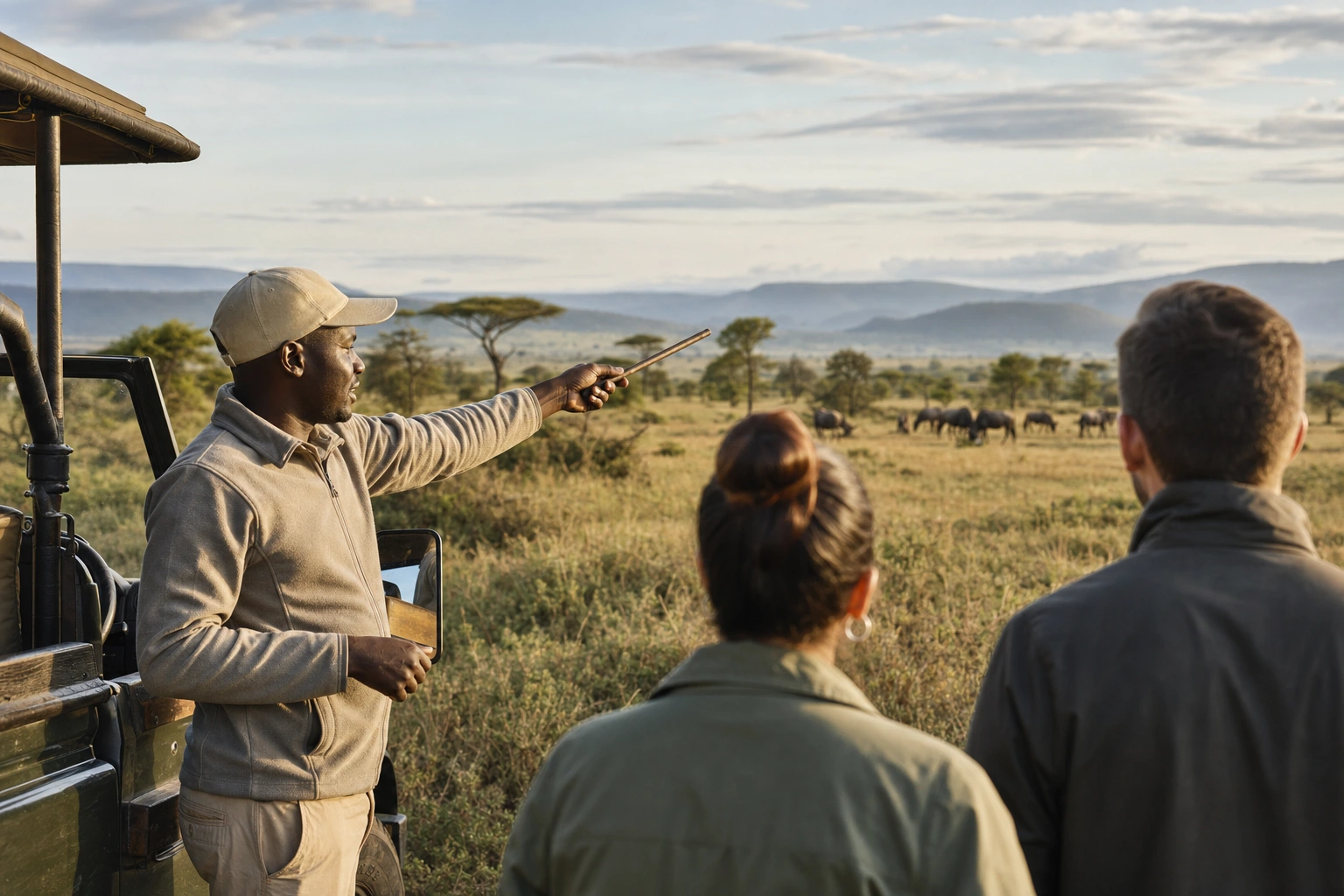
Tour guides are among the most visible professionals in Kenya’s tourism industry. They are often the first local representatives a visitor meets and the people who transform a journey from a sequence of destinations into a meaningful experience. Whether leading a wildlife drive in the Maasai Mara, explaining the history of Fort Jesus in Mombasa or guiding a walking tour through Nairobi, a tour guide connects visitors with places, people, stories and practical information.
The role involves much more than reciting facts. A professional guide must plan carefully, communicate clearly, manage time, respond to unexpected situations and represent destinations responsibly. In Kenya, where tourism includes wildlife, beaches, culture, history, adventure, business travel and community-based experiences, tour guides help create value for visitors while supporting local livelihoods and protecting the resources on which tourism depends.
What Is a Tour Guide?
A tour guide is a trained person who accompanies visitors and provides information, interpretation, assistance and direction during a tourism experience. The guide may work independently, for a tour operator, in a hotel, at a museum, within a protected area or as part of a community tourism project.
The terms tour guide and tour leader are sometimes used interchangeably, but they can describe different responsibilities. A guide usually focuses on interpreting a particular place or experience, such as a national park, historical site or city attraction. A tour leader may coordinate an entire multi-day itinerary, handling group logistics, accommodation, transport and communication between travellers and service providers. One professional may perform both roles, especially on smaller or customised tours.
Guides also differ according to their specialisation. A wildlife guide needs knowledge of animal behaviour, habitats and safe viewing practices. A cultural guide requires strong understanding of local history, customs and community relationships. A mountain or adventure guide needs technical competence, route awareness and emergency preparation. Specialisation allows guides to provide more accurate and useful experiences.
Key Roles of Tour Guides in Kenya
1. Interpreting attractions and destinations
Interpretation is one of the guide’s most important duties. It means helping visitors understand the significance of what they are seeing rather than simply naming it. At a wildlife destination, for example, a guide may explain how predator and prey relationships influence the ecosystem, why animals behave differently at certain times of day and how visitors should observe them without causing disturbance.
At a historical site, interpretation may connect architecture, trade, migration, religion and political history. In a community visit, it may explain local livelihoods, food traditions, crafts or environmental practices. Effective interpretation is accurate, relevant and adapted to the group. A family with children, a professional photography group and a university class may need different levels of detail and different ways of learning.
2. Providing safety and security
Tour guides have a major responsibility for visitor safety. Before an activity begins, they should identify foreseeable risks, explain appropriate behaviour and ensure that the group understands the plan. In wildlife areas, this may include maintaining a safe distance from animals, remaining inside the vehicle where required and following the instructions of park authorities. On hiking routes, it may involve checking weather conditions, footwear, water supplies, fitness levels and emergency contacts.
Safety also includes awareness of traffic, water conditions, heat, dehydration, lost property, allergies and medical needs. A responsible guide does not pretend to know everything. When a situation exceeds their training or authority, they should contact the appropriate operator, ranger, medical service or emergency provider. Good preparation reduces risk, but professional judgement is still needed when plans change.
3. Managing time, movement and logistics
Visitors judge an experience partly by how smoothly it operates. Guides help groups follow an itinerary, reach meeting points, manage breaks and coordinate with drivers, accommodation providers, restaurants, attraction staff and activity instructors. They may confirm opening times, check tickets, monitor travel delays and adjust the programme when conditions change.
For example, a guide taking visitors from Nairobi to a conservation area may need to balance road conditions, meal stops, park entry procedures, expected wildlife activity and the group’s energy levels. A rigid schedule can create unnecessary stress, while poor time management can cause missed activities. The guide’s task is to keep the experience organised while leaving enough flexibility for genuine discovery.
4. Communicating across cultures
Tourists do not all share the same language, expectations or social habits. Guides help prevent misunderstandings by explaining local etiquette in a respectful way. This might include appropriate behaviour when visiting a religious site, asking permission before photographing people, dressing suitably for a community visit or understanding why some places are not open to the public.
Cross-cultural communication should work in both directions. Visitors deserve clear information, but local communities also deserve to be represented fairly. A guide should avoid presenting Kenyans or African cultures as curiosities, stereotypes or entertainment. Instead, the guide can explain diversity within communities and make it clear when a practice is specific to a particular group, location or occasion.
5. Supporting local economies
Tour guides influence where visitors spend time and money. By working with locally owned restaurants, craft producers, accommodation providers, transport businesses and community activities, they can help distribute tourism income more widely. They may introduce visitors to a cooperative, recommend a locally made product or arrange a community-led experience.
This support should be transparent and ethical. Recommendations should be based on quality, suitability and fair business relationships rather than hidden pressure on visitors. A guide should never force travellers to buy goods or give money, and should explain when a payment, entrance fee or contribution is voluntary or required.
6. Protecting natural and cultural heritage
Tour guides help visitors understand why conservation matters. They can encourage responsible waste disposal, reduce unnecessary noise, discourage feeding wildlife and promote respect for protected areas. In coastal destinations, guides may explain the importance of avoiding damage to marine environments. In forests, wetlands and mountain areas, they can reinforce the value of staying on designated routes and following local guidance.
Heritage protection also applies to buildings, artefacts, stories and living traditions. A guide should not encourage visitors to touch fragile objects, remove materials from archaeological sites or treat sacred places as photo backdrops. By explaining the meaning and vulnerability of heritage, guides make responsible behaviour easier for visitors to understand.
Skills and Knowledge a Professional Guide Needs
Successful tour guiding combines technical knowledge with interpersonal and operational skills. Important areas include:
- Destination knowledge: understanding geography, attractions, history, ecology, culture, transport routes and current visitor information.
- Communication: speaking clearly, listening actively, answering questions honestly and adjusting explanations to different audiences.
- Storytelling and interpretation: turning information into engaging explanations without exaggerating or inventing facts.
- Group management: keeping people informed, identifying individual needs and maintaining a respectful atmosphere.
- First aid and risk awareness: recognising common hazards and knowing how to respond within the limits of one’s training.
- Language ability: using English, Kiswahili and other relevant languages where possible, while maintaining accuracy and clarity.
- Digital competence: using maps, booking systems, mobile communication and digital information responsibly.
- Professional conduct: being punctual, appropriately presented, honest about prices and respectful towards guests, colleagues and communities.
Knowledge must be kept current. Roads, access arrangements, conservation rules, attraction schedules and community protocols can change. A guide who relies only on old training may unintentionally provide inaccurate or unsafe advice. Continuous learning through reading, site visits, professional networks and skills refreshers is therefore part of the occupation.
How Guides Create a Better Visitor Experience
A strong visitor experience is not created by information alone. It begins before the tour, when the guide learns about the group. Useful questions may cover mobility needs, dietary requirements, language preferences, interests, previous travel experience and expectations. This preparation helps the guide choose suitable explanations and identify practical adjustments.
During the tour, the guide should establish a clear rhythm. Visitors need orientation at the beginning: what will happen, how long activities may take, where to meet and what behaviour is expected. The guide should then alternate explanation with observation, conversation and quiet time. Constant talking can prevent visitors from appreciating a landscape, while too little communication may leave them confused or disconnected.
Questions are valuable signals. If several visitors ask about transport, costs or safety, the guide may need to provide clearer information. If the group becomes tired, hungry or distracted, the itinerary may need adjustment. Professional guiding involves observing the group and responding without losing control of the schedule.
Accuracy is essential. When a guide does not know an answer, saying so and offering to verify the information is more professional than guessing. Visitors usually value honesty, and reliable information protects the reputation of the guide and destination.
Ethics and Responsible Representation
Guides occupy a position of trust. Visitors may accept the guide’s account of a community, historical event or environmental issue without checking it independently. This creates an ethical duty to distinguish fact from personal interpretation and to acknowledge uncertainty where evidence is contested.
Guides should also obtain appropriate permission when arranging photography, home visits, demonstrations or interactions with community members. People should not be displayed as objects for visitor entertainment. Children require particular care, and guides should avoid exposing personal information or encouraging intrusive behaviour.
Wildlife experiences require similar restraint. A guide should not encourage a driver to pursue animals, crowd a sighting or create an unnatural encounter merely to produce better photographs. Short-term excitement can cause stress to animals and damage the reputation of a destination. Responsible guiding protects the quality of future visits as well as the immediate experience.
Challenges Facing Tour Guides
Guides work in an environment affected by seasonality, changing visitor expectations, traffic, weather, fluctuating operating costs and competition. A guide may also have to manage a group with different physical abilities, budgets and interests. These pressures make planning and communication especially important.
Another challenge is the need to balance commercial expectations with professional judgement. A client may request an activity that is unsafe, culturally inappropriate or environmentally harmful. The guide should explain the concern, offer a suitable alternative and involve the responsible operator when necessary. Protecting standards may require tact, but it is part of the profession.
Digital reviews and social media have also increased the visibility of both excellent and poor service. Guides can benefit from feedback, but they should not chase positive reviews by making promises they cannot keep or by prioritising dramatic experiences over safety. A consistent, honest service is more valuable than a single impressive moment.
Applying This in Practice
A guide preparing for a one-day cultural and nature tour can use the following process:
- Research the route: confirm access, travel time, weather considerations, opening arrangements and any relevant local guidance.
- Understand the group: identify interests, language needs, mobility considerations, dietary requirements and the level of activity participants expect.
- Prepare a clear briefing: explain the itinerary, meeting points, safety rules, appropriate conduct and what visitors should carry.
- Select meaningful information: choose accurate stories and observations that connect the site to its people, history, environment or economy.
- Work with local providers: use agreed prices and permissions, and make sure community partners understand the activity and expected group behaviour.
- Monitor the experience: watch for fatigue, confusion, discomfort or changing conditions, and adjust the pace when appropriate.
- Review the tour: record questions, incidents, delays and feedback so that future tours can be safer and better organised.
This approach is useful whether the guide is working with international visitors in a national park, Kenyan residents exploring a historical town or corporate guests attending a destination experience. The details change, but the principles remain: preparation, accuracy, care, respect and adaptability.
Key Takeaways
- Tour guides interpret destinations, manage logistics and connect visitors with local places and communities.
- Safety requires preparation, clear briefings, risk awareness and the judgement to seek help when necessary.
- Effective guiding combines destination knowledge with communication, storytelling, group management and professionalism.
- Guides can strengthen local economies by working ethically with community businesses and service providers.
- Responsible guides protect wildlife, cultural heritage and community dignity rather than pursuing entertainment at any cost.
- Continuous learning and honest feedback help guides maintain accurate, safe and relevant visitor experiences.
No comments yet.