
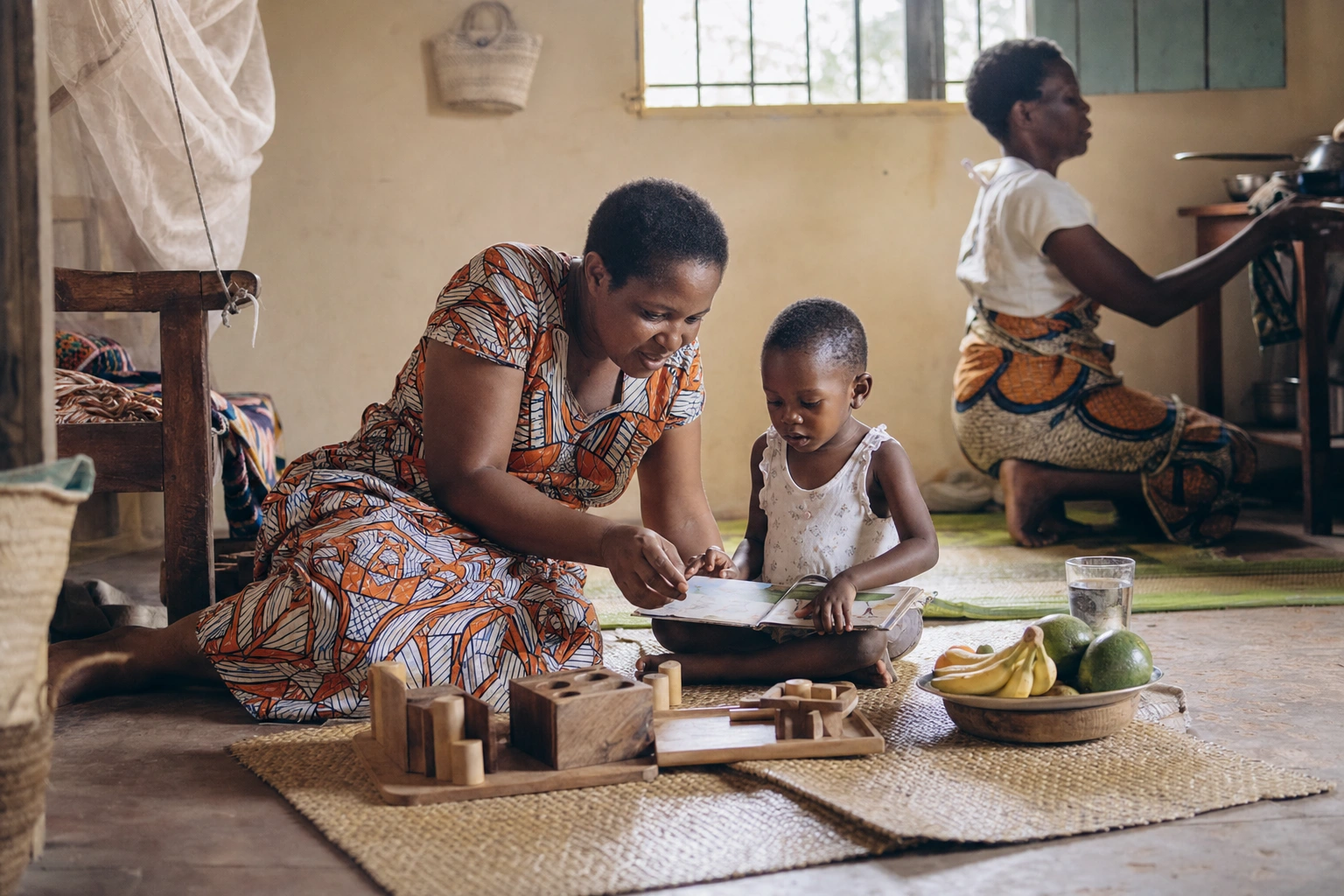
Child development begins before birth and continues through relationships, daily routines and opportunities to learn. Families are usually the people closest to a child, so their care strongly influences physical health, emotional wellbeing, language, behaviour and confidence. This does not mean that families must be perfect. Consistent, loving and responsive care, together with appropriate support from health and education services, can make a meaningful difference.
In maternal and child health, the family is not only a source of food and shelter. It is also a child’s first environment for communication, protection, learning and social connection. Understanding this role helps parents, relatives and other caregivers make practical choices that support development while recognising when additional professional help is needed.
What child development involves
Child development refers to the gradual changes children experience as they grow. These changes are connected rather than separate. A child’s physical health can affect concentration and play; emotional security can support communication; and language skills can help a child form relationships and manage feelings.
- Physical development: growth, movement, coordination, strength, sleep and general health.
- Cognitive development: attention, memory, problem-solving, curiosity and early reasoning.
- Language and communication: listening, understanding, gestures, speaking, reading and expressing needs.
- Social development: forming relationships, cooperating, sharing and understanding social expectations.
- Emotional development: recognising feelings, building trust, developing confidence and gradually learning self-regulation.
Children develop at different rates. A variation in one skill does not automatically indicate a problem. However, persistent concerns, loss of previously acquired skills or difficulties that interfere with everyday life should be discussed with a qualified health professional or other appropriate specialist.
Families provide the foundation for secure relationships
Babies and young children depend on adults to interpret and respond to their needs. When a caregiver notices a baby’s cry, hunger, discomfort or desire for contact and responds appropriately, the child gradually learns that the world can be predictable and that communication is worthwhile. This process is often called responsive caregiving.
Responsive caregiving does not require constant entertainment or immediate perfection. It includes noticing a child’s signals, responding with warmth, and adjusting support as the child grows. For example, a caregiver may comfort a distressed toddler, name the emotion, set a safe limit and remain nearby while the child calms down.
Simple actions can build secure relationships:
- Make eye contact when speaking or feeding, where this is comfortable for the child.
- Respond to sounds, gestures and facial expressions by speaking or smiling back.
- Hold, comfort and reassure a frightened or unwell child.
- Use predictable routines for meals, sleep, bathing and play.
- Listen to older children without dismissing their concerns.
Secure relationships support exploration. A child who feels safe is more able to play, ask questions and try new tasks. As children mature, supportive relationships remain important, although the form of support changes from physical comfort to conversation, guidance and respectful boundaries.
Maternal health affects the whole family
Maternal health includes a woman’s physical, emotional and social wellbeing during pregnancy, childbirth and the postnatal period. A mother’s health can affect her ability to rest, feed, care for and interact with a baby. Supporting maternal health is therefore also an investment in child health.
Families can help by encouraging attendance at antenatal and postnatal care, supporting recommended treatment, arranging transport where possible and sharing household responsibilities. Practical assistance may include preparing meals, collecting water, caring for older children or creating time for the mother to sleep and recover.
Emotional wellbeing deserves equal attention. Pregnancy and the period after birth can involve tiredness, worry, sadness or feeling overwhelmed. These experiences should not be treated as a moral failure. Persistent low mood, severe anxiety, hopelessness, confusion, thoughts of self-harm or thoughts of harming a baby require urgent professional attention. A trusted family member can listen without judgement and help the mother contact a health worker or emergency service.
Partners and relatives also benefit from support. A father or other caregiver may experience stress, sleep disruption or emotional difficulties, and these can affect family relationships. Sharing care and speaking openly about pressure can make it easier for the household to seek help early.
Nutrition, growth and everyday health
Families influence children’s nutrition through what is available, how food is prepared and the routines surrounding meals. During infancy, caregivers should follow guidance from qualified health workers on breastfeeding, complementary feeding and safe food preparation. As children grow, meals should offer variety and include locally available nutritious foods where possible, such as vegetables, fruits, legumes, eggs, fish, dairy products or other suitable sources of nutrients.
Feeding is more than providing calories. A calm caregiver who notices hunger and fullness cues can help a child develop a healthy relationship with food. Pressuring, shaming or using food as a punishment can make mealtimes stressful. Young children may need repeated exposure to unfamiliar foods before accepting them, provided the food is safe and appropriate for their age.
Families also support health through clean water, hygiene, immunisation according to the national schedule, safe sleep arrangements, protection from smoke and timely care when a child is ill. Growth monitoring and routine health visits can help identify concerns early. A child who is unusually lethargic, has difficulty breathing, cannot drink or breastfeed, shows signs of dehydration, has convulsions or is rapidly deteriorating needs urgent medical attention.
Learning starts in ordinary family life
Early learning does not depend only on expensive toys or formal lessons. Children learn through conversation, movement, play, imitation and participation in daily activities. A caregiver preparing vegetables might name colours and shapes; a parent travelling on a matatu might talk about sounds, people and safety; an older sibling might tell a story or play a simple counting game.
Useful family activities include:
- Talking, singing and telling stories in the language or languages used at home.
- Looking at picture books or homemade picture cards and asking the child what they notice.
- Sorting household objects by colour, size or use, while supervising closely.
- Encouraging drawing, building, dancing and pretend play.
- Involving children in safe tasks such as folding clothes, watering plants or measuring ingredients.
- Asking open questions such as “What do you think will happen?” rather than giving every answer.
Play should be suited to the child’s age and abilities. It should also include time away from screens. Digital devices may offer useful content, but they do not replace conversation, physical activity, sleep, hands-on play and attentive relationships. Families can set clear routines, supervise content and avoid allowing screens to interfere with sleep, meals or interaction.
Discipline, behaviour and protection
Children need boundaries to learn safety and responsibility. Effective discipline teaches rather than humiliates. Adults can state the rule clearly, explain the reason briefly, offer a suitable choice and apply a calm, predictable consequence when necessary. For example: “The cup is for the table, not for throwing. You may put it here or give it to me.”
Physical punishment, threats and degrading language can damage trust and do not teach children how to manage the behaviour that caused concern. Adults who feel close to losing control should place the child in a safe space, step away briefly and seek support from another trusted adult. Babies must never be shaken.
Protection is a shared family responsibility. Children need supervision appropriate to their age, safe sleeping arrangements, protection from dangerous substances and clear guidance about roads, water, fire and unfamiliar adults. Older children should learn that they can tell a trusted adult when something feels unsafe, including inappropriate touching, online contact or pressure from another person. Families should take disclosures seriously, avoid blaming the child and follow local child-protection and health procedures.
Fathers, siblings and extended family matter
Although mothers often provide much of the early care, child development is not a mother’s responsibility alone. Fathers, grandparents, older siblings, aunts, uncles and other regular caregivers can provide affection, play, supervision, practical support and guidance. In many African households, care is shared across an extended family or community network. This can be a strength when adults communicate clearly and maintain consistent expectations.
Shared care works best when adults agree on essential routines and safety rules. If one caregiver encourages reading while another discourages questions, or if discipline changes sharply from one adult to another, a child may become confused. Family discussions can clarify who handles health appointments, what foods are suitable, how screens are used and how behaviour is addressed.
Children with disabilities or developmental differences need the same affection, dignity and opportunities to participate as other children. Families should avoid hiding or excluding them. Instead, they can adapt play, communication and household activities, request professional assessment when concerns arise and connect with appropriate support services or community groups.
When family circumstances create challenges
Families may face poverty, unemployment, illness, migration, conflict, overcrowded housing, bereavement or limited access to health services. These pressures can reduce time and energy for responsive care, but they do not mean that a family does not care about its children. Practical support may come from relatives, community health workers, schools, faith communities, social services or health facilities.
Small, reliable actions can still protect development during difficult periods. A caregiver might establish one predictable daily routine, spend a few focused minutes talking and playing, keep essential medicines and contacts organised, or ask another trusted adult for help. Adults should also avoid placing adult responsibilities on children beyond what is reasonable for their age.
When a child’s behaviour, learning, speech, movement, hearing, vision, eating, sleep or emotions cause concern, early advice is useful. Families should record what they have noticed, when it began and how it affects daily life. They can then share this information with a health worker, teacher or other qualified professional. Seeking advice is not labelling a child; it is a way to understand needs and identify helpful support.
Applying This in Practice
- Observe: Notice how the child communicates, plays, eats, sleeps, moves and responds to people.
- Connect: Set aside regular periods for talking, reading, singing, play or shared household tasks without distractions.
- Protect: Review hazards in the home and teach age-appropriate safety rules.
- Support health: Keep routine appointments, follow professional guidance and seek care promptly when warning signs appear.
- Share responsibility: Agree with other caregivers on routines, nutrition, supervision and respectful discipline.
- Seek help early: Discuss persistent developmental, emotional or health concerns with a qualified professional rather than waiting for the problem to worsen.
Key Takeaways
- Children develop through connected physical, emotional, social, language and cognitive experiences.
- Warm, predictable and responsive caregiving helps children feel secure and ready to explore.
- Supporting maternal physical and emotional health also supports the child and the wider household.
- Everyday conversation, play, stories and safe participation in family tasks provide valuable learning.
- Respectful boundaries teach more effectively than physical punishment, threats or humiliation.
- Fathers, siblings, relatives and other caregivers can share responsibility for protection, health and development.
- Persistent concerns, loss of skills or serious illness signs should be discussed promptly with a qualified professional.
No comments yet.