
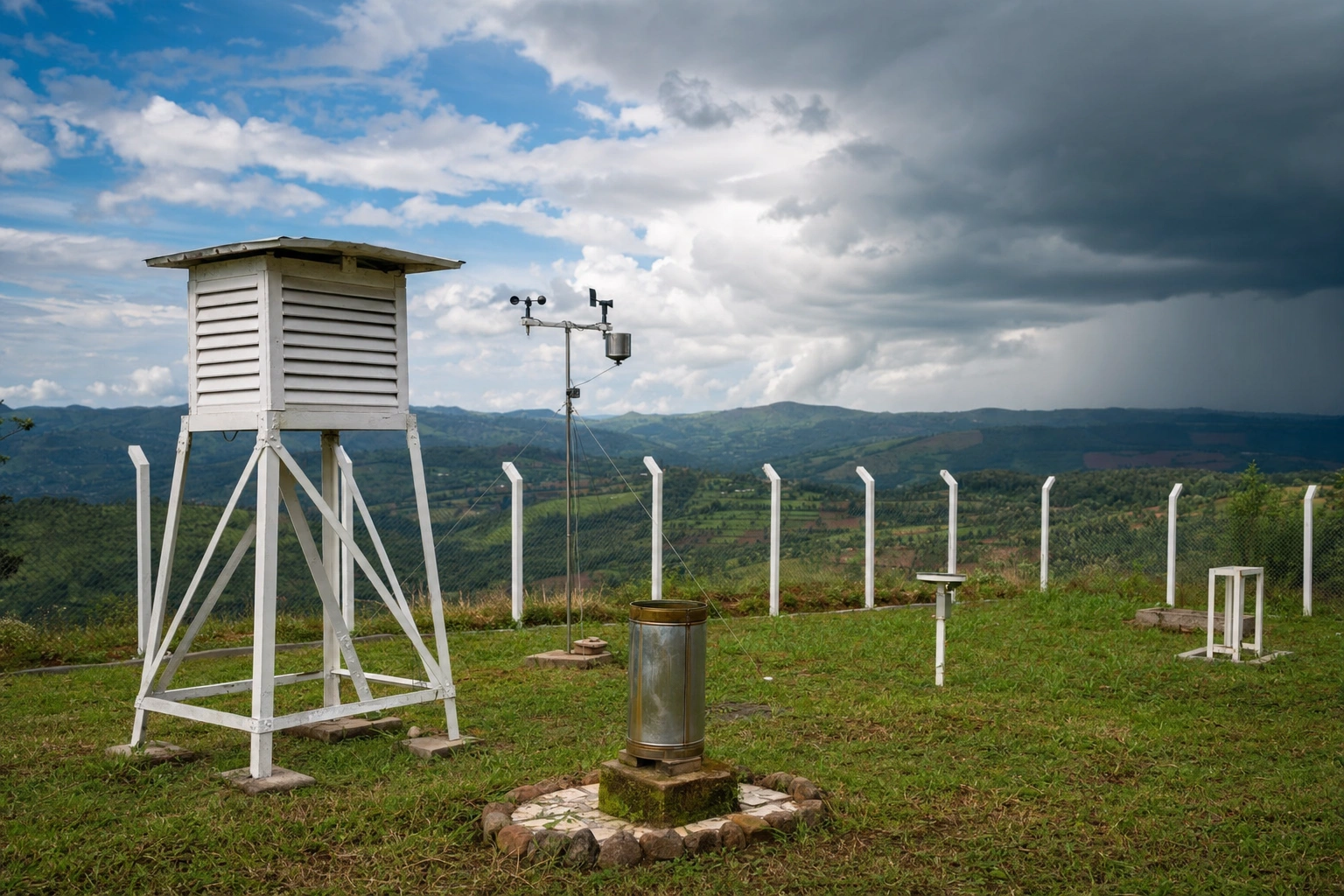
Weather and climate are closely related, but they are not the same thing. Weather is what the atmosphere is doing now or over a short period: today’s temperature, this afternoon’s rain, tomorrow’s wind or a sudden storm. Climate is the longer-term pattern of weather in a particular place or across the planet, including typical conditions, seasonal cycles and changes in extremes.
This distinction is essential for understanding climate change. A cold morning does not disprove global warming, just as one unusually hot day does not, by itself, prove a long-term climate trend. To interpret environmental change accurately, we need to look beyond individual events and examine patterns over time.
What Is Weather?
Weather refers to the condition of the atmosphere at a specific time and place. It can change quickly, sometimes within minutes or hours. Weather forecasts commonly describe several atmospheric elements:
- Temperature: how hot or cold the air is.
- Precipitation: water falling from the atmosphere as rain, drizzle, hail or snow.
- Wind: the movement of air, including its speed and direction.
- Humidity: the amount of water vapour in the air.
- Cloud cover: how much of the sky is covered by clouds.
- Air pressure: the force exerted by the weight of the atmosphere.
- Visibility: how far people can see through the atmosphere, which may be reduced by dust, fog, smoke or heavy rain.
For example, Nairobi may experience a cool, cloudy morning followed by sunshine and a short afternoon shower. That sequence describes the day’s weather. In Mombasa, a humid morning with strong coastal winds is also a weather condition. Weather reports help people decide what to wear, whether to carry an umbrella, how to schedule outdoor work and whether travel may be disrupted.
What Is Climate?
Climate describes the usual range and long-term pattern of weather in a place, region or the Earth as a whole. It includes average conditions, but it is not limited to averages. Climate also considers seasonal timing, the frequency of rainfall, the range of temperatures and how often unusual events occur.
When people say that an area has a tropical, arid, temperate or polar climate, they are describing recurring patterns rather than a single day. A semi-arid region may receive very little rain in a typical year, even though one particular storm can produce intense rainfall. A highland area may generally be cooler than a lowland area, even when both places experience a hot day.
Climate is usually assessed using observations collected over many years. A long record allows scientists and planners to distinguish a temporary fluctuation from a persistent shift. For instance, one rainy season cannot establish that a region has become wetter. Several decades of rainfall records may reveal whether the timing, amount or reliability of rainfall is changing.
The Main Difference: Short-Term Conditions Versus Long-Term Patterns
The simplest distinction is the timescale:
- Weather describes short-term atmospheric conditions, from minutes to days or sometimes weeks.
- Climate describes long-term patterns and trends, usually examined over decades or longer.
A useful comparison is the difference between a person’s daily activities and their usual lifestyle. What someone does on one day may be unusual, while their broader routine becomes clearer when observed over a longer period. In the same way, a single hot afternoon is weather; a long-term rise in typical temperatures is a climate trend.
Another useful comparison is between a single match and a whole sports season. The result of one match tells you what happened on one occasion. The results across many matches reveal the team’s broader performance. Weather is like the individual match, while climate is like the longer season pattern.
How Weather and Climate Are Connected
Weather and climate are different, but they are not separate systems. Climate influences the conditions in which weather occurs. For example, a region’s climate affects the types of air masses, seasons and rainfall patterns that are likely to occur there. At the same time, repeated weather events contribute to the climate record used to identify long-term patterns.
Climate does not determine the exact weather on a particular day. Instead, it changes the probabilities and typical range of possible conditions. A dry climate does not mean that rain can never fall. A cool climate does not prevent an occasional warm day. It means that the overall pattern is more likely to be dry or cool compared with other places.
This relationship can be expressed through a simple question:
Weather asks, “What is happening in the atmosphere now?” Climate asks, “What conditions are usual, and how are they changing over time?”
Why One Weather Event Cannot Explain Climate on Its Own
People naturally notice individual events. A severe flood, a long dry spell or an unusually cold week can affect homes, farms, businesses and public services immediately. However, one event cannot usually show whether the climate has changed. Natural variation means that weather can be unusual even when the long-term climate pattern remains stable.
To investigate a climate trend, scientists examine evidence from many observations across time and space. They may compare temperature records, rainfall measurements, ocean conditions, glacier changes, vegetation responses and other indicators. They also consider whether the frequency, intensity or duration of particular events is changing.
This does not mean that individual events are irrelevant. Climate change can influence the likelihood or severity of some types of extreme weather, but the exact relationship depends on the event and the location. A careful explanation distinguishes between saying that climate change affected the conditions in which an event occurred and saying that it directly caused every aspect of that event.
Weather Variability, Climate Variability and Climate Change
Weather variability
Weather variability is the short-term fluctuation from one day to another or one week to another. A week may be wetter, windier or cooler than the week before. Such changes are normal because the atmosphere is constantly moving and responding to differences in temperature, pressure and moisture.
Climate variability
Climate variability refers to changes around a longer-term average. A season may be wetter or drier than usual, or one year may be warmer than the previous year. Some climate variability occurs naturally through interactions among the atmosphere, oceans, land and other parts of the Earth system.
Climate change
Climate change refers to a persistent shift in the usual conditions of the climate. It may involve changes in average temperature, rainfall patterns, seasonal timing, sea levels, snow and ice, or the frequency and intensity of some extremes. The current period of rapid global warming is strongly associated with increased concentrations of heat-trapping greenhouse gases from human activities, including the burning of coal, oil and gas, land-use change and some industrial and agricultural processes.
The key point is that climate change is identified through long-term evidence, not through one isolated weather observation. A warming trend can continue even though individual days and seasons still vary widely.
Examples from Everyday Life and African Contexts
Farmers often need to respond to both weather and climate. Weather information can guide a decision about whether to plant, spray crops, harvest produce or protect livestock before a storm. Climate information can support longer-term choices, such as selecting crop varieties, planning water storage, adjusting planting calendars or deciding whether an area is suitable for a particular crop.
In Kenya and other parts of East Africa, rainfall can vary considerably between seasons and locations. A farmer in a semi-arid county may experience a heavy downpour that causes local flooding, even though the wider area receives limited rainfall over the year. The heavy downpour is a weather event; the broader pattern of low and unreliable rainfall is part of the area’s climate. Both matter for managing water, soil and livelihoods.
Urban planners also use both types of information. A daily forecast may help authorities prepare for a storm, while long-term climate assessments can inform drainage design, water-supply planning, building standards and heat-risk management. A business may use weather forecasts to protect deliveries and stock, while climate information may influence where it builds a warehouse or how it manages long-term energy and water costs.
How Climate Change Can Affect Weather
A changing climate does not replace weather with a fixed new pattern. Weather continues to vary from day to day. However, changes in the climate system can alter the background conditions in which weather develops.
For example, a warmer atmosphere can hold more water vapour, although the actual outcome in a particular place also depends on circulation, geography and available moisture. This can contribute to heavier rainfall in some situations. Warmer conditions can also increase the risk of heatwaves, especially when persistent high-pressure systems keep hot air in place. In other regions, shifts in rainfall patterns may increase the risk of drought or make rainy seasons less predictable.
The effects are not identical everywhere. Mountains, coastlines, forests, cities and drylands respond differently. Local vulnerability also matters. A flood may cause limited disruption in one location but severe damage in another if drainage is poor, settlements are exposed or emergency services have limited capacity.
Common Misunderstandings
“It is cold today, so global warming cannot be happening.”
This confuses daily weather with a global, long-term trend. Cold days still occur in a warming world. The relevant question is whether average conditions and the distribution of temperatures are changing over many years.
“A hot day proves climate change.”
One hot day may be unusual weather. It becomes more meaningful when considered alongside long-term records showing whether hot days are becoming more frequent, more intense or longer-lasting.
“Climate means only the average temperature.”
Temperature is important, but climate also includes rainfall, wind, humidity, seasonal cycles, storms, droughts and other recurring conditions.
“A climate forecast is the same as a weather forecast.”
A weather forecast may estimate conditions for tomorrow or next week. A climate projection describes possible long-term changes under particular assumptions about greenhouse-gas emissions, land use and other factors. It does not predict the exact weather on a specific future date.
Applying This in Practice
- State the timescale. When discussing an environmental observation, say whether it concerns today, this season, several years or a much longer period.
- Separate an event from a trend. Record unusual weather events, but avoid treating one event as proof of a long-term change.
- Use the right information. Check weather forecasts for immediate decisions and climate records or assessments for planning over years and decades.
- Consider location. Conditions in a coastal town, highland city, dryland county and dense urban neighbourhood may differ even during the same season.
- Plan for uncertainty. Good decisions can prepare for a range of possible conditions rather than relying on one exact prediction.
For personal learning, keep a simple weather diary for several weeks or months. Record temperature impressions, rainfall, cloud cover and notable events, then compare your observations with longer-term information from a reliable meteorological source. The exercise shows how quickly weather changes and why a much longer record is needed to describe climate.
For organisations, the same principle can improve planning. A school might use short-term forecasts for outdoor activities and long-term climate information when improving ventilation or managing heat. A small enterprise might use weather warnings to protect goods while using climate trends to review water use, insurance needs and the resilience of its supply chain.
Key Takeaways
- Weather is the short-term state of the atmosphere; climate is the long-term pattern of atmospheric conditions.
- A single hot, cold, wet or dry event cannot establish a climate trend.
- Climate includes averages, seasonal patterns, variability and the frequency of unusual events.
- Climate change is identified through persistent changes measured across long periods, not isolated observations.
- Weather forecasts support immediate decisions, while climate information supports long-term planning.
- Local geography and vulnerability determine how climate-related changes affect communities and businesses.
No comments yet.