
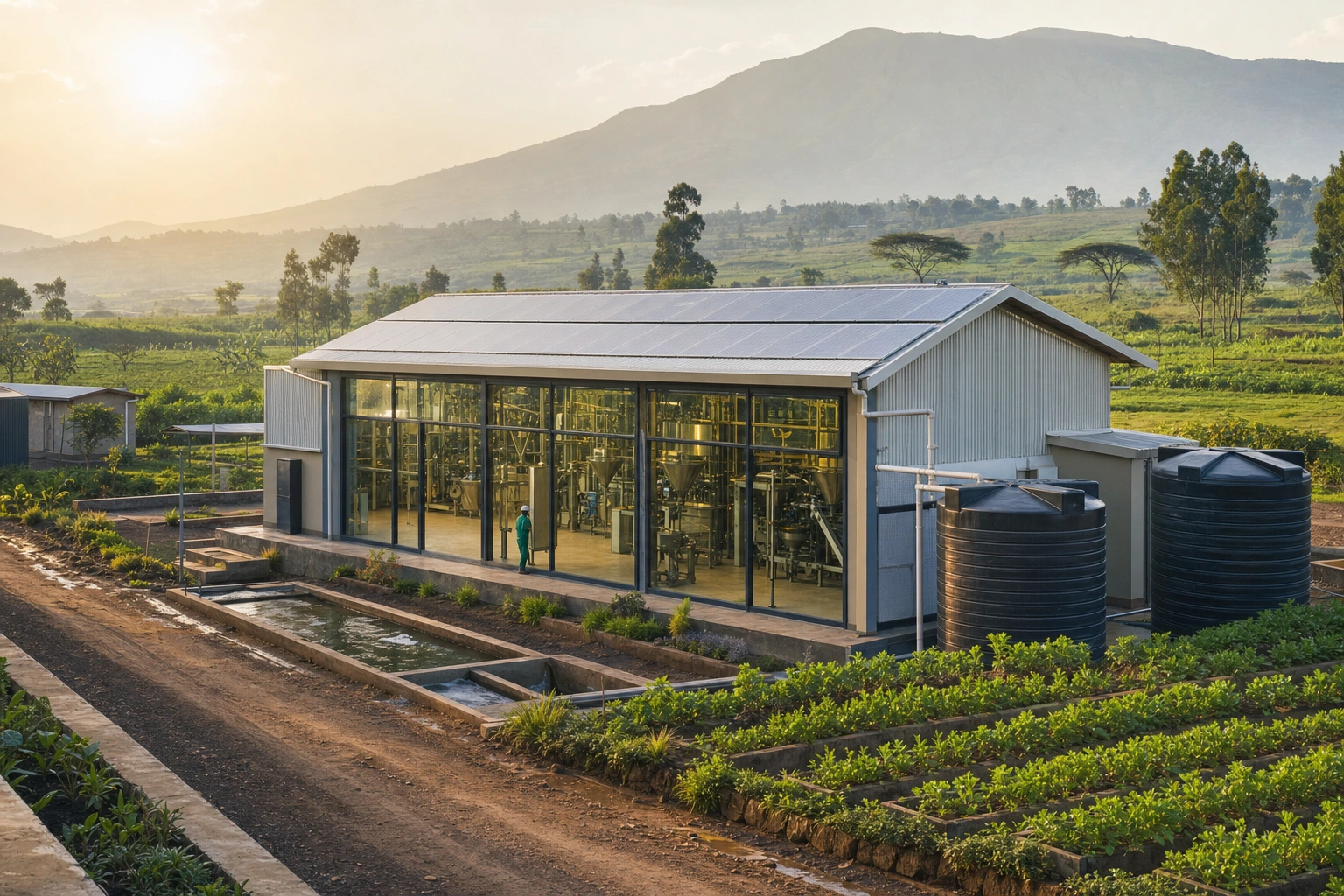
Economic growth can create jobs, expand incomes, fund public services and help communities move out of poverty. Yet growth measured only by rising production or consumption can also increase pollution, widen inequality and deplete the land, water and energy systems on which prosperity depends. Sustainable development addresses this tension by asking a broader question: how can societies improve wellbeing today while protecting the ability of future generations to meet their own needs?
Sustainable development and economic growth are therefore not automatically opposites. Growth becomes more sustainable when it is inclusive, resource-efficient and resilient. The challenge is to design economies in which businesses can succeed, people can live with dignity and nature is treated as an essential foundation of long-term prosperity rather than an unlimited source of free inputs.
Understanding the Difference Between Economic Growth and Sustainable Development
Economic growth generally refers to an increase in the production and consumption of goods and services within an economy. It is often assessed through measures such as national income, business activity, employment and productivity. Growth can be valuable because it may increase household earnings, support investment and provide governments with more resources for infrastructure, health and education.
However, growth does not automatically reveal who benefits or what environmental costs have been created. An economy may expand while many people remain excluded from opportunity. It may also record greater output after forests are cleared, minerals are extracted or pollution causes damage that households and public authorities must later pay to address.
Sustainable development is broader. It combines economic progress with social wellbeing and environmental stewardship. It considers the quality, fairness and durability of development, not simply its speed. A sustainable development approach asks whether progress is:
- Economically viable: able to create livelihoods, productivity and financial stability over time.
- Socially inclusive: able to improve access to opportunities, services, safety and participation.
- Environmentally responsible: able to operate within the limits of ecosystems and natural resources.
- Resilient: able to withstand shocks such as droughts, floods, disease outbreaks, price changes or supply disruptions.
The distinction matters because a short-term gain can produce a long-term loss. For example, a factory may reduce costs by discharging untreated waste into a river. Its output and profits may rise temporarily, but nearby communities could face unsafe water, reduced agricultural productivity and increased health costs. Sustainable development would treat those wider effects as part of the economic decision.
The Three Connected Dimensions of Sustainable Development
Economic prosperity
Sustainable economies need productive enterprises, decent work, reliable infrastructure, sound financial systems and opportunities for innovation. Economic sustainability is not about stopping growth. It is about making growth less wasteful, less dependent on fragile resources and more capable of producing lasting value.
A small food-processing business, for instance, may become more economically sustainable by reducing energy waste, improving storage and turning by-products into saleable goods. These measures can lower operating costs while making the business more competitive. At a national level, investment in skills, transport, digital access and research can help economies move towards higher-value activities rather than relying only on the extraction of raw materials.
Social inclusion and human wellbeing
Development is not sustainable if large groups of people are denied basic opportunities or carry most of the costs of economic activity. Social sustainability includes access to education, healthcare, safe housing, decent work, clean water, participation in decision-making and protection from discrimination.
Inclusive development also recognises that environmental harm often affects poorer households most severely. A family that depends on rain-fed farming may have fewer resources to respond to prolonged dry conditions. A low-income neighbourhood may be located closer to polluted roads, waste sites or industrial areas. Policies that combine environmental protection with affordable services and livelihood support are more likely to produce fair and durable results.
Environmental protection
Economic activity depends on natural systems. Farms need fertile soil and reliable water. Businesses need energy and raw materials. Cities depend on functioning drainage, clean air and ecosystems that help reduce flooding and extreme heat. Environmental sustainability means managing these foundations carefully.
This involves protecting biodiversity, using water responsibly, reducing pollution, limiting greenhouse gas emissions and maintaining the productive capacity of land and oceans. It also means recognising that some environmental damage cannot be reversed easily. Once a wetland is destroyed or soil is severely degraded, replacing its economic and ecological functions may be difficult and expensive.
How Sustainable Development Can Support Economic Growth
Resource efficiency lowers costs
Using fewer materials, less energy and less water to produce the same or better results can improve both environmental performance and profitability. Energy-efficient lighting, efficient machinery, water recycling, better stock management and reduced packaging can lower recurring expenses.
Resource efficiency is especially important for small and medium-sized enterprises, which may have limited cash reserves. A practical starting point is to measure where money is being lost: electricity used during idle periods, damaged inventory, unnecessary transport, excessive water consumption or avoidable waste. Environmental improvement often begins as a careful business-management exercise.
Innovation creates new markets and jobs
Environmental challenges can stimulate demand for new products and services. Examples include solar energy installation, repair and maintenance, efficient public transport, sustainable construction, recycling, climate-smart agriculture, environmental monitoring and low-waste packaging. These activities can create employment while addressing real community needs.
In Kenya and other African economies, decentralised renewable energy can help businesses and households access electricity where extending conventional infrastructure is difficult or costly. Improved irrigation, drought-tolerant farming practices and better post-harvest storage can strengthen food security while supporting agricultural incomes. The benefits depend on affordability, sound maintenance and access to skills, not merely on purchasing new technology.
Healthy environments protect productivity
Pollution, unsafe water and environmental degradation create costs for households, firms and governments. They can reduce worker productivity, damage equipment, disrupt supply chains and increase pressure on health services. Preventing harm is often more economical than trying to repair it later.
For example, protecting a watershed can support farming, household water supply and industrial activity at the same time. Maintaining urban drainage and green spaces can reduce disruption during heavy rainfall. These are not only environmental measures; they are investments in the reliability of the wider economy.
Resilience reduces the cost of shocks
Climate-related events, market volatility and public health emergencies can expose weaknesses in businesses and public systems. Sustainable development encourages preparation through diversified livelihoods, strong infrastructure, emergency planning, responsible financial management and secure supply chains.
A farmer who depends on one crop and one buyer may be highly vulnerable to a price fall or failed harvest. Diversifying crops, improving storage, using weather information and building links to different markets can increase resilience. Similarly, a business that relies on one supplier may reduce risk by developing alternatives and keeping essential contingency plans.
Common Tensions and Difficult Choices
Sustainable development does not eliminate difficult choices. Building roads, housing, energy systems and industries may require land and materials. Transitioning to cleaner technologies can involve high initial costs. Closing a polluting activity may affect workers and communities that depend on it. A responsible approach must therefore consider timing, distribution and practical alternatives.
One important distinction is between short-term costs and long-term value. An energy-efficient building may cost more to design or construct, but it can use less electricity and provide a healthier environment over its lifetime. A business may need to invest in waste treatment before it sees financial benefits. Decision-makers should evaluate total life-cycle costs rather than focusing only on the cheapest initial option.
Another issue is fairness. If a policy increases fuel or energy costs without providing affordable alternatives, low-income households may be affected disproportionately. A just transition seeks to reduce environmental harm while supporting workers, consumers and communities through retraining, targeted assistance, accessible services and meaningful participation.
There is also a difference between genuine sustainability and superficial claims. A product is not automatically sustainable because it uses attractive environmental language or recyclable packaging. Credible assessment examines the whole process: raw materials, production, transport, use, maintenance and disposal. Businesses should be precise about what they have improved and avoid presenting limited changes as complete solutions.
Measuring Sustainable Economic Progress
Measurement helps organisations move from good intentions to accountable action. Financial results remain important, but they should be considered alongside social and environmental indicators. Useful questions include:
- How many quality jobs are being created, and who can access them?
- How much energy, water and raw material is used per unit of output?
- What waste and pollution are produced, and how are they managed?
- Are employees and surrounding communities safe and fairly treated?
- Can the organisation continue operating during environmental or market shocks?
- Are benefits and costs distributed fairly among different groups?
Indicators should be relevant to the decision being made. A restaurant might track food waste, water use, energy bills, local sourcing and staff turnover. A construction firm might monitor material waste, worker safety, energy performance and the durability of completed buildings. A county government might examine access to clean water, transport reliability, waste collection and the condition of local ecosystems.
Good measurement also requires a baseline, a target and a review period. Saying that a company will reduce waste is less useful than identifying the current level, setting a realistic reduction target, assigning responsibility and checking results regularly. Where precise measurement is difficult, organisations should still record reasonable estimates and improve their data over time.
What Different Actors Can Do
Governments and public institutions
Governments shape the conditions in which economic activity takes place. They can enforce environmental standards, invest in public transport and resilient infrastructure, support education and skills, improve land-use planning and create predictable rules for responsible investment. Public procurement can also influence markets by favouring durable, efficient and socially responsible goods and services.
Effective policy should connect national goals with local realities. A rural community, a rapidly growing city and a coastal fishing settlement may face different environmental and economic priorities. Consultation, transparent enforcement and accessible information help policies work beyond official documents.
Businesses and entrepreneurs
Businesses can integrate sustainability into their core decisions rather than treating it as a separate public-relations activity. This includes choosing suppliers carefully, designing durable products, reducing waste, protecting workers, considering the full life cycle of products and preparing for environmental risks.
Entrepreneurs should begin with a clearly defined problem. Affordable solar services, water-saving equipment, repair businesses, efficient cold storage and responsible waste collection can all create value when they solve practical challenges. The strongest sustainable ventures usually combine environmental benefit with a clear customer need and a workable revenue model.
Individuals and communities
Households and community groups influence demand, resource use and local priorities. Responsible purchasing, maintenance and repair can extend the life of products. Community action can improve waste separation, tree care, water protection and neighbourhood planning. Individual choices matter, although they should not be used to shift all responsibility away from institutions and large producers.
Applying This in Practice
A useful way to apply sustainable development thinking is to examine a decision through five steps:
- Define the desired outcome. Specify the economic, social and environmental result you want, such as lower operating costs, safer work or reduced water use.
- Map the resources and people affected. Consider employees, customers, suppliers, neighbours, public authorities and future users, as well as land, water, energy and materials.
- Compare options over their full life cycle. Look beyond the purchase price to operating costs, maintenance, durability, disposal and possible risks.
- Identify trade-offs and protect vulnerable groups. Ask who gains, who bears the cost and what support or alternative can make the decision fairer.
- Set indicators and review results. Track a small number of meaningful measures, learn from the evidence and adjust the plan when conditions change.
Consider a small bakery deciding whether to replace an old oven. The owner can compare the purchase price of a more efficient model with expected energy savings, maintenance needs and production capacity. The decision can also include worker safety, indoor air quality, the reliability of local power and the possibility of using cleaner energy. By considering finances, people and the environment together, the owner is more likely to choose an option that remains valuable beyond the first year.
The same reasoning applies at a larger scale. A city planning a new transport corridor can assess travel time and economic access alongside air quality, pedestrian safety, land use, displacement risks and resilience to flooding. Sustainable development is achieved through these connected decisions, not through one project or policy alone.
Key Takeaways
- Economic growth measures increased production, while sustainable development also considers fairness, environmental limits and long-term resilience.
- Prosperity, social inclusion and environmental protection are connected foundations of durable development.
- Resource efficiency can reduce costs, strengthen competitiveness and lower environmental harm at the same time.
- Green innovation can create jobs and markets when it responds to genuine needs and remains affordable and maintainable.
- Major decisions should be assessed across their full life cycle, including hidden social and environmental costs.
- Use clear indicators, assign responsibility and review results regularly to turn sustainability goals into practical action.
No comments yet.