
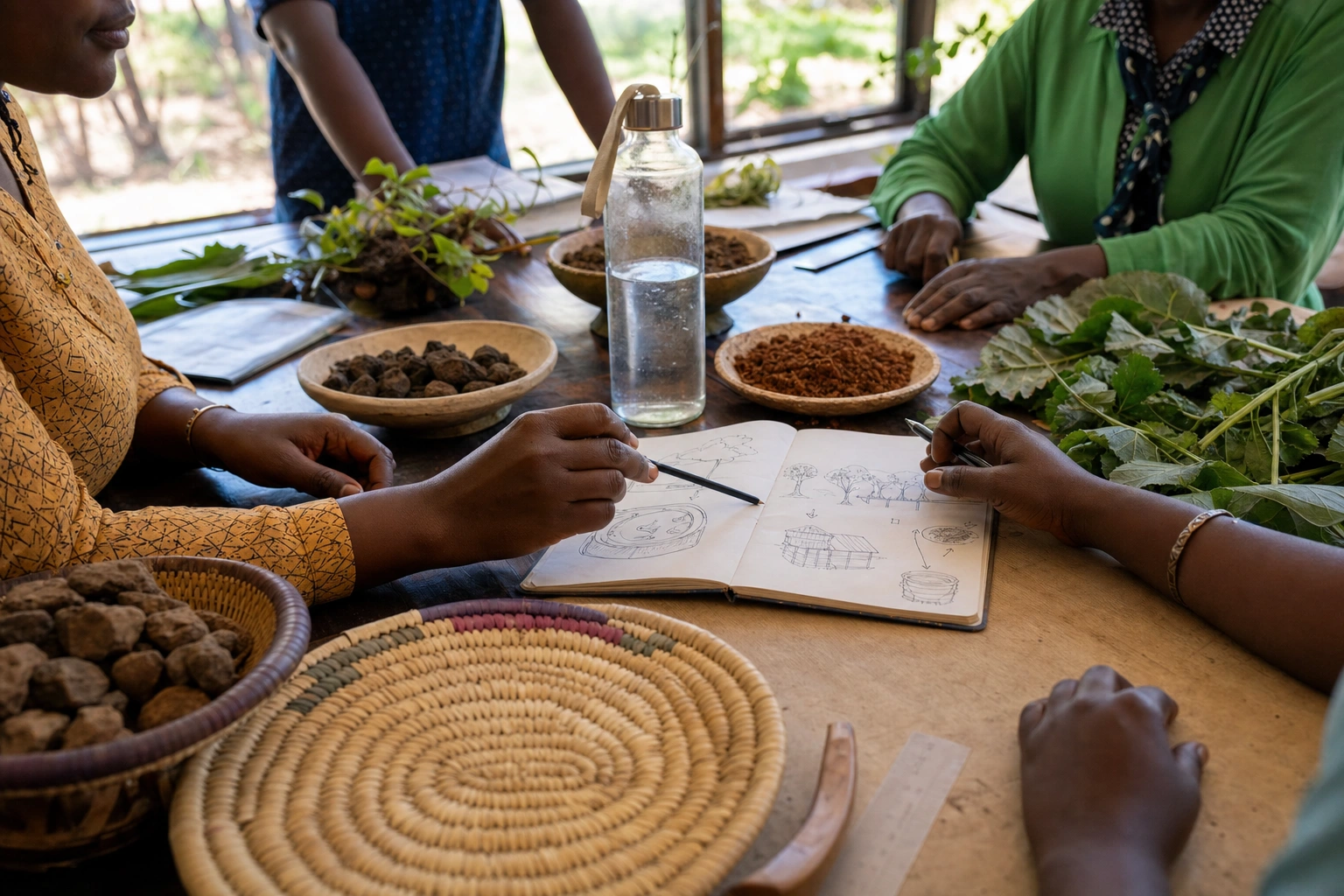
Gender equality is a central condition for sustainable development. A society cannot create lasting prosperity while women and men have unequal access to education, healthcare, income, safety, land, technology, decision-making or opportunities to shape the future. Sustainable development therefore requires more than protecting the environment or increasing economic output. It also requires building fair institutions and ensuring that people can participate in, benefit from and influence development.
The relationship works in both directions. Gender equality can improve the quality and reach of development efforts, while sustainable development can help remove the social, economic and environmental barriers that limit people’s choices. Understanding this connection is useful for policymakers, entrepreneurs, employers, educators and community leaders who want solutions that are effective as well as fair.
What Gender Equality Means in Sustainable Development
Gender equality means that people of all genders have equal rights, responsibilities, opportunities and access to resources. It does not mean that everyone must have identical experiences or make identical choices. Rather, it means that a person’s gender should not determine whether they can learn, work, own property, access finance, receive healthcare, participate in public life or live free from violence and discrimination.
It is helpful to distinguish equality from equity. Equality provides the same formal opportunity to everyone. Equity recognises that people may begin from different positions and may need different forms of support to achieve a fair outcome. For example, announcing that a training course is open to everyone is an equality measure. Providing childcare, accessible transport, safe facilities or flexible schedules may be equity measures that make participation genuinely possible for more people.
Gender equality also involves more than increasing the number of women in a workplace or institution. It asks whether people have meaningful influence, fair treatment, safety, progression opportunities and control over resources. A business may employ many women but still be unequal if women are concentrated in poorly paid roles, excluded from senior decisions or penalised for family responsibilities.
Why Gender Equality Matters for Sustainable Development
It strengthens human development
Education, health and personal security are essential parts of development. When girls and women can remain in education, access appropriate healthcare and make informed decisions about their lives, families and communities gain greater capacity to respond to economic, social and environmental challenges. Boys and men also benefit when restrictive expectations are reduced and caring, emotional wellbeing and responsible family participation are valued.
For example, a school improvement project that considers separate sanitation facilities, menstrual health, disability access and protection from harassment is more likely to support regular attendance for a wider range of learners. The same principle applies to workplaces, clinics, public transport and digital learning platforms: design choices affect who can participate.
It supports inclusive economic growth
Women contribute to agriculture, trade, professional services, manufacturing, unpaid care and entrepreneurship. Yet many face barriers involving finance, collateral, property ownership, business networks, procurement and time. When these barriers are reduced, skills and ideas that were previously underused can contribute more fully to household income, enterprise growth and local economic resilience.
Consider a small food-processing enterprise in Kenya. Its growth may depend not only on equipment and customers but also on whether women workers can access training, whether wages are transparent, whether working hours are compatible with care responsibilities and whether the owner can obtain suitable finance. Addressing these issues can improve both fairness and business performance, while reducing staff turnover and widening the enterprise’s talent pool.
It improves environmental decision-making
Environmental policies affect people differently because responsibilities, income, location and access to resources are not distributed equally. In many communities, women are closely involved in collecting water, producing food, managing household energy and caring for family members. This does not mean that environmental responsibility is naturally women’s work; it means that development planners should understand who experiences environmental pressures and who holds relevant knowledge.
Including women in water-user groups, agricultural planning, conservation committees and climate adaptation decisions can bring practical perspectives that might otherwise be missed. Participation must be genuine, however. Inviting women to attend a meeting without giving them information, speaking time, voting power or control over resources is not the same as sharing decision-making.
It builds stronger institutions and communities
Sustainable development depends on trust, accountability and institutions that serve the public fairly. Gender-responsive institutions examine how rules, budgets, services and procedures affect different groups. They also address harassment, violence, corruption and exclusion rather than treating them as private or unavoidable problems.
Inclusive leadership can improve the range of questions considered in planning. A local authority designing a market, for instance, may need to think about lighting, sanitation, childcare, storage, physical safety, accessibility and trading hours. These considerations matter to many people, but they can be overlooked when planning is based on a narrow picture of the typical user.
Gender Equality Across the Sustainable Development Goals
Gender equality is represented directly by Sustainable Development Goal 5, but it is connected to the wider Sustainable Development Goals. Progress in one area can support progress in another, while inequality can weaken results across several areas.
- No poverty: Equal access to assets, decent work, social protection and financial services can improve people’s ability to withstand economic shocks.
- Zero hunger: Fair access to land, agricultural inputs, extension services and markets can strengthen food security and rural livelihoods.
- Good health and well-being: Accessible, respectful and responsive health services help people make informed decisions and receive appropriate care.
- Quality education: Safe, inclusive learning environments expand skills and future choices for learners of all genders.
- Decent work and economic growth: Fair recruitment, pay, conditions and progression help organisations use talent more effectively.
- Climate action and life on land: Adaptation and conservation are more effective when affected communities, including women and marginalised groups, participate in planning.
- Peace, justice and strong institutions: Safety, representation and access to justice are necessary for people to exercise their rights and contribute to public life.
These connections show why gender equality should not be treated as a separate project handled by one department. A transport programme, agricultural policy, technology product or climate investment can either reduce inequality or reinforce it, depending on how it is designed and implemented.
Common Barriers to Gender Equality
Barriers often operate together. Social norms may assign care work mainly to women, while workplace policies assume that employees have unlimited time outside their jobs. Limited access to property or formal identification can make it harder to obtain credit. Safety concerns may restrict movement, education or participation in public spaces. Digital exclusion can reduce access to information, markets and remote work.
Discrimination can also be hidden in apparently neutral systems. A recruitment process that values uninterrupted career histories may disadvantage people who have taken time away for caregiving. A loan process requiring conventional collateral may exclude capable entrepreneurs who do not control titled property. A climate project that consults only landowners may overlook tenants, pastoralists, informal workers or household members whose livelihoods depend on shared resources.
Gender does not operate in isolation. Age, disability, income, ethnicity, location, migration status, marital status and other factors can shape a person’s experience. This is sometimes described as an intersectional approach: it examines how different forms of advantage and disadvantage interact. A rural woman with a disability may face barriers that are not addressed by a general women’s empowerment programme, just as an urban professional woman may have very different priorities from a woman working in informal trade.
How Organisations Can Advance Gender Equality
Start with evidence
Before choosing an intervention, collect information about who participates, who benefits and who is missing. Where appropriate and lawful, organisations can examine data by gender and other relevant factors. Useful questions include: Who applies for opportunities? Who is selected? Who leaves? Who receives training, credit, promotions or contracts? Who speaks in meetings, and whose recommendations influence decisions?
Both numbers and lived experiences matter. A participation figure may show that women attend a programme, while interviews or feedback may reveal that meeting times, harassment or lack of transport prevent meaningful involvement.
Review policies and budgets
Policies should address recruitment, pay, promotion, parental responsibilities, flexible work, harassment reporting, procurement and leadership accountability. A policy is credible only when staff understand it and can use it safely. Budgets should also be reviewed to determine whether resources are reaching the groups the programme intends to serve.
For example, a professional association seeking more diverse leadership might combine transparent nomination rules, mentoring, accessible meeting arrangements and clear standards for respectful conduct. Simply announcing a diversity target without changing the pathway into leadership is unlikely to produce lasting results.
Design with affected people
Consultation should happen early, not after a project has already been decided. Participants should receive understandable information, have genuine opportunities to influence plans and be told how their feedback was used. In a farming initiative, this could mean consulting women farmers, men farmers, youth, people with disabilities, local traders and extension workers before deciding on training schedules, technologies or market arrangements.
Measure outcomes, not only activities
Counting the number of workshops held is an activity measure. More useful outcome measures might examine whether participants gained income, increased control over productive resources, improved access to services, progressed into leadership or experienced safer working conditions. Measures should be realistic, relevant to the programme and reviewed over time.
What Entrepreneurs and Professionals Can Do
Entrepreneurs can consider gender equality throughout the business model. This includes identifying the different needs of customers, checking whether products are affordable and safe, choosing suppliers responsibly and creating jobs with fair conditions. A digital finance service, for instance, should examine whether its registration process, customer support, data requirements and operating hours exclude people with limited connectivity, identification documents or control over a phone.
Professionals can apply a gender lens to everyday decisions. A manager can distribute high-visibility assignments fairly, make promotion criteria clear and challenge assumptions about who is available for demanding work. A teacher can use examples that do not confine careers or responsibilities to one gender. A project officer can ask whose knowledge is being used and who bears unintended costs.
Individuals should also recognise that equality is not achieved by placing all responsibility on women to adapt. Men and boys, leaders, institutions and communities have important roles in changing harmful expectations, sharing care work, preventing harassment and supporting fair participation.
Applying This in Practice
- Define the development goal: State the environmental, economic or social problem clearly before deciding what gender equality action is needed.
- Map affected groups: Identify who uses the service or resource, who controls decisions and who may be excluded.
- Find the barriers: Examine time, cost, safety, information, mobility, technology, social norms and institutional rules.
- Co-design a response: Involve affected people in shaping the intervention, not merely in approving a finished plan.
- Assign responsibility: Give named people or teams responsibility for implementation, safeguarding and monitoring.
- Track meaningful change: Monitor participation, access, quality, power and outcomes, using feedback as well as numerical data.
- Adapt openly: If a programme is not reaching the intended groups, change its design rather than blaming those who were excluded.
A useful test is to ask whether a proposed development action changes who has access, who has voice, who carries the cost and who receives the benefit. If the answers remain unequal, the project may be sustainable in a narrow technical sense but not in a social or human sense.
Key Takeaways
- Gender equality is a foundation of sustainable development, not a separate issue added after economic or environmental planning.
- Equality provides fair opportunity, while equity addresses the different barriers people face in reaching that opportunity.
- Environmental, health, education and economic programmes are stronger when affected people participate meaningfully in decisions.
- Review policies, budgets and systems for hidden barriers involving care, safety, finance, technology, property and leadership.
- Use both data and lived experience to identify who participates, who benefits and who remains excluded.
- Measure outcomes such as access, income, influence, safety and progression rather than counting activities alone.
No comments yet.