
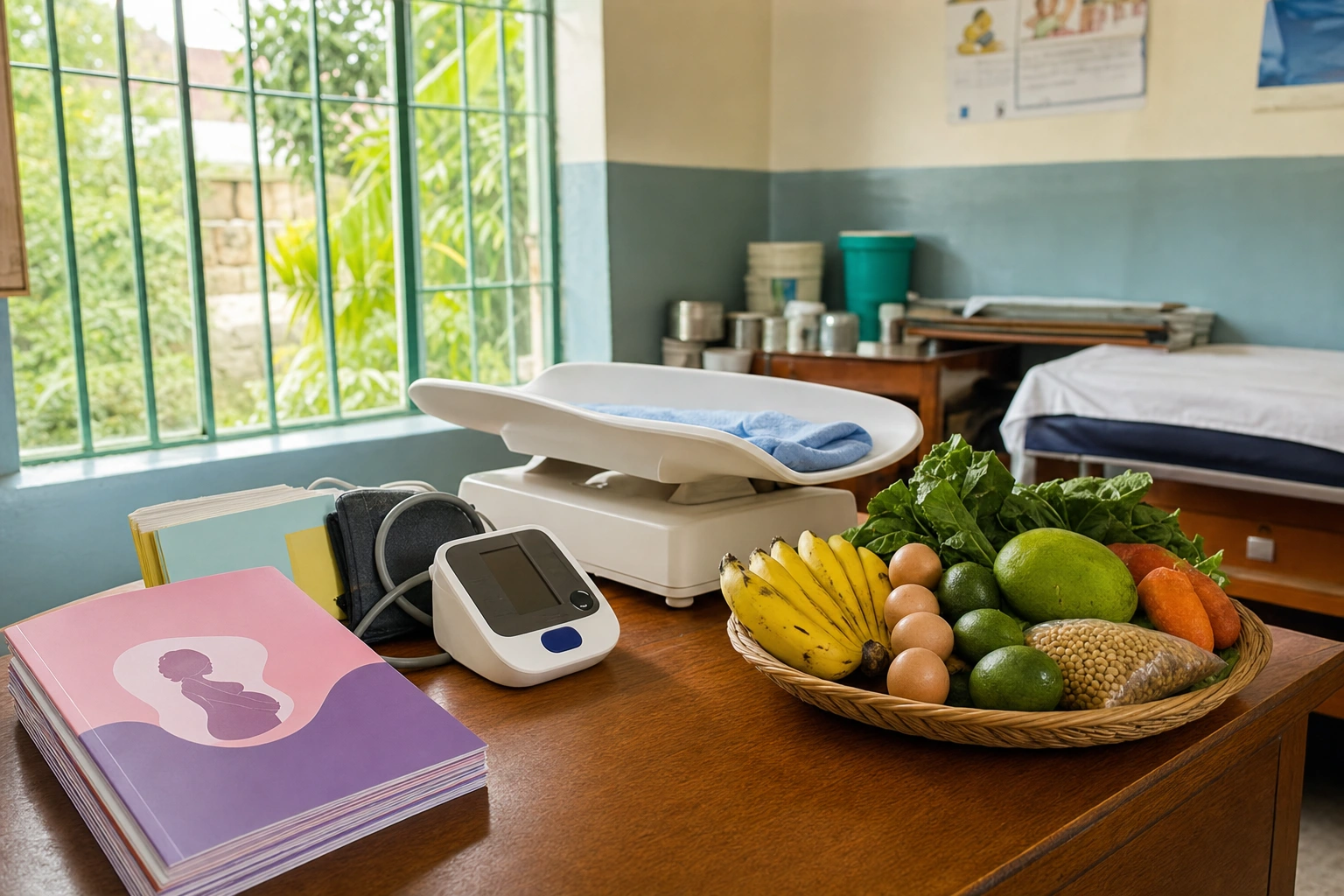
Maternal and child health at community level concerns the health and wellbeing of women before, during and after pregnancy, as well as the survival, growth and development of newborns, infants and children. It is shaped not only by what happens in a clinic or hospital, but also by household knowledge, living conditions, social support, transport, nutrition, sanitation and the ability to recognise danger early.
A strong community approach connects families with trained health workers and formal health services. In Kenya and many other countries, community health workers, volunteers, traditional leaders, schools, local organisations and health facilities can help people prevent illness, seek care promptly and continue care after returning home. The goal is not to replace professional medical services, but to make those services easier to reach, understand and use.
What Maternal and Child Health Includes
Maternal and child health covers a continuous period rather than a single clinic visit. It begins with the health of women and girls before pregnancy, continues through pregnancy and childbirth, and extends through the postnatal period, infancy and childhood. Each stage affects the next.
- Before pregnancy: women and adolescents may benefit from information about nutrition, healthy relationships, family planning, prevention of infections and management of existing health conditions.
- During pregnancy: antenatal care helps monitor the health of the mother and baby, identify risks, provide preventive services and prepare for birth and emergencies.
- During childbirth: skilled care and a safe, clean environment help manage normal birth and respond to complications.
- After childbirth: the mother needs physical and emotional support, while the newborn needs warmth, feeding support, examination and protection from infection.
- During childhood: children need immunisation, adequate nutrition, treatment for illness, protection from harm and support for healthy development.
These stages are connected. For example, a mother who is anaemic, undernourished or living with an untreated condition may need additional support during pregnancy. A newborn who has difficulty feeding may become weak or dehydrated unless the family receives prompt help. Community-based care helps identify such needs early.
Why the Community Matters
Families usually notice the first changes in a pregnancy, newborn or child. They decide when to seek care, arrange transport, provide food and medicine, and continue treatment at home. This makes everyday knowledge and practical support important parts of health protection.
Community health workers can strengthen the link between households and facilities by sharing accurate information, encouraging antenatal and postnatal attendance, supporting immunisation follow-up, identifying danger signs and helping families understand referrals. Their responsibilities vary by country and programme, so they should work within their training and refer cases that require clinical assessment.
Community leaders and local groups can also influence whether families feel safe and respected when seeking care. They may help organise emergency transport plans, promote birth preparedness, reduce harmful stigma and encourage families to support pregnant women and caregivers. Faith-based groups, schools and workplaces can contribute by sharing reliable information and making practical support available.
Supporting a Healthy Pregnancy
Pregnancy should be registered with a qualified health provider as early as possible. Antenatal care is more than a routine check-up. It provides opportunities to assess the mother and baby, discuss nutrition and symptoms, offer recommended preventive care, identify complications and make a plan for delivery and emergencies.
At community level, useful support includes helping a pregnant woman to:
- Attend appointments according to the schedule advised by her health provider.
- Take prescribed medicines or supplements correctly and discuss side effects rather than stopping them without advice.
- Eat a varied diet when possible, including locally available sources of energy, protein, fruits and vegetables.
- Avoid alcohol, tobacco and non-prescribed drugs, and seek advice about any medicine before using it.
- Sleep and rest adequately, while following professional advice about activity and work.
- Discuss where to give birth, how to reach the facility and who can provide support during an emergency.
- Seek help for emotional distress, violence, severe stress or lack of safety at home.
Community education should avoid blaming women for circumstances they cannot control. Poverty, distance, disability, lack of transport, household responsibilities and discrimination can all affect access to care. Practical assistance, such as accompaniment, childcare or transport planning, may be more useful than information alone.
Recognising Maternal Danger Signs
Some pregnancy, childbirth and postnatal problems require urgent assessment. Families and community workers should know the warning signs and act quickly rather than waiting for a routine appointment. These can include heavy bleeding, severe abdominal pain, severe headache or problems with vision, difficulty breathing, convulsions, fainting, high fever, sudden swelling, severe weakness or a reduction in the baby’s movements when movement had previously been felt.
During labour, prolonged or difficult labour, heavy bleeding, convulsions, loss of consciousness or severe pain should be treated as emergencies. After birth, urgent help is needed for heavy bleeding, fever, worsening pain, breathing difficulty, severe headache, confusion, extreme sadness or thoughts of self-harm.
The exact response depends on the situation and local services, but the basic principle is consistent: contact an appropriate health facility or emergency service immediately, arrange safe transport and do not leave a seriously ill person alone. Community workers should not attempt procedures outside their training or delay referral while trying home remedies.
Safe Childbirth and the First Hours After Birth
Every birth should have access to a skilled health professional and a clean environment. Birth preparedness can include identifying the preferred facility, saving emergency contact details, planning transport, knowing the location of the nearest referral facility and arranging a trusted companion. Plans should allow for changes, because complications can arise even when pregnancy has appeared normal.
Immediately after birth, the newborn should be kept warm, observed and supported to begin feeding as advised by a qualified provider. Clean cord care, handwashing and protection from unnecessary handling help reduce infection risk. The mother should also be assessed for bleeding, pain, blood pressure concerns and other complications.
Families should not apply substances to the cord or give a newborn medicines, water or other feeds unless advised by a qualified health professional. If breastfeeding is difficult, support should be sought promptly from a skilled health worker. A baby who is unable to feed, is unusually sleepy or floppy, has breathing difficulty, develops fever or feels unusually cold needs urgent assessment.
Postnatal Care for Mothers and Newborns
The weeks after birth are a period of major physical and emotional change. Postnatal care allows health workers to check recovery, feeding, blood pressure, infection risk, contraception options and the baby’s condition. It also provides an opportunity to discuss sleep, household support, safety and mental wellbeing.
Community follow-up can help families remember appointments and notice changes between visits. A postnatal conversation should be private and respectful. Mothers may be reluctant to report pain, sadness, abuse or feeding difficulties if they expect criticism. Listening carefully and offering referral is often the first step towards effective care.
Persistent sadness, loss of interest, severe anxiety, confusion or thoughts of harming oneself or the baby require professional attention. Emotional and mental health concerns are health concerns, not a sign of personal failure. If there is immediate danger, the person should not be left alone and urgent help should be sought.
Protecting Children Through Prevention
Child health at community level involves preventing illness as well as treating it. Families should use the immunisation schedule provided by their local health service and keep the child’s health record safe. If a dose is missed, caregivers should ask a health worker what to do rather than assuming that vaccination must be abandoned.
Good nutrition supports growth, learning and resistance to illness. Infants should receive feeding guidance appropriate to their age from qualified health workers. As children grow, they need safe, diverse foods and clean drinking water where available. Caregivers should watch for poor weight gain, persistent diarrhoea, feeding difficulty, swelling, unusual tiredness or developmental concerns, and seek assessment when these occur.
Handwashing with soap or an appropriate alternative, safe preparation and storage of food, use of sanitation facilities and protection from mosquito bites where relevant can reduce common risks. Children also need a safe environment, supervision, protection from violence and opportunities to play, communicate and learn. Development is not measured only by physical growth; language, movement, social interaction and emotional wellbeing matter too.
Childhood Illness and Timely Referral
Young children can become seriously ill quickly. Community-level guidance should therefore focus on recognising changes and seeking care early, not on diagnosing every illness at home. A child who has difficulty breathing, cannot drink or breastfeed, vomits repeatedly, has convulsions, is unusually sleepy or difficult to wake, has severe dehydration, persistent high fever or a rapidly worsening condition needs urgent medical assessment.
For diarrhoea, caregivers should follow advice from a health professional about oral rehydration and feeding. They should continue appropriate feeding and seek help if the child cannot drink, becomes weak, passes very little urine or shows other danger signs. Antibiotics and other medicines should not be shared or used without professional advice, because the cause and correct treatment vary.
Referral works best when it is specific. The person making the referral should explain where the family should go, how urgently they should travel, what information to carry and what signs require immediate action. A referral is not complete until the family has reached appropriate care or a responsible service has confirmed the next step.
Making Community Health More Equitable
Not every family has the same ability to use health services. A community programme should consider distance, cost, language, disability, age, gender, insecurity, migration and social exclusion. Information should be understandable and available through channels people actually use, including face-to-face communication, local meetings, schools, radio or mobile messages where appropriate.
Respectful care is central. Women, adolescents and caregivers should be able to ask questions, receive information about their options and be treated with dignity. Confidentiality matters, especially when discussing pregnancy, contraception, HIV, mental health, violence or family circumstances. Community health workers should avoid spreading private information and should understand when a safeguarding or professional referral is required.
Applying This in Practice
A household or community group can turn general knowledge into a simple action plan:
- Map available services: identify the nearest dispensary, health centre, hospital, maternity service and emergency contact.
- Prepare for pregnancy and birth: record appointment dates, plan transport, identify a support person and keep important health information together.
- Learn the danger signs: discuss maternal and newborn warning signs with family members, not only with the pregnant woman.
- Maintain child health records: keep immunisation and clinic information safe and take it to every visit.
- Review the home environment: check water, sanitation, food storage, sleeping arrangements, mosquito protection and hazards that could injure a child.
- Agree on referral steps: decide who will make calls, accompany the patient, care for other children and provide transport if an emergency occurs.
- Follow up: after a referral or clinic visit, confirm that instructions are understood and that medicines, review appointments or additional support are available.
Community health improves when prevention, early recognition, respectful communication and reliable referral operate together. Families need clear information, but they also need services that are reachable and responsive. Health workers, local leaders and households each have a role in creating that connection.
Key Takeaways
- Maternal and child health extends from before pregnancy through pregnancy, childbirth, postnatal care and childhood development.
- Community health workers and local networks connect families with professional services; they should refer conditions beyond their training.
- Birth preparedness, antenatal care and knowledge of danger signs can reduce delays in seeking urgent help.
- Newborns need warmth, feeding support, clean care and prompt assessment when they cannot feed or show unusual behaviour or breathing problems.
- Immunisation, nutrition, hygiene, sanitation, safety and developmental support are all part of child health.
- Respect, privacy, inclusion and practical support are essential for families to use health services effectively.
No comments yet.