
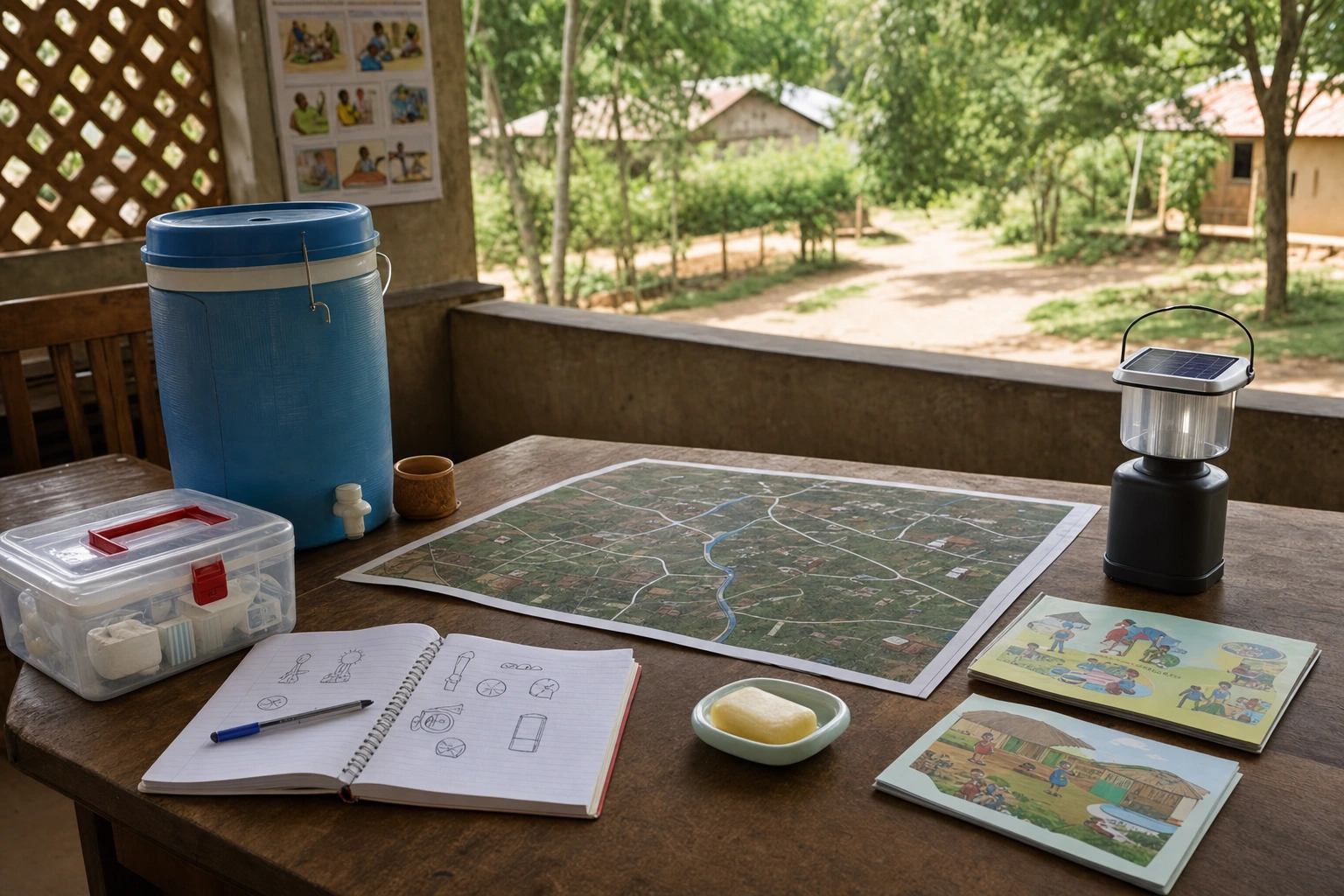
A healthy community is more than a place with clinics and hospitals. It is a community where people can obtain reliable health information, access appropriate care, live in safe environments and take part in decisions that affect their wellbeing. Health is shaped by daily conditions such as housing, food, water, work, education, transport, social relationships and safety.
Community health brings these influences together. It focuses on prevention and collective action, while recognising that residents often understand local problems better than outside organisations. When communities develop the knowledge, relationships and systems needed to manage health risks, they become more resilient: better able to prepare for difficulties, respond to emergencies and recover without leaving vulnerable people behind.
What Community Health Means
Community health is the organised effort to protect and improve the health of people who share a place, identity, institution or set of circumstances. The community might be a rural village, an informal settlement, a neighbourhood, a school, a workplace or a group connected through culture or faith.
Unlike an approach that treats one patient at a time, community health looks for patterns and shared causes. For example, a health facility may treat children with repeated stomach illnesses, while a community health approach asks whether unsafe water, poor sanitation, food handling or limited health information is contributing to the problem.
This does not make individual medical care less important. Instead, it connects treatment with prevention. A person with diabetes may need clinical care, but the wider community can also support access to healthier food, safe places for physical activity, screening and practical education.
Why Healthier Communities Are More Resilient
Resilience is the capacity to withstand pressure, adapt to change and recover from disruption. Communities may face infectious disease outbreaks, floods, drought, food insecurity, economic hardship, displacement, violence or interruptions to essential services. Resilience does not mean that a community avoids every crisis. It means that the community has the relationships, knowledge and resources to reduce harm and respond effectively.
Several qualities strengthen community resilience:
- Trust: People are more likely to follow useful health guidance when they trust those communicating it.
- Local knowledge: Residents can identify risks, barriers and practical solutions that may be missed by external planners.
- Inclusive participation: Women, men, young people, older adults, people with disabilities and marginalised groups have meaningful opportunities to contribute.
- Connected services: Health facilities, schools, local government, businesses, civil society groups and community leaders coordinate rather than working in isolation.
- Preparedness: The community knows how to identify warning signs, share accurate information and connect people with help.
Resilience should not be used as an excuse to place responsibility on communities without providing resources. People can organise and support one another, but safe infrastructure, trained workers, medicines and responsive public services remain essential.
Start With Local Needs and Evidence
Effective community health work begins with listening and assessment. Before designing a programme, ask what health concerns residents experience, who is most affected, what support already exists and which barriers prevent people from using services.
Useful sources of information include community meetings, household discussions, health-facility records, school observations, local environmental assessments and conversations with groups that are often overlooked. Information should be handled respectfully, protecting privacy and avoiding blame.
A practical assessment can examine five questions:
- What are the most important health problems or risks?
- Which people face the greatest difficulty or harm?
- What social, environmental or economic conditions contribute to the problem?
- What strengths, skills, facilities and relationships can support a solution?
- How will the community know whether conditions are improving?
For example, residents in a Kenyan settlement may report that mothers delay seeking care because transport costs are high, opening hours are inconvenient or they fear being treated disrespectfully. A response focused only on health education would miss these barriers. More useful action might combine clear information with referral support, respectful service improvement, community dialogue and arrangements for urgent transport.
Build Participation, Not Just Attendance
Participation is stronger than inviting people to a meeting after decisions have already been made. It means involving community members in identifying priorities, designing activities, implementing solutions and reviewing results.
Participation can take different forms. Residents may map unsafe areas, help develop health messages, join clean-up activities, support peer groups or advise a health facility on service experience. Local leaders can help coordinate, but they should not be the only voices heard. A meeting attended mainly by officials may produce a plan that does not reflect everyday realities.
Good participation requires practical arrangements. Choose accessible meeting times and locations, use language that people understand, provide reasonable support for people with disabilities and create safe ways for quieter participants to contribute. When decisions are made, explain what was agreed, what could not be done and why. This transparency protects trust.
Prioritise Prevention and Health Promotion
Prevention reduces avoidable illness and helps people act before a problem becomes severe. It may include immunisation, screening, hand hygiene, safe food preparation, sexual and reproductive health education, injury prevention, oral health, physical activity and support for healthy mental wellbeing.
Health promotion is not simply telling people to make better choices. People’s choices are influenced by what is affordable, available, safe and socially acceptable. Advice about nutritious food has limited value if households cannot obtain it regularly. Encouraging exercise is difficult when roads are unsafe or there is no accessible public space.
Strong prevention combines information with supportive conditions. A school can teach handwashing while also ensuring that water and soap are available. A workplace can provide health education while improving ventilation, protective equipment and rest arrangements. A community can discuss malaria prevention while addressing standing water, sleeping arrangements and timely access to testing and treatment, according to local health guidance.
Strengthen the Everyday Health System
Community health depends on the everyday systems people use before, during and after illness. These include households, community health workers, pharmacies, clinics, schools, social services, transport networks and trusted communication channels.
Community health workers can play an important linking role by sharing health information, identifying concerns, supporting referrals and following up with households. Their work is most effective when roles are clear, training is appropriate, supervision is available and they can refer people to functioning services. Volunteers should not be expected to replace qualified clinical care.
Referral systems also deserve attention. A person may recognise the need for care but still fail to receive it because they do not know where to go, cannot afford transport, lack documentation, fear stigma or encounter a service that is unavailable. Mapping services, displaying accurate information and establishing clear referral pathways can reduce these gaps.
Communication must be two-way. Health institutions should not only distribute messages; they should listen to concerns, correct misinformation respectfully and explain uncertainty when evidence is still developing. In emergencies, timely and honest communication is especially important.
Protect Mental and Social Wellbeing
Community health includes emotional, psychological and social wellbeing. Stress caused by unemployment, illness, displacement, caregiving, discrimination or insecurity can affect sleep, relationships, work and physical health.
Support does not always begin in a specialist service. Safe peer groups, school support, faith-based care, social workers, community organisations and trained frontline workers may help people recognise distress and find appropriate assistance. These supports should respect confidentiality and avoid presenting ordinary hardship as a personal failure.
Communities also need clear pathways for urgent situations, including immediate danger, severe distress, violence or abuse. People responsible for community activities should know which local services can respond and how to make a referral safely. Confidentiality, consent and the protection of children and vulnerable adults must guide all such work.
Make Equity a Design Requirement
A programme can improve average health while widening gaps if it mainly benefits people who are already informed, mobile and financially secure. Equity means recognising different needs and reducing unfair barriers to care and prevention.
Consider who may be excluded by cost, distance, language, disability, gender, age, stigma, migration status, digital access or cultural expectations. Then adapt the approach. This might involve mobile services, community-language materials, accessible venues, flexible opening hours, confidential consultation spaces or targeted outreach.
Equity also requires disaggregated thinking. Instead of asking only whether a programme reached the community, ask which groups participated, who did not benefit and why. Feedback should be collected from people who experience the greatest obstacles, not only from those who are easiest to reach.
Prepare for Environmental and Public Health Risks
Environmental conditions can affect health every day and during crises. Flooding may contaminate water and disrupt transport. Drought can affect food availability and livelihoods. Poor waste management, air pollution, heat and unsafe buildings can increase health risks.
Local preparedness can include identifying safe water sources, protecting essential medicines, mapping vulnerable households, agreeing on communication channels and practising referral or evacuation procedures where appropriate. Schools, businesses and households can also review how they would continue essential activities during a disruption.
Preparedness plans should be realistic. A short, clearly assigned plan is more useful than a document nobody understands. It should state who communicates, who checks on people at greater risk, where information is verified, which services remain available and how concerns are reported. Plans should be reviewed after exercises or real events so that lessons become improvements.
Measure Progress and Learn
Evaluation helps a community distinguish activity from impact. Counting meetings or leaflets can show that something happened, but not necessarily that health improved. A balanced assessment may consider reach, participation, knowledge, behaviour, service experience and health outcomes.
Choose a small number of measures that relate directly to the objective. If the aim is earlier care-seeking, track whether people know warning signs, whether referrals are completed and whether reported delays change. If the aim is safer water, examine both household practices and the reliability of the water source.
Use feedback as a learning tool rather than as a way to punish individuals. If participation is low, ask whether the schedule, language, location or activity is unsuitable. If a referral system fails, examine the whole pathway instead of blaming the person who needed help. Adaptation is a central part of resilience.
Applying This in Practice
An entrepreneur, professional, community group or local institution can use the following sequence to develop a practical health initiative:
- Define the community: Identify the people, location or group involved and clarify whose needs are being considered.
- Listen before planning: Gather views from residents, service providers and groups facing particular barriers.
- Select one manageable priority: Choose a problem that matters, can be influenced and has a realistic starting point.
- Map causes and assets: Identify contributing conditions as well as existing skills, facilities, networks and trusted messengers.
- Co-design the response: Agree on activities, responsibilities, resources, safeguarding arrangements and a timetable.
- Test on a modest scale: Begin with a pilot or clearly defined area, then collect feedback from participants and non-participants.
- Review and adapt: Compare results with the original objective, share learning openly and improve the next stage.
For personal reflection, consider whether your current health initiative listens to the people most affected, addresses practical barriers and connects prevention with reliable services. Also ask what would happen if funding, transport, technology or a key volunteer became unavailable. The answers can reveal where resilience needs strengthening.
Key Takeaways
- Community health links individual care with the social, environmental and economic conditions that shape wellbeing.
- Resilient communities rely on trust, local knowledge, inclusive participation, connected services and practical preparedness.
- Begin with listening and evidence so that programmes respond to real priorities rather than assumptions.
- Prevention works best when health information is matched by safe, affordable and accessible conditions.
- Equity requires identifying and reducing barriers related to cost, distance, language, disability, stigma and exclusion.
- Measure meaningful change, learn from feedback and adapt activities as community needs develop.
No comments yet.