
Food portions and energy balance are central to understanding body weight, energy levels and everyday nutrition. Yet the subject is often reduced to a simple instruction: eat less or exercise more. In reality, the amount of energy your body uses varies between people and changes with age, body size, muscle mass, health, activity and lifestyle.
A useful approach is to understand how much food your body needs, what different foods contribute, and how portions fit into your normal routine. This does not require weighing every ingredient or avoiding favourite foods. It means learning to recognise balance, notice hunger and fullness, and make practical choices that support health over time.
What Is Energy Balance?
Energy balance describes the relationship between the energy obtained from food and drinks and the energy used by the body. Food energy is commonly measured in kilocalories, often shortened to calories. Your body uses energy for several purposes:
- Basic body functions: breathing, circulation, temperature regulation, brain activity and organ function.
- Movement: walking, household tasks, work, exercise and other physical activity.
- digestion and absorption: processing and using nutrients from food.
- Growth, repair and adaptation: particularly during childhood, pregnancy, recovery from illness or strength training.
When energy intake is broadly similar to energy use over time, body weight may remain relatively stable. When intake is consistently greater than expenditure, the body stores some of the surplus, which can lead to weight gain. When intake is consistently lower than expenditure, the body draws on stored energy, which can lead to weight loss. These changes are not perfectly predictable from day to day because body water, hormones, digestion and activity also affect weight.
Energy balance is therefore a pattern over time, not a judgement about one meal. A celebration meal, a skipped workout or a day of low appetite does not determine your health by itself.
Portion, Serving and Energy Density
The words portion and serving are sometimes used as if they mean the same thing, but they are different. A portion is the amount you choose to eat. A serving is a standard amount used on a food label, in a recipe or in dietary guidance. One portion may contain several servings.
For example, if a packet of biscuits contains multiple servings and you eat the whole packet, your portion is the entire packet even though the label may describe the energy and nutrients for one serving. Checking the number of servings helps you interpret labels more accurately.
Portion size is also different from energy density. Energy density refers to how much energy a food contains in relation to its weight or volume. Vegetables, fruit and broth-based dishes often have lower energy density because they contain water and fibre. Oils, fried snacks, sugary drinks and many highly processed foods can contain a great deal of energy in a small amount.
This explains why two plates of the same size can provide very different amounts of energy. A plate filled with vegetables, beans and a modest amount of whole-grain starch may be more filling for its energy content than a plate containing mostly fried food or large amounts of added fat.
Why Portion Needs Differ Between People
There is no single ideal portion that suits every adult. Someone who spends the day doing physically demanding work may need more food than someone with a sedentary routine. A larger body generally requires more energy for basic functions and movement, while muscle tissue also contributes to energy use.
Other factors influence needs, including:
- age and stage of life;
- height, body size and muscle mass;
- pregnancy or breastfeeding;
- illness, recovery and some medical conditions;
- medicines that affect appetite, metabolism or fluid balance;
- climate and physical working conditions; and
- the intensity, frequency and duration of activity.
For this reason, portion guidance should be treated as a starting point rather than a rigid prescription. A person with diabetes, kidney disease, an eating disorder, significant unintentional weight change or another health condition may need individual advice from a qualified health professional.
Building a Balanced Plate
A practical way to manage portions is to consider the structure of the whole plate rather than focusing only on calories. For many meals, aim to include several food groups:
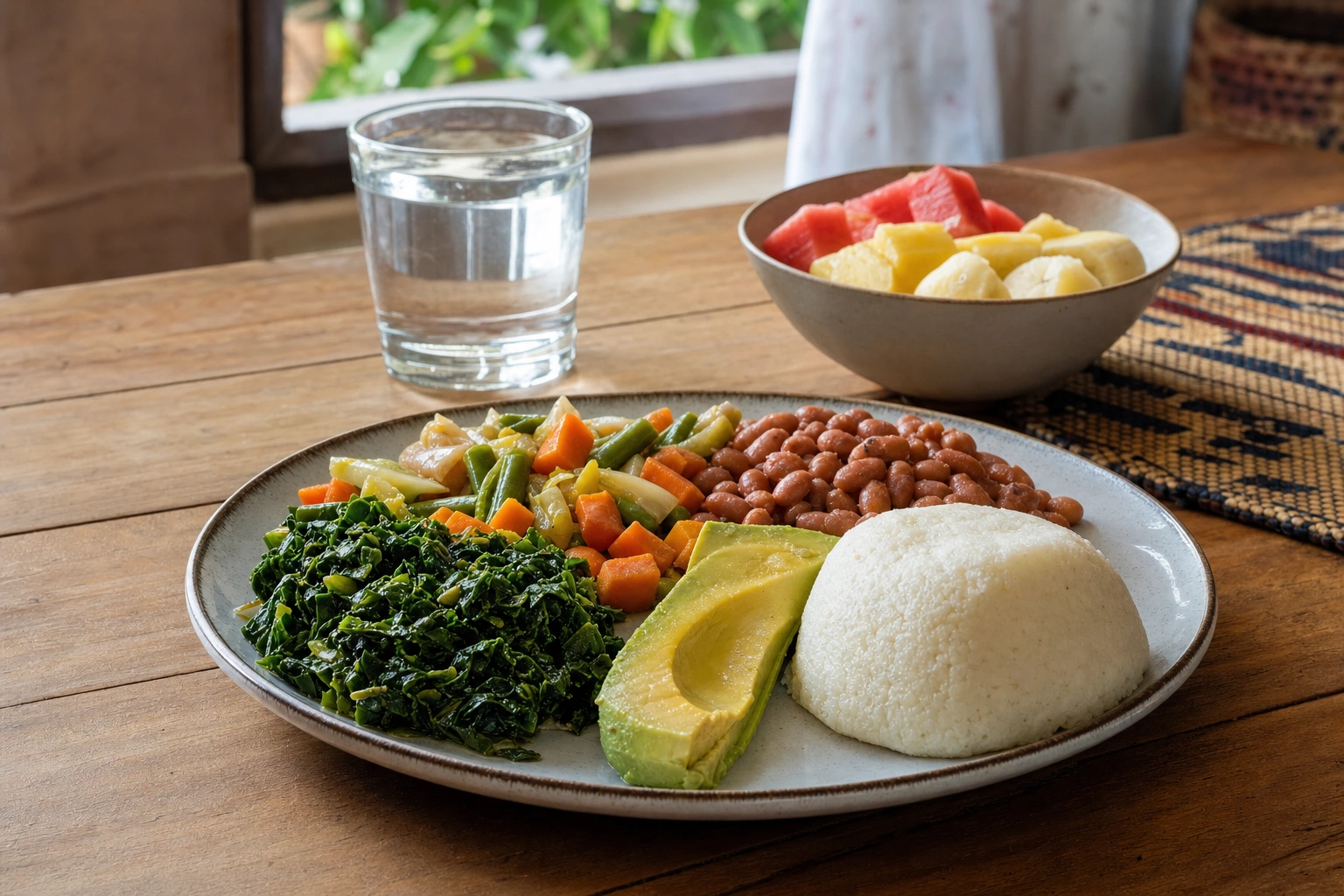
- Vegetables or salad: such as sukuma wiki, spinach, cabbage, carrots, tomatoes, onions, green beans or peppers.
- Protein-rich food: such as beans, lentils, peas, eggs, fish, chicken, yoghurt, milk, tofu or lean meat.
- Starchy or grain foods: such as ugali, rice, potatoes, sweet potatoes, arrowroots, chapati, oats or whole-grain bread.
- Healthy fats in modest amounts: such as avocado, nuts, seeds or vegetable oils.
This pattern supports variety and can improve fullness because vegetables, pulses and whole grains provide fibre, while protein helps make meals satisfying. The exact proportions can vary. A person doing manual work may require a larger starch portion, while another person may feel comfortable with more vegetables and a smaller starch portion.
Consider a lunch of ugali, sukuma wiki and beans. A balanced adjustment might involve keeping the beans as the main protein source, adding a generous amount of greens and choosing an amount of ugali that matches hunger and activity. The goal is not to label ugali as good or bad; it is to consider the whole meal and the amount eaten.
Simple Ways to Estimate Portions
Kitchen scales and measuring cups can be useful when learning, especially for recipes or packaged foods, but they are not essential for every meal. Hand-based estimates can provide a convenient guide:
- Protein foods: a palm-sized amount is a useful visual reference for many meals.
- Starchy foods: a cupped hand can help estimate a moderate portion of cooked rice, maize, pasta or potatoes.
- Vegetables: two open handfuls or a substantial part of the plate can be a practical target.
- Fats: a thumb-sized amount can help estimate oil, nut butter or similar concentrated foods.
These are not medical rules, and hand size differs between people. Their value is that they make portion awareness easier when eating at work, travelling or buying food from a café or local food vendor.
Serving food onto a plate rather than eating directly from a large packet can also make the amount easier to see. Smaller bowls may help some people, but the more important habit is to pause and decide how much to serve before eating automatically.
Hunger, Fullness and Eating Pace
Portion control is not only a mathematical exercise. Internal signals can also guide eating. Hunger may appear as an empty feeling, reduced concentration, low energy or a desire to eat. Fullness may develop gradually through reduced hunger, physical comfort and less interest in more food.
Eating quickly, working while eating or watching highly absorbing entertainment can make it harder to notice these signals. Try slowing down enough to taste the meal, placing cutlery down occasionally and checking whether you are still hungry before taking another serving. This is not about forcing yourself to stop eating while hungry. It is about creating a moment for a decision.
Appetite can also be affected by stress, poor sleep, illness, dehydration, medication and emotional experiences. If your eating feels out of control, causes distress or involves persistent restriction and guilt, seek support from a qualified health professional rather than relying on stricter rules.
Drinks and Hidden Energy
Drinks can contribute energy without creating the same sense of fullness as solid food. Sugary tea, soft drinks, sweetened juices, energy drinks and large flavoured coffees may be easy to consume quickly. Alcohol can also provide energy and may influence food choices.
Water is a practical everyday option. If you enjoy sweetened tea or juice, consider gradually reducing the sugar or serving a smaller amount. Whole fruit usually provides more fibre and requires more chewing than fruit juice, although it still contributes energy and belongs within the overall pattern of eating.
Be careful not to assume that every drink marketed as natural or healthy is low in energy. Read the ingredient list and nutrition information where available, and consider how often and how much you drink.
Portion Awareness When Eating Away from Home
Restaurants, cafés, workplace canteens and social events may serve larger portions than you would prepare at home. You can respond without avoiding shared meals. For example, choose one main starch rather than several large starch portions, add vegetables or salad where available, share a large dessert, or keep part of the meal for later if safe storage is possible.
At a nyama choma gathering, you might combine a moderate amount of meat with kachumbari, vegetables and a suitable starch portion. At a buffet, survey the options first instead of filling the plate immediately. At a street-food stall, notice whether frying oil, sauces or sugary drinks are included and make a deliberate choice about them.
Social eating is also part of a healthy life. Portion awareness should help you participate with greater control, not make you fearful of food or isolated from family and community.
Energy Balance and Physical Activity
Movement supports energy balance, but exercise should not be treated as punishment for eating. Regular activity benefits fitness, strength, mood, sleep and long-term health even when body weight does not change.
Choose activities that fit your life. Walking to work, climbing stairs, farming, cleaning, cycling, dancing, playing with children or following a structured exercise programme can all contribute to movement. If you sit for long periods, short activity breaks may be more realistic than relying on one demanding workout each week.
People often overestimate how much energy exercise uses and underestimate the energy in concentrated foods and drinks. This is one reason it is unhelpful to “earn” specific foods through exercise. Combine regular movement with balanced meals and realistic portions instead.
Making Changes Without Extreme Restriction
Extreme diets may promise rapid results but can be difficult to maintain and may encourage cycles of restriction and overeating. A more sustainable approach is to make one or two observable changes at a time.
- Observe your routine: for several days, note meal times, drinks, snacks, hunger, fullness and activity without trying to change everything.
- Identify one pressure point: this might be oversized evening portions, frequent sugary drinks, skipped breakfasts followed by overeating, or limited vegetables.
- Choose a specific adjustment: serve vegetables first, use a smaller amount of oil, add protein to breakfast, or replace one sugary drink with water.
- Make the change convenient: keep fruit visible, prepare beans in batches, carry water or portion snacks into a bowl.
- Review after a couple of weeks: consider hunger, energy, enjoyment, affordability and whether the habit fits your schedule.
For an entrepreneur or professional with irregular working hours, a planned combination of yoghurt and fruit, a bean-based meal, or a packed lunch may be more useful than a perfect diet that is impossible to follow during busy days.
Applying This in Practice
Use the following questions when planning or reviewing a meal:
- What is the main source of protein?
- How much of the plate contains vegetables or fruit?
- Is the starch portion appropriate for my hunger and activity today?
- Have oils, sauces, fried toppings or sweetened drinks increased the energy content substantially?
- Am I eating because I am hungry, or because of stress, habit, convenience or social pressure?
- What small adjustment would improve this meal without making it unrealistic?
For example, if dinner consists of a large serving of rice, fried chicken and a sugary drink, a practical adjustment could be to reduce the rice slightly, add vegetables, choose grilled or less heavily fried chicken when available, and drink water. If the meal is already balanced but hunger remains high after a physically demanding day, adding an appropriate serving of food may be reasonable. Portion awareness is about matching food to needs, not automatically eating less.
Key Takeaways
- Energy balance reflects food and drink energy compared with the energy your body uses over time.
- A portion is the amount you choose to eat; a serving is a standard amount used for guidance or labelling.
- Build meals around variety, including vegetables, protein foods, starches and modest amounts of healthy fats.
- Use visual guides, hunger and fullness cues, and deliberate serving habits instead of relying only on calorie counting.
- Pay attention to drinks, oils, sauces and fried foods because small volumes can contain substantial energy.
- Make gradual changes that fit your work, budget, culture, activity level and health needs.
No comments yet.