
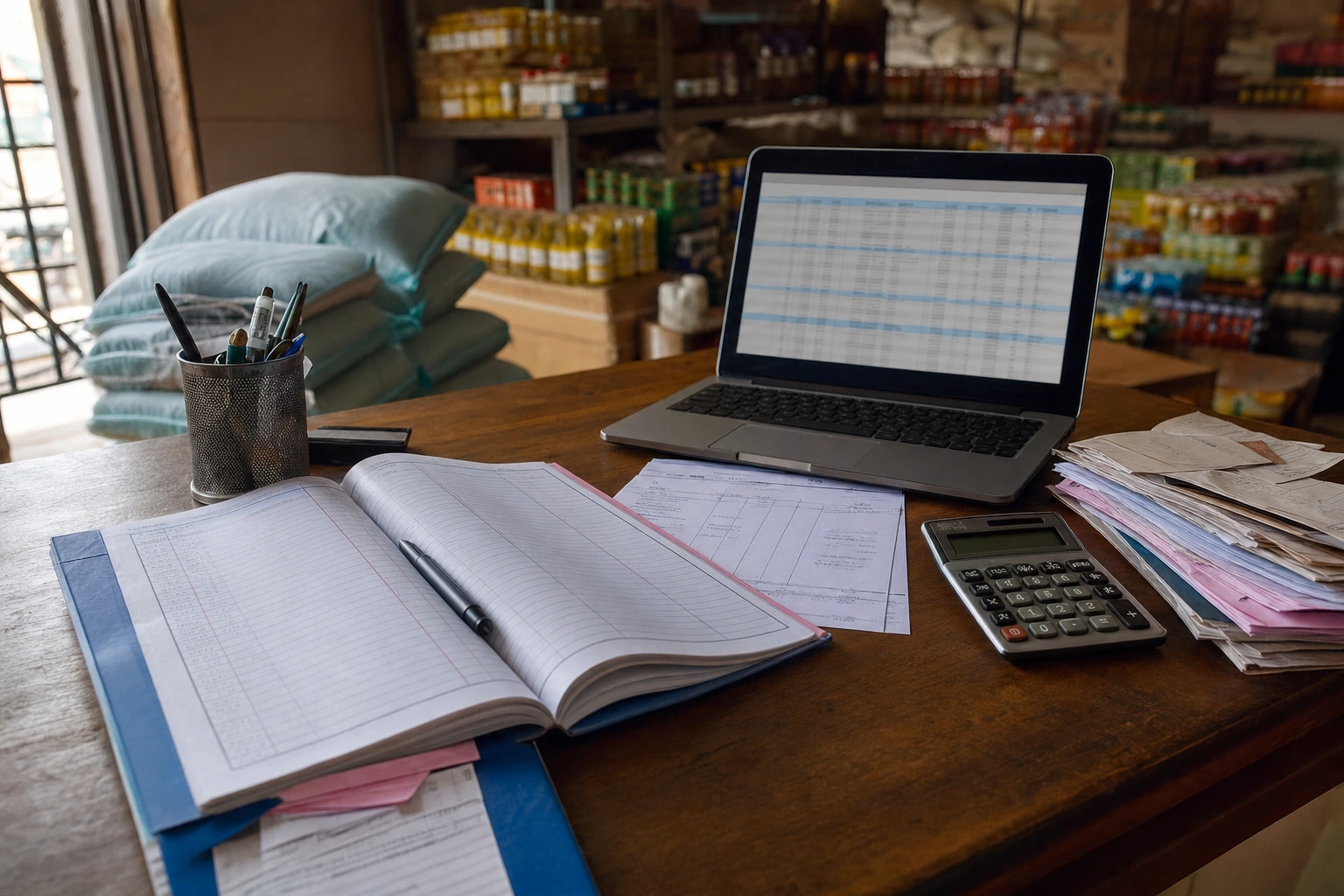
A business can make sales and still struggle to pay its bills. The reason is often timing: money owed by customers may not have been collected, while money owed to suppliers may already be due. Accounts receivable and accounts payable help a business track these two sides of its short-term financial activity.
Understanding them is important for business owners, managers, bookkeepers and professionals who approve purchases or follow up customer payments. These accounts affect cash flow, profit reporting, supplier relationships, credit decisions and the accuracy of financial statements.
What Are Accounts Receivable?
Accounts receivable, often shortened to AR, is money that customers owe a business for goods or services already supplied on credit. It is recorded as a current asset because the business expects to convert it into cash, normally within its operating cycle or within twelve months.
For example, a Nairobi-based wholesaler may deliver goods worth KSh 120,000 to a retail shop and give the shop 30 days to pay. The wholesaler has made a sale, but it has not yet received the cash. Until payment arrives, KSh 120,000 is recorded as accounts receivable.
Accounts receivable may arise from:
- Credit sales to business customers
- Professional services provided before invoicing or payment
- Subscription or contract work billed periodically
- Amounts due from customers after partial payments
- Approved claims or reimbursements that have not yet been received
AR is not the same as cash. A receivable represents a claim against a customer, and that claim carries a risk: the customer may pay late, dispute the invoice or fail to pay at all.
What Are Accounts Payable?
Accounts payable, often shortened to AP, is money that a business owes to suppliers or other creditors for goods or services already received. It is recorded as a current liability because the business has an obligation to settle it, normally within its operating cycle or within twelve months.
Suppose a restaurant buys food supplies worth KSh 45,000 from a supplier on 14-day credit. The restaurant receives and uses the supplies before paying for them. Until the payment is made, KSh 45,000 is recorded as accounts payable.
Accounts payable may include amounts owed for:
- Inventory and raw materials
- Office supplies and equipment
- Rent, utilities and maintenance services
- Professional services such as legal, accounting or consultancy work
- Transport, advertising and technology services
AP is different from all business expenses. An expense describes the cost recognised for accounting purposes, while accounts payable describes an unpaid obligation. Some expenses are paid immediately and never become payables. Likewise, a payable may relate to an asset purchase rather than an operating expense.
The Difference Between Accounts Receivable and Accounts Payable
The simplest distinction is that accounts receivable is money owed to the business, while accounts payable is money the business owes to others.
- AR is an asset: it is an expected inflow of cash.
- AP is a liability: it is an expected outflow of cash.
- AR comes mainly from credit sales: the business has delivered value but is waiting for payment.
- AP comes mainly from credit purchases: the business has received value but is waiting to pay.
- AR management focuses on collection: businesses want customers to pay accurately and on time.
- AP management focuses on settlement: businesses want to pay suppliers accurately, on time and in line with agreed terms.
These accounts are connected through cash flow. If a business collects receivables slowly but pays suppliers quickly, cash may become tight even when reported sales and profits appear healthy. If it delays supplier payments excessively, it may preserve cash temporarily but damage supplier trust or lose favourable credit terms.
How Accounts Receivable Is Recorded
When a business makes a credit sale, it normally records an increase in accounts receivable and recognises revenue, subject to the applicable accounting rules and the point at which the sale is earned.
A simplified entry is:
- Debit: Accounts receivable
- Credit: Sales revenue
When the customer pays:
- Debit: Cash or bank
- Credit: Accounts receivable
The payment does not create new revenue. It converts an existing receivable into cash. This distinction matters because counting both the invoice and the payment as new income would overstate sales.
If a customer returns goods, receives an approved credit note or qualifies for an adjustment, the receivable should be reduced appropriately. A business should also consider whether some balances may be uncollectable. An allowance or impairment approach may be needed so that receivables are not shown at an amount the business does not realistically expect to collect.
How Accounts Payable Is Recorded
When a business receives goods or services on credit, it records the relevant expense or asset and an increase in accounts payable.
A simplified entry for supplies purchased on credit is:
- Debit: Expense, inventory or the relevant asset account
- Credit: Accounts payable
When the supplier is paid:
- Debit: Accounts payable
- Credit: Cash or bank
As with receivables, paying an existing invoice does not create a new expense. It settles a liability that was recognised when the goods or services were received or the obligation was otherwise recorded.
Businesses should also record supplier credit notes, returns, discounts and disputed amounts. An invoice should not remain fully payable if part of the delivery was rejected or a pricing error has been confirmed.
The Accounts Receivable Process
Effective receivables management begins before a sale is made. A practical process includes the following steps:
- Set customer credit terms. Decide which customers may buy on credit, the maximum exposure allowed and the payment period. New or higher-risk customers may need deposits or payment before delivery.
- Confirm the order and customer details. Check the customer’s legal or trading name, contact information, delivery details and authorised purchasing contact.
- Issue an accurate invoice promptly. Include the invoice date, description, quantities, prices, taxes where applicable, payment due date and accepted payment methods.
- Monitor outstanding balances. Use an accounts receivable ledger and an ageing report to identify current, overdue and seriously overdue invoices.
- Follow up professionally. Send reminders before and after the due date. Ask whether the customer has received the invoice and whether there is a genuine dispute.
- Resolve disputes quickly. Missing documents, incorrect quantities or unclear delivery records can delay otherwise valid payments.
- Escalate and review credit. Repeated late payment may require revised terms, a credit limit, a deposit or suspension of further credit sales.
The Accounts Payable Process
A controlled payables process helps prevent duplicate payments, fraud, late fees and incorrect records. A typical process includes:
- Approve the purchase. Purchases should be authorised by someone with the appropriate responsibility and budget authority.
- Receive and verify the goods or service. Compare what arrived with the purchase order, delivery note or service agreement.
- Check the supplier invoice. Confirm the supplier, invoice number, quantities, prices, taxes, payment terms and bank details.
- Match supporting documents. Where appropriate, compare the purchase order, receipt or delivery evidence and invoice before approving payment.
- Record the liability promptly. Delaying the entry can make expenses and liabilities appear lower than they really are.
- Schedule payments responsibly. Pay by the agreed date, taking account of cash availability, early-payment discounts and the importance of the supplier relationship.
- Reconcile supplier statements. Compare the supplier’s records with the business ledger and investigate missing invoices, credits or unexplained balances.
Using Ageing Reports to Manage Risk
An ageing report groups receivables or payables according to how long they have been outstanding. Common categories include current, 1–30 days overdue, 31–60 days overdue, 61–90 days overdue and more than 90 days overdue. The exact categories can be adapted to the business’s payment terms.
For accounts receivable, ageing helps answer questions such as:
- Which customers owe the largest amounts?
- Which invoices are overdue?
- Are overdue balances concentrated in one customer, sector or branch?
- Should credit terms be changed?
For accounts payable, ageing helps a business see which supplier invoices are due soon, which are overdue and whether any old balance is actually a disputed or duplicated item. An old payable should not be ignored simply because cash is limited; it should be investigated and discussed with the supplier where necessary.
Cash Flow, Profit and Working Capital
Receivables and payables explain why profit and cash are not always the same. A business may report revenue when it makes a valid credit sale, even though the customer will pay later. It may also recognise a cost when goods or services are received, even though the supplier will be paid later.
Working capital management involves controlling short-term assets and liabilities so that the business can operate without unnecessary cash pressure. Faster collection of valid receivables generally improves available cash. Sensible payment scheduling can preserve cash, but it must not become a pattern of ignoring agreed obligations.
Two useful management measures are:
- Days sales outstanding (DSO): an estimate of the average number of days customers take to pay. A simplified formula is average accounts receivable divided by credit sales, multiplied by the number of days in the period.
- Days payable outstanding (DPO): an estimate of the average time the business takes to pay suppliers. The calculation should use appropriate supplier purchases or cost data for the period.
These measures are most useful when tracked over time and interpreted alongside payment terms, seasonality, industry practice and changes in customer behaviour. A lower DSO is not automatically better if it results from overly strict terms that reduce profitable sales. Similarly, a higher DPO may reflect negotiated terms, or it may signal overdue bills and supplier problems.
Controls That Improve Accuracy
Small and growing businesses can strengthen AR and AP without creating unnecessary bureaucracy. Useful controls include:
- Number invoices and retain copies of supporting documents.
- Separate the duties of ordering, receiving, approving and paying where practical.
- Restrict changes to customer and supplier bank details and verify significant changes independently.
- Reconcile bank accounts, customer ledgers and supplier statements regularly.
- Review unusual credit balances, old invoices, duplicate invoice numbers and round-number adjustments.
- Back up accounting records and control access to financial systems.
- Set a routine for reviewing overdue customers and upcoming supplier obligations.
Good controls are not only for large companies. A sole proprietor may use a spreadsheet, numbered folders and a weekly review. A larger organisation may use accounting software with approval workflows and user permissions. The principle is the same: each transaction should be supported, recorded once and reviewed by an appropriate person.
Applying This in Practice
Imagine a small catering business that invoices a corporate client KSh 80,000 for an event and receives ingredients worth KSh 35,000 from a supplier on seven-day credit. The client will pay in 30 days, but the supplier expects payment in seven days.
The catering business has recorded a receivable of KSh 80,000 and a payable of KSh 35,000. Its reported sale may look positive, but it must still plan for the seven-day cash requirement. Practical actions could include:
- Confirm that the client received the invoice and that no supporting document is missing.
- Check whether the client’s payment date is reliable or whether a deposit should have been required.
- Reserve enough cash to pay the supplier on time.
- Review other upcoming obligations, such as wages, transport and utilities.
- Follow up the client before the due date without waiting until cash is urgently needed.
This example shows why sales growth alone does not guarantee financial stability. A business needs both a reliable collection process and a realistic payment plan.
Key Takeaways
- Accounts receivable is money customers owe the business; accounts payable is money the business owes suppliers and other creditors.
- Receivables are short-term assets, while payables are short-term liabilities.
- Accurate invoices, clear credit terms and regular follow-up improve collections.
- Purchase approval, document matching and supplier reconciliation reduce payment errors.
- Ageing reports reveal overdue customer balances and upcoming or neglected supplier obligations.
- Profit does not always mean cash is available; the timing of collections and payments matters.
No comments yet.