
Evangelism is the communication of the Christian message with the aim of helping people encounter, understand and respond to Jesus Christ. Although individual believers have an important role, evangelism is not only a private activity. The local church provides a community, structure and visible witness through which the gospel can be shared and lived out.
A local church may be a congregation meeting in a city building, a rural fellowship, a house church, a campus ministry or a growing community of believers in an informal settlement. Whatever its size or setting, it can participate in evangelism by proclaiming the gospel, forming disciples, serving neighbours and demonstrating the character of Christ. Effective evangelism brings words and actions together without confusing social service with the message itself.
Understanding Evangelism in the Life of the Church
The word evangelism comes from a Greek term associated with announcing good news. In Christian use, it refers to sharing the good news of God’s work in Jesus Christ: his life, teaching, death and resurrection, and the call to repentance, faith and a transformed life. Christian traditions may express some theological details differently, but evangelism generally involves communicating the gospel clearly and inviting people to respond.
The local church has a distinctive role because it is more than a venue for religious events. It is a community that worships God, teaches Scripture, welcomes people, cares for those in need and equips believers for service. Through these activities, the church creates opportunities for people to hear the Christian message and observe how it shapes a community’s life.
Evangelism should therefore be understood as both proclamation and witness. Proclamation involves explaining the gospel in words. Witness includes the conduct, relationships and public presence that either support or undermine that explanation. A church that speaks about love while treating outsiders with contempt weakens its witness. A church that serves compassionately but never explains the faith behind its service may leave people unsure about the message it represents.
Why the Local Church Matters in Evangelism
It gives the gospel a visible community
Christianity is not presented only as a set of private ideas. It is also a way of life shared by a community. When visitors attend worship, join a small group or take part in a service project, they can encounter believers from different ages, occupations and backgrounds learning to live out their faith together.
This communal witness is especially important when the church demonstrates reconciliation, accountability and practical care. For example, a congregation in Kenya might bring together members from different ethnic communities, support families facing hardship and create a respectful space for young people and older adults. Such actions do not replace gospel proclamation, but they can make the church’s message more credible and understandable.
It equips believers
Many Christians want to share their faith but feel unprepared. They may worry about answering difficult questions, speaking to people from another religion or discussing faith without sounding aggressive. The local church can respond by teaching believers how to explain the gospel, listen carefully, understand their context and speak with humility.
Training should cover more than memorising a presentation. Believers need to learn how to identify genuine questions, distinguish between curiosity and hostility, avoid misleading claims and respect a person’s freedom. They should also understand that evangelism is a process. One conversation may open a door, while another person may need time, friendship and further discussion before making a decision.
It provides ongoing care and discipleship
Evangelism is not complete when someone attends a church service or makes a profession of faith. New believers need teaching, relationships, pastoral care and opportunities to grow. The local church can help them understand Christian beliefs, develop spiritual practices, participate in worship and serve others.
This continuing support also protects evangelism from becoming a numbers exercise. The goal is not simply to record decisions or increase attendance. It is to help people become mature followers of Christ who can themselves encourage, serve and teach others.
Key Ways a Local Church Participates in Evangelism
1. Worship and public proclamation
Worship gatherings can introduce visitors to Christian teaching, prayer, music, confession, thanksgiving and fellowship. Preaching and teaching have a central place because they explain the biblical message and connect it with human life. Clear communication matters: sermons should avoid unnecessary jargon and address the real questions people are asking about guilt, hope, suffering, purpose, forgiveness and community.
Public worship should also be welcoming without becoming misleading. A church may use local languages, familiar musical forms or culturally appropriate examples, provided that these forms serve the message rather than obscure it. A visitor should be able to understand what is happening, why it matters and how to seek further guidance.
2. Personal witness among members
Most evangelistic conversations happen outside formal services. Church members speak with relatives, colleagues, neighbours, classmates, customers and friends. Their daily relationships can create opportunities for honest conversations about faith.
Personal witness is strongest when it combines a clear account of the gospel with a truthful account of how faith shapes the speaker’s life. A believer might explain how Christian hope influences their response to bereavement, how prayer has become part of their decision-making or how their understanding of forgiveness has affected a damaged relationship. Personal experience should not be presented as a guarantee that every person will receive the same outcome. It is a testimony, not a substitute for careful teaching.
Good witness also begins with listening. Someone facing unemployment, family conflict or illness may need to be heard before they are ready to discuss religious beliefs. Listening does not mean avoiding the gospel; it means understanding the person well enough to respond appropriately and compassionately.
3. Small groups and relational evangelism
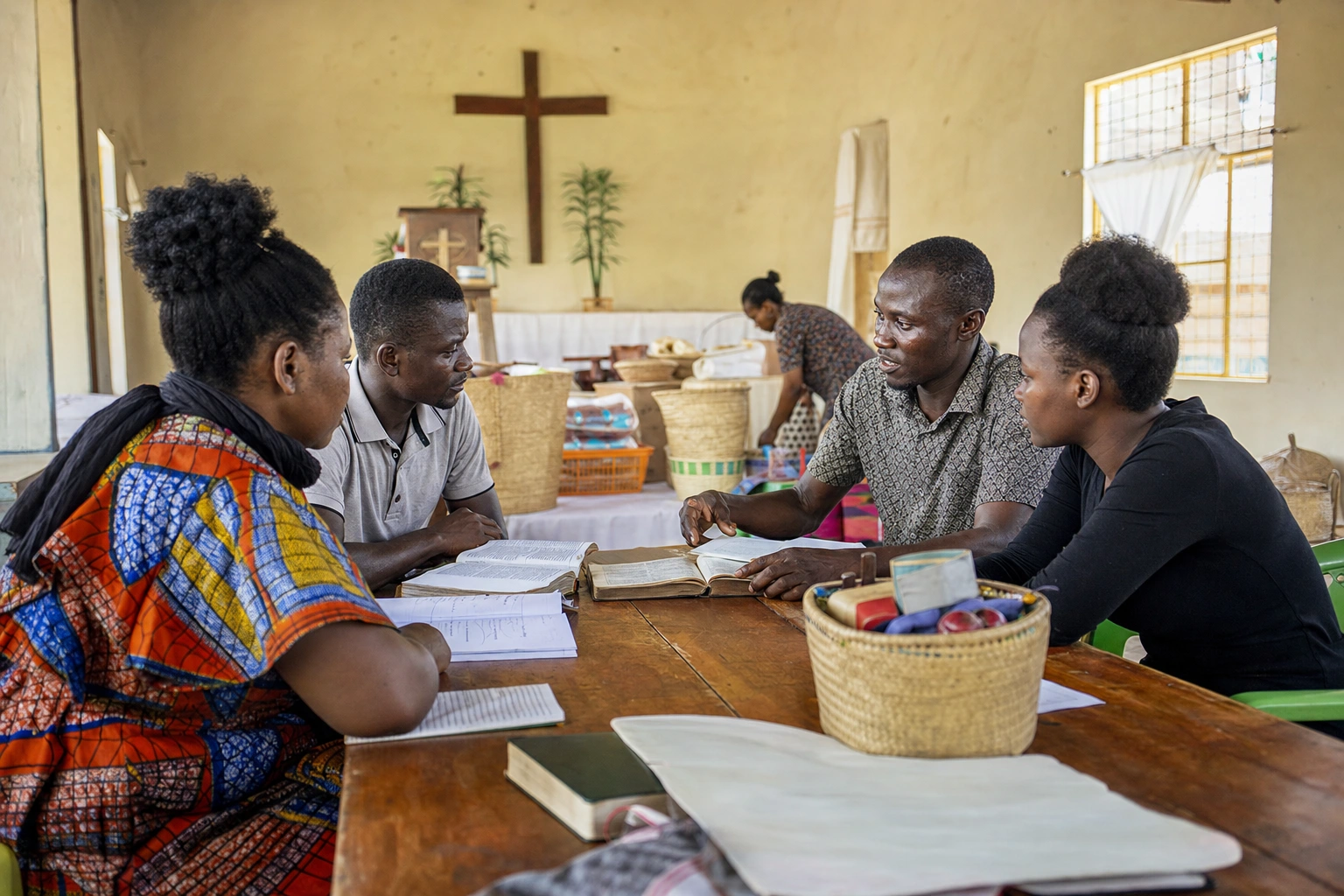
Large gatherings can be helpful, but smaller groups often provide a safer environment for questions. Bible study groups, youth fellowships, women’s and men’s groups, workplace fellowships and home gatherings can welcome people who are curious about Christianity but uncomfortable in a large service.
In a small group, participants can ask questions such as: Why do Christians believe Jesus rose from the dead? How does Christianity address injustice? Why do Christians disagree with one another? What does repentance mean? Leaders should not shame honest questions. They can acknowledge uncertainty where appropriate, consult reliable sources and return to difficult topics rather than offering careless answers.
4. Compassionate service
Jesus’ ministry included teaching, healing, welcome and practical care. Churches therefore participate in evangelism when they respond to real needs in their communities. Examples include visiting people in hospital, supporting vulnerable households, mentoring young people, offering literacy classes, helping during floods or droughts, and providing counselling or referral services where trained professionals are available.
Service must be offered with dignity. The church should not make food, school support or emergency assistance conditional on attending a service or making a religious commitment. Such pressure can damage trust and misrepresent Christian compassion. The church may explain why it serves, invite people to voluntary conversations and offer opportunities to explore the faith, but assistance should not be used as a bargaining tool.
5. Community presence and public engagement
A local church can engage its surrounding community through public discussions, family events, youth activities, educational programmes and partnerships that address shared concerns. In an urban neighbourhood, the congregation might host a discussion on ethical business practices or peaceful conflict resolution. In a rural area, it might support agricultural training, environmental care or community health education, working within its competence and cooperating with appropriate services.
Public engagement requires wisdom. Evangelism should not be confused with political campaigning, ethnic mobilisation or the pursuit of institutional power. Churches can speak about justice and human dignity while treating people with different political views, religions and backgrounds fairly.
Communicating the Gospel Faithfully
A useful evangelistic explanation should answer several basic questions. First, what is the human problem? Christian teaching describes sin as humanity’s rebellion against God and the brokenness that affects personal lives, relationships and societies. Second, what has God done? The gospel proclaims God’s initiative of reconciliation through Jesus Christ. Third, what response is invited? People are called to turn towards God, trust in Christ and begin a new life of discipleship. Fourth, what does belonging to Christ involve? It includes relationship with God and participation in a community shaped by worship, love, holiness and service.
The way this message is explained should suit the listener’s background. A university student may ask about evidence and reason. An entrepreneur may ask how faith relates to integrity, wealth and responsibility. A parent may be concerned about family pressure or the future of their children. A person from another religious tradition may want to understand Christian beliefs without being insulted or misrepresented. The core message remains Christian, but examples and explanations should be clear, respectful and relevant.
Churches should avoid manipulation. Fear, public embarrassment, exaggerated promises and claims of guaranteed financial or physical benefits can produce outward responses without genuine understanding. Evangelism should invite a considered response rather than force one. People should be free to ask questions, decline an invitation and continue a conversation later.
Common Challenges Facing Local Churches
Internal division
Conflict over leadership, finances, worship styles or social issues can consume a congregation’s energy. Disagreement is not always avoidable, but churches can model reconciliation through honest communication, fair processes and appropriate accountability. A divided church may still speak about the gospel, but unresolved hostility can confuse observers and discourage participation.
Cultural and generational differences
A congregation may include older members who prefer familiar forms of worship and younger members who communicate through digital platforms and different cultural expressions. Evangelism becomes stronger when the church recognises these differences without treating one group as spiritually superior. Shared leadership, intergenerational activities and careful translation can help more people participate.
Digital communication
Online sermons, social media, messaging groups and video discussions can extend a church’s reach beyond its building. They can help people who are travelling, housebound or hesitant to attend publicly. However, digital evangelism requires the same standards as face-to-face ministry: accuracy, respect, privacy and responsible moderation. Online popularity should not be mistaken for spiritual fruitfulness.
Limited resources
Evangelism does not depend entirely on expensive equipment or large programmes. A small congregation can offer attentive relationships, clear teaching, prayer, hospitality and practical service. At the same time, limited resources should encourage planning rather than careless promises. Churches should focus on needs they can address competently and work with other community organisations when specialised assistance is required.
Applying This in Practice
A local church can develop a simple evangelism plan by following these steps:
- Listen to the community. Identify the questions, pressures and opportunities present among neighbours, families, workers, students and local institutions. Do not assume that every community has the same needs.
- Clarify the message. Agree on a biblically faithful explanation of the gospel that members can communicate in ordinary language.
- Equip the congregation. Provide training in listening, testimony, cross-cultural communication, responding to questions and safeguarding vulnerable people.
- Create natural points of contact. Use worship, small groups, visits, educational activities, service projects and personal relationships rather than relying on a single annual event.
- Practise hospitality. Make visitors feel safe and respected. Explain unfamiliar activities, provide opportunities for questions and avoid pressuring people to disclose personal information publicly.
- Follow up responsibly. Offer further conversations, Bible study, pastoral support and connection with a healthy Christian community. Respect people who are not ready to continue.
- Review the fruit. Ask whether the church is communicating clearly, treating people with dignity, serving genuine needs and helping new believers grow. Attendance figures alone cannot answer these questions.
For example, a congregation near a technical college might combine a weekly discussion group with mentoring, career conversations and a short Bible study. Its members could invite students personally, listen to their concerns and explain the Christian faith without assuming that every student shares the same background. Over time, the church would assess not only attendance but also the quality of relationships, the clarity of teaching and the wellbeing of participants.
Key Takeaways
- The local church supports evangelism through both clear gospel proclamation and a credible community life.
- Worship, personal relationships, small groups, compassionate service and public engagement provide complementary opportunities for evangelism.
- Listening carefully helps Christians respond to people’s real questions without compromising the central Christian message.
- Evangelism should respect human dignity and freedom; practical assistance should not be used to pressure people into religious commitment.
- Follow-up and discipleship are essential because evangelism involves helping people grow, not merely recording decisions.
- A church can evaluate its evangelistic ministry by considering clarity, integrity, relationships, service and spiritual growth rather than attendance alone.
No comments yet.