
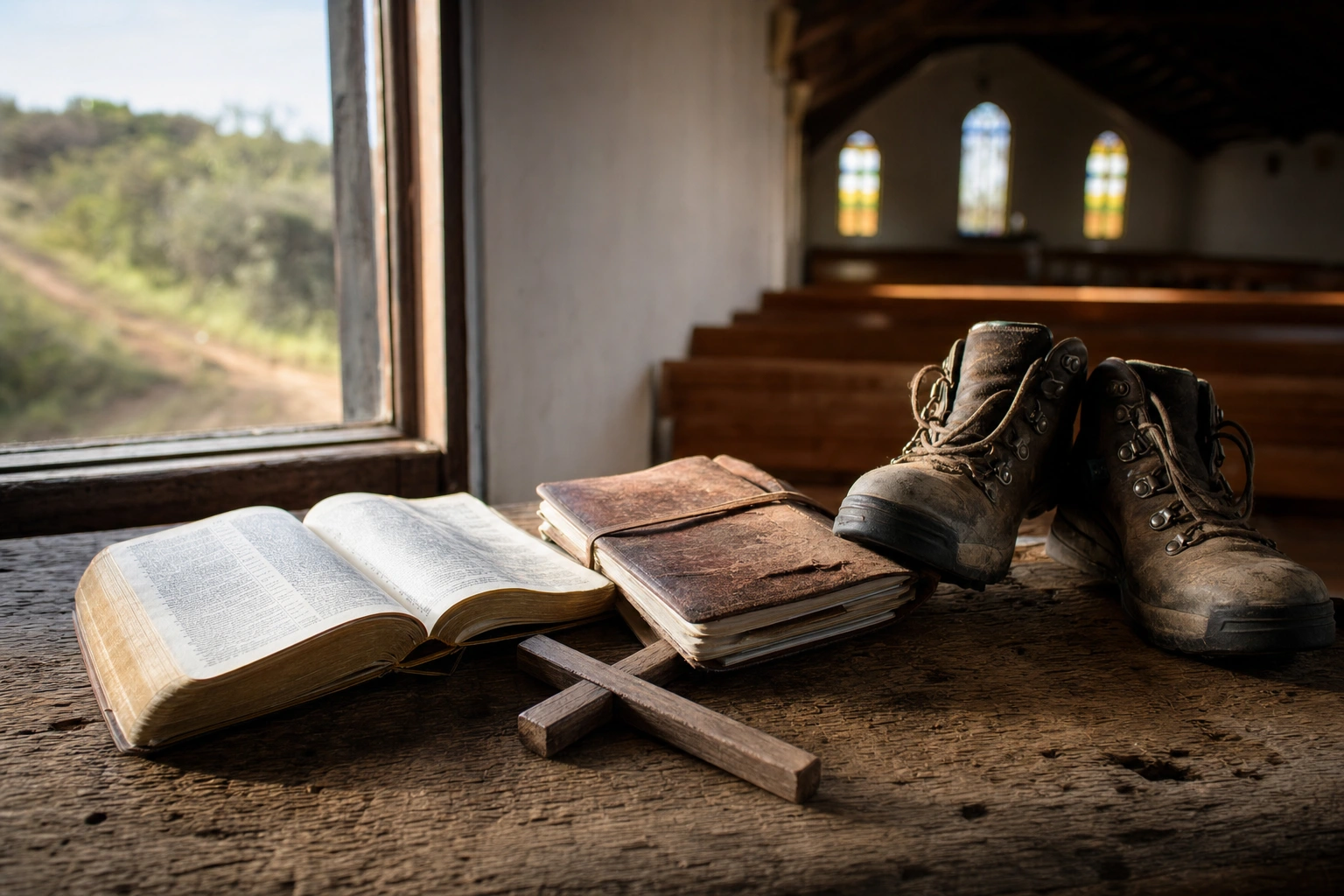
Christian discipleship is the lifelong process of following Jesus Christ. It involves learning from him, trusting him, obeying his teaching, becoming more like him and helping others grow in the same faith. Discipleship is therefore more than attending church services or agreeing with Christian beliefs. It is a way of life shaped by a relationship with Christ.
The word disciple describes a learner or follower. In the ancient world, a disciple did not simply collect information from a teacher. The disciple adopted the teacher’s way of life. In Christianity, discipleship means allowing Jesus’ words, character and mission to influence one’s choices, relationships, work, use of money and response to society. It begins with God’s grace and continues through daily practice, community and service.
What Does Christian Discipleship Mean?
At its simplest, Christian discipleship means following Jesus. In the Gospels, Jesus called people to leave their old patterns and learn a new way of life. His invitation, “Follow me,” involved trust, movement and commitment. Those who followed him listened to his teaching, watched how he treated people, served others and gradually took part in his mission.
Christian discipleship has several connected meanings:
- Learning from Jesus: Disciples study Scripture and seek to understand Jesus’ teaching, priorities and example.
- Belonging to Jesus: Disciples place their identity and hope in Christ rather than treating Christianity as a collection of ideas.
- Becoming like Jesus: Disciples grow in qualities such as love, humility, truthfulness, compassion, courage and self-control.
- Living under Jesus’ authority: Disciples allow Christian faith to guide decisions, even when obedience is inconvenient.
- Participating in Jesus’ mission: Disciples bear witness to the gospel, serve neighbours and contribute to the good of their communities.
These dimensions belong together. Learning without obedience can become merely academic. Activity without spiritual depth can become performance. Personal devotion without love for others can become isolated religion. Mature discipleship joins belief, character and action.
Discipleship in the New Testament
The New Testament presents discipleship as central to Christian identity. Jesus called ordinary people, including fishermen, a tax collector and others from different backgrounds. They were not selected because they already understood everything. They learned gradually, often misunderstood Jesus and sometimes failed. Their story shows that discipleship is a process of formation rather than instant perfection.
In Matthew 4:19, Jesus tells Simon Peter and Andrew that he will make them “fishers of people”. This call contains both relationship and purpose. They are invited to follow Jesus personally, but they are also prepared to participate in his work among others.
Jesus later commands his followers to make disciples of all nations, baptising them and teaching them to obey everything he commanded in Matthew 28:19–20. This is sometimes called the Great Commission. It shows that Christian discipleship is both received and shared. Christians are disciples themselves, and they are also called to help other people become disciples.
Luke 9:23 adds an important dimension: those who follow Jesus are called to deny themselves, take up their cross daily and follow him. This does not mean seeking suffering for its own sake. It means placing faithfulness to Christ above self-centred ambition and accepting that obedience may involve sacrifice, rejection or difficult choices.
Discipleship and Conversion
Conversion and discipleship are closely related but are not identical. Conversion refers to turning towards God through faith in Jesus Christ. It includes repentance, which means turning away from sin and reorientating one’s life towards God. Discipleship describes the continuing journey that follows: learning, growing, obeying and serving.
A person may describe a particular moment when they first believed in Christ, but Christian growth continues throughout life. A new believer may need help understanding prayer, Scripture, Christian community and ethical decisions. A mature Christian also remains a learner because no one reaches a point at which there is nothing more to understand or practise.
This distinction helps avoid two common misunderstandings. First, Christianity is not reduced to a single emotional experience with no continuing change. Secondly, discipleship is not a way of earning God’s love. Christian teaching generally understands discipleship as a response to God’s grace, not a payment for salvation. Christians obey and serve because they have received God’s mercy, not because they can purchase it through good behaviour.
The Main Areas of Christian Discipleship
1. Knowing God through Scripture
Scripture is a primary source for Christian discipleship. Reading the Bible involves more than collecting quotations or searching for quick answers. Disciples learn to read passages in context, consider the type of writing, understand the original audience and ask how the teaching relates to life today.
A useful approach is to read a short passage slowly and ask four questions: What does this passage say? What does it reveal about God or human beings? What response does it invite? How might that response be practised this week? Different Christian traditions use different study methods, but careful reading, prayer and responsible interpretation are widely valued.
2. Prayer and dependence on God
Prayer expresses relationship with God. It may include praise, confession, thanksgiving, lament, requests and listening. Jesus taught his followers to pray with trust and sincerity rather than using prayer to impress other people.
Regular prayer does not require elaborate language. A professional may pray before making an ethical decision; a parent may pray for patience; a student may ask for wisdom; a small business owner may bring financial fears and responsibilities to God. Prayer helps disciples acknowledge that they are accountable to God and dependent on more than their own ability.
3. Character and holiness
Discipleship changes character. The New Testament describes the fruit of the Spirit as including love, joy, peace, patience, kindness, goodness, faithfulness, gentleness and self-control in Galatians 5:22–23. These qualities are not merely private emotions. They affect how people speak, lead, negotiate, handle conflict and treat those with less power.
For example, honesty in business is part of discipleship. So is refusing to exploit an employee, admitting an error to a client, paying workers fairly and resisting corruption. In professional life, Christian integrity is tested not only by major decisions but also by routine choices such as accurate reporting, responsible use of time and respect for confidentiality.
4. Community and mutual growth
Christian discipleship is not designed to be lived alone. The early Christian community described in Acts 2 shared teaching, fellowship, meals and prayer. Churches and small groups can provide encouragement, correction, teaching and practical care.
Community also exposes weaknesses that private spirituality may hide. A person may consider themselves patient until they must work with someone who disagrees with them. Another may speak about generosity but struggle when asked to share resources. Healthy Christian community creates space for honest growth while avoiding humiliation, manipulation or unquestioned control.
Different churches organise discipleship in different ways, including Bible study groups, mentoring, catechism, youth ministries, service teams and one-to-one conversations. The structure matters less than whether it helps people understand Christian truth, develop character and practise love.
5. Service and mission
Jesus connected discipleship with service. He taught that greatness is expressed through serving rather than dominating. Christian mission includes sharing the message of the gospel, but it also includes practical love for neighbours and concern for human dignity.
In an African context, discipleship may be expressed through caring for vulnerable households, supporting education, visiting the sick, strengthening honest enterprises, protecting children and helping communities respond to poverty or conflict. Such service should respect the dignity and agency of the people involved. Christian service is not a reason to control or shame others, nor should it be presented as a transaction requiring religious conformity in exchange for assistance.
The Cost and Joy of Following Jesus
Christian discipleship contains both cost and joy. Jesus did not promise that following him would always be comfortable. Disciples may have to surrender resentment, dishonest income, destructive relationships, status or habits that conflict with Christian teaching. They may experience misunderstanding when they refuse practices considered normal in their workplace or social circle.
The cost of discipleship should not be confused with harmful religious pressure. Christian leaders should not use the language of sacrifice to justify abuse, exploitation, forced giving or the surrender of wise boundaries. Following Jesus includes truth, love and care for the vulnerable. It is compatible with seeking help, reporting wrongdoing and protecting personal safety.
At the same time, discipleship is not only a list of restrictions. It brings the joy of knowing God, belonging to a community, receiving forgiveness, discovering purpose and participating in acts of love. Christian freedom is not simply the freedom to do whatever one wants. It is also freedom to become the kind of person who can love God and neighbour more fully.
Common Misunderstandings About Discipleship
Discipleship is not perfect performance
Disciples can fail, doubt and need correction. Peter’s denial of Jesus and the repeated misunderstandings of the disciples show that growth can include setbacks. Failure should lead to repentance and restoration, not despair or the pretence that no problem exists.
Discipleship is not only church attendance
Gathered worship is important in many Christian traditions, but discipleship extends into homes, workplaces, schools, farms, online spaces and public life. A person’s treatment of customers, relatives, colleagues and strangers is part of their Christian witness.
Discipleship is not only private spirituality
Personal prayer and Bible reading matter, but Christian faith also has social consequences. Jesus’ command to love one’s neighbour challenges prejudice, exploitation, indifference and abuse of power. Discipleship asks how faith affects the way communities handle justice, poverty, reconciliation and responsibility.
Discipleship is not identical in every tradition
Roman Catholic, Orthodox, Anglican, Protestant and African Independent or instituted churches may emphasise different practices, structures and forms of teaching. Some highlight sacraments, others small groups, evangelism, spiritual gifts, theological instruction or social action. Despite these differences, the central idea remains following Jesus and being formed by his teaching.
Applying This in Practice
A person who wants to grow as a disciple can begin with a realistic pattern rather than an unrealistic promise of instant change. The following process can be adapted to different Christian traditions and stages of life:
- Identify one area for growth. Choose a specific issue such as truthfulness, forgiveness, patience, prayer or responsible money management.
- Study relevant biblical teaching. Read a small number of passages carefully and discuss difficult questions with a trusted, mature Christian or recognised teacher.
- Turn learning into a concrete action. For example, apologise to someone, correct inaccurate information, create a regular prayer time or set aside resources to serve a genuine need.
- Invite accountable support. Ask a trusted person to encourage you and provide honest feedback. Accountability should be respectful, confidential and free from coercion.
- Review the results. Notice where you acted faithfully, where you struggled and what circumstances made obedience easier or harder.
- Continue patiently. Character develops through repeated choices, repentance and dependence on God. Sustainable growth is usually built through ordinary practices over time.
Questions for personal or group reflection include: What does following Jesus require from me in my current responsibilities? Which Christian teaching do I understand but fail to practise? How do my financial and professional decisions affect other people? Where do I need forgiveness, correction or support? How can my church community help people grow without creating unhealthy dependence on leaders?
Key Takeaways
- Christian discipleship is the lifelong process of following Jesus, learning from him and becoming more like him.
- Discipleship joins belief with obedience, character, community and service.
- Conversion begins a Christian journey; discipleship describes the continuing growth that follows.
- Prayer and careful engagement with Scripture help disciples depend on God and make faithful choices.
- Christian growth affects everyday conduct, including work, money, relationships, leadership and treatment of vulnerable people.
- Discipleship involves sacrifice, but it must never be used to justify abuse, exploitation or coercive control.
- Healthy discipleship helps Christians grow personally while also participating in Jesus’ mission to serve others.
No comments yet.