
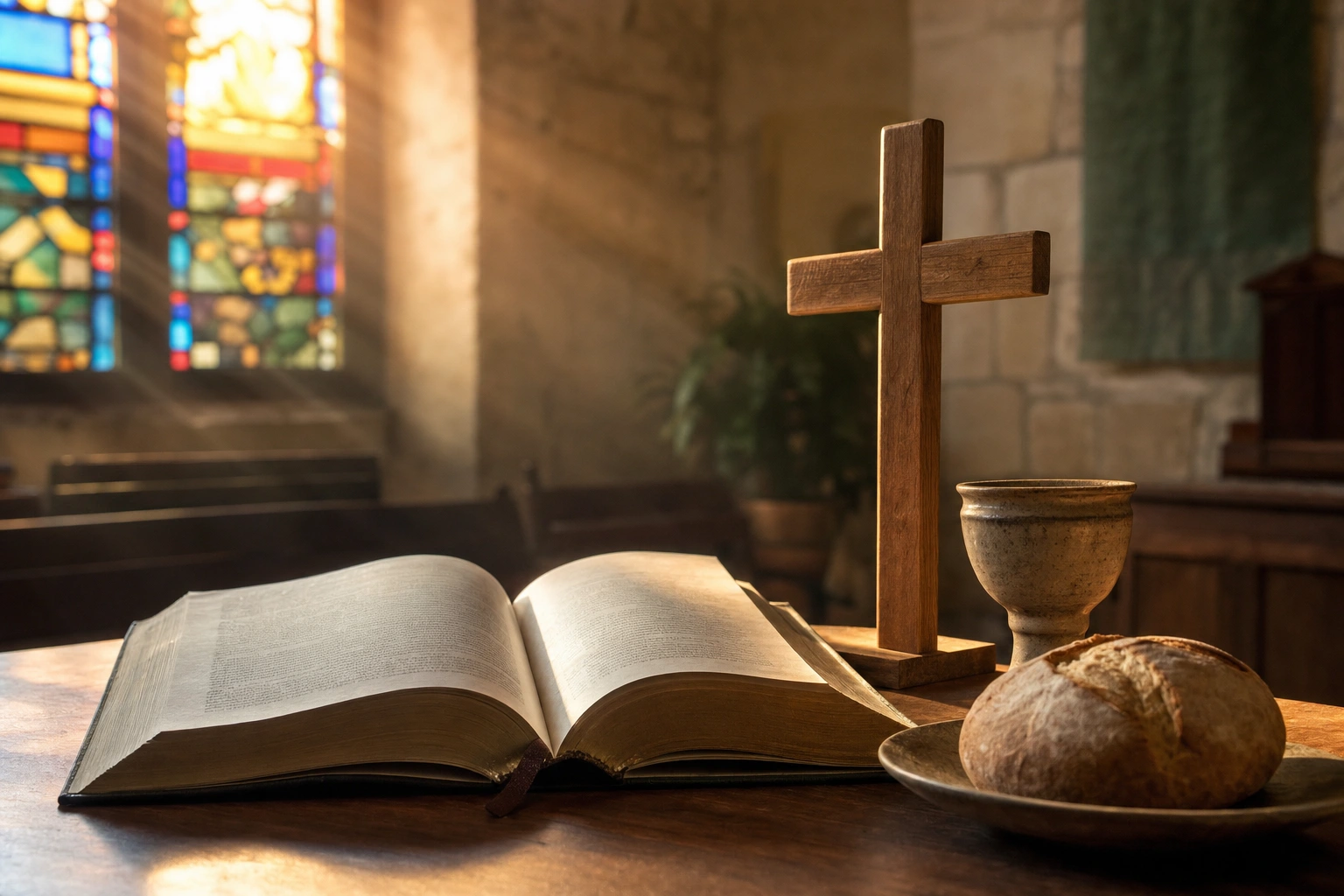
Christianity is a diverse global religion centred on the life, teaching, death and resurrection of Jesus Christ. Christians worship one God and understand Jesus as the Son of God and the Saviour of humanity. Although Christian communities differ in worship style, organisation and interpretation, they share a group of central beliefs rooted in the Bible and expressed in historic statements of faith such as the Apostles’ Creed and the Nicene Creed.
Studying these beliefs requires both clarity and care. Christianity includes Roman Catholic, Eastern Orthodox, Anglican, Protestant, Pentecostal, Evangelical and many other traditions. These groups do not agree on every doctrine or practice. Nevertheless, several convictions provide a common framework for understanding Christian identity, worship and moral life.
Belief in One God
At the heart of Christianity is monotheism: the belief that there is one God, the creator and sustainer of all things. God is understood as eternal, holy, loving, wise and just. Christian belief is not that the universe is divine or that there are many competing gods. Rather, God is distinct from creation while remaining actively involved in it.
The Bible presents God as personal rather than as an impersonal force. Christians therefore believe that people can know God, respond to God in worship and prayer, and live in relationship with God. God’s character is often described through qualities such as mercy, faithfulness, righteousness and compassion. These qualities shape Christian ideas about how human beings should treat one another.
The Trinity
Most Christians understand the one God through the doctrine of the Trinity. The Trinity teaches that God is one being in three persons: the Father, the Son and the Holy Spirit. This does not mean that Christianity teaches three gods. It means that the one God exists eternally as three distinct persons who share the same divine nature.
The doctrine developed as early Christians reflected on three strands of biblical teaching: the oneness of God, the relationship between Jesus and God, and the work of the Holy Spirit. The term Trinity does not appear as a formal word in the Bible, but the doctrine became an important way of expressing these beliefs. Christians commonly speak of the Father as creator, the Son as redeemer and the Holy Spirit as the presence of God at work in the world, while recognising that all three persons act together.
The Trinity is considered a mystery, meaning that it cannot be reduced to a simple comparison. Popular illustrations, such as water appearing as ice, liquid and vapour, can be misleading because they may suggest that God is one person who merely changes form. A better approach is to recognise that the doctrine makes a claim about God’s identity without pretending that human language can explain God completely.
Jesus Christ: Incarnation and Lordship
Jesus Christ is central to Christianity. Christians believe that Jesus was a real historical person who lived in first-century Palestine, taught about God’s kingdom, healed and welcomed people, challenged religious hypocrisy, and called his followers to love God and their neighbours.
The word Christ is not Jesus’ surname. It comes from a Greek word meaning “anointed one” and corresponds to the Hebrew idea of the Messiah. Christians believe that Jesus is the promised Messiah and that he is uniquely united with God. The doctrine of the incarnation states that the eternal Son of God became human in Jesus. In traditional Christian teaching, Jesus is fully divine and fully human.
This belief has several implications. Jesus is seen as revealing God’s character in a human life. His compassion, teaching and self-giving love are therefore not merely examples of good behaviour; they are signs of who God is. At the same time, Christianity takes Jesus’ humanity seriously. He experienced hunger, tiredness, grief, pain and death. Christians believe that God entered human history rather than remaining distant from human suffering.
The Death and Resurrection of Jesus
Jesus’ crucifixion is one of the central events of Christian faith. According to the New Testament, Jesus was executed by crucifixion under Roman authority. Christians interpret his death in several connected ways. It is understood as an act of obedience and love, a sacrifice for sin, a victory over the powers of evil, and a demonstration of God’s willingness to share in human suffering.
Christian traditions use different language to explain how Jesus’ death brings salvation. Some emphasise that Jesus bears the consequences of sin on behalf of humanity. Others stress that the cross defeats death and evil or reveals the depth of divine love. These explanations should not be treated as completely separate in every tradition; many Christians draw on more than one of them.
Christians believe that Jesus rose from the dead on the third day. The resurrection is not simply the survival of Jesus’ teaching or the idea that his followers continued to remember him. It is understood as God’s decisive act of raising Jesus bodily from death. For Christians, the resurrection confirms Jesus’ identity, demonstrates God’s power over death and provides the foundation for Christian hope.
The resurrection also shapes Christian practice. Easter is the principal Christian festival because it celebrates Jesus’ resurrection. Christian worship, preaching and mission are closely connected to the belief that death does not have the final word and that God is bringing renewal to creation.
Humanity, Sin and the Need for Salvation
Christianity teaches that human beings are created in the image of God. This gives every person inherent worth and provides a basis for respecting human life, seeking justice and caring for vulnerable people. Human beings are also understood as capable of reason, creativity, love, responsibility and moral choice.
At the same time, Christianity recognises that individuals and societies are marked by sin. Sin is more than breaking a list of rules. It refers to attitudes and actions that turn people away from God and damage relationships with other people and the created world. Examples include pride, dishonesty, exploitation, hatred, violence, greed and indifference to suffering. Christian teaching also recognises that injustice can become embedded in social systems and institutions, not only in private choices.
The Christian understanding of salvation addresses this broken relationship with God and its consequences. Salvation may be described as forgiveness of sins, reconciliation with God, liberation from evil, healing of human life and the hope of eternal life. Christians generally believe that salvation is a gift of God’s grace rather than something people can earn by good deeds alone.
Faith and works are related but are understood differently across Christian traditions. Many Christians teach that people receive God’s grace through faith, while genuine faith produces a transformed life expressed through love, justice and service. Good works are therefore not a way of purchasing salvation; they are a response to God’s grace and evidence of a living faith.
Grace, Faith and Repentance
Grace refers to God’s generous and undeserved favour. It is central to Christian ideas about forgiveness and salvation. Christians believe that God takes the initiative in restoring humanity and that no person can claim to be morally self-sufficient before God.
Faith involves trust in God and commitment to Jesus Christ. It is more than agreeing that certain statements are true. In Christian teaching, faith includes reliance, loyalty and a willingness to shape one’s life around Christ’s teaching.
Repentance means turning away from sin and turning towards God. It includes recognising wrongdoing, seeking forgiveness and making changes where possible. Repentance may be personal, but it can also involve communities acknowledging harm and pursuing reconciliation. For example, a Christian who has dealt dishonestly in business may need not only to pray for forgiveness but also to correct records, repay what is owed and rebuild trust.
The Bible and Christian Authority
The Bible is the foundational collection of sacred writings for Christianity. It contains the Old Testament, which shares much of its content with the Hebrew Bible, and the New Testament, which includes the four Gospels, the history of the early Church, letters and apocalyptic writings. Christians read these texts as bearing witness to God’s relationship with humanity and to the life and work of Jesus.
Christians differ in how they understand biblical authority and interpretation. Some emphasise the Bible as the highest written authority for doctrine. Others read Scripture together with Church tradition and the teaching authority of the Church. All major traditions recognise that the Bible contains different literary forms, including poetry, narrative, law, wisdom literature, prophecy, letters and symbolic visions.
Responsible interpretation considers a passage’s historical setting, literary genre, audience and relationship to the wider biblical story. A proverb, a poem and a historical narrative should not automatically be read in exactly the same way. Christians also debate questions about translation, gender, war, wealth, sexuality, politics and social justice. These debates show why reading the Bible requires knowledge, humility and attention to context rather than isolated quotations.
The Church as a Community of Faith
The Church is not only a building or an organisation. In Christian usage, it refers to the community of people who follow Jesus Christ. The Church gathers for worship, teaching, prayer, fellowship and service. It also passes on Christian beliefs from one generation to another.
Christians understand the Church in both local and universal terms. A local congregation may meet in a cathedral, a village church, a school hall, a home or another shared space. The universal Church refers to the worldwide community of believers, including Christians from different cultures, languages and historical traditions.
The Church is expected to serve its members and the wider society. Its work may include education, care for the sick, support for people facing poverty, advocacy for justice, counselling and reconciliation. In Kenya and other African contexts, churches often function as important community spaces for worship, education, family support and public discussion. Their influence can be constructive when it is expressed through service, accountability and respect for the dignity of all people.
Worship, Prayer and Sacraments
Christian worship commonly includes prayer, singing, Scripture reading, preaching, confession, thanksgiving and acts of service. Worship may be highly formal, with set prayers and a liturgical calendar, or less formal, with spontaneous prayer, contemporary music and extended preaching. These differences do not necessarily indicate different levels of commitment; they reflect the variety of Christian traditions and cultures.
Prayer is communication with God. It may involve praise, confession, thanksgiving, requests for help and silent reflection. Christians may pray alone or with others, using written prayers or their own words. The Lord’s Prayer, taught by Jesus in the Gospels, is one of the best-known Christian prayers.
Baptism and the Lord’s Supper, also called Holy Communion or the Eucharist, are recognised as sacraments or ordinances by Christian communities. Baptism uses water and represents entry into the Christian community, cleansing from sin and participation in the death and resurrection of Christ. Churches differ on whether infants, professing believers or both should be baptised.
The Lord’s Supper recalls Jesus’ final meal with his disciples and his death. Christians share bread and wine, or bread and a non-alcoholic alternative, as signs connected with Christ’s body and blood. Traditions differ on whether Christ is understood to be present symbolically, spiritually or in a distinctive sacramental way. These differences are important, but the practice is broadly associated with remembrance, communion and thanksgiving.
Christian Ethics and the Life of Discipleship
Christian ethics begins with love for God and love for one’s neighbour. Jesus’ teaching in the Gospels emphasises mercy, truthfulness, forgiveness, humility, faithfulness and concern for people who are neglected or excluded. The Sermon on the Mount is especially important for Christian reflection on anger, generosity, prayer, non-retaliation and care for the poor.
Following Jesus is often described as discipleship. It involves developing habits that shape character, such as prayer, honesty, self-control, generosity, service and participation in a community of faith. Christian ethics is therefore not limited to private morality. It may also address business conduct, leadership, family responsibilities, environmental care, treatment of migrants, poverty, corruption and the use of power.
Christian communities sometimes reach different conclusions about particular ethical questions. A careful study should distinguish between beliefs widely shared across Christianity and issues on which denominations or individual Christians disagree. It should also distinguish official teaching from the behaviour of particular Christians or institutions. No community consistently lives up to all the values it professes, so both ideals and historical practice deserve honest examination.
Hope, Judgement and the Renewal of Creation
Christianity teaches that history is moving towards God’s judgement and renewal. Christians believe in the resurrection of the dead and the life of the world to come. Ideas about heaven, hell, judgement and the timing of future events are interpreted differently, but the broad hope is that God will finally overcome evil, establish justice and restore creation.
This future hope is not intended to make present life irrelevant. Christian belief calls people to live responsibly in the present, because their choices affect neighbours, communities and the world. Caring for creation, seeking peace and defending human dignity can be understood as signs of hope rather than attempts to create salvation through human effort alone.
Applying This in Practice
When studying or explaining Christianity, use the following approach:
- Begin with the centre. Ask how a belief relates to Jesus Christ, since Christian doctrine and practice are organised around him.
- Separate shared beliefs from denominational differences. For example, most Christians affirm Jesus’ resurrection, while churches may differ about baptism, church leadership or the meaning of Communion.
- Read beliefs in context. Examine biblical passages alongside their genre, historical setting and wider Christian interpretation.
- Connect belief with practice. Consider how ideas about grace, human dignity or discipleship influence prayer, worship, family life, business ethics and community service.
- Use respectful comparison. When comparing Christianity with another religion or worldview, describe each tradition according to its own self-understanding rather than reducing it to stereotypes.
Key Takeaways
- Christianity is centred on Jesus Christ and his life, death and resurrection.
- Most Christians believe in one God understood as Father, Son and Holy Spirit: the Trinity.
- Salvation is understood as God’s gracious work of forgiveness, reconciliation and renewed life.
- The Bible is Christianity’s foundational collection of sacred writings, interpreted through different traditions and methods.
- The Church is a worldwide community that worships, teaches, serves and preserves Christian faith.
- Christian discipleship connects belief with practical commitments to love, justice, truthfulness and service.
- Christian hope includes resurrection, final justice and the renewal of creation.
No comments yet.