
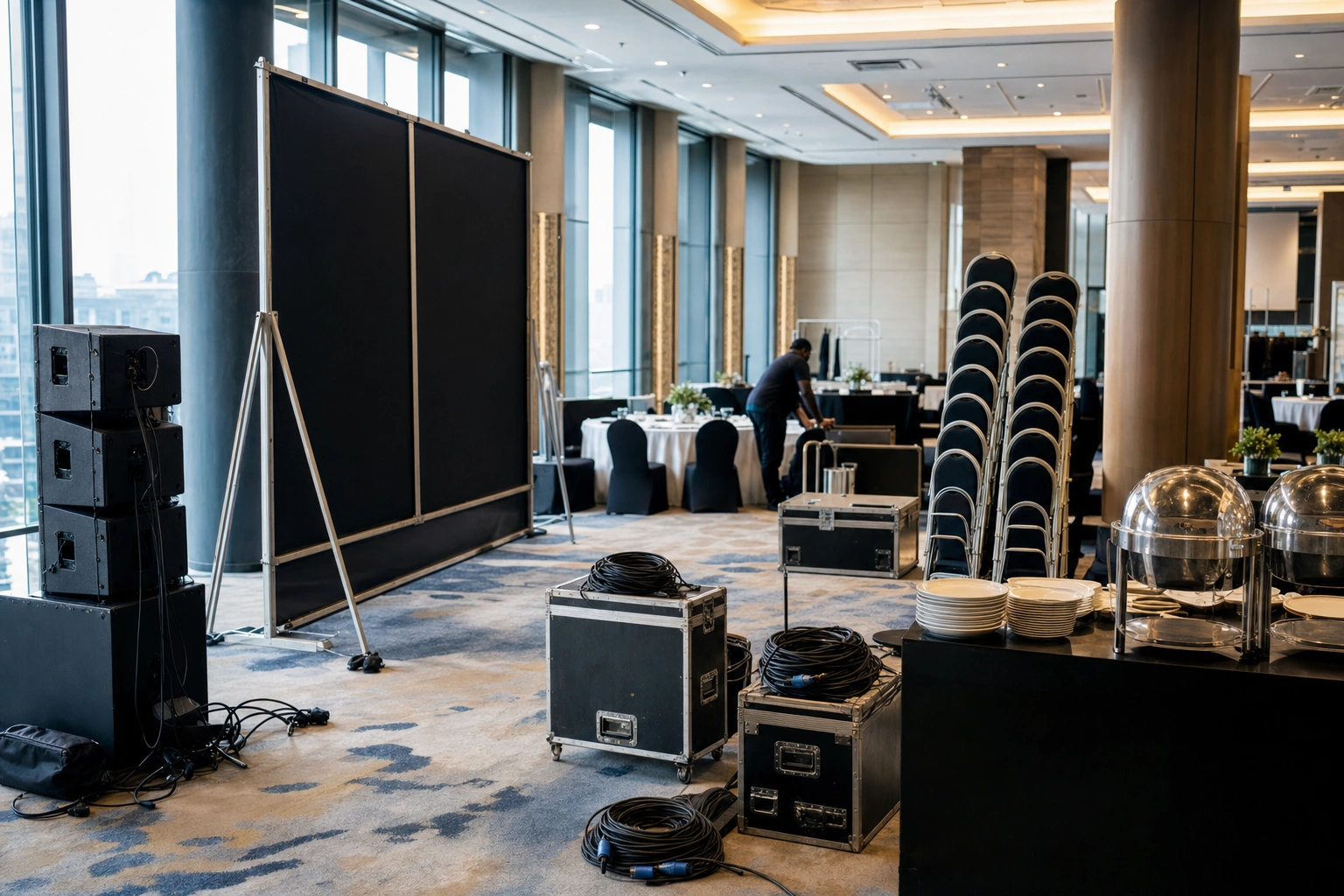
Event suppliers are the people and businesses that provide the products, services, equipment and specialist knowledge needed to deliver an event. They may supply a venue, meals, furniture, lighting, sound, transport, security, décor, entertainment, registration technology or temporary structures. Although guests may not always notice them, suppliers strongly influence whether an event feels organised, comfortable and professional.
For an event manager, working with suppliers is more than placing orders. It involves translating the event concept into practical requirements, comparing suitable providers, negotiating clear agreements, coordinating delivery and checking that each supplier performs as expected. A supplier can become a valuable operational partner, but a poorly selected or poorly managed supplier can create delays, unexpected expenses and reputational damage.
Why Suppliers Matter in Event Management
Most events depend on several specialist providers. An event organiser may have a clear objective and an attractive programme, but the event cannot function without the physical resources and technical services that support it. Suppliers help convert plans into a real experience.
For example, a business conference in Nairobi may require a hotel or conference centre, catering team, registration system, microphones, projectors, internet access, branding materials, transport and photographers. A wedding may involve a venue, decorator, florist, caterer, entertainment provider, photographer and transport company. A community festival may need temporary toilets, waste collection, power equipment, security and stall infrastructure.
Suppliers affect at least five important areas:
- Quality: The standard of food, equipment, décor and service shapes how attendees judge the event.
- Time: Deliveries, installations and rehearsals must happen according to the event schedule.
- Cost: Supplier pricing often represents a significant part of the event budget.
- Risk: Equipment failure, late delivery or inadequate staffing can disrupt the programme.
- Guest experience: Comfort, accessibility, safety and smooth service depend on effective supplier performance.
Main Types of Event Suppliers
Understanding supplier categories helps an event manager identify all the resources required before requesting quotations.
Venues and accommodation providers
Venues provide the space in which the event takes place. Their responsibilities may include room setup, furniture, cleaning, power, parking, catering, security and technical support. Some venues are full-service, while others require the organiser to bring in external suppliers.
Accommodation providers may also support room blocks, guest check-in, meeting rooms and hospitality arrangements. When an event attracts visitors from different towns or countries, accommodation becomes part of the overall attendee experience.
Catering and beverage suppliers
Caterers provide meals, refreshments, service staff, tableware and sometimes temporary kitchens. Their work must reflect the event schedule, guest numbers, dietary requirements and service style. A formal dinner, a training workshop and an outdoor cultural event will require different menus and service arrangements.
The event manager should confirm how the supplier will handle allergies, vegetarian or religious dietary needs, children’s meals, water provision, food presentation and waste. The number of guests should also be managed carefully because both shortages and excessive surplus can create problems.
Audio-visual and technical suppliers
Audio-visual suppliers may provide microphones, speakers, screens, projectors, lighting, staging, recording, streaming and technical operators. Their contribution is particularly important at conferences, launches, concerts and hybrid events.
Technical quality should be assessed in relation to the venue and programme. A small meeting may need only a reliable microphone and display screen, while a product launch may require stage lighting, video playback, multiple cameras and a backup power arrangement.
Décor, furniture and production suppliers
These suppliers provide tables, chairs, linen, carpets, backdrops, floral arrangements, signage structures and themed installations. They help express the event’s identity and influence how guests move through and perceive the space.
Transport, security and support services
Transport providers may arrange airport transfers, shuttle services, executive vehicles or equipment movement. Security providers, ushers, cleaners, first-aid teams and temporary staffing agencies support the safe and efficient running of the event.
Other suppliers may include photographers, videographers, entertainers, ticketing providers, printers, interpreters, temporary power companies, waste-management teams and suppliers of portable toilets or tents.
Choosing the Right Suppliers
Supplier selection should be based on suitability, not simply on the lowest quotation. A supplier may offer a low price but lack the capacity, experience or reliability needed for the event.
Begin by preparing a clear requirement. The brief should state the event date, venue, expected attendance, service scope, delivery times, setup requirements, quality expectations and budget range where appropriate. A vague request produces vague quotations and makes comparison difficult.
Next, identify suppliers through professional networks, venue recommendations, industry directories, previous event records and credible referrals. For larger or higher-risk events, it is sensible to compare several providers rather than relying on one familiar contact.
Evaluate each supplier against relevant criteria:
- Experience with events of a similar scale and type.
- Availability on the required date and ability to meet the programme schedule.
- Quality of previous work and references from comparable clients.
- Capacity, equipment condition and staff competence.
- Pricing transparency, including delivery, setup, overtime and additional charges.
- Communication speed and willingness to answer practical questions.
- Ability to manage changes, emergencies and reasonable special requests.
- Approach to accessibility, waste reduction and responsible sourcing where relevant.
A tasting, site visit, equipment demonstration or portfolio review may be useful. For example, a caterer can provide a sample menu, while an audio-visual provider can demonstrate how the proposed sound system will work in the actual room.
Creating a Clear Supplier Brief
A supplier brief reduces misunderstandings by explaining what is required before a quotation is accepted. It should be written in practical language and should distinguish essential requirements from optional enhancements.
A useful brief may include:
- Event name, date, location and operating hours.
- Expected number and type of attendees.
- Required products or services.
- Arrival, delivery, installation and collection times.
- Room layout, access restrictions and storage arrangements.
- Branding, design or presentation expectations.
- Technical specifications and power requirements.
- Food, accessibility and cultural considerations.
- Contact persons and escalation arrangements.
- Quotation format, payment stages and validity period.
For instance, “provide sound” is not a sufficient technical brief. A better requirement could specify the number of speakers, microphones, lectern, technician, sound check, recording needs and the times when the system must be operational. The level of detail should match the complexity and risk of the service.
Managing Contracts, Costs and Expectations
Once a supplier is selected, the agreed arrangement should be recorded in writing. This may be a formal contract, purchase order or detailed service agreement, depending on the size and nature of the event. The document should describe what will be supplied, when it will be supplied, how much it will cost and what happens if circumstances change.
Important points include the service scope, quantities, agreed rates, taxes or other charges, deposit requirements, payment dates, cancellation terms, postponement arrangements, overtime rates, damage responsibilities and ownership or permitted use of photographs or recordings where relevant.
Event managers should also ask whether the quoted price includes transport, installation, dismantling, staffing, consumables and equipment testing. A quotation that appears cheaper may exclude several necessary services. Comparing like with like gives a more accurate view of value.
Budget control continues after a supplier is appointed. Keep an updated supplier schedule showing the agreed cost, amount paid, outstanding balance, due date and any approved changes. Verbal additions made during event preparations can cause disputes, so changes should be confirmed in writing.
Coordination Before and During the Event
Supplier coordination is the process of making sure that different providers can work together without obstructing one another. It begins well before the event day.
- Build a master supplier schedule. Record contact details, arrival times, vehicle information, equipment needs, setup duration and responsible staff members.
- Conduct a site inspection. Check loading areas, entrances, lifts, storage spaces, power points, parking, room dimensions and restrictions on installation or noise.
- Share the running order. Suppliers need to understand when guests arrive, when meals are served, when speeches occur and when equipment or décor must be changed.
- Hold a production or coordination meeting. Bring together key suppliers to identify clashes, dependencies and unanswered questions.
- Confirm details shortly before the event. Reconfirm quantities, timings, menus, contact persons and contingency arrangements.
- Use one communication structure on the day. Suppliers should know who has authority to approve changes and where to report problems.
Coordination is especially important when one supplier depends on another. The caterer may need the room cleared before setup, the decorator may need access before the audio-visual team installs equipment, and the photographer may need a clear stage during the opening session. A detailed schedule helps the event manager identify these dependencies.
Managing Supplier Risk
Every event contains uncertainty. A supplier may arrive late, equipment may fail, attendance may change or weather may affect an outdoor programme. Risk management does not remove every problem; it prepares the team to respond before a small issue becomes a major disruption.
For each important supplier, ask what could go wrong and what the practical response would be. A technical supplier should have backup microphones, spare cables and a technician available. An outdoor event may need an alternative weather arrangement. A catering plan may require a reasonable buffer for changes in guest numbers. Transport plans should allow for traffic delays and clear pickup instructions.
Supplier reliability can also be improved through phased checks. Confirm the booking, review the brief, inspect equipment or samples, verify arrival, check the delivered quantity and record any defects. For high-value or critical services, the organiser may need a second provider or an alternative solution.
Safety and professional responsibility should be considered as part of supplier management. Ask appropriate suppliers about safe installation, trained personnel, equipment handling, emergency procedures and the protection of guests and staff. Requirements will vary according to the event, venue and local arrangements, so the event manager should clarify responsibilities rather than assume that another party will manage them.
Building Productive Supplier Relationships
A supplier relationship works best when both sides understand the event’s priorities. Professional communication includes timely briefs, realistic deadlines, prompt decisions and respectful treatment of supplier teams. It also means giving accurate information instead of promising conditions that cannot be delivered.
Good relationships do not mean accepting poor performance. The event manager should set standards, monitor delivery and address problems directly. Feedback is most useful when it is specific: identify what happened, explain the operational effect and agree on the corrective action. After the event, record what worked well and what should change before appointing the supplier again.
Long-term relationships can improve efficiency because a trusted supplier learns the organiser’s standards and working methods. However, familiarity should not remove proper comparison, documentation or performance review. A supplier should continue to earn confidence through consistent service.
Applying This in Practice
Imagine that a professional association is organising a one-day training forum for 120 participants. The event manager first lists the required services: venue, seating, registration desk, refreshments, lunch, projector, microphones, recording, signage and transport information.
The manager then prepares briefs and compares suppliers using quality, capacity, cost, availability and contingency arrangements. During the venue inspection, the team discovers that the main room has limited power points. The audio-visual supplier therefore proposes suitable extension equipment and a backup power option, while the seating plan is adjusted to protect walkways.
Before the event, the caterer receives the confirmed attendance and dietary information, the technical team conducts a sound check, and the registration supplier tests the participant list. On the event day, one person manages the overall schedule while designated contacts handle catering, technical issues and transport. Afterward, the organiser records supplier performance, reconciles invoices and notes improvements for the next forum.
This example shows that supplier management is a continuous process: define the need, select carefully, document the agreement, coordinate the work, monitor performance and learn from the results.
Key Takeaways
- Suppliers directly influence event quality, cost, timing, risk and guest experience.
- Choose providers for suitability, capacity and reliability rather than price alone.
- Use a detailed supplier brief so quotations and expectations are clear.
- Record scope, costs, timings, payment terms and change arrangements in writing.
- Coordinate suppliers through site inspections, shared schedules and clear communication.
- Prepare practical backups for critical services such as power, sound, transport and catering.
- Review supplier performance after every event and use the lessons to improve future planning.
No comments yet.