
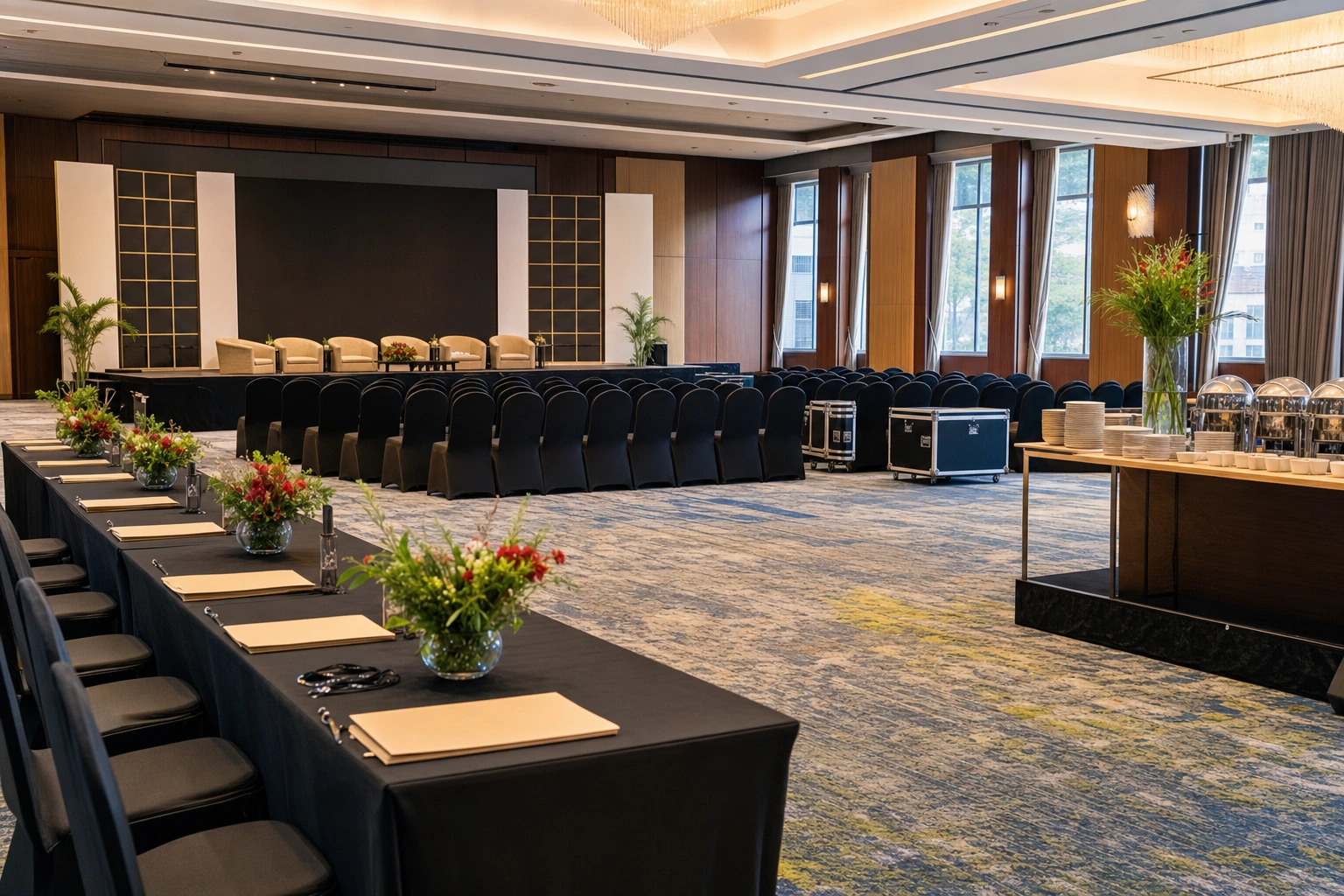
An event may have an excellent theme, influential speakers and attractive marketing, yet still fail when guests cannot find the entrance, equipment arrives late or refreshments run out. Event logistics is the behind-the-scenes discipline that prevents these problems. It connects planning decisions with the practical movement of people, materials, information and services before, during and after an event.
For a conference in Nairobi, a wedding in Mombasa, a trade exhibition in Kampala or a community festival in a rural setting, logistics determines whether the event feels organised and dependable. Good logistics rarely attracts attention because everything works as expected. Poor logistics, however, becomes immediately visible. Understanding its importance helps event managers protect the guest experience, control costs and respond calmly when conditions change.
What Event Logistics Means
Event logistics is the planning, coordination and control of the resources and activities required to deliver an event. It covers the physical and operational details that support the event’s purpose, including:
- Choosing and preparing the venue
- Managing suppliers, contractors and service providers
- Arranging transport, deliveries and storage
- Planning seating, staging, signage and guest movement
- Coordinating catering, audio-visual equipment and technical services
- Managing staff, volunteers, performers, speakers and guests
- Preparing for safety, security, accessibility and emergencies
- Monitoring the event and closing down efficiently
Logistics is related to event planning but is not exactly the same. Event planning establishes the purpose, audience, programme, budget and overall design. Event logistics translates those decisions into a workable operating system. For example, planning may decide that a conference will have three workshop rooms. Logistics determines whether the venue has suitable rooms, how participants will find them, when furniture and equipment will be delivered, who will reset each room and what will happen if one room becomes unavailable.
Why Event Logistics Is Important
It protects the attendee experience
Guests judge an event through many practical interactions. They notice whether registration is quick, toilets are easy to locate, seating is comfortable, meals are served on time and staff can answer questions. These details influence whether participants can concentrate on the programme and whether they leave with a positive impression.
Consider a professional workshop where attendees travel from different counties to learn new business skills. If registration materials are not organised, the programme starts late. If room changes are not communicated, participants miss sessions. If lunch arrangements ignore dietary requirements, some guests feel excluded. None of these problems is necessarily part of the workshop content, but each can reduce the value participants receive from it.
It keeps the programme on time
Most events depend on a sequence of connected activities. A delayed delivery can affect room set-up; a delayed set-up can affect sound checks; a delayed sound check can affect the opening session. Logistics creates a timetable that shows what must happen, when it must happen and who is responsible.
A useful operational schedule should include more than the public programme. It may show supplier arrival times, access periods, technical rehearsals, speaker briefings, catering preparation, guest entry, session transitions, cleaning and dismantling. Allowing realistic time between activities is essential. A schedule that works only if nobody is late, equipment works perfectly and guests move instantly is not a reliable schedule.
It improves cost control
Logistics has a direct relationship with the event budget. Poor coordination often produces avoidable costs such as urgent transport, duplicate equipment hire, unused food, overtime, last-minute printing or additional labour. Detailed planning helps the organiser understand what is needed and when it is needed.
Cost control does not mean choosing the cheapest option in every situation. A low-priced supplier may create extra transport, repair or supervision costs. A slightly more expensive venue may include furniture, power backup or technical support that reduces other expenses. The practical question is the total value and risk of each option, not only the initial quotation.
It supports safety and duty of care
Event organisers have a responsibility to think about foreseeable risks. These may include overcrowding, slips and falls, fire, poor lighting, unsafe electrical connections, severe weather, lost children, medical incidents or blocked emergency routes. Logistics gives safety planning a practical form.
A safety-focused logistics plan should identify entrances and exits, emergency access, crowd flow, first-aid arrangements, communication channels and people responsible for responding to incidents. Outdoor events also require attention to weather, ground conditions, shade, water and secure storage. Requirements will vary according to the venue, audience, event type and applicable local rules, so organisers should confirm relevant permissions and professional advice rather than assume that one plan suits every event.
It strengthens supplier coordination
Events commonly involve venues, caterers, decorators, transport providers, security teams, entertainers, printers, technicians, cleaners and temporary staff. Each supplier may perform well individually, but the event can still fail if their work is not coordinated.
For example, a decorator may need access before a technician installs lighting, while a caterer may need a clear route to the kitchen. If delivery vehicles arrive at the same narrow entrance, delays can occur. A logistics manager creates a shared schedule, confirms responsibilities and ensures that suppliers understand access rules, loading areas, set-up limits and contact procedures.
The Main Areas of Event Logistics
Venue and site planning
The venue must be assessed against the event’s actual requirements, not just its appearance. Consider capacity, room layout, accessibility, parking or public transport, power supply, toilets, kitchens, storage, security, noise restrictions and weather protection. Visit the site at a similar time of day when possible, because traffic, lighting and temperature can affect the experience.
Create a site plan showing key areas such as registration, seating, stages, catering points, toilets, first aid, storage, staff areas, emergency exits and waste collection. Clear routes help guests and reduce unnecessary movement by staff.
Transport, deliveries and storage
Transport logistics covers how people and materials reach the event. This may include airport transfers for speakers, shuttle arrangements, equipment deliveries, parking guidance and access for suppliers. In busy urban areas, traffic and restricted loading times should be considered. In less developed or outdoor locations, road conditions, distance and mobile connectivity may require additional preparation.
Every delivery should have an agreed time, contact person, unloading point and storage location. Valuable or sensitive items such as microphones, laptops and registration materials should not be left in unsecured areas. A simple inventory can record what was received, its condition, its location and who is responsible for it.
Equipment and technical production
Audio-visual equipment must match the venue and programme. A small meeting may need a projector and microphone, while a public performance may require staging, lighting, sound reinforcement and power distribution. Technical planning should include compatibility checks, cable management, equipment testing and backup options for essential items.
Do not assume that equipment will work because it worked at a previous event. Test presentations, microphones, videos, internet connections and remote participation tools before guests arrive. Identify a technical lead who can make decisions quickly during the programme.
People and communication
Logistics depends on clear roles. Registration staff, ushers, technicians, catering teams, security personnel, drivers and floor managers need to know what they are expected to do and whom to contact. A short briefing should cover the schedule, guest needs, escalation procedures, emergency information and changes to the plan.
Communication tools may include a contact list, radio system, messaging group or printed run sheet. The tool matters less than the discipline of keeping information accurate. When a room, speaker or timing changes, the update should reach the people who must act on it as well as the people who need to inform guests.
Catering and guest comfort
Catering involves more than selecting a menu. Organisers must consider guest numbers, service style, dietary needs, timing, water, food safety, waste and the distance between the kitchen and serving area. A buffet, plated meal, packed lunch and refreshment station each require different staffing and space.
Registration data can help identify dietary requirements, but information should be handled respectfully and shared only with those who need it to provide the service. Clear labelling and staff knowledge can make food service more inclusive. Comfort also includes seating, ventilation, shade, lighting, cleanliness and access for people with disabilities.
Building a Practical Logistics Plan
- Define the event requirements. Record the event purpose, audience size, date, location, programme, guest profile and service standards. These decisions create the basis for the logistics plan.
- Break the event into work areas. Create sections for venue, suppliers, transport, equipment, catering, staffing, guest services, safety and close-down. Assign one responsible person to each area where possible.
- Develop a master schedule. Include planning deadlines, supplier confirmations, delivery windows, set-up, rehearsals, guest arrival, programme sessions, breaks, dismantling and collection of hired items.
- Prepare a resource and inventory list. List furniture, signage, badges, stationery, cables, extension leads, first-aid supplies, cleaning materials and other essential items. Include quantities, sources and storage locations.
- Inspect and test the site. Walk through the guest journey from arrival to departure. Test equipment, check access routes and confirm that the planned layout is realistic.
- Brief the team. Share the run sheet, maps, contact details, role descriptions and escalation process. Invite questions before the event rather than waiting for confusion on the day.
- Monitor and adjust. Appoint someone to track timing, supplies, guest flow and supplier performance. Small changes made early are usually easier than emergency corrections later.
- Close down systematically. Confirm that guests have departed safely, equipment has been returned, waste has been removed, supplier sign-offs are complete and lost property has been recorded.
Managing Risk and Contingency
A contingency plan is not a prediction of disaster. It is a set of prepared responses to situations that could disrupt the event. Start by listing likely risks and then assess their possible effect. An outdoor launch might face rain; a conference might experience a speaker cancellation; a sporting event might require medical support; a venue might lose power.
For each significant risk, record a preventive action, an early warning sign, a response and a responsible person. For example, rain may be reduced through covered walkways and an indoor alternative. A missing speaker may be addressed through a standby facilitator or programme adjustment. Power disruption may require a tested backup arrangement for critical equipment.
Contingency planning should also protect communication. Guests become more anxious when staff provide conflicting information. Decide in advance who can approve changes and how updates will be communicated through announcements, signage, messages or staff briefings.
Measuring Logistics Performance
Evaluation should examine more than attendance. Useful questions include: Did the event start and finish as scheduled? Were deliveries received on time? Were there equipment failures? How long did registration take? Were accessibility and dietary needs addressed? Did the budget remain under control? Were incidents recorded and handled appropriately? Did suppliers meet agreed standards?
Collect feedback from guests, staff and suppliers while the experience is still fresh. Compare the planned schedule with what actually happened. Record both failures and successful solutions. A post-event review might reveal that an extra registration desk reduced queues, that a particular delivery window was unrealistic or that staff needed clearer authority to solve minor problems.
Applying This in Practice
Imagine a two-day entrepreneurship forum in Nairobi with 250 participants, guest speakers, exhibition stands and catered breaks. The logistics manager could begin by mapping the attendee journey: arrival, registration, orientation, plenary sessions, workshops, meals, networking and departure.
The venue plan would allocate separate areas for registration, exhibitors, speakers, storage and catering. The master schedule would include exhibitor set-up the previous evening, technical testing before registration, speaker briefings and room resets between workshops. Suppliers would receive delivery slots so that exhibition materials, food and audio-visual equipment do not compete for the same access point.
On the event day, a floor manager would monitor movement and timing, while a technical lead would manage microphones and presentations. Staff would have a current contact list and a clear process for reporting issues. After the forum, the team would check hired equipment, document supplier performance, reconcile deliveries and hold a short review using guest and staff feedback.
This example shows that logistics is not one task performed shortly before guests arrive. It is a connected process that begins with requirements, continues through coordination and monitoring, and ends only when resources, records and responsibilities have been properly closed.
Key Takeaways
- Event logistics turns an event concept into a coordinated operational experience.
- Reliable schedules must include deliveries, set-up, testing, guest movement and close-down, not only public sessions.
- Venue assessment should cover capacity, access, power, storage, comfort, safety and realistic guest flow.
- Clear supplier roles, communication channels and ownership reduce delays and confusion.
- Contingency plans should identify likely risks, preventive actions, responses and responsible people.
- Post-event evaluation should compare plans with actual performance and record improvements for future events.
No comments yet.