
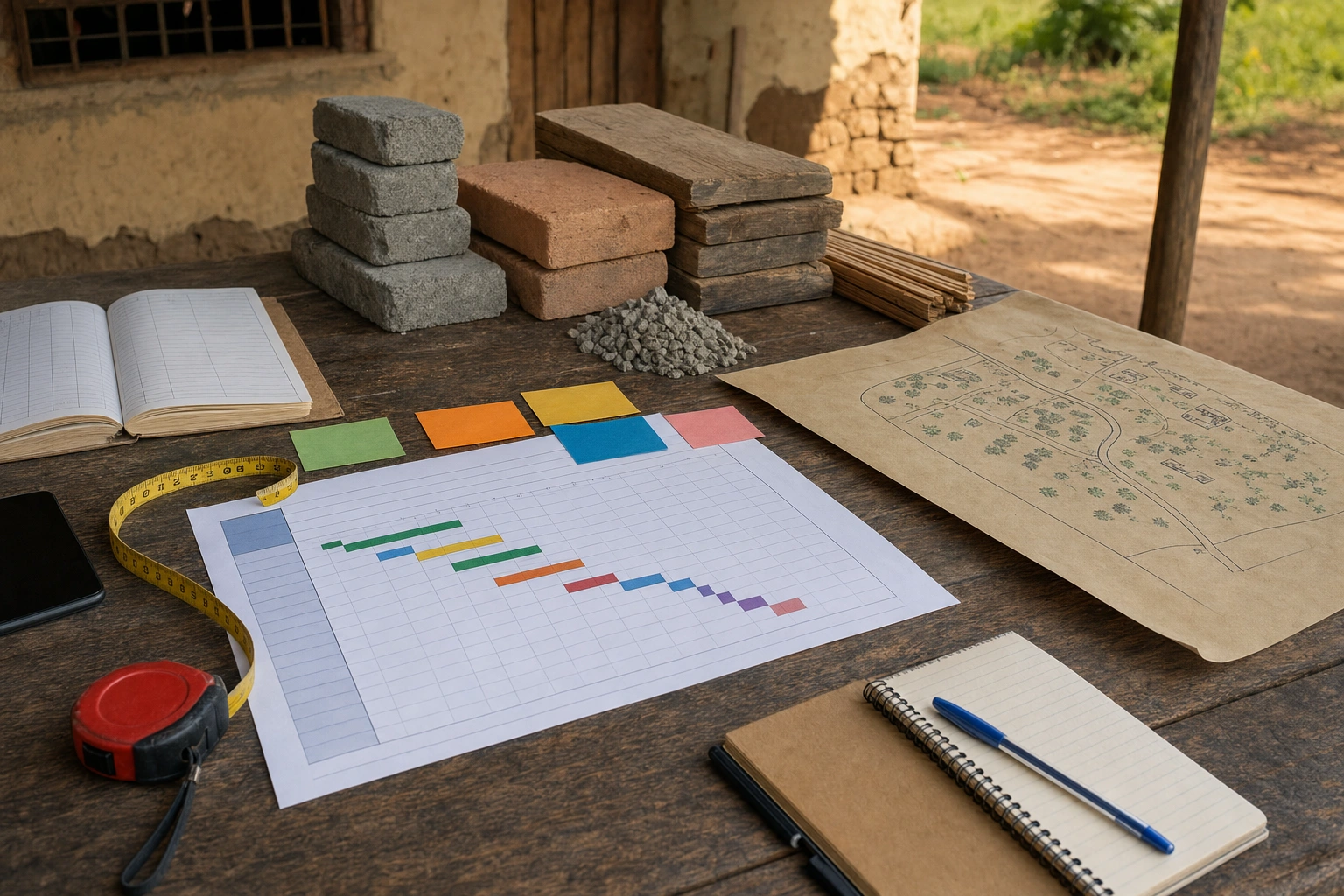
Managing community project activities involves turning a shared idea into organised action that produces useful, lasting results. Whether a neighbourhood is improving a water point, a youth group is establishing a digital learning centre, or residents are restoring a public space, success depends on more than goodwill. People need clear responsibilities, realistic schedules, transparent decisions and regular opportunities to review progress.
Community projects are often delivered in changing environments. Funding may arrive in stages, volunteers may have competing responsibilities, weather may disrupt work, and different groups may disagree about priorities. Good activity management provides enough structure to keep the project moving while remaining flexible enough to respond to local realities.
What Managing Community Project Activities Means
Project activities are the specific actions required to achieve a project objective. For example, a project aimed at improving access to clean water might include confirming the site, consulting households, obtaining materials, repairing the infrastructure, training a local maintenance team and checking whether the facility continues to function.
Managing these activities means coordinating the people, money, materials, information and time needed to complete them. It is different from simply making a project plan. A plan describes what should happen; activity management ensures that it happens in the right order, by the right people, at an acceptable standard.
Effective management also connects daily tasks to the intended community benefit. Completing a building is not necessarily the same as improving access to services. A project manager or committee should continually ask whether activities are producing the outcomes that the community needs.
Start with a Clear Project Purpose
Before listing activities, clarify the problem the project is addressing and the change the community wants to see. A broad statement such as “support local development” is difficult to manage because it does not explain what will be done or how progress will be recognised.
A stronger purpose identifies the intended result and the people who should benefit. For example: “Improve reliable access to safe water for households near the trading centre by rehabilitating the existing water point and establishing a local maintenance arrangement.” This statement helps the team decide which activities belong in the project and which do not.
It is useful to distinguish between four levels:
- Need: the condition or problem affecting people, such as unreliable water access.
- Objective: the specific change the project intends to make.
- Activity: the work carried out to achieve the objective.
- Output: the immediate product of an activity, such as a repaired water point or completed training session.
These distinctions prevent a common mistake: treating activity completion as proof that the project has solved the problem. A training meeting may be completed, for instance, but the project still needs to check whether participants understood the information and are applying it.
Involve the Community from the Beginning
Participation should begin before the activity schedule is created. Residents, local leaders, community-based organisations, people with disabilities, women, young people and other relevant groups may have different experiences of the problem. Including them early improves the quality of decisions and helps identify practical barriers.
Participation does not mean asking people to approve a plan that has already been designed. It means giving them a genuine opportunity to describe needs, suggest solutions, identify risks and influence priorities. The approach should also be realistic. Some people may be unable to attend meetings because of work, caring responsibilities, distance or mobility challenges. The team may need to use several methods, such as small group discussions, household consultations, accessible venues or feedback through trusted local representatives.
Record important decisions and explain how community views affected them. If a suggestion cannot be adopted because of cost, safety or technical limitations, communicate the reason respectfully. This reduces misunderstanding and strengthens accountability.
Break the Work into Manageable Activities
Once the objective is clear, break the project into activity groups or phases. A typical community project may include:
- Preparation: confirm the project scope, stakeholders, permissions, resources and decision-making arrangements.
- Design and procurement: develop technical specifications, obtain quotations where appropriate and acquire materials or services.
- Implementation: carry out construction, training, outreach, distribution or other core activities.
- Monitoring and adjustment: inspect work, collect feedback, address problems and revise the schedule when necessary.
- Handover and continuation: confirm ownership, maintenance, documentation and responsibilities after project support ends.
Each broad phase should be divided into tasks that have a clear beginning and end. “Build a community hall” is too large to monitor as one activity. It could be divided into confirming the site, approving the design, preparing the foundation, sourcing materials, completing the structure, installing essential services, inspecting the work and agreeing on a maintenance plan.
For every activity, identify the expected output, person responsible, required resources, start date, completion date and evidence of completion. Evidence might include attendance records, delivery notes, photographs, inspection forms, meeting minutes or a completed register. Use evidence appropriately and protect personal information where records contain sensitive details.
Assign Roles and Responsibilities
Unclear responsibility is one of the main causes of delayed community activities. A committee may agree that “the project team” will handle procurement or monitoring, but this can leave everyone assuming that someone else is responsible.
Create a simple responsibility matrix or activity register. It can include the following columns:
- Activity or task
- Responsible person or group
- People who must be consulted
- People who need updates
- Required resources
- Due date
- Status and next action
Responsibility should not rest only with the chairperson or project coordinator. For example, a treasurer may oversee financial records, a technical person may inspect construction quality, a community liaison may organise consultations, and a youth representative may coordinate volunteer participation. Shared leadership increases local ownership, but each task should still have one clearly accountable lead.
Agree how decisions will be made. Some decisions may require approval from the full committee, while routine operational decisions can be delegated. Define who can authorise spending, approve changes to the plan, accept completed work and respond to complaints.
Build a Realistic Schedule
A schedule shows when activities should happen and how they depend on one another. Start with the required completion date, then work backwards to identify earlier tasks. A water project cannot begin installation before the site is confirmed and materials are available. A community training event cannot be evaluated before participants have attended it.
Allow time for activities that are often overlooked, including consultation, obtaining approvals, transport, supplier delays, quality checks, payment processing, community feedback and correcting defects. In some parts of Kenya and other African countries, seasonal rainfall, market-day patterns, school calendars or agricultural work can affect when people are available. A schedule that ignores these realities may look efficient on paper but fail in practice.
Use a simple calendar, table or spreadsheet. Mark completed tasks, delayed tasks and activities that depend on unresolved decisions. Review the schedule regularly rather than waiting until the end of the project. When a delay occurs, examine its effect on later tasks and communicate any change promptly.
Manage Resources and the Budget Transparently
Resources include money, labour, equipment, materials, transport, technical expertise and meeting space. List what each activity needs and compare it with what is available. This can reveal gaps early, such as the need for skilled installation, additional tools or transport to a remote site.
A practical budget separates costs by activity and distinguishes planned costs from actual expenditure. Keep supporting documents such as invoices, receipts, payment approvals and delivery records according to the project’s requirements. Where community contributions are made through labour, land, materials or local knowledge, record them clearly without presenting estimates as cash received.
Transparency is not only a financial exercise. Explain the approved budget, purchasing process and reporting arrangements in a way that community members can understand. Use noticeboard updates, meetings or written reports as appropriate. Avoid exposing private financial information, but make project-level spending and decisions sufficiently clear for legitimate oversight.
Procurement should be fair and fit for purpose. Compare quality, price, reliability and delivery time rather than choosing solely on the lowest price. Where conflicts of interest may arise, require disclosure and follow an agreed process for managing them.
Coordinate Communication and Participation
Communication keeps people informed about what is happening, what has changed and what they need to do. It should be two-way. A project team that only announces decisions may miss useful information from residents or fail to hear about problems early.
Prepare a communication plan that identifies the audience, message, channel, timing and responsible person. Contractors may need technical instructions, volunteers may need shift information, local leaders may need progress updates, and community members may need to know how to give feedback or raise a concern.
Use language and channels that fit the community. Meetings, phone calls, messaging groups, printed notices and local announcements may each serve different purposes. Important information should not be shared only through a digital channel if some affected people have limited connectivity. Translate or explain technical terms where necessary.
Good meeting records include the date, participants, issues discussed, decisions made, responsible persons and deadlines. Circulating action points after a meeting makes it easier to track commitments and reduces disputes about what was agreed.
Monitor Progress, Quality and Outcomes
Monitoring is the regular collection and use of information about project progress. It should answer practical questions: Are activities taking place as planned? Are outputs meeting the required standard? Are the intended groups participating? What needs to change?
Select a small number of useful indicators. For a community learning centre, these might include the number of sessions delivered, the condition of equipment, attendance by different groups and whether the centre is operating according to its agreed timetable. Indicators should be understandable and possible to verify.
Combine records with direct observation and community feedback. A completed attendance sheet can show that a meeting occurred, but it cannot show whether participants understood the content or whether the meeting was accessible. Site visits, short interviews, demonstrations and feedback forms can provide a fuller picture.
Separate monitoring from blame. If a task is behind schedule, identify the cause and agree on corrective action. The cause might be a supplier problem, unclear instructions, unrealistic timing or a technical issue. Record the change, the person responsible and the new date. This creates a useful management history and supports honest reporting.
Manage Risks and Changes
Risk management means identifying events that could affect the project and deciding how to reduce their likelihood or impact. Common risks include rising costs, poor weather, theft, low attendance, disagreement over land or ownership, unsafe work conditions, political interference and weak maintenance arrangements.
For each significant risk, record its possible effect, warning signs, preventive action and response plan. For example, if delivery delays could stop construction, the team might confirm supplier lead times, order critical materials early and identify an alternative supplier. If volunteers may be unavailable during harvest season, the schedule can include alternative dates and a broader pool of participants.
Changes are sometimes necessary, but they should not be made informally when they affect cost, scope, quality or beneficiaries. Describe the proposed change, explain why it is needed, assess its effect and obtain approval from the appropriate authority. A small adjustment to a meeting date is different from removing a major activity because the budget is insufficient.
Promote Inclusion, Safety and Accountability
A project can be technically successful while excluding people or creating harm. Review whether women, people with disabilities, older people, minority groups and lower-income households can access activities and benefits. Consider the location, timing, cost, language, physical accessibility and social barriers.
Safety responsibilities should be clear, especially where projects involve construction, tools, transport, public events or work with children. Use suitable protective equipment, competent supervision and safe procedures. Do not treat volunteer labour as a reason to lower safety standards.
Establish a feedback and complaints process that people can use without fear of retaliation. Explain whom to contact, how concerns will be recorded and how they will be handled. Serious safeguarding or protection concerns should be referred through the appropriate local or organisational procedures. Respect confidentiality and avoid promising outcomes that the project cannot deliver.
Plan for Continuity and Handover
Community projects often lose value when activities stop as soon as funding ends. Continuity should be considered during planning, not as an afterthought. Identify who will own, operate, maintain or finance the project after completion.
A handover may include training, equipment registers, maintenance schedules, contact details for service providers, operating guidelines and an agreement on future responsibilities. For a solar-powered facility, for example, the community may need to understand basic care, reporting of faults and the source of funds for repairs.
Before declaring activities complete, verify that outputs meet the agreed standard and that the responsible local group is ready to continue. Conduct a review with participants and document what worked, what did not and what should be done differently next time. Lessons are most useful when they are specific, such as “include transport costs in the initial budget” rather than “improve planning”.
Applying This in Practice
Suppose a community organisation is managing a project to improve waste collection around a market. The team could apply the following sequence:
- Consult traders, residents, market authorities, waste workers and nearby households to define the main problem.
- Agree on a measurable objective, such as establishing a reliable collection arrangement for the market area.
- List activities including selecting collection points, obtaining suitable containers, agreeing collection days, communicating instructions and monitoring use.
- Assign a lead person to each activity and record the required materials, cost, evidence and deadline.
- Check practical risks, such as overflowing containers, unsafe handling, missed collection days or disagreement about payment.
- Review progress weekly at first, using observations and feedback rather than relying only on reports.
- Adjust the arrangement where necessary and agree who will manage the service after the initial project period.
This example demonstrates the central discipline of activity management: connect every task to a recognised need, assign responsibility, monitor evidence and use feedback to improve delivery. The same method can be adapted for health outreach, agricultural groups, skills training, environmental restoration and local infrastructure projects.
Key Takeaways
- Define the community problem, objective, activities and expected outputs separately.
- Involve affected groups before finalising the plan, and explain how their input shaped decisions.
- Give every important task a responsible lead, resources, deadline and verifiable evidence.
- Use a realistic schedule that allows for approvals, delays, seasonal conditions and quality checks.
- Monitor both completed activities and whether they are producing useful benefits for the intended community.
- Manage risks, changes, complaints and spending through clear, documented processes.
- Plan ownership, maintenance and local capacity before project support comes to an end.
No comments yet.